I landed in Bogotá at 2 AM with a backpack, a phone full of bookmarked Instagram posts, and absolutely no idea what I was doing. Three months later, I’d eaten my way through Colombia, hiked to ruins I’d only seen in documentaries, floated on a salt flat that looked like another planet, and had my entire bucket list rearranged by places I’d never even heard of before.
That’s what South America does. It wrecks your plans in the best way possible.
If you’re looking for South America travel destinations that go beyond the obvious top-10 listicle, this post is for you. We’re covering the big-name spots that earn their reputation (yes, Machu Picchu really is that good) alongside the overlooked cities, lakes, and mountain towns that seasoned travelers keep recommending to each other. From Patagonia’s glaciers to Colombia’s colorful streets to Peru’s Sacred Valley, this is the practical, no-fluff guide to planning a trip across the most diverse continent on the planet.
Whether you have two weeks or two months, a backpacker budget or a splurge-worthy itinerary, South America has a destination that will surprise you.
Table of Contents
- Which South America Travel Destination Will Surprise You Most?
- The Bucket List Destinations That Actually Deliver
- Stop Skipping These South America Travel Destinations
- South America Travel Destinations Ranked by Budget
- Can’t Pick Your South America Travel Destination?
- The Hidden Gems Travelers Can’t Stop Sharing
- What’s the Hidden Gem of South America Travel?
- The South America Destinations Guide: Country by Country
- Key Takeaways
- FAQ
Which South America Travel Destination Will Surprise You Most?
Every traveler who’s spent real time in South America has one: the place that caught them completely off guard. For some, it’s a city that was supposed to be a quick stopover but turned into a week-long stay. For others, it’s a landscape so unreal they couldn’t believe it existed outside of a screensaver.
The surprise destinations tend to share a few things in common. They’re usually not the places you see on magazine covers. They reward slow travel over checklist tourism. And they almost always involve food, people, or scenery that you didn’t know to expect.
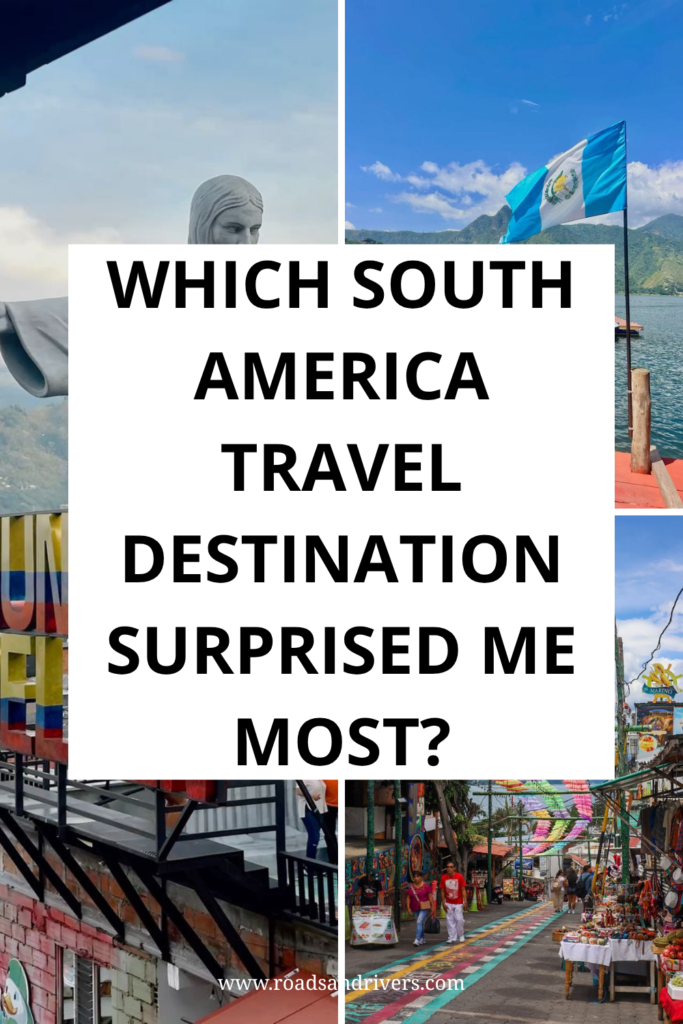
Colombia is the biggest surprise for most first-time South America travelers. Specifically, Medellín. A decade ago, this city had a reputation that kept tourists away. Today, it’s one of the most innovative, walkable, and affordable cities on the continent. The transformation of neighborhoods like Comuna 13, from one of the most dangerous areas in the world to a vibrant outdoor gallery of street art and community resilience, is something you have to see in person to fully grasp. The weather sits at a near-perfect 22-27°C year-round (they call it the City of Eternal Spring for a reason), the food scene is booming, and the cost of living makes it possible to stay for weeks without stressing about your budget.
Pro tip: Don’t skip Guatapé, a day trip from Medellín. The colorful town sits on a lake dotted with tiny islands, and climbing the 700+ stairs to the top of El Peñol rock gives you one of the most dramatic views on the continent.
Guatemala’s Lake Atitlán is another common surprise. Ringed by three volcanoes and dotted with indigenous Maya villages, this lake in the highlands is often described as the most beautiful in the world. And unlike many “most beautiful” claims, this one holds up.
The Bucket List Destinations That Actually Deliver
Some famous places disappoint in person. These don’t.
Machu Picchu, Peru
You’ve seen the photos a thousand times, and you’re wondering if it’s overhyped. It’s not. Standing above those terraces at sunrise, with clouds rolling through the Andes peaks and the ancient Incan city materializing below you, is one of those rare travel moments where reality exceeds expectation. The site is more massive, more intricate, and more dramatically placed than any photo can communicate.
The catch: it’s not cheap. The Inca Trail trek alone can cost $750+, and entrance tickets now require timed entry slots that sell out weeks in advance. Book early. If the classic Inca Trail is out of your budget, alternative treks like the Salkantay or Lares routes offer similar scenery at a fraction of the cost.
Patagonia, Argentina and Chile
Patagonia is where South America shows off. Torres del Paine in Chile and Los Glaciares National Park in Argentina deliver landscapes that look AI-generated but are very real: turquoise lakes, massive glaciers calving into water, jagged granite towers, and winds strong enough to knock you sideways. It’s not a budget destination (Chile averages around $128 per day for travelers, and Patagonia is even pricier), but it’s a once-in-a-lifetime kind of place.
Cartagena, Colombia
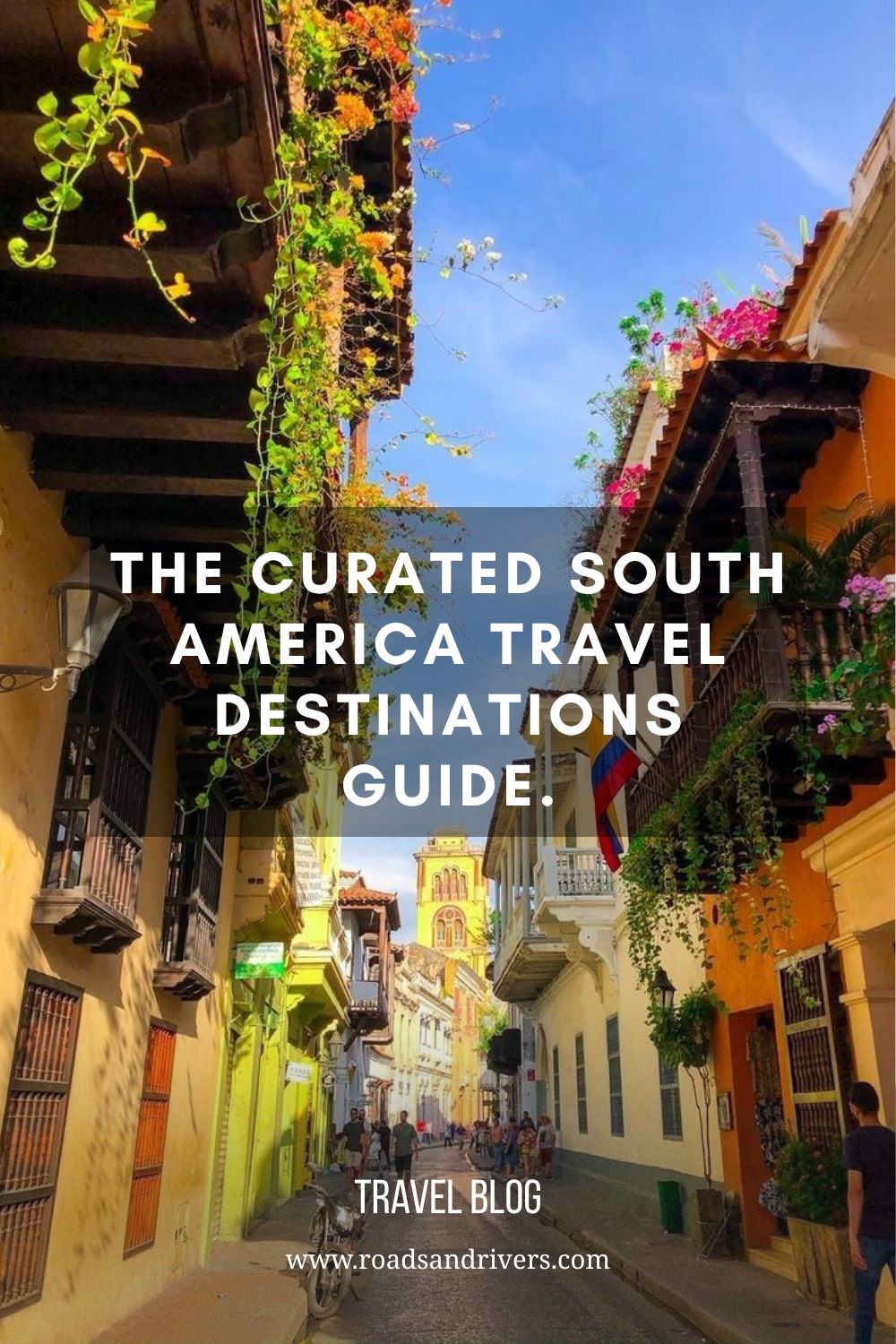
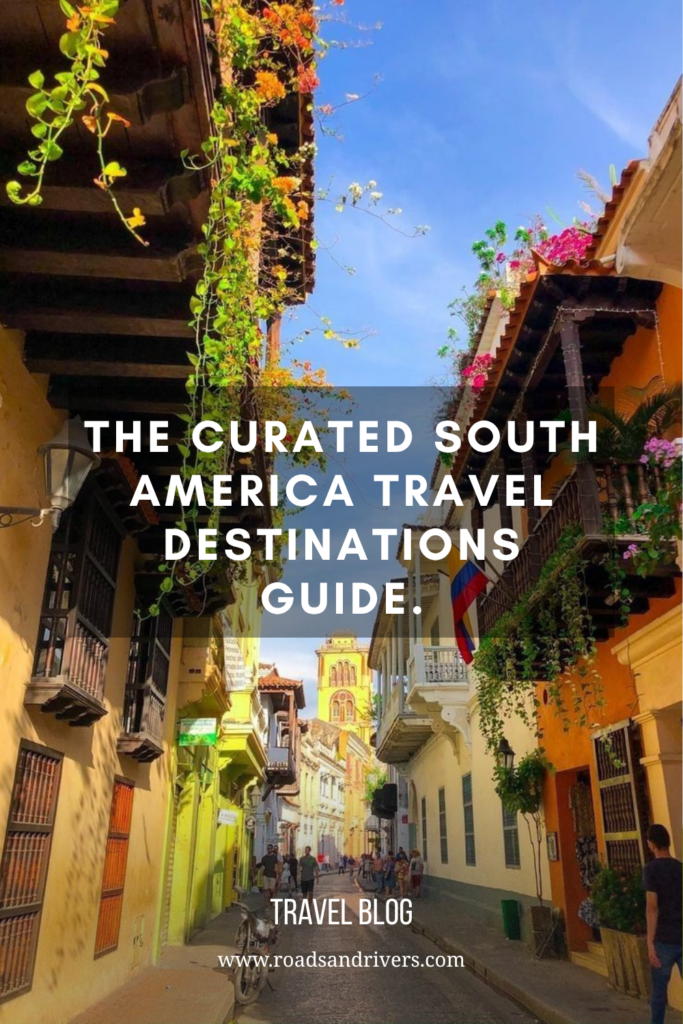
Cartagena’s walled Old Town is one of the most photogenic places in the Americas. Cobblestone streets, bougainvillea cascading over colonial balconies in every shade of yellow, orange, and pink, and a Caribbean breeze that softens the tropical heat. It’s a bit more touristy (and more expensive) than other Colombian cities, but the architecture, food, and atmosphere justify the hype. Walk the walls at sunset. Eat ceviche at a street cart. Get lost in Getsemaní. It earns every superlative.
Stop Skipping These South America Travel Destinations
These are the places travelers keep flying over on their way to the famous names. Every one of them deserves a spot on your itinerary.
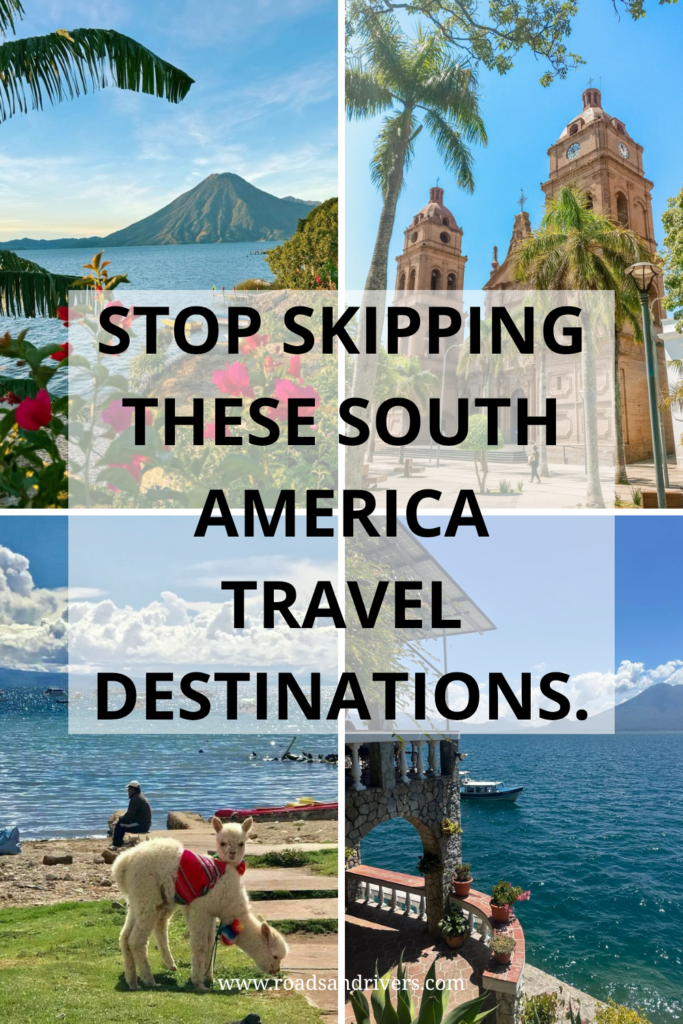
Lake Atitlán, Guatemala
I almost skipped Guatemala entirely. Huge mistake. Lake Atitlán, ringed by volcanoes and Maya villages connected by small boats, is one of the most peaceful and visually overwhelming places I’ve visited anywhere. San Marcos offers yoga and meditation retreats. San Juan has the best local textile workshops. And Panajachel is the gateway town with more restaurants and hostels than you’d expect. The cost of being here is shockingly low: $30-40 per day covers comfortable accommodation, meals, and boat transport.
Bolivia’s Salar de Uyuni
The world’s largest salt flat. During the dry season, it’s an infinite white expanse that stretches to the horizon. During the wet season, a thin layer of water turns it into a perfect mirror reflecting the sky. Bolivia is the cheapest country in South America, with budget travel starting around $25-35 per day, and a 3-day Uyuni tour costs approximately $130. For the price of a nice dinner in Patagonia, you get three days of surreal landscapes.
Peru’s Sacred Valley
Most travelers treat the Sacred Valley as a box to check on the way to Machu Picchu. That’s a mistake. The valley, nestled between Cusco and Machu Picchu, offers ancient ruins, salt mines, and traditional villages with a fraction of the crowds. Ollantaytambo is a living Incan town where the original stone streets and water channels still function. Pisac’s market is one of the best in the Andes for textiles and crafts. Moray’s circular agricultural terraces look like something from science fiction.
Pro tip: Spend at least two nights in the Sacred Valley before heading to Machu Picchu. The lower altitude (2,800m vs. Cusco’s 3,400m) helps with acclimatization, and the valley itself is worth the time.
South America Travel Destinations Ranked by Budget
Budget is the biggest factor in choosing where to go in South America. The cost difference between countries is dramatic: Colombia averages about $55 per day, Bolivia $63, and Argentina $70, while Chile runs $128 and Brazil $102. Here’s how the major destinations stack up.
Cheapest (Under $50/Day)
Bolivia is the undisputed budget champion. La Paz, Sucre, and the Uyuni Salt Flats are all affordable, with hostel beds from $6-12 per night and set-menu lunches for $2-4. The trade-off is basic infrastructure and high altitude that can hit hard on arrival. Colombia (outside of Cartagena) is the sweet spot of cheap and comfortable: Medellín, Bogotá, and the coffee region offer quality food, modern hostels, and affordable activities.
Mid-Range ($50-80/Day)
Peru sits here, mainly because of Machu Picchu. The daily cost in Lima or Cusco is manageable, but big-ticket experiences like the Inca Trail or Galápagos-adjacent tours push the average up. Argentina fluctuates wildly depending on exchange rate situations, but Buenos Aires and northern Argentina (Salta, Jujuy) remain good value for the quality of food and wine you get. Ecuador offers Galápagos access, Amazon lodges, and the colonial capital of Quito within this range.
Premium ($80-130+/Day)
Chile (especially Patagonia and the Atacama Desert) and Brazil (Rio, São Paulo, beach towns) hit harder on the wallet. These are splurge destinations best saved for when you want comfort, dramatic scenery, and world-class wine.
Can’t Pick Your South America Travel Destination?
This is the most common problem first-time South America travelers face. The continent is massive, flights between countries can be long and expensive, and there’s no single “right” itinerary. Here’s how to narrow it down.
If you have 2 weeks: Pick one country and go deep. Peru (Lima, Cusco, Sacred Valley, Machu Picchu) or Colombia (Bogotá, Medellín, Cartagena, coffee region) are the two best options for a short trip. Both have strong domestic flight networks, easy logistics, and enough variety to fill 14 days without feeling rushed.
If you have 3-4 weeks: Combine two countries. Peru + Bolivia is the classic backpacker route (Cusco to La Paz to Uyuni). Colombia + Ecuador works well geographically. Argentina + Chile gives you Buenos Aires, wine country, and Patagonia in one loop.
If you have 2+ months: Go big. The most popular long-haul route runs Colombia to Ecuador to Peru to Bolivia to Chile/Argentina, moving south along the Andes. This is where budget planning matters most, because a four-week loop through Bolivia, Peru, Ecuador, Colombia and Paraguay can run $1,200-1,800 on the ground for budget travelers.
Pro tip: Start in the cheapest country on your route and work toward the most expensive. You’ll be more relaxed about spending at the end of your trip when you’ve already saved money at the beginning.
The South America Destinations Travelers Can’t Stop Sharing
Ask someone who’s been to South America for their top recommendation, and the same names keep coming up. Not always the famous ones. The ones that hit differently.
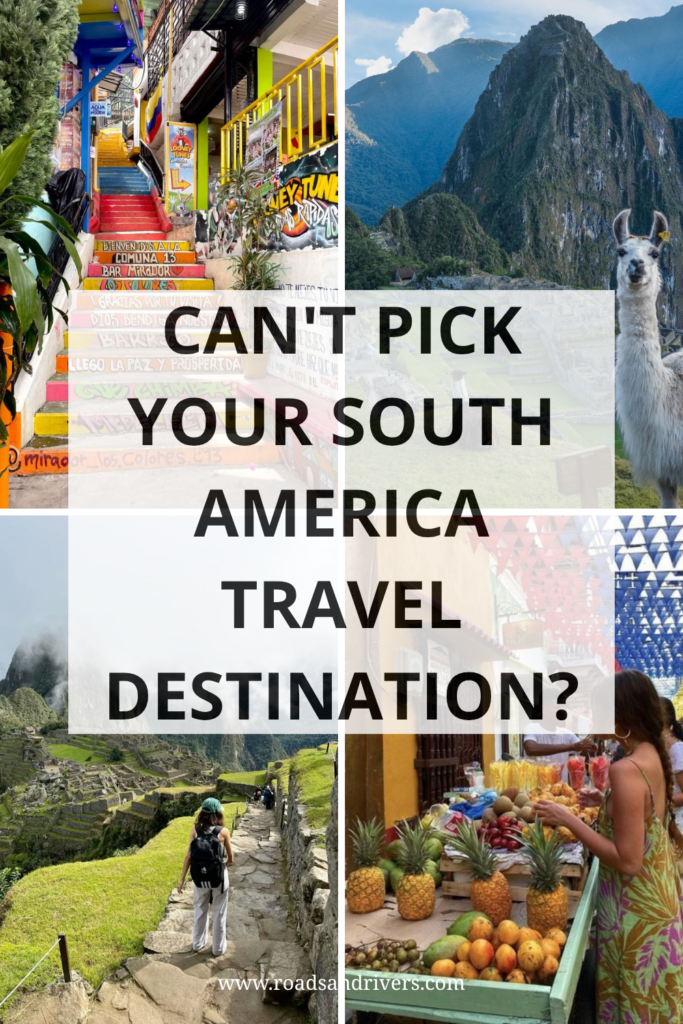
Medellín’s Comuna 13 shows up in every single “best of” conversation. The street art, escalators built into the hillside, and the story of how this neighborhood reinvented itself make it more than a tourist stop. It’s a lesson in resilience and creativity.
Cartagena’s Getsemaní neighborhood is the spot locals recommend over the more polished Old Town. It’s grittier, more colorful, and packed with street food vendors, murals, and salsa bars that stay open late.
Ollantaytambo in Peru gets mentioned by everyone who’s spent time in the Sacred Valley. It’s not just a ruin site. It’s a living town where Incan-era stone buildings are still occupied, original water channels still flow, and the massive fortress terraces above town catch the morning light in a way that makes you forget your camera.
Isla del Sol on Lake Titicaca is the one that surprises people most. This island, shared between Bolivia and Peru, has no cars, no roads, and Incan ruins scattered along hilltop trails with views of the world’s highest navigable lake.

What’s the Hidden Gem of South America Travel?
If I had to pick one genuinely underrated corner of South America, it would be northwestern Argentina. The area around Salta and Jujuy, right up against the Bolivian border, has everything: multicolored rock formations in the Quebrada de Humahuaca, the vast white Salinas Grandes salt flat, traditional Andean villages, incredible regional wine, and a fraction of the tourist traffic that Patagonia or Buenos Aires sees.
This area delivers authentic experiences without the premium prices of more touristy regions. You can drive the famous Ruta 40, eat empanadas that put the rest of Argentina to shame, and hike through landscapes that shift from desert red to mineral green to snow-capped white within a single hour.
Bolivia’s Sucre is another genuine hidden gem. The constitutional capital is quieter, more walkable, and more beautiful than La Paz, with white colonial architecture, great food, and some of the best Spanish language schools on the continent. If you’re looking for a place to slow down and settle in for a while, Sucre is it.
The South America Destinations Guide: Country by Country
Here’s a quick breakdown of what each major country offers and who it’s best for.
Colombia: Best for first-timers, budget travelers, and food lovers. Cities (Medellín, Bogotá, Cartagena), coffee country, Caribbean beaches, and incredible biodiversity. Affordable and easy to navigate. Average daily budget: $35-55.
Peru: Best for history lovers, hikers, and foodies. Machu Picchu, the Sacred Valley, Lima’s world-class restaurant scene, Lake Titicaca, and the Amazon. Mid-range pricing with expensive highlight experiences. Average daily budget: $30-50.
Bolivia: Best for budget travelers and adventure seekers. Salar de Uyuni, La Paz, Death Road cycling, Lake Titicaca. The cheapest country on the continent with basic but improving infrastructure. Average daily budget: $25-40.
Argentina: Best for wine lovers, steak enthusiasts, and nature seekers. Buenos Aires, Mendoza wine country, Patagonia, Iguazú Falls, and the northwestern deserts. Pricing fluctuates with the economy. Average daily budget: $45-70.
Chile: Best for nature lovers with a bigger budget. Patagonia (Torres del Paine), the Atacama Desert, Valparaíso’s street art and hills, Easter Island, and some of South America’s best wine. Premium pricing. Average daily budget: $55-80.
Brazil: Best for beach lovers, party seekers, and nature enthusiasts. Rio de Janeiro, São Paulo, the Amazon, Iguazú Falls (Brazilian side), and thousands of kilometers of coastline. Large and expensive to traverse. Average daily budget: $50-70.
Ecuador: Best for nature lovers on a budget. The Galápagos Islands, Quito’s colonial center, the Amazon, and the Avenue of Volcanoes. Compact and easy to explore. Average daily budget: $30-45.
Panama: Best for a mix of city, beach, and nature. Panama City’s modern skyline, the canal, Bocas del Toro islands, and San Blas archipelago. More expensive than Central American neighbors but more developed. Average daily budget: $55-80.
Key Takeaways
- Colombia and Peru are the best starting points for first-time South America travelers. They’re affordable, easy to navigate, and packed with variety.
- Bolivia is the budget king. If your main constraint is money, start there. $25-40 per day gets you salt flats, Death Road, and one of the most unique cultures on the continent.
- Don’t skip the in-between places. The Sacred Valley, Lake Atitlán, northwestern Argentina, and Sucre are where the magic happens, away from the crowds and the inflated prices.
- Budget by region, not by continent. South America’s cost varies wildly. Plan your route from cheap countries to expensive ones to maximize your money.
- Two weeks is enough for one country. Don’t try to do it all. South America rewards depth over breadth.
This Continent Will Change How You Travel
South America is not a single destination. It’s a dozen different trips packed into one continent, each with its own rhythm, price point, and personality. The only mistake you can make is not going.
Pick a country. Book a flight. Let the continent do the rest. And when you come back with a rearranged bucket list and a phone full of photos you can’t stop showing people, you’ll understand why every traveler who’s been here says the same thing: I didn’t stay long enough.
Which South America travel destinations are on your list? Drop them in the comments. We’re always looking for the next spot.
FAQ
What is the best country to visit in South America for the first time?
Colombia and Peru are the two best options for first-timers. Colombia is affordable, welcoming, and easy to navigate with strong tourism infrastructure. Peru offers the widest range of iconic experiences (Machu Picchu, Lima’s food scene, the Amazon, Lake Titicaca) in a single country. Both have reliable domestic flights and well-established backpacker routes.
How much does a trip to South America cost?
Daily budgets vary dramatically by country. Bolivia and Colombia are the cheapest at $25-55 per day, while Chile and Brazil can run $80-130+. A realistic budget for a month-long backpacking trip through two to three countries is $1,200-2,500 depending on your travel style and which countries you choose.
Is South America safe for tourists?
South America is generally safe for tourists who take standard precautions: stay aware of your surroundings, avoid displaying expensive items, use registered taxis or ride-sharing apps, and research neighborhoods before walking around at night. Colombia, Peru, Ecuador, and Chile all have well-established tourist infrastructure. Petty theft is the most common concern, not violent crime.
What is the best time to visit South America?
It depends on the region. June through September is dry season in Peru, Bolivia, and most of the Andes (the best time for trekking and sightseeing). December through March is summer in Patagonia and the best time for hiking in southern Argentina and Chile. Colombia’s climate varies by altitude, not season, so it’s comfortable year-round. The shoulder months of April-May and September-October often offer the best combination of good weather and fewer crowds.
Can I travel South America without speaking Spanish?
You can get by, but learning basic Spanish makes every part of the trip better. English is widely spoken in tourist areas of Colombia, Peru, and Chile, but outside those zones, communication gets harder fast. Even 50 common phrases will dramatically improve your experience with food ordering, transportation, and connecting with locals. Brazil speaks Portuguese, not Spanish, though many Brazilians understand basic Spanish.