Morocco does not ease you in. You land, step outside the airport, and the country immediately starts competing for your attention — taxi drivers, the smell of cumin and charcoal, the sound of a muezzin cutting through traffic noise. Before you have found your riad, you have already had an experience.
Ten days is the right amount of time to do Morocco without either rushing or running out of things to see. It is enough time to cover the imperial cities, cross the Atlas Mountains, sleep in the Sahara, and still have a slow afternoon in a medina souk. It is also, conveniently, long enough to make all five of the itinerary mistakes that most first-timers make — and to wish you had known about them beforehand.
This guide gives you both: the mistakes to avoid and the actual day-by-day route that uses your 10 days well.
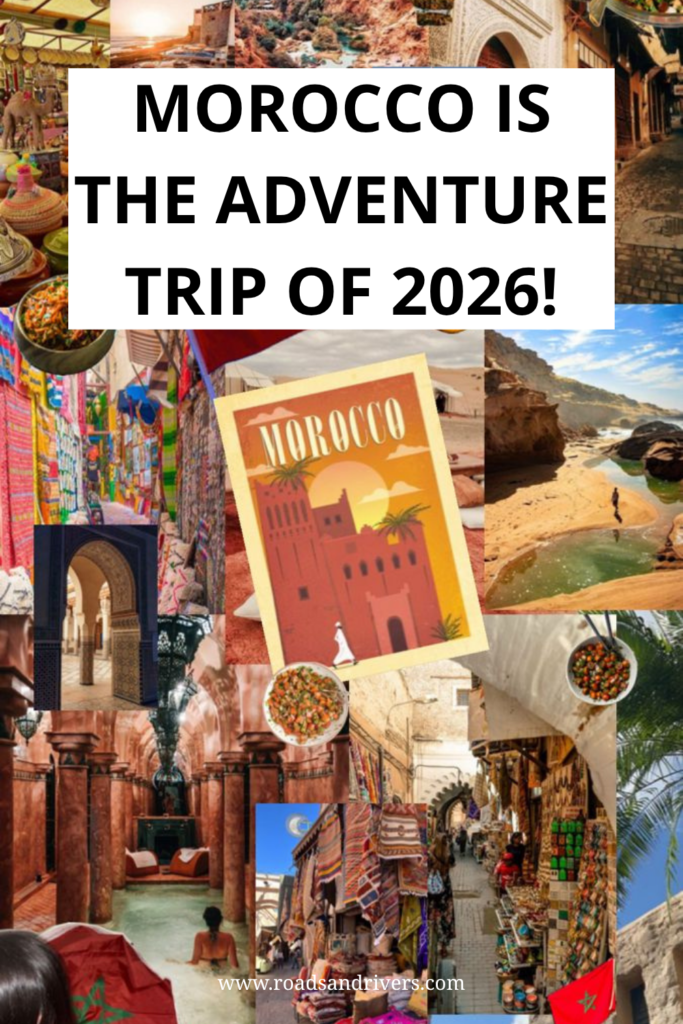
The 5 Morocco Itinerary Mistakes That Waste Your Days
Before the route, the mistakes. These are the five decisions that consistently shorten what travelers get out of 10 days in Morocco.
Mistake 1: Spending too many nights in Marrakech. Marrakech is where most international flights land, so most travelers camp there for 3–4 nights, then realize they have burned half their trip in one city. Two nights is enough to cover Djemaa el-Fna, the souks, the Bahia Palace, and the Saadian Tombs. Move on.
Mistake 2: Skipping Fes in favor of a second city. First-timers sometimes swap Fes for Casablanca or the coastal towns. That is the wrong trade. Fes is the most medieval city in North Africa — its medina, Fes el-Bali, is a UNESCO World Heritage site and genuinely unlike anything else on the continent. Casablanca, by contrast, is a modern business city with one great mosque and not much else to hold a traveler for more than a day.
Mistake 3: Not accounting for Sahara transit time. The Sahara camp at Merzouga is roughly 9–10 hours by road from Marrakech and about 5–6 hours from Fes. Travelers who plan a day trip or a single overnight often spend most of their desert time in a vehicle. The route in this guide builds the desert leg properly — two nights minimum at the dunes.
Mistake 4: Over-scheduling the Atlas Mountains crossing. The drive through the Draa Valley and over the Tizi n’Tichka pass is genuinely spectacular. The mistake is treating it as a transit day and not stopping. Ait Benhaddou — a ksar (fortified village) used in countless films including Gladiator and Game of Thrones — is right on this route and needs at least 90 minutes.
Mistake 5: Ignoring Chefchaouen because “it’s out of the way.” It is slightly out of the way. It is also one of the most atmospheric places in Morocco and consistently the highlight of the trip for travelers who include it. If you are routing through Fes, adding Chefchaouen adds one night and one transit day. It is worth every hour of it.
Quick-Reference Info Box
Best time to visit: March–May and September–November (pleasant temperatures, fewer crowds than summer)
Average daily budget: $40–$70 USD (mid-range riads, local food, shared transport); $80–$150 (private drivers, better accommodation)
Getting there: Direct flights to Marrakech or Casablanca from most European cities; Casablanca also has strong connections from North America and Africa
Visa: Visa-free for EU, US, UK, and many other nationalities (check current requirements before travel)
Currency: Moroccan Dirham (MAD); 1 USD = approx. 10 MAD
Getting around: Trains between major northern cities; private drivers or shared grand taxis for the south and Atlas routes
The Route at a Glance
This itinerary runs Marrakech → Atlas Mountains → Sahara Desert → Fes → Chefchaouen, finishing in Fes for your return flight or onward journey.
| Days | Location | Highlights |
|---|---|---|
| Days 1–2 | Marrakech | Djemaa el-Fna, souks, Bahia Palace, hammam |
| Day 3 | Atlas crossing + Ait Benhaddou | Tizi n’Tichka pass, Ait Benhaddou ksar |
| Days 4–5 | Sahara Desert (Merzouga) | Erg Chebbi dunes, camel trek, overnight camp |
| Day 6 | Draa Valley + Todra Gorge | Gorge hike, palmeries, roadside tajine |
| Days 7–8 | Fes | Fes el-Bali medina, tanneries, Bou Inania Madrasa |
| Day 9 | Chefchaouen | Blue medina, Ras el-Maa waterfall, hiking |
| Day 10 | Departure via Fes or Casablanca | — |
Days 1–2: Marrakech — Two Days, Not Three
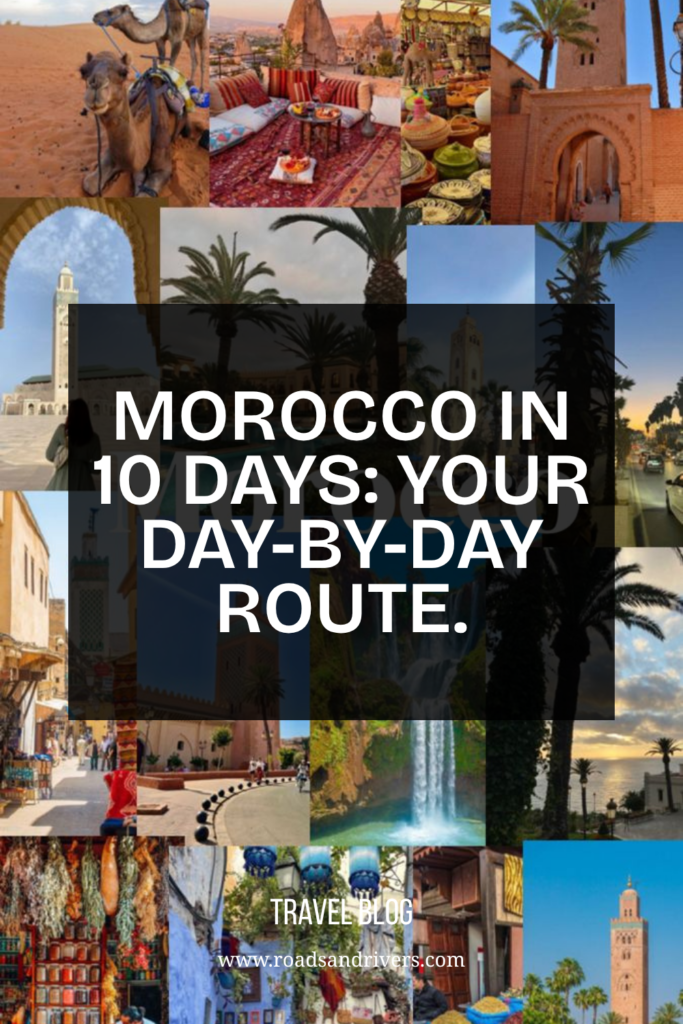
Arrive on Day 1, check into your riad in the medina (book inside the walls — the experience of waking up inside Marrakech’s old city is the point), and spend the afternoon doing nothing useful. Walk without a destination. Get lost. Sit on the edge of Djemaa el-Fna with a glass of fresh orange juice and watch the square fill up as the sun goes down. Food stalls, snake charmers, storytellers, smoke from grills — it is genuinely unlike any other square in the world.
Day 1 evening: Eat on the square or in one of the rooftop restaurants overlooking it. Order what you do not recognize.
Day 2 morning: Bahia Palace and Saadian Tombs before 9 AM, before the tour groups arrive. The tombs were hidden behind a wall for centuries and only rediscovered in 1917. The cedar and marble work inside is extraordinary.
Day 2 afternoon: The souks. The leather souk, the dyers’ souk, the copper souk, the spice market — each one a different district, each one with its own specific character. The souk is navigated best without a “guide” who appears suddenly and insists on showing you around (they head for shops that pay commissions). A good map downloaded offline keeps you oriented.
Day 2 evening: Book a hammam for late afternoon. A traditional hammam — not a tourist spa version, a real one with steam rooms and a kessa (exfoliating mitt) scrub — is one of the best things you can do in Morocco and costs almost nothing at a local establishment.
Pro tip: Every taxi in Marrakech should use the meter or agree to a fixed price before you get in. The medina is largely pedestrian, so most distances inside the walls are walkable.
Day 3: The Atlas Mountains Crossing
Leave Marrakech early — on the road by 8 AM. The Tizi n’Tichka pass (2,260 m) is the highest road pass in North Africa and the drive over it is one of the most scenic you will find anywhere in the region. Berber villages cling to steep hillsides. The landscape shifts from dry scrub to snow-capped rock to the beginning of the pre-Saharan south all within a few hours.
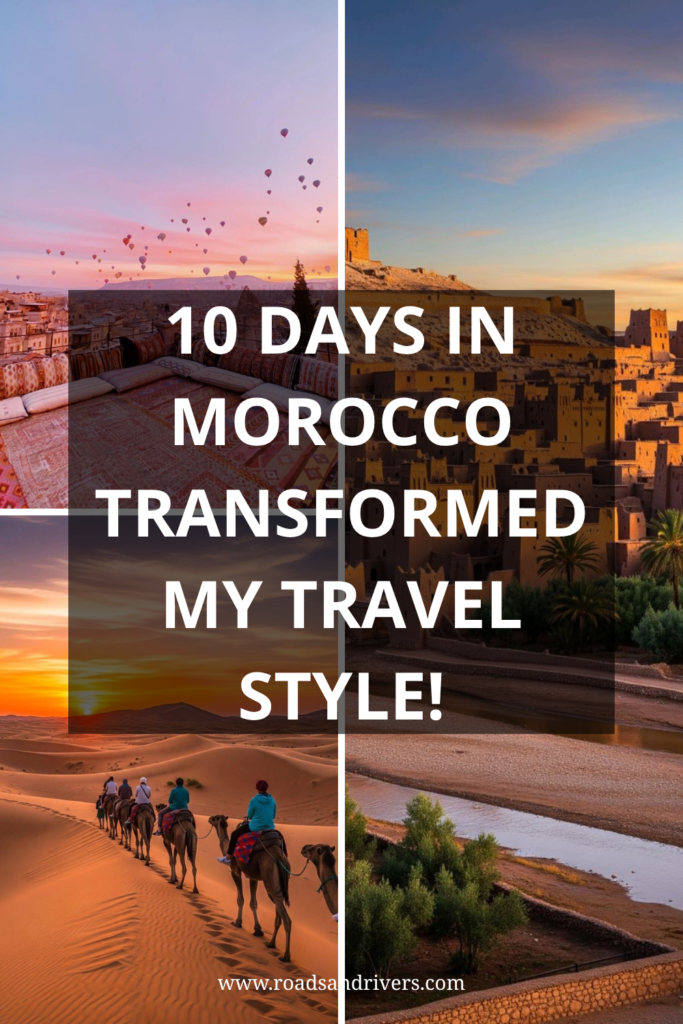
Stop at Ait Benhaddou around midday. This UNESCO-listed ksar sits on a hillside above a seasonal river and has been used as a film set so many times that you will recognize it immediately. Walk to the top of the fortification for views across the surrounding plain. Budget 90 minutes minimum, more if you want to explore the handful of traditional households still occupied inside the walls.
Continue east toward Ouarzazate and then begin the long Draa Valley road to Merzouga. This drive is best done in daylight — the landscape of palmeries and kasbah ruins is worth watching. Arrive at your desert camp accommodation in the late afternoon or early evening.
Days 4–5: The Sahara Desert — Two Nights Minimum
The Erg Chebbi dunes near Merzouga are the photogenic Sahara that Morocco is famous for — rolling orange dunes that rise to 150 meters and shift color from pale gold to deep amber depending on the time of day.
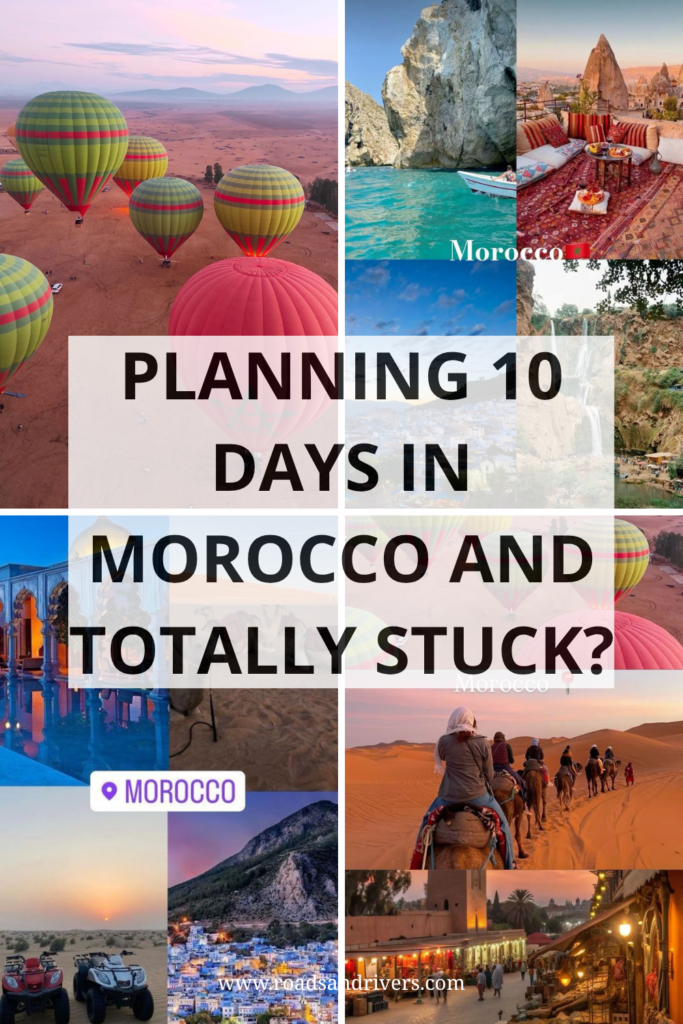
Day 4 afternoon: Check in, drop your bags, and take a camel out to a desert camp before sunset. The camel ride takes about 45–60 minutes and deposits you at a Berber camp with traditional tents, carpets, and lanterns. Dinner under a sky with zero light pollution. Sleep in the desert.
Day 5: Wake before sunrise. The dunes at first light — with the shadows long and the air cold — are completely different from the daytime experience and worth setting an alarm for. Spend the morning exploring the dunes on foot, by camel, or by sandboard. Return to your guesthouse in Merzouga by mid-morning and use the afternoon to rest, eat, or drive out to the smaller satellite dune fields nearby.
Pro tip: Two nights in the desert sounds like a lot until you are there. One night feels rushed. Two nights gives you two sunsets, two sunrises, and the luxury of not watching the clock.
For travelers building Morocco into a longer adventure circuit, Backpacking India on a Budget: How Far Can $20 a Day Go? uses the same slow-travel philosophy and is worth reading if Asia is the next leg.
Day 6: Todra Gorge and the Road North
The drive north from Merzouga passes through some of the most dramatic landscape in Morocco. Stop at Todra Gorge, where sheer rock walls rise 300 meters above a narrow river canyon. The gorge is a popular rock climbing destination and the short walk through the canyon floor takes about 30 minutes. Eat lunch at one of the simple restaurants built into the cliff base.
Continue north through the cedar forests of the Middle Atlas, passing through Azrou (where Barbary macaques live in the roadside trees). Arrive in Fes in the evening.
Days 7–8: Fes — The Deepest Medina in the World
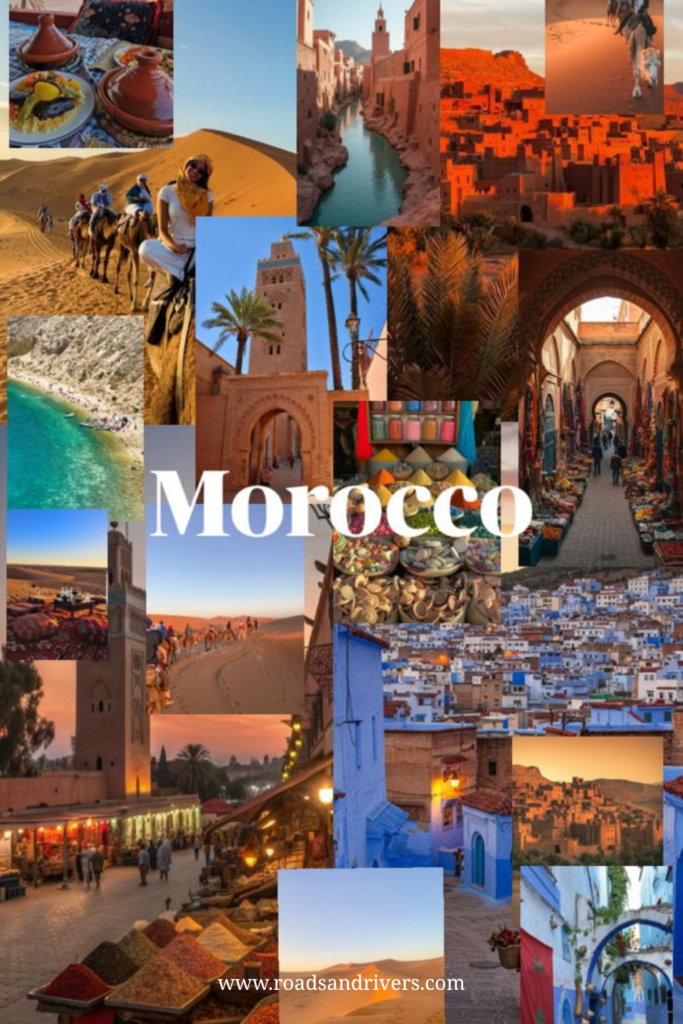
Fes is where Morocco slows you down whether you want it to or not.
Fes el-Bali is the largest car-free urban area in the world. The medina has roughly 9,000 alleyways, some too narrow for two people to pass without turning sideways. Donkeys and mules are still the main cargo transport. The medina has not substantially changed its layout in over a thousand years.
Day 7: Get lost intentionally. Download an offline map, identify a few landmarks, and walk without a strict agenda for the morning. The Bou Inania Madrasa is one of the finest examples of Moroccan Islamic architecture anywhere in the country — its carved stucco, zellige tilework, and cedar screens are breathtaking. Entry is cheap.
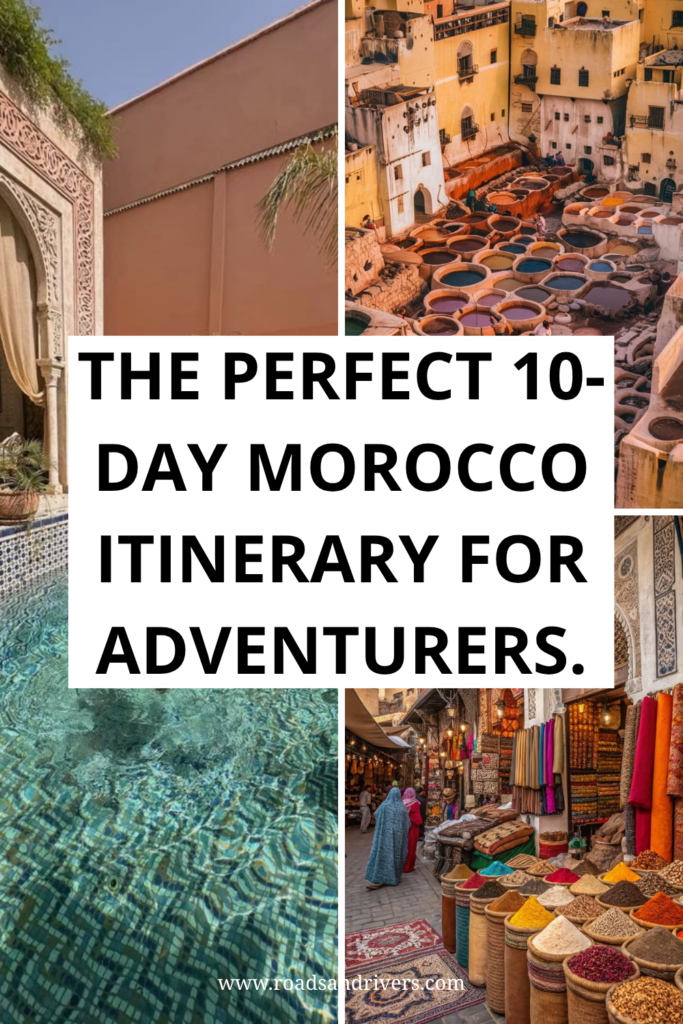
The tanneries are Fes’s most famous sight and genuinely extraordinary. The Chouara tannery is the largest and oldest — viewed from the leather shop balconies surrounding it, the circular dyeing vats in multicolored patterns look exactly like the photographs. The smell is intense (the hides are soaked in pigeon dung as part of the tanning process). The shops provide sprigs of mint.
Day 8: The mellah (Jewish quarter), the Andalusian quarter across the river, and the Merenid tombs on the hill above the city for a panoramic view at sunset. Also: eat as much as possible. Fes is arguably the culinary capital of Morocco. Pastilla (a sweet-savory pigeon pie in flaky pastry), harira (a thick soup of tomatoes and chickpeas), and fresh-made msemen flatbread with argan oil are all better here than anywhere else.
Pro tip: Arrange for your riad host to recommend a guide for the tannery district specifically. This is one area where a local guide adds genuine value — the best tannery viewing spots are not obvious, and navigating the leather souk without one takes more time than it should.
Day 9: Chefchaouen — The Blue City
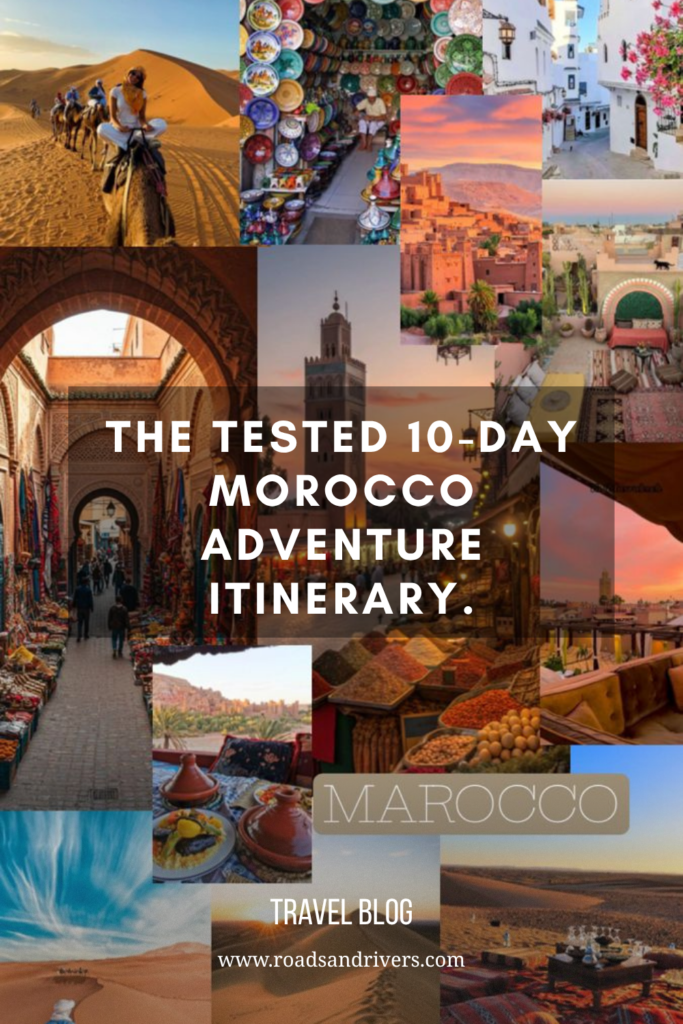
Chefchaouen is about 3 hours by bus or shared taxi from Fes, north through the Rif Mountains. The city is famous for its medina painted in every shade of blue and white — cobalt staircases, turquoise window frames, blue-washed walls rising steeply up the hillside. It looks exactly like the photographs, but quieter and more lived-in than you expect.
Arrive by midday and spend the afternoon walking the medina. The main square, Plaza Uta el-Hammam, has cafes that face the kasbah. The Ras el-Maa waterfall at the medina’s edge is where women do laundry and children swim — a completely ordinary domestic scene in an absurdly picturesque setting.
For photographers: the blue hour in Chefchaouen is literal — the medina walls reflect the light at dusk in a way that makes the whole place glow. Be there with your camera at that hour.
Hikers have the option of climbing up to the Spanish Mosque above the city for a view across the entire medina, the valley below, and the surrounding mountains. The walk takes about 45 minutes.
Day 10: Getting Out
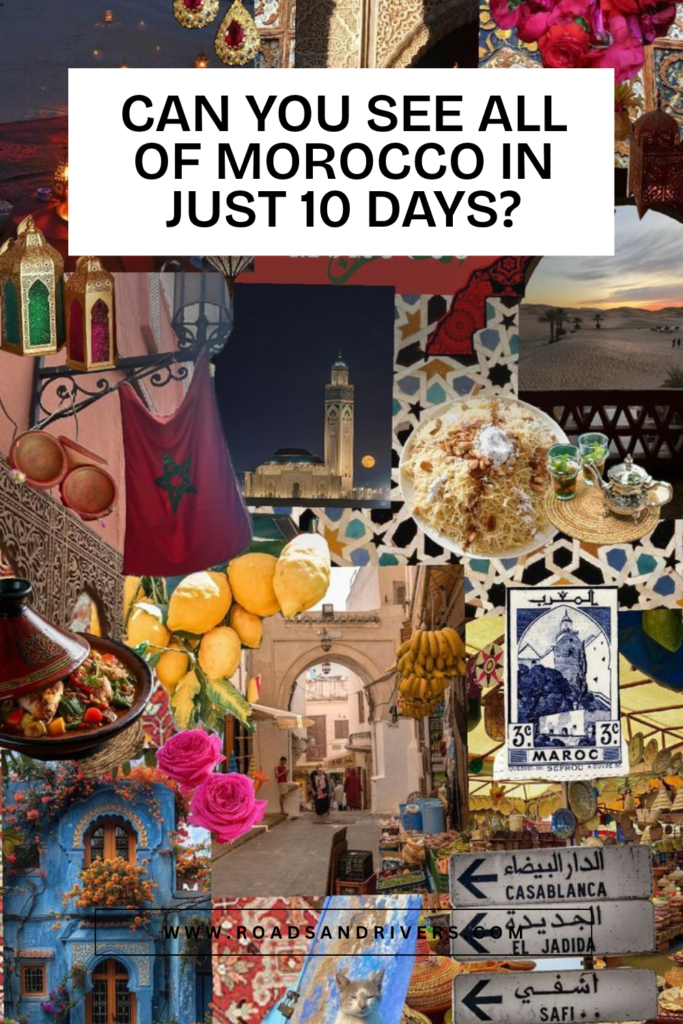
Fly home from Fes (Fes-Saiss Airport), or connect by train to Casablanca for an international departure. If you have a late flight, Casablanca’s Hassan II Mosque — built partially over the Atlantic Ocean and the largest mosque in Africa — is worth the transit stop. The exterior is one of the most impressive religious structures you will see anywhere.
Can You Really See All of Morocco in 10 Days?
No. Morocco is a large and varied country. 10 days covers the classic southern loop well, but it leaves out the Atlantic coast (Essaouira is exceptional), the Souss Valley, the Anti-Atlas mountains, and the entire north beyond Chefchaouen.
What 10 days does cover: the highlights that make Morocco one of the best adventure travel destinations in the world. The medinas, the desert, the mountains, and the blue city. That is not “all of Morocco” — but it is a complete and deeply satisfying trip.
Come back for the rest.
Read more: Morocco sits naturally at the end of a southern Europe trip. The Best Interrail Routes in Europe has routes that end in southern Spain — from Algeciras, the ferry to Tangier takes 35 minutes and Morocco begins immediately on the other side.
If Morocco has you hungry for more North Africa and Middle East travel, Is Egypt Safe for Tourists? What You Actually Need To Know and 3 Days in Istanbul: The Perfect First-Timer’s Guide both sit in a similar travel register — complex, rewarding, and better with good preparation.
Key Takeaways
- The best 10-day Morocco route runs Marrakech → Atlas Mountains → Sahara → Fes → Chefchaouen
- Two nights minimum in the Sahara — one night is not enough
- Fes is non-negotiable; do not swap it for Casablanca
- Ait Benhaddou deserves a proper stop, not a drive-past
- Chefchaouen adds one night and is consistently the trip highlight for travelers who include it
- March–May and September–November are the sweet spots for weather and crowds
- Budget $40–$70 per day mid-range; the Sahara camp leg costs more but is worth every dirham
FAQ
Is 10 days enough for Morocco?
10 days covers Morocco’s most iconic highlights well: Marrakech, the Sahara, the Atlas Mountains, Fes, and Chefchaouen. It does not cover the Atlantic coast, Casablanca beyond one stop, or the far south. For a first trip, 10 days gives you a complete and satisfying experience without feeling rushed.
What is the best time of year to visit Morocco?
March through May and September through November offer the best conditions. Temperatures are comfortable across the country, including in the Sahara where summer heat can exceed 45 degrees Celsius. Spring also brings wildflowers in the Atlas Mountains. December and January are cold in the mountains and desert at night but very pleasant in the cities.
Do I need a visa for Morocco?
Citizens of the EU, US, UK, Canada, Australia, and most other Western countries can enter Morocco visa-free for stays up to 90 days. Always verify current requirements with your own government’s travel advisory before departure.
Is Morocco safe for solo travelers?
Yes, for both men and women. Morocco is one of the more traveler-friendly countries in North Africa and has well-developed tourism infrastructure. Solo female travelers should be prepared for occasional unsolicited attention in medinas, especially in Marrakech and Fes. Traveling with confidence, dressing modestly, and walking purposefully significantly reduces hassle.
How do I get around Morocco on a 10-day itinerary?
The classic approach is train from Marrakech to Casablanca and north to Fes, with a private driver or organized tour for the southern desert loop (Marrakech → Atlas → Sahara → Fes). Private drivers are affordable in Morocco — a full 3-day southern circuit with accommodation stops runs $150–$250 for the car. Grand taxis (shared long-distance taxis) are the budget alternative for most intercity legs.