The first taco I ate in Mexico City cost 12 pesos. That is less than a dollar. It was al pastor, sliced straight off the rotating trompo at a street stall in Roma Norte around 11 PM, and it was better than any Mexican food I had ever eaten anywhere else in the world. The salsa was searingly hot, the pineapple was fresh, and the tortilla had been pressed and griddled seconds before it landed in my hand.
That moment set the tone for everything that followed. Mexico City (or CDMX, as locals call it) is not a place that reveals itself slowly. It hits you immediately: the colour, the noise, the food, the scale. This Mexico City travel guide covers how to navigate it all without feeling overwhelmed, where to eat like the locals do, which neighbourhoods are actually worth your time, and what to skip so you do not waste a single day in one of the most exciting cities on the planet.
Table of Contents
- Why Mexico City Is the 2026 Trip Everyone Recommends
- Mexico City in 4 Days: Eat, See, Explore
- The Neighbourhoods That Define Mexico City
- Roma Norte or Coyoacan: Where Should You Stay?
- What Mexico City Street Food Do Locals Actually Eat?
- 5 Mexico City Tourist Traps That Waste Your Time
- The Insider’s Mexico City Food and Culture Guide
- Day Trips Worth Leaving CDMX For
- Budget Breakdown: What Does Mexico City Actually Cost?
- FAQ
Why Mexico City Is the 2026 Trip Everyone Recommends

Mexico City has been building momentum as a travel destination for years, but 2026 feels like the tipping point. The combination of world-class food at street-level prices, a booming arts and design scene, direct flights from most North American and European cities, and a cost of living that makes it wildly accessible compared to comparable capitals like Tokyo or Paris has turned CDMX into the city that everyone who has been there tells everyone else to visit next.
The numbers support the hype. The city has over 150 museums (more than any other city in the Americas), a food scene that ranges from 12-peso street tacos to multi-course tasting menus at some of the highest-rated restaurants on the continent, and a network of neighbourhoods so distinct from each other that moving between them feels like visiting different cities.
It is also a city that works well for every type of traveller. Solo travellers find it walkable, safe in the right areas, and socially easy. Couples find it romantic. Food obsessives find it life-changing. Budget travellers find it absurdly affordable. And anyone who cares about culture and history finds more than they can possibly absorb in a single trip.
Pro tip: The best months to visit Mexico City are February through May. The jacaranda trees bloom in March and cover the city in purple. The rainy season starts in June and runs through October, bringing heavy afternoon downpours (mornings are usually clear).
Mexico City in 4 Days: Eat, See, Explore
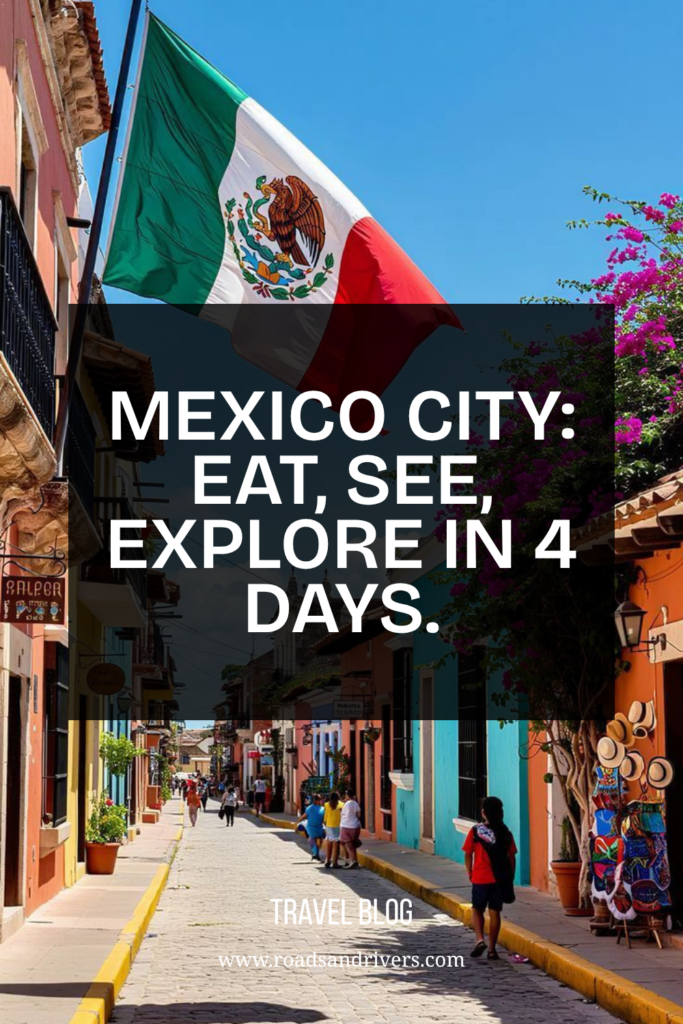
Four days is the sweet spot for a first visit. It is enough to cover the main neighbourhoods, eat widely, and fit in one day trip without the trip feeling rushed or incomplete.
Day 1: Centro Historico and the Zocalo
Start where the city started. The Zocalo (main plaza) is one of the largest public squares in the world and it anchors the historic centre. Spend the morning at the Templo Mayor ruins (Aztec foundations literally visible beneath the Spanish colonial buildings), then walk through the Palacio Nacional to see the Diego Rivera murals.
Lunch at a traditional fonda (family restaurant) in the streets around the Zocalo. Order a comida corrida (set lunch menu) for 80-120 pesos, which includes soup, a main course, drink, and often dessert. This is how locals eat midday and it is one of the best-value meals in any major city.
Afternoon: walk to Palacio de Bellas Artes for the architecture and murals, then up Calle Madero (the main pedestrian street) to the Torre Latinoamericana for sunset views over the entire valley.
Day 2: Roma Norte, Condesa, and Chapultepec
This is your neighbourhood exploration day. Roma Norte and Condesa are the two areas most associated with the Mexico City aesthetic: tree-lined avenues, Art Deco apartment buildings, independent coffee shops, and some of the best restaurants in the city.
Walk from Roma Norte through Condesa to Chapultepec Park, the largest urban park in the Americas. Inside the park, the Museo Nacional de Antropologia is the single best museum in Mexico and one of the best in the world. Give it at least 2-3 hours.
Day 3: Coyoacan and Xochimilco
Take the Metro south to Coyoacan, one of the oldest neighbourhoods in the city and the former home of Frida Kahlo. The Frida Kahlo Museum (Casa Azul) is the main draw, but the real pleasure of Coyoacan is the mercado, the cobblestone streets, and the village-like pace that contrasts sharply with the rest of CDMX.
Afternoon: head to Xochimilco for the trajineras (colourful flat-bottomed boats) on the ancient canal system. This is touristy, yes, but the floating market vendors selling food and drinks from boat to boat make it a genuinely fun afternoon.
Day 4: Teotihuacan or San Angel
Use your final day for a day trip to Teotihuacan (the pre-Aztec pyramid complex 50 km outside the city) or a slower morning in San Angel, an upscale neighbourhood known for its Saturday Bazaar and colonial architecture. Teotihuacan requires an early start but it is worth the effort.
The Neighbourhoods That Define Mexico City
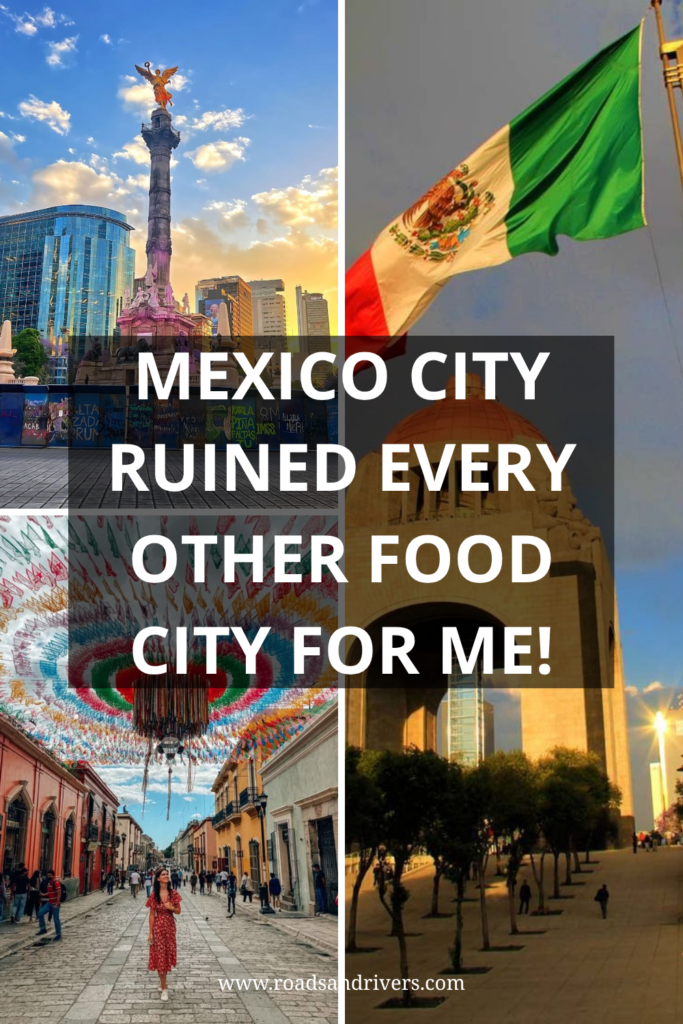
Mexico City is a city of colonias (neighbourhoods), and the one you stay in will shape your entire experience. These are the ones that matter for visitors.
Roma Norte
This is the neighbourhood that most first-time visitors fall for. The streets are wide, the trees are mature, and almost every block has a cafe, a mezcal bar, or a restaurant worth stopping for. Roma Norte is walkable, safe, and has the highest concentration of interesting dining options in the city. It is also the neighbourhood featured most in the Mexico City aesthetic that has taken over social media: Art Deco facades, colourful doorways, and jacaranda canopies.
Condesa
Adjacent to Roma Norte and similar in character but slightly quieter and more residential. Parque Mexico and Parque España are the centres of gravity. Dog owners, runners, and people reading on benches give Condesa a relaxed pace that Roma Norte does not always have. The restaurant scene here is excellent but less concentrated.
Coyoacan
The furthest south on the tourist circuit and the most distinct. Coyoacan feels like a small town folded into a megacity. The market, the church plazas, and the Frida Kahlo connection give it a very specific atmosphere. It is worth half a day minimum.
Centro Historico
The oldest part of the city and the densest. This is where the colonial architecture, the major museums, the Zocalo, and the street life are most intense. It is noisier and more chaotic than Roma or Condesa but that is part of what makes it rewarding. Stay here if you want immersion.
Read more: South America Travel Destinations You Will Love if you are thinking about combining Mexico City with a broader Latin American trip.
Roma Norte or Coyoacan: Where Should You Stay in Mexico City?
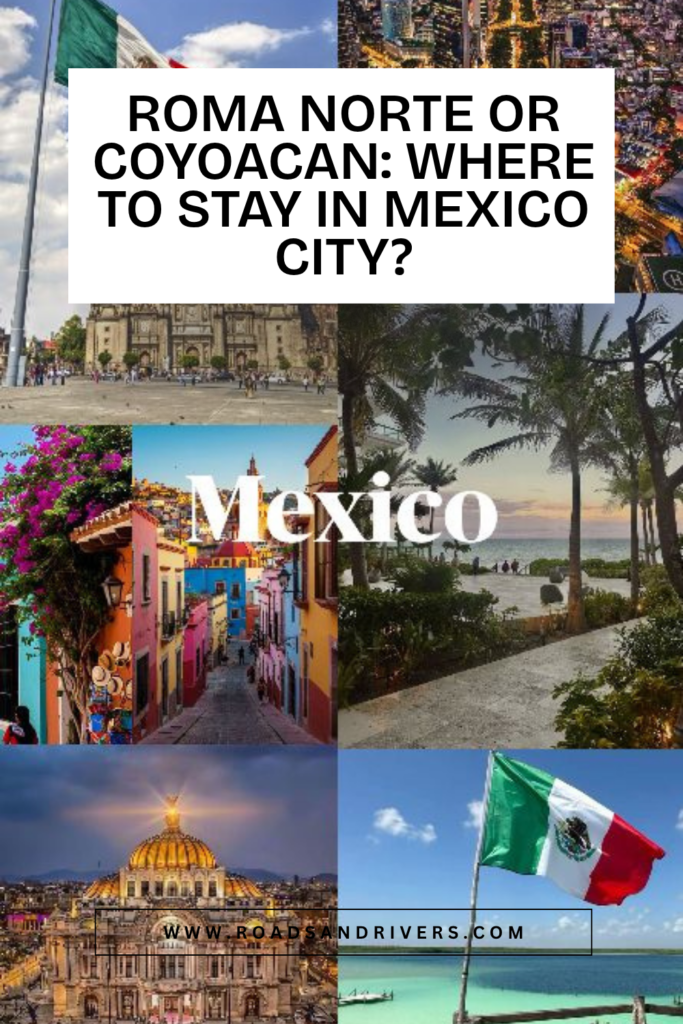
This is the accommodation question that shapes every Mexico City trip. The short answer: Roma Norte is the best base for first-timers. The longer answer depends on what kind of trip you want.
Choose Roma Norte if: you want to walk to restaurants and bars without using Uber, you are a solo traveller who wants an easy social scene, you prefer a neighbourhood that is lively at night, or you are visiting for 4-5 days and want a central base for exploring multiple areas.
Choose Condesa if: you want Roma Norte’s convenience but with slightly less noise, you enjoy parks and quieter mornings, or you are travelling as a couple.
Choose Coyoacan if: you are returning to Mexico City and want something different, you prefer a slower pace, or you are visiting specifically for the Frida Kahlo Museum and want to be nearby.
Choose Centro Historico if: you are on a tight budget (hostels and budget hotels are cheapest here), you want to be near the major museums, or you do not mind trading polish for intensity.
For most first-time visitors, Roma Norte between Avenida Insurgentes and Avenida Cuauhtemoc is the ideal zone. You are within walking distance of Condesa, a short Metro or Uber ride from Centro and Coyoacan, and surrounded by food options at every price point.
Pro tip: Avoid staying north of Reforma in Roma Norte. The area changes character quickly. South of Alvaro Obregon and between Insurgentes and Cuauhtemoc is the sweet spot.
What Mexico City Street Food Do Locals Actually Eat?
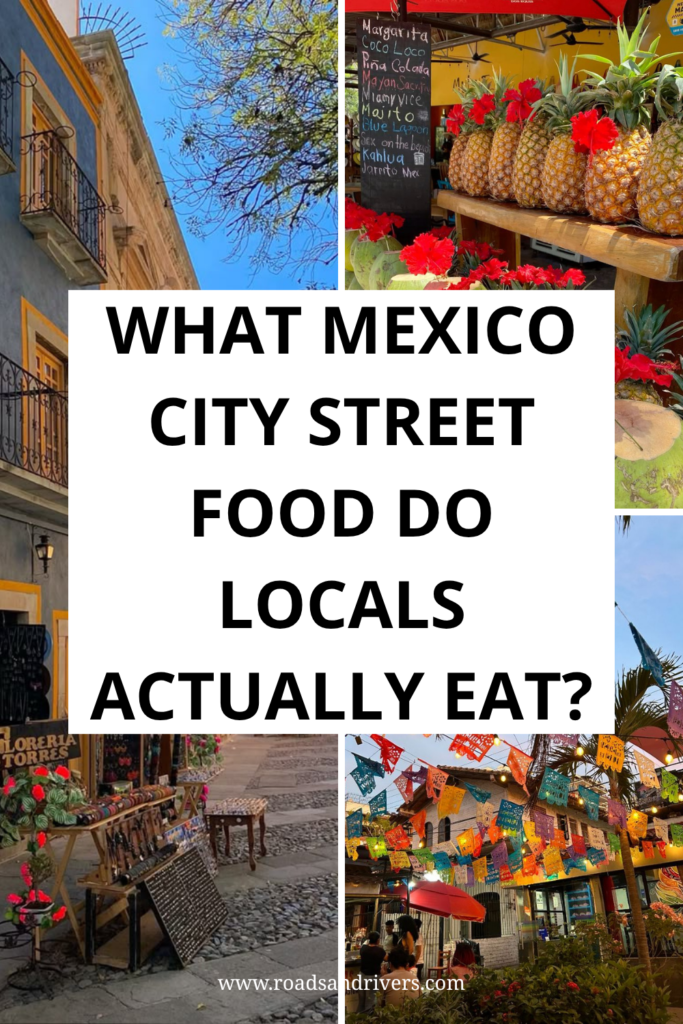
The street food in Mexico City ruined every other food city for me. That is not an exaggeration. Once you have eaten a 15-peso taco from a stall that has been operating in the same spot for 30 years, it is hard to get excited about a $14 taco in New York or London.
Here is what locals actually eat day to day, beyond the obvious tacos:
Tamales and atole for breakfast. Tamales vendors set up outside Metro stations starting at 6 AM. A tamal wrapped in corn husk, paired with a cup of atole (thick corn-based hot drink), costs around 30-40 pesos total. It is the working-class breakfast of the city and it is excellent.
Tortas (sandwiches) for lunch. Not the sad sandwiches you are imagining. A torta from a good stand is loaded with milanesa (breaded meat), avocado, beans, onion, and salsa, pressed on a telera roll until the outside is crispy and the inside is soft. Torta stands are everywhere and a full torta runs 50-80 pesos.
Tlacoyos in the mercados. These are thick oval-shaped corn cakes stuffed with beans or cheese, topped with nopales (cactus), salsa, and crumbled cheese. They are most common in markets like Mercado de la Merced and Mercado de Jamaica. Most tourists walk past them. Do not.
Esquites and elotes in the evening. Corn is the backbone of Mexican cooking. Esquites (corn kernels in a cup with mayo, chili, lime, and cheese) and elotes (whole grilled corn with the same toppings) show up on carts around 5 PM across the city. 20-30 pesos.
Tacos al pastor at night. The rotating spit (trompo) appears outside taco stalls after dark. Al pastor is pork marinated in achiote and dried chilies, slow-cooked on the vertical spit, and sliced to order. A good taquero will flick a slice of pineapple from the top of the spit onto your taco in one motion. Three tacos for 45-60 pesos.
Pro tip: The busier the stall, the fresher the food and the safer it is. Locals know where to eat. Follow the line.
5 Mexico City Tourist Traps That Waste Your Time
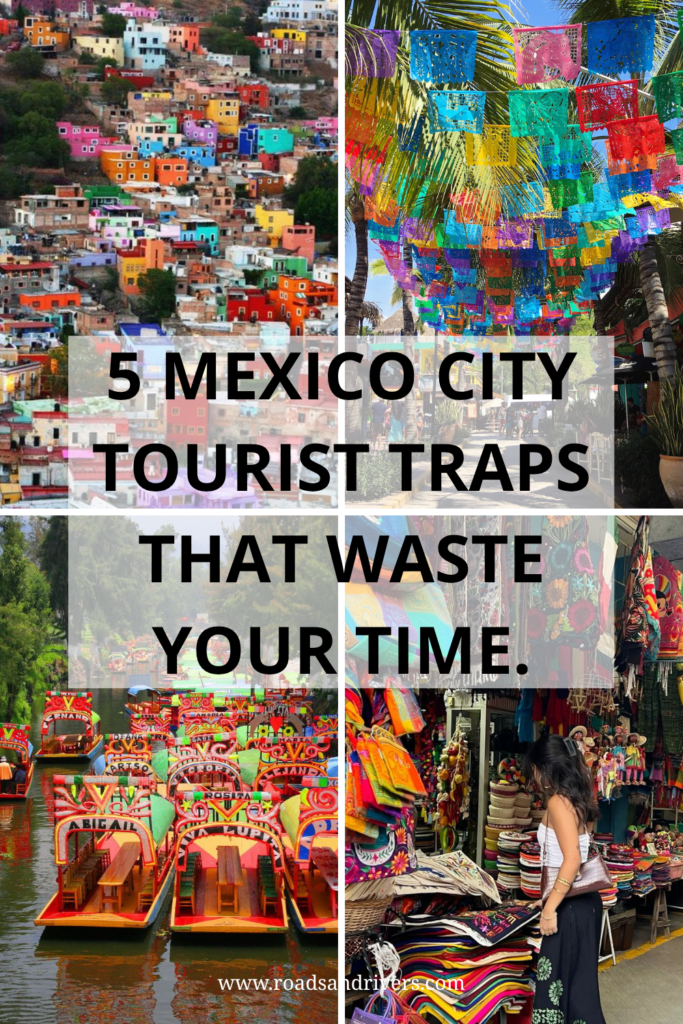
Not everything in Mexico City is worth the queue or the pesos. These five attract huge numbers of tourists and consistently disappoint.
1. Xochimilco on a Saturday afternoon. The canals are worth visiting, but Saturday is when tour groups and party boats clog the waterways. Go on a Tuesday or Wednesday morning instead. Same boats, same views, one-tenth of the crowds, and the vendors are more relaxed.
2. Overpriced rooftop bars in Polanco. Polanco is the upscale neighbourhood, and its rooftop bars charge Mexico City’s highest prices for drinks that are average by international standards. The views are fine but you can get better views for free from the terrace of the Sears building on Calle Madero.
3. Guided “food tours” in Roma Norte. Most of the restaurants and stalls that food tours take you to are already on Google Maps with hundreds of reviews. Save the 800-1200 peso tour fee and eat your way through the neighbourhood yourself. You will find better food by following your instincts (and the crowds) than by following a guide.
4. The Soumaya Museum gift shop experience. The museum itself (Carlos Slim’s private art collection in a striking silver building in Polanco) is free and worth visiting. But many visitors spend more time in the gift shop than in front of the art. Give the museum two full hours and skip the merchandise.
5. Teotihuacan with a midday tour bus. The pyramids are magnificent but arriving at 11 AM with a bus full of tourists, in peak heat, with a rushed schedule, is the worst way to experience them. Take a public bus from Terminal Norte (60 pesos each way) and arrive at opening time instead. You will have the Avenue of the Dead nearly to yourself at 8 AM.
The Insider’s Mexico City Food and Culture Guide
The intersection of food and culture in Mexico City is not a metaphor. The two are literally inseparable. The corn tortilla you are eating was made the same way it was made 3,000 years ago. The mole on your plate might contain 30 ingredients prepared over two days. Mexican cuisine was recognised by UNESCO as an Intangible Cultural Heritage of Humanity, and spending time eating in Mexico City is spending time inside that living tradition.
The Markets You Should Not Miss
Mercado de San Juan in Centro is the market serious food people visit. It has imported cheeses, exotic meats, and high-quality produce that supply many of CDMX’s best restaurants. Walk through slowly and eat as you go.
Mercado de la Merced is enormous (the largest traditional market in the Americas) and overwhelming in the best way. This is where you see the full range of Mexican produce, chilis, mole pastes, fresh herbs, and prepared foods that supply the city.
Mercado de Coyoacan is smaller and more tourist-friendly but still excellent for tostadas, fresh juices, and people-watching.
The Restaurant Tiers
Mexico City dining operates on three levels, and all three are worth experiencing:
Street stalls and fondas (15-120 pesos per meal) are where the city actually eats. This is the level that ruins you for other food cities.
Mid-range restaurants (200-500 pesos per person) in Roma Norte, Condesa, and Juarez offer creative Mexican and international cooking at prices that feel startlingly low compared to similar quality in European or North American cities.
Fine dining (1,500-3,000 pesos per person for tasting menus) includes restaurants that regularly appear on international best-of lists. The tasting menu culture in CDMX is world-class and significantly more affordable than comparable experiences in Tokyo, Copenhagen, or New York.
If you are planning a broader trip that includes food-focused cities, the Seoul travel guide covers another city where street food and fine dining coexist at this level.
Day Trips Worth Leaving CDMX For
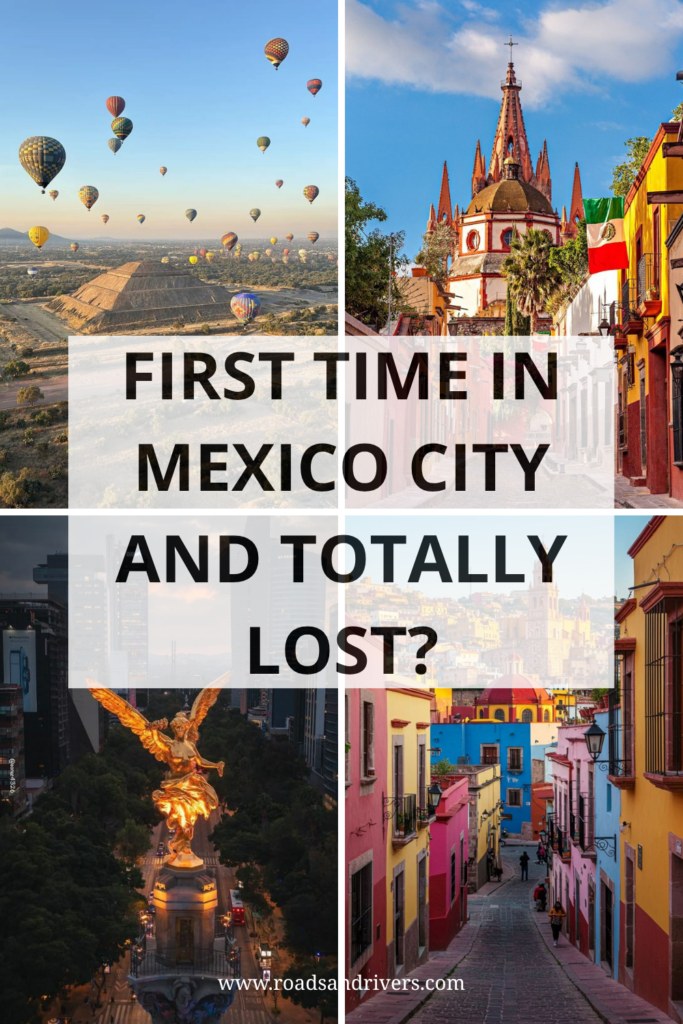
Mexico City is surrounded by destinations that make excellent day or overnight trips. Two in particular are worth prioritising.
Teotihuacan
The ancient city of Teotihuacan sits about 50 km northeast of CDMX and contains the Pyramid of the Sun (the third-largest pyramid in the world), the Pyramid of the Moon, and the Avenue of the Dead. The site dates to roughly 100 BCE and at its peak was one of the largest cities in the world. Get there for opening at 8 AM, bring water and sunscreen, and give yourself at least 3-4 hours to walk the full complex.
San Miguel de Allende
A 3.5-hour bus ride from Mexico City (ADO or ETN bus from Terminal Norte), San Miguel de Allende is a colonial-era town with cobblestone streets, baroque churches, and some of the most photographed streetscapes in Mexico. It is popular with expats and artists and has a food scene that punches well above its size. An overnight trip is ideal. This is the colourful, photogenic Mexico that fills Pinterest boards.
Read more: Brazil Travel Guide: Best Places To Visit Beyond Rio for another Latin American destination that rewards travellers who look past the obvious.
Budget Breakdown: What Does Mexico City Actually Cost?
One of the reasons Mexico City works so well as a travel destination is cost. You can eat extremely well, stay in comfortable accommodation, and move around the city easily without spending what you would in most major capitals.
Here is a realistic daily breakdown for three types of traveller:
Budget traveller (under $40 USD/day): Hostel dorm (200-350 pesos/night), street food and fondas for all meals (150-250 pesos/day), Metro and Metrobus for transport (5-7 pesos per ride), free museums on Sundays. Total: roughly 500-700 pesos ($30-40 USD) per day.
Mid-range traveller ($60-100 USD/day): Private Airbnb or boutique hotel (800-1500 pesos/night), mix of street food and sit-down restaurants (400-700 pesos/day), occasional Uber rides (50-150 pesos per ride), 1-2 paid activities (100-300 pesos). Total: roughly 1,300-2,500 pesos ($70-130 USD) per day.
Comfortable traveller ($120-180 USD/day): Nice hotel in Roma Norte or Condesa (2,000-3,500 pesos/night), restaurants for most meals (800-1,500 pesos/day), Uber everywhere, guided tours or fine dining. Total: roughly 3,000-5,500 pesos ($160-290 USD) per day.
The city is especially good value for solo travellers. Eating alone at street stalls and fondas carries no social friction in Mexico City. Everyone does it. If you are considering a solo trip, the guide to planning your first solo trip covers the planning side of travelling alone for the first time.
Pro tip: Get a Mexican bank account or use a Wise card to avoid foreign transaction fees. ATMs inside banks (not standalone ones on the street) have the best exchange rates. Never exchange money at the airport.
Key Takeaways
- Mexico City rewards 4-5 days minimum. That gives you enough time to cover the main neighbourhoods, eat widely, and take one day trip.
- Roma Norte is the best base for first-time visitors. It is walkable, central, safe, and surrounded by excellent food at every price point.
- Street food is the heart of the city’s food culture. Follow the locals, eat at busy stalls, and do not overpay for guided food tours.
- Avoid Xochimilco on weekends, midday Teotihuacan tours, and overpriced Polanco rooftop bars. The better alternatives cost less and deliver more.
- The budget math works in your favour. You can eat three meals, travel across the city, and sleep comfortably for under $80 USD per day.
Mexico City is one of those places that changes what you expect from a city. The food is better than it has any right to be at those prices. The art and architecture span 3,000 years without ever feeling like a history lesson. And the energy of a city of 22 million people going about their lives is something you feel in your chest, not just in your head.
Book the flight. Start in Roma Norte. Let the city take it from there.
What is your favourite neighbourhood or street food stall in CDMX? Drop it in the comments. And if you are still planning, the Germany travel guide covers another city-hopping food destination with a similar neighbourhood-by-neighbourhood approach.
FAQ
Is Mexico City safe for tourists?
Mexico City is safe for tourists in the main visitor areas (Roma Norte, Condesa, Coyoacan, Centro Historico, Polanco). Use the same common sense you would in any large city: avoid flashing expensive items, use Uber or registered taxis at night, and stay aware of your surroundings in crowded markets. The Metro is safe during the day but can get very crowded during rush hour.
How many days do you need in Mexico City?
Four to five days is the ideal first visit. That gives you time to cover the main neighbourhoods (Roma Norte, Condesa, Coyoacan, Centro Historico), eat at a wide range of places, visit the top museums, and take one day trip to Teotihuacan or San Miguel de Allende. You could spend a week easily, but four days covers the highlights without rushing.
What is the best neighbourhood to stay in Mexico City?
Roma Norte is the best neighbourhood for first-time visitors. It is central, walkable, safe, and has the highest density of restaurants, cafes, and bars in the city. Condesa is a quieter alternative with a similar feel. Coyoacan is best for returning visitors or anyone who prefers a village-like pace over urban energy.
What street food should you try first in Mexico City?
Start with tacos al pastor from any busy street stall (look for the rotating trompo), then work through tamales for breakfast, a torta for lunch, and esquites (corn in a cup) for an afternoon snack. The mercados (particularly Mercado de San Juan and Mercado de Coyoacan) are the best places to try a wide range of dishes in one visit.
What is the best time to visit Mexico City?
February through May offers the best weather: warm days, cool evenings, and no rain. March is especially beautiful when the jacaranda trees bloom citywide. The rainy season (June through October) brings heavy afternoon showers but mornings are usually clear. November and December are pleasant and coincide with Day of the Dead celebrations (late October to early November) if you time it right.