You have two weeks off, a passport that’s finally valid, and one big problem: Italy has too many incredible places and not enough vacation days. Choosing the right Italian destinations for your trip is the single most important decision you’ll make during the planning process. Get it right, and you’ll come home with the kind of memories that ruin every future vacation (in the best way). Get it wrong, and you’ll spend half your trip on trains, exhausted and wondering why you tried to squeeze five cities into seven days.
Italy is not a country you can “do” in one trip. It’s a collection of wildly different regions, each with its own food, dialect, landscape, and pace of life. The Amalfi Coast feels nothing like the Dolomites. Rome and Bologna might as well be on different planets. And that’s exactly what makes picking the right destinations so tricky.
This guide breaks down exactly how to choose where to go in Italy based on your time, travel style, and what actually matters to you. No generic lists. No filler. Just a clear framework to help you build an Italian itinerary you won’t regret.
Table of Contents
- Why Most Travelers Pick the Wrong Italian Destinations
- How Many Italian Destinations Can You Actually Fit In?
- The Italian Destinations That Ruin Every Other Trip
- 3 Overhyped Italian Destinations You Might Want to Skip
- What Italian Destinations Do Locals Actually Visit?
- The Italian Destination Everyone Is Booking for 2026
- How to Match Italian Destinations to Your Travel Style
- What to Pack for Your Italian Destination (Style Meets Comfort)
- Key Takeaways
- FAQ
Quick-Reference Info Box
Best time to visit Italy: April to June and September to October (fewer crowds, pleasant weather)
Average daily budget: €100 to €180 per person (mid-range)
Getting there: Major international airports in Rome (FCO), Milan (MXP), Venice (VCE), Naples (NAP)
Days needed: 7 to 14 days minimum for a well-paced trip
Why Most Travelers Pick the Wrong Italian Destinations
The biggest mistake first-time visitors make is treating Italy like a checklist. Rome, Florence, Venice, the Amalfi Coast, Cinque Terre, all crammed into 10 days. It sounds amazing on paper. In reality, it means waking up at 5 AM for trains, dragging luggage through cobblestone streets, and spending more time in transit than actually experiencing anything.
Here’s a better approach: pick two to three regions and commit to them. If you have a week, choose one area and go deep. If you have 10 to 14 days, you can comfortably cover two or three bases and use day trips to explore nearby towns.
Pro tip: Stay in each base city for at least three nights. This gives you a full day to explore without the stress of packing and moving. Day trips are almost always easier (and cheaper) than switching hotels every other night.
The travelers who have the best experiences in Italy are the ones who slow down. They sit in a piazza for two hours with an Aperol spritz. They wander a neighborhood without Google Maps. They eat lunch at a trattoria where nobody speaks English. That only happens when you stop trying to see everything.
How Many Italian Destinations Can You Actually Fit In?
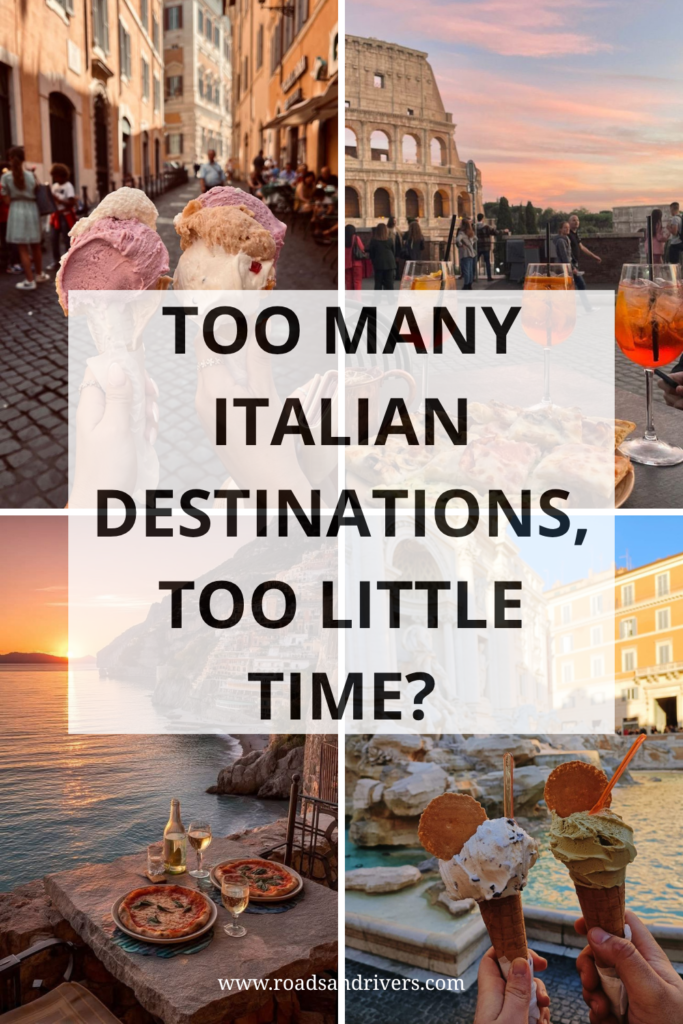
This is the question that trips up everyone. And the answer is simpler than most travel blogs make it:
For a 3 to 5 day trip, pick one city or region. Rome alone can fill five days without breaking a sweat. So can the Amalfi Coast, Florence with Tuscan day trips, or the Italian Lakes.
For a 7 to 10 day trip, choose two to three destinations in either the north or south. Don’t try to cover both ends of the country unless you want to spend an entire day on a train. A classic northern route: Venice, Lake Como, and Milan. A solid southern loop: Rome, Naples (with a Pompeii day trip), and the Amalfi Coast.
For a two-week trip, you can realistically cover three to four destinations and bridge the north-south divide. Rome to Florence to Venice is the classic first-timer route, and it works because the train connections between them are fast and frequent.
Pro tip: When mapping your route, visit cities in order along the rail line. Zigzagging across the country wastes precious hours. Book fast trains (Frecciarossa or Italo) between major cities, and regional trains for shorter hops.
The real secret is to stop thinking of Italian destinations as individual pins on a map. Think of them as regions. Stay in Florence and you’re a day trip from Siena, Pisa, and Bologna. Stay in Sorrento and the entire Amalfi Coast opens up. One smart base eliminates three hotel changes.
The Italian Destinations That Ruin Every Other Trip
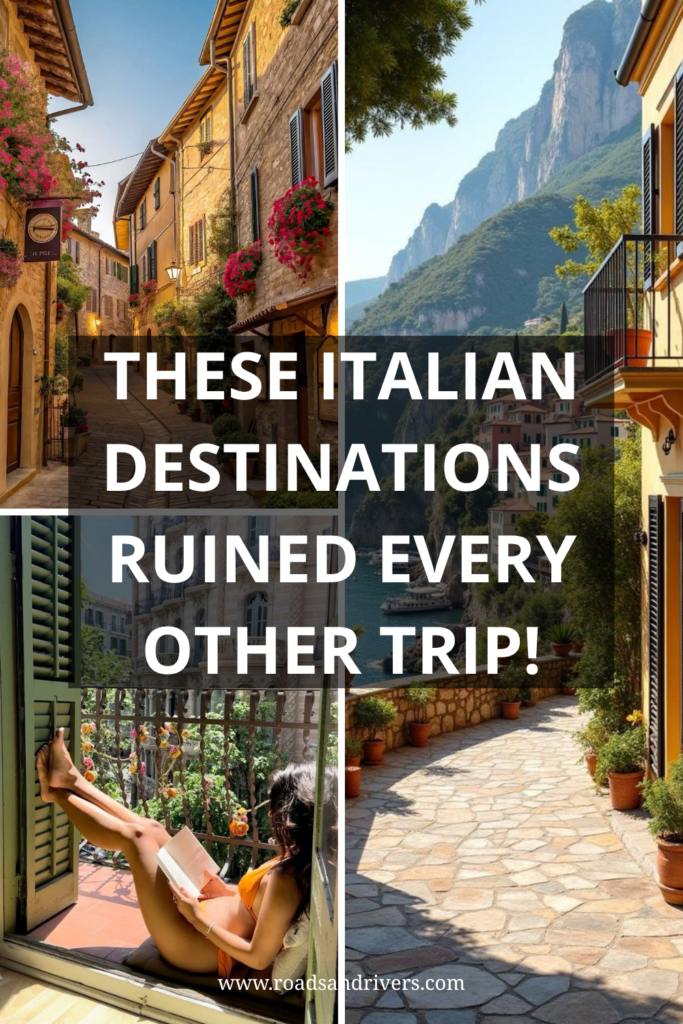
Some places in Italy are so good that they permanently raise your standards. You’ll visit them once and then spend the rest of your travel life comparing everything else to that one perfect afternoon in a hilltop village.
The Amalfi Coast does this to people. There’s something about those pastel buildings clinging to cliffs above turquoise water that rewires your brain. Positano gets the most attention, but the smaller towns along the coast (Ravello, Atrani, Praiano) are where the magic really lives. Fewer crowds, lower prices, and the same jaw-dropping views.
Tuscany’s hill towns have the same effect. San Gimignano’s medieval towers, the rolling vineyards outside Montepulciano, the quiet piazzas of Cortona. These are the Italian destinations that make you question why you’d ever vacation anywhere else.
And then there’s the Italian Lakes. Como gets the celebrity attention, but Lake Garda and Lake Maggiore are just as beautiful and significantly less crowded. Imagine waking up to mountains reflected in glassy water, eating fresh pasta on a lakeside terrace, and having nowhere you need to be. That’s the Italian Lakes experience.
Pro tip: If the Amalfi Coast is on your list, visit in May or late September. Summer crowds (especially July and August) can turn the winding coastal roads into a parking lot, and restaurant prices spike dramatically.
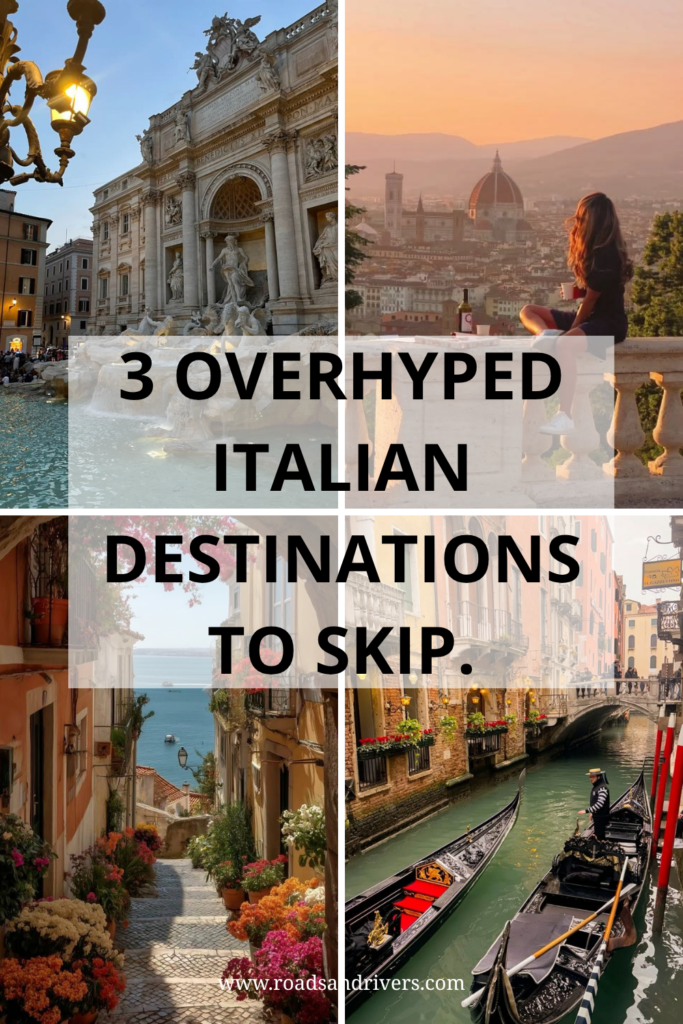
3 Overhyped Italian Destinations You Might Want to Skip
This is the part where I’ll get some angry emails. But honest travel advice means telling you what a place is actually like, not just what it looks like on Instagram.
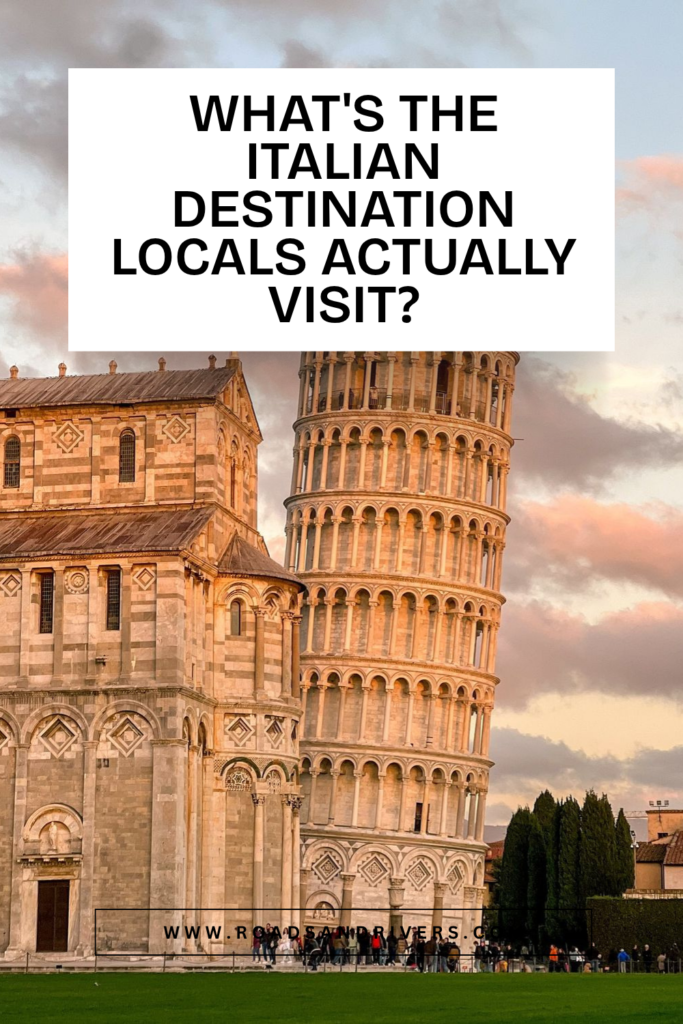
Is the Leaning Tower of Pisa Worth a Full Day?
Short answer: no. The tower is impressive for about 15 minutes, and the rest of the Piazza dei Miracoli area doesn’t take long to see. Travelers consistently report that Pisa feels like a tourist trap surrounded by overpriced souvenir shops. If you’re based in Florence, it makes a fine two-hour stop on the way to somewhere else. But dedicating an entire day to Pisa? Skip it.
Venice: Magical or Overcrowded?
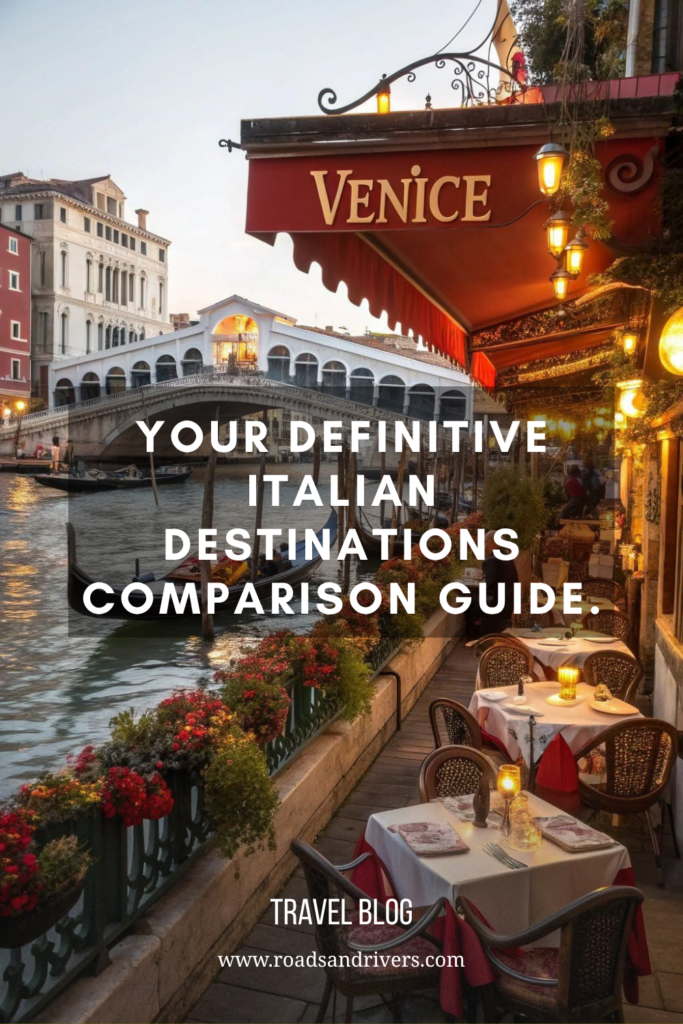
Venice is one of those Italian destinations that divides travelers sharply. The canals, the architecture, the gondolas: it’s all real and genuinely beautiful. But the crowds are also real. During peak season, the narrow streets and bridges around St. Mark’s Square become a slow-moving wall of tour groups and selfie sticks. Venice is worth visiting, but go in the shoulder season (late October or early March), stay overnight after the day-trippers leave, and wander the quieter neighborhoods like Dorsoduro and Cannaregio.
The Cinque Terre Crowd Problem
The five colorful villages perched on the Ligurian coast are genuinely gorgeous. But the word is out. During summer months, trails between villages can feel like rush hour, and the tiny streets overflow with tourists. If you want the Cinque Terre experience without the chaos, try Portovenere (just south) or the Cilento Coast in southern Italy, where locals head for crystalline water and hidden grottos without the crowds.
Pro tip: “Overhyped” doesn’t mean “bad.” It means you need to set realistic expectations and plan around the crowds. Venice at dawn is a completely different city than Venice at noon.
What Italian Destinations Do Locals Actually Visit?
When Italians plan their own vacations, they rarely head to the same places tourists flock to. Their picks tend to be less crowded, more affordable, and focused on food and relaxation over sightseeing.
Puglia is having a major moment. The heel of Italy’s boot has incredible beaches, whitewashed towns like Ostuni and Alberobello (with its bizarre and beautiful trulli houses), and some of the best food in the country. Burrata, orecchiette, focaccia: Puglia is where these classics taste the way they’re supposed to taste. It’s quickly becoming one of the most sought-after Italian destinations for 2026, with over 16 million Instagram posts showcasing its turquoise coastline.
Umbria is Tuscany’s quieter, more affordable neighbor. The hilltop town of Orvieto, the medieval streets of Perugia, and the rolling green countryside offer everything you love about Tuscany without the tour bus crowds.
Bologna rarely appears on first-timer itineraries, and that’s a shame. It’s widely considered the culinary capital of Italy, home to the oldest university in the Western world, and it has a vibrant, youthful energy that bigger cities can’t match.
Sardinia is where Italians go for beach vacations. The island’s coastline rivals anything in the Caribbean, with crystal-clear water and white sand. Costa Smeralda is the luxury end, but the southern beaches near Villasimius are just as beautiful and far more budget-friendly.
Pro tip: If you want to eat like a local in any Italian city, walk at least three blocks away from any major landmark before choosing a restaurant. The quality goes up and the prices go down.
The Italian Destination Everyone Is Booking for 2026
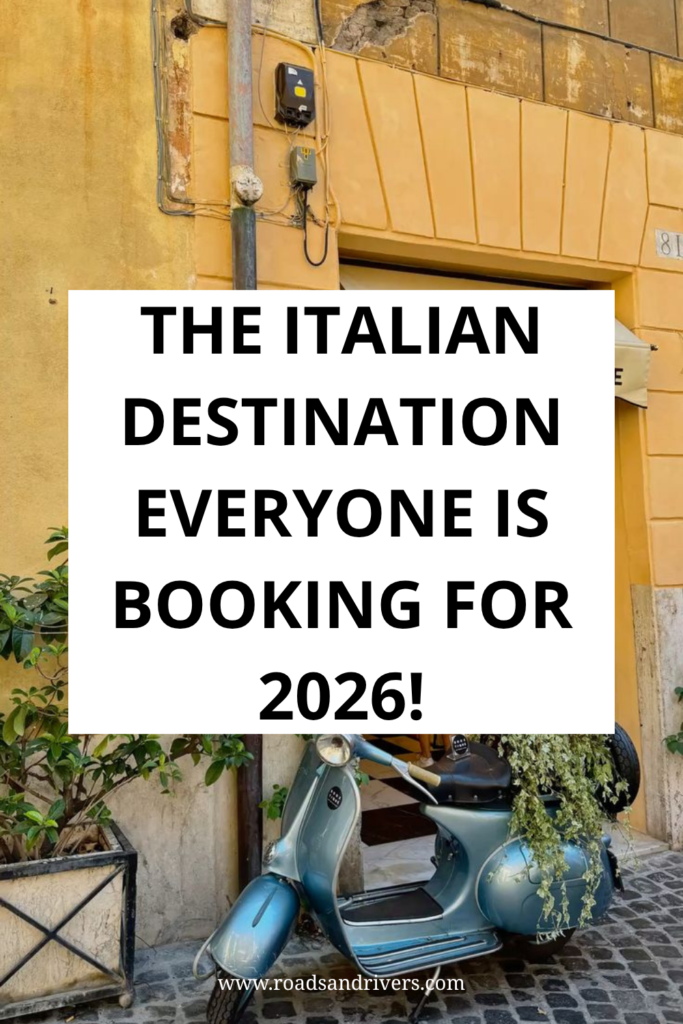
Puglia keeps showing up in every travel trend list for 2026, and for good reason. But the real sleeper hit this year is the area around Matera and Basilicata in southern Italy.
Matera, one of the oldest continuously inhabited cities in the world, is famous for its sassi: ancient cave dwellings carved into limestone cliffs that have been converted into hotels, restaurants, and galleries. It was named a European Capital of Culture and has been riding a wave of renewed interest ever since.
The broader Basilicata region around it offers dramatic landscapes, virtually no tourist crowds, and prices that feel like a different era compared to Rome or Florence. It’s the kind of place where a three-course dinner with local wine costs €25 and the waiter treats you like family.
Meanwhile, Italy’s northern lakes are also seeing a surge in bookings. The Milano Cortina Winter Olympics in early 2026 have put a spotlight on the alpine region, and towns like Bormio and Cortina d’Ampezzo are drawing visitors who want to combine mountain scenery with Italian food culture.
Pro tip: Book accommodations in trending destinations like Puglia and Matera at least three to four months in advance. The supply of quality boutique hotels and agriturismos in these areas is limited, and they fill up fast.
How to Match Italian Destinations to Your Travel Style
The best Italian destinations for your trip depend entirely on what you actually want from a vacation. Here’s a quick framework:
For Art and History Lovers
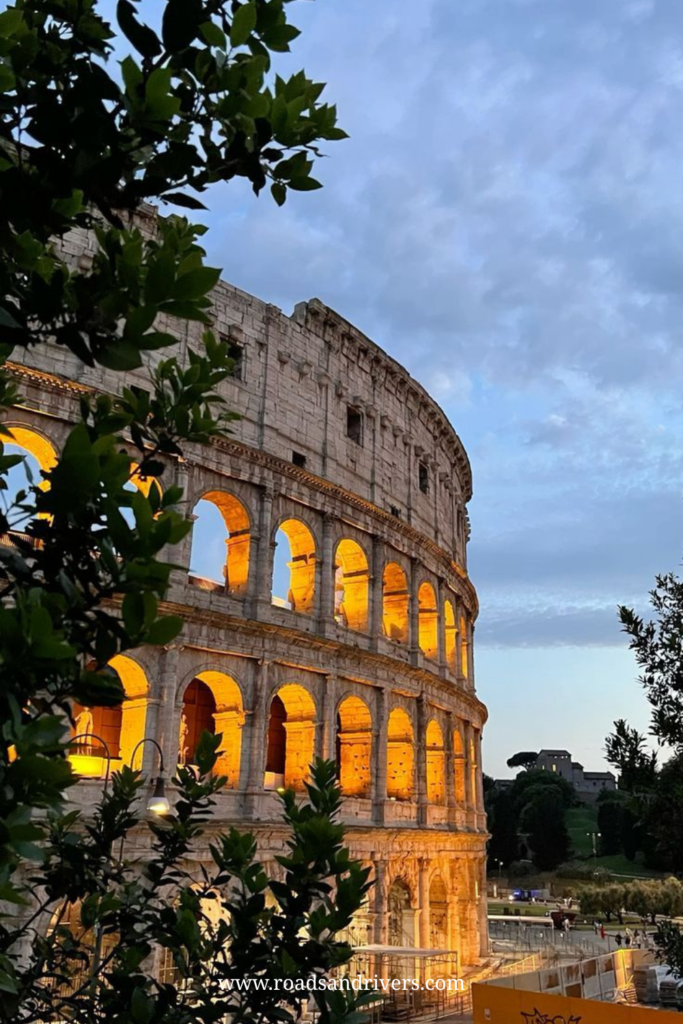
Rome and Florence are non-negotiable. Between the Colosseum, the Vatican, the Uffizi Gallery, and Michelangelo’s David, these two cities hold more masterpieces per square kilometer than almost anywhere on Earth. Add Naples for the National Archaeological Museum (Pompeii artifacts) and Ravenna for its Byzantine mosaics.
For Food-Obsessed Travelers
Bologna is your base. From there, explore Modena (balsamic vinegar), Parma (Parmigiano-Reggiano and prosciutto), and the Emilia-Romagna countryside. This region isn’t called Italy’s food valley for nothing.
For Beach and Coastal Vibes
The Amalfi Coast and Puglia are your best bets. For something more off-the-radar, Sardinia’s southern coast and Sicily’s Aeolian Islands deliver incredible water and far fewer crowds.
For the Italy Aesthetic
If your Italy trip is partly about capturing that golden-hour, lemon-tree, Vespa-parked-on-cobblestone vibe, head to Sorrento, Positano, or any of the small towns along the Amalfi Coast. Ravello’s gardens and Lake Como’s villa-lined shores also deliver that dreamy Italian summer aesthetic.
For Mountain and Adventure Seekers
The Dolomites in northern Italy are world-class for hiking, climbing, and winter sports. Val di Funes, Lago di Braies, and Tre Cime di Lavaredo are among the most photographed spots in the Alps.
What to Pack for Your Italian Destination (Style Meets Comfort)
Italians care about how they look. It’s not vanity; it’s culture. And while nobody expects tourists to show up in runway fashion, putting a little thought into your Italian vacation outfit will make you feel more confident and blend in better.
The key to an Italy travel outfit is layering. Mornings can be cool, afternoons hot, and evenings breezy. A linen shirt, tailored shorts or a midi skirt, comfortable walking shoes (not athletic sneakers), and a light jacket or scarf covers most situations.
For women chasing that Italian summer aesthetic, flowy dresses in earthy tones, espadrilles, and oversized sunglasses are the uniform. A straw bag and gold jewelry complete the look. Think effortless warmth, not overdone.
For men, linen pants or well-fitted chinos, a polo or linen button-down, and leather loafers or clean minimal sneakers work everywhere from trattorias to museums.
If you’re visiting churches (and you will), bring something to cover your shoulders and knees. A light scarf works perfectly and takes up zero luggage space.
Pro tip: Italian summer nails are a small detail that locals notice. Warm, earthy tones (terracotta, olive, sandy beige) or classic red fit the vibe. Skip neon or overly trendy nail art if you want to blend in with the Italian aesthetic.
And one practical note: bring a crossbody bag with a zip closure. Pickpocketing is a real issue in Rome, Florence, and any major tourist area. Keep your phone and wallet close.
Key Takeaways
- Pick two to three Italian destinations per trip and go deep rather than rushing between five cities.
- Use base cities with day trips instead of switching hotels every night.
- The best Italian destinations depend on your travel style: food lovers head to Emilia-Romagna, beach seekers go to Puglia or Sardinia, history buffs start with Rome and Florence.
- Visit popular spots (Venice, Amalfi Coast, Cinque Terre) in the shoulder season to avoid crushing crowds.
- Puglia, Matera, and Umbria are the Italian destinations trending hardest for 2026: book early.
Your perfect Italian trip isn’t about seeing every famous landmark. It’s about picking the right places, staying long enough to actually feel them, and leaving space for the unplanned moments: a conversation with a shop owner, a sunset you didn’t schedule, a meal that changes your understanding of what food can be.
Stop trying to do all of Italy. Pick your corner, slow down, and let the country do what it does best.
Have you been to Italy? Drop your favorite under-the-radar Italian destination in the comments. And if you’re still building your itinerary, save this post: you’ll want it when the planning gets real.
FAQ
How many days do you need to see Italy properly?
A minimum of seven days gives you enough time to explore two destinations at a relaxed pace. Ten to fourteen days lets you cover three to four regions comfortably. Anything less than a week means picking one city and committing to it fully rather than trying to rush between multiple stops.
What is the best month to visit Italian destinations?
May, June, September, and October offer the best combination of warm weather, manageable crowds, and reasonable prices. July and August are peak tourist season with higher temperatures and packed attractions. April and early November work well for budget travelers who don’t mind cooler evenings.
Is it better to fly into Rome or Milan for an Italy trip?
It depends on your itinerary. Rome is the better entry point for central and southern Italian destinations (Florence, Amalfi Coast, Naples). Milan works best for northern Italy (Lake Como, Venice, the Dolomites, Cinque Terre). Compare flight prices to both and let that guide your route direction.
What are the most underrated Italian destinations right now?
Puglia, Umbria, Basilicata (especially Matera), Bologna, and Sardinia consistently rank as the most underrated areas among experienced travelers. These regions offer authentic Italian culture, world-class food, and fewer crowds at lower prices than the classic tourist triangle of Rome, Florence, and Venice.
Can you plan an Italian vacation on a budget?
Absolutely. Southern Italy and smaller cities are significantly cheaper than the tourist hotspots. A budget of €80 to €120 per day is realistic if you stay in B&Bs or agriturismos, eat lunch at local trattorias instead of tourist restaurants, and use regional trains instead of taxis. Shoulder season travel also cuts accommodation costs by 30 to 40 percent.