
The single biggest decision you’ll make when planning a trip to Miami has nothing to do with restaurants, nightlife, or beach chairs. It’s where you book your hotel. Pick the wrong neighborhood and you’ll spend half your trip stuck in traffic or paying $30 for an Uber to get where you actually want to be. Pick the right one and the whole city opens up.
Most first-time visitors to Miami default to South Beach because it’s the name they know. And South Beach is iconic for a reason. But Miami is a sprawling, neighborhood-driven city, and South Beach is just one piece of a much bigger picture. Downtown, Brickell, Wynwood, Little Havana, Coconut Grove: each one feels like a different city entirely, with different price tags, different vibes, and different reasons to stay.
This post breaks down the real differences between South Beach and Downtown Miami, covers the neighborhoods most visitors overlook, and helps you pick the area that actually matches how you want to spend your time.
Table of Contents
- The Miami Hotel Mistake Most First-Timers Make
- South Beach or Downtown Miami? Still Can’t Decide?
- Which Miami Neighborhood Actually Fits Your Vibe?
- Is South Beach Still the Best Part of Miami?
- The Miami Neighborhood Everyone’s Booking in 2026
- Miami: Where to Stay Based on Your Travel Style
- The Insider’s Miami Neighborhood Guide
- Key Takeaways
- FAQ
Best time to visit: November to April (dry season, warm but not brutal); May to October for deals (40 to 60% cheaper)
Average hotel cost: $150 to $300/night mid-range; $80 to $130 budget; $300 to $800+ luxury
Getting around: Car helpful but not always needed. Free Metromover in Downtown/Brickell. Uber and Lyft widely available.
Days needed: 3 to 5 days for a solid first visit
The Miami Hotel Mistake Most First-Timers Make
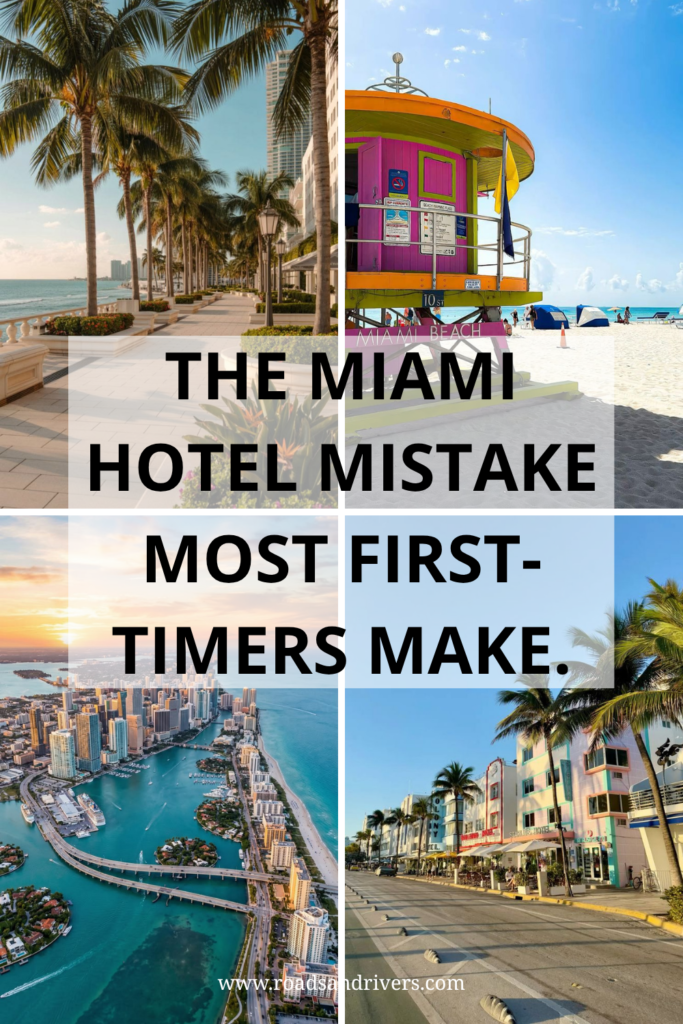
Here it is: booking an overpriced hotel on South Beach because you assumed that’s where you’re “supposed” to stay. Then spending your trip either overpaying for mediocre food on Ocean Drive, sitting in traffic trying to reach the rest of the city, or wondering why your hotel charged a $44 resort fee on top of the already inflated nightly rate.
Why Location Changes Everything
South Beach hotels are 40 to 50% more expensive than comparable rooms in inland neighborhoods. You’re paying a premium for beach proximity and the Art Deco backdrop, which is fair if that’s what you came for. But if your priorities are good food, cultural exploration, nightlife variety, or a home base to explore the wider city, you might be better off somewhere else entirely.
The free Metromover connects Downtown, Brickell, and the Arts District, making those areas surprisingly easy to navigate without a car. South Beach, by contrast, sits on a barrier island connected to the mainland by causeways. Getting from South Beach to Wynwood, Little Havana, or Coconut Grove means crossing the water, and during peak hours that 15-minute drive can turn into 45 minutes.
Pro tip: Always check for mandatory resort fees before booking. Many South Beach hotels tack on $30 to $50 per night in fees that don’t show up in the headline price. That “deal” at $200 per night quickly becomes $250.
South Beach or Downtown Miami? Still Can’t Decide?
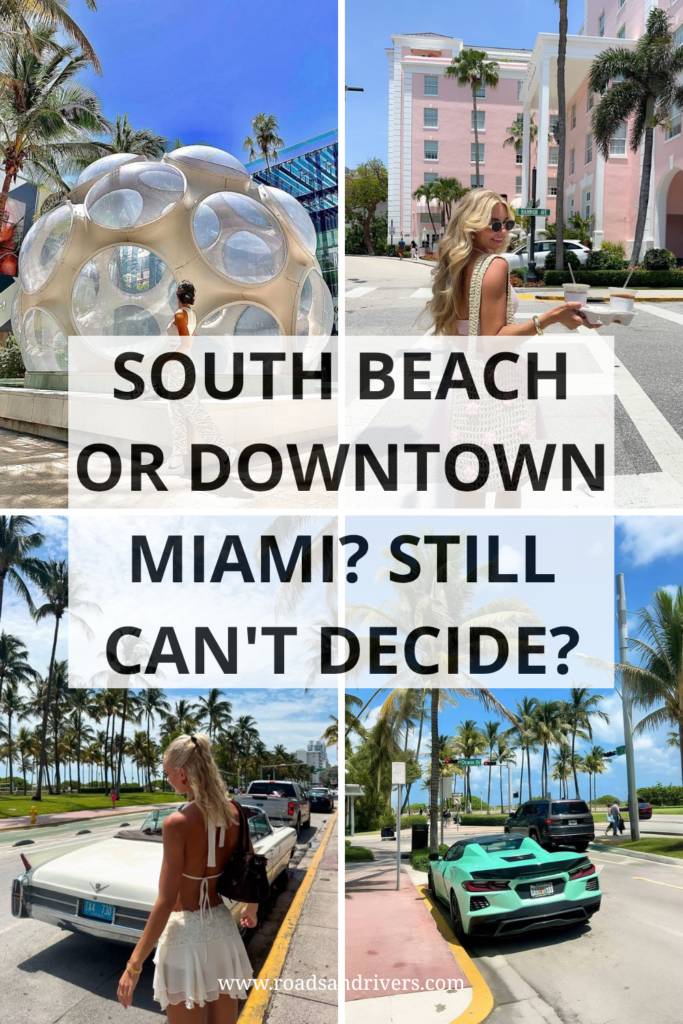
This is the question that trips up most visitors. The answer depends entirely on what kind of trip you’re planning.
The Case for South Beach
South Beach is the quintessential Miami experience. Art Deco buildings in pastel pinks and blues lining Ocean Drive. The wide, white-sand beach stretching for miles. Lifeguard stands in candy colors. Celebrity-spotting at rooftop pools. Clubs like LIV and Story that don’t really get going until midnight.
If your trip is primarily about the beach, the nightlife scene, and the classic Miami aesthetic (the one you’ve seen in every music video and movie), South Beach delivers exactly that. It’s walkable, photogenic, and packed with energy at all hours.
What it costs: Mid-range hotels average $250 to $400 per night in peak season (December through April). Budget options exist but are limited, with hostel dorms starting around $50 to $60 per night. Dining on Ocean Drive is overpriced across the board. Walk a few blocks inland to Collins Avenue or Washington Avenue for better food at lower prices.
The Case for Downtown Miami
Downtown (including the adjacent Brickell neighborhood) is Miami’s urban core. Gleaming skyscrapers, waterfront parks, world-class museums, and some of the best restaurants in the city. It’s where Miami actually lives and works, which gives it a completely different energy than the tourist-focused South Beach strip.
The Pérez Art Museum Miami (PAMM), the Frost Museum of Science, and the Kaseya Center (home of the Miami Heat) are all here. Brickell City Centre offers high-end shopping and dining, and the rooftop bar scene in this area rivals anything on the Beach.
What it costs: Mid-range hotels in Brickell average $166 per night. You’ll find solid options from $115 to $200 without the resort fee surprises that plague South Beach. Dining is significantly more affordable, with great Cuban food, local lunch spots, and everything from upscale steakhouses to casual waterfront cafés.
If you’re exploring the broader Florida coast, our guide to the 10 best Florida beach destinations covers the top spots beyond Miami.
Which Miami Neighborhood Actually Fits Your Vibe?
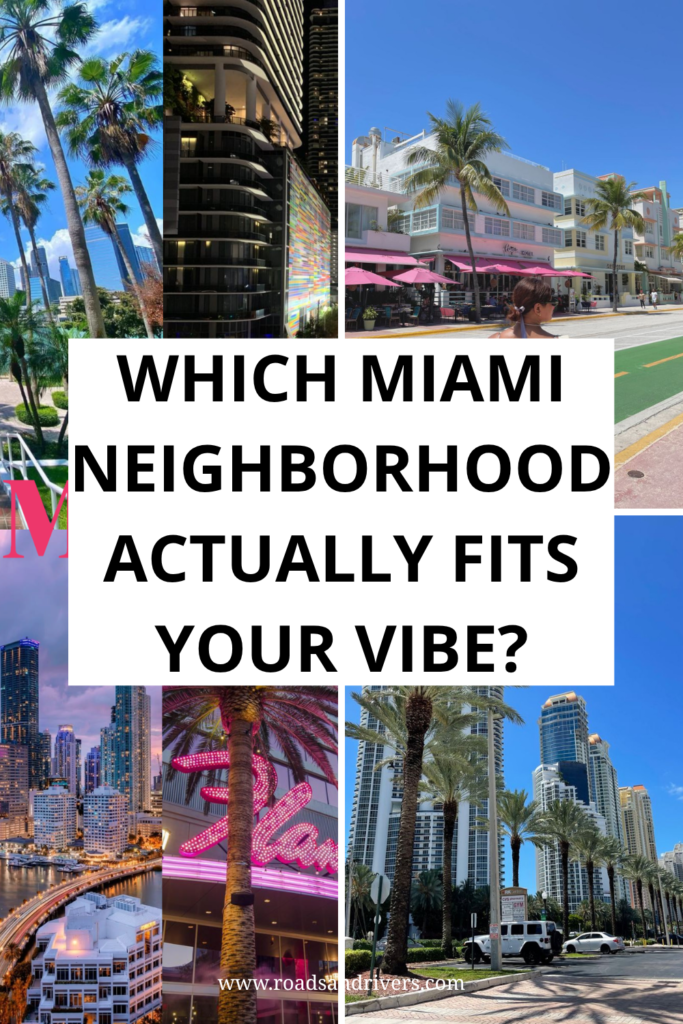
Miami isn’t a one-neighborhood city. Here’s a quick breakdown of where to base yourself depending on what you’re after.
For Nightlife and Beach Days: South Beach
The classic. You’ll walk out your hotel door onto the sand. Clubs, bars, and late-night restaurants are all within stumbling distance. The trade-off is price and tourist density. South Beach earns its reputation, but you’re paying for the location.
For Food, Culture, and City Energy: Brickell and Downtown
This is where the locals eat, work, and go out. The free Metromover connects the entire area. You’re close to Little Havana, Wynwood, and the Design District by a short Uber ride. Hotels here offer the best balance of price and quality for most visitors.
For Art and Nightlife Without the Beach Crowds: Wynwood
Mural-covered walls, craft breweries, gallery openings, and some of the best late-night bars in the city. Wynwood is where Miami’s creative energy lives. It doesn’t have a beach, but if your trip is more about art, food, and going out than tanning, this is your spot.
For Budget Travelers and Authentic Cuban Culture: Little Havana
The cheapest neighborhood to stay in Miami that still delivers a genuine experience. Start your morning with a cafecito on Calle Ocho, watch domino games at Máximo Gómez Park, and eat some of the best Cuban food outside of Havana. Hotels and rentals here run 30 to 40% less than South Beach.
For Families and a Slower Pace: Coconut Grove
Shaded streets, waterfront parks, the Vizcaya Museum and Gardens, and a Saturday farmers’ market that’s been running for over 40 years. Coconut Grove is Miami’s oldest neighborhood and its most family-friendly. It’s quieter, greener, and more relaxed than anywhere else in the city.
Pro tip: If you’re staying in Downtown or Brickell and want a beach day, the causeways to South Beach take 15 to 20 minutes outside of rush hour. You get the best of both worlds without the inflated hotel bill.
Is South Beach Still the Best Part of Miami?
The honest answer: it depends on what “best” means to you.
What South Beach Does Better Than Anywhere Else
The beach itself is genuinely world-class. The Art Deco Historic District is unlike anything else in the United States. The people-watching on Ocean Drive is an experience all its own. And if you want the high-energy, see-and-be-seen Miami that shows up in movies and social media, this is the only place that fully delivers.
Lincoln Road Mall is a great pedestrian shopping street with a mix of chains and local spots. The south tip of the island around South Pointe Park offers some of the best sunset views in the city, with cruise ships passing through Government Cut right in front of you.
Where South Beach Falls Short
The food on Ocean Drive is consistently overpriced and mediocre. Parking is expensive and limited. The tourist density means aggressive promoters trying to pull you into restaurants and clubs. And the hotel prices, particularly during peak season, can be genuinely painful.
The area has also become more crowded and commercialized over the past decade. Many long-time Miami visitors and locals have shifted their go-to spots to Brickell, Wynwood, and Mid-Beach, where the quality is higher and the hustle is lower.
Read more: For more Florida beach inspiration beyond Miami, check out our list of the 10 best Florida beach destinations for every type of traveler.
The Miami Neighborhood Everyone’s Booking in 2026
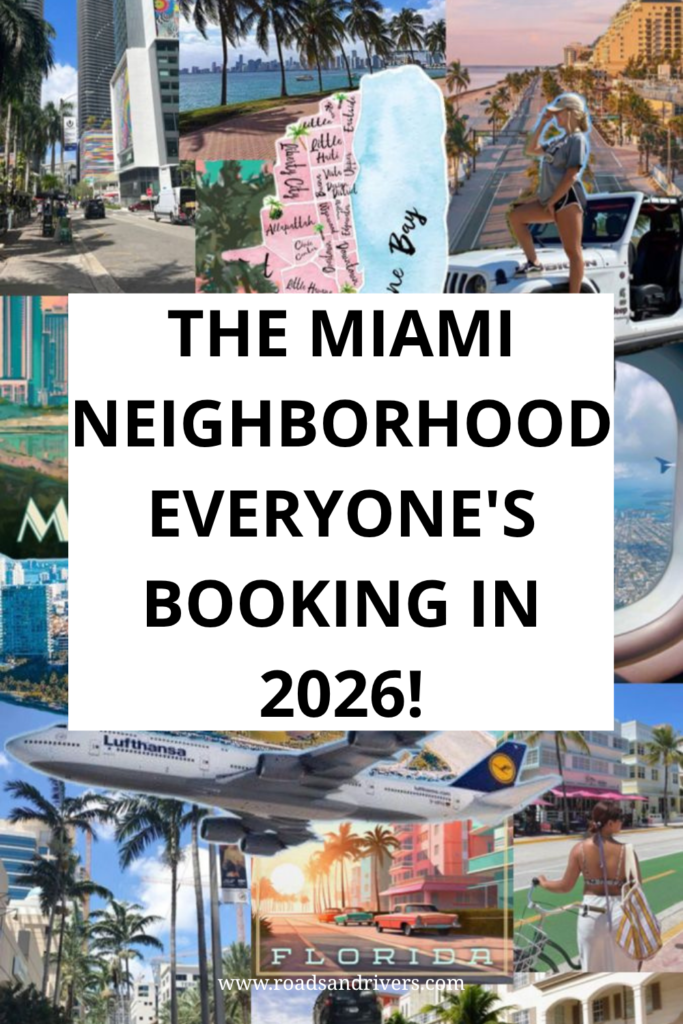
Brickell is having a moment. The neighborhood just south of Downtown has been growing rapidly over the past few years, and in 2026, it’s the area that savvy travelers are gravitating toward.
Why Brickell Is Trending
Brickell combines urban walkability (rare in Miami) with great restaurants, rooftop bars, and a growing cultural scene. It’s sleek and modern without the tourist-trap energy of South Beach. The Brickell City Centre is a major draw for shopping and dining. Rooftop spots like Sugar Bar offer panoramic bay views that rival anything on the Beach.
It’s also better connected to the rest of the city. The Metromover runs through the entire area for free, and Uber rides to Wynwood, Little Havana, or South Beach are short and cheap. For travelers who want to experience multiple sides of Miami without being locked into one neighborhood, Brickell is the smartest home base.
Hotels in Brickell start around $115 per night for budget options and average $166 for mid-range stays. That’s nearly half the cost of comparable South Beach rooms during the same period.
Pro tip: If you’re visiting during Art Basel (early December) or Ultra Music Festival (March), book early. Every neighborhood’s prices spike during major events, but Brickell tends to hold steadier than South Beach.
If you’re also thinking about a cruise departure from Miami, our guide to what to pack for a cruise in 2026 has you covered.
Miami: Where to Stay Based on Your Travel Style

Here’s the cheat sheet, organized by traveler type.
The Beach Lover: South Beach or Mid-Beach. You came for the sand and the water. Pay the premium and enjoy the walkability. Mid-Beach (around the Fontainebleau and Faena area) offers a slightly more refined experience than the South Beach party strip.
The Foodie: Brickell, Little Havana, or Wynwood. Miami’s best dining isn’t on the beach. It’s in the Cuban bakeries of Little Havana, the inventive restaurants of Wynwood, and the upscale spots along Brickell. A Cuban sandwich at Versailles or Sanguich de Miami will be the best $10 meal of your trip.
The Nightlifer: South Beach or Wynwood. South Beach for the mega-clubs (LIV, Story, E11EVEN is technically Downtown). Wynwood for a more laid-back, bar-hopping, gallery-district vibe. Ball & Chain in Little Havana is a must for live salsa music and dancing.
The Budget Traveler: Little Havana or Downtown. The cheapest hotel and rental rates in a central location. Both areas are well-connected by bus or Uber to everywhere else.
The Couple: Coconut Grove or Mid-Beach. Coconut Grove for romantic dinners and waterfront walks. Mid-Beach for a quieter, more polished beach experience away from the Spring Break crowds.
The Family: Coconut Grove or Key Biscayne. Parks, museums, calmer beaches, and a pace that lets you actually enjoy the trip instead of managing chaos.
For planning your beach-day packing, check out our must-have beach day essentials for 2026.
The Insider’s Miami Neighborhood Guide

Getting Around Without a Car
Miami is a car-centric city, but you can manage without one if you stay in the right area. South Beach is walkable within itself. Downtown and Brickell are connected by the free Metromover. The Miami Beach Trolley and Coral Gables Trolley are both free and connect to popular areas. Uber and Lyft are widely available and cheap for short rides.
If you plan to visit multiple neighborhoods (and you should), a rental car gives you the most flexibility. Just be prepared for parking costs: $20 to $40 per day in garages, and street parking in South Beach that requires both patience and quarters.
Best Free Things to Do in Miami
Many of Miami’s best experiences cost nothing. Walking the Art Deco district in South Beach, exploring the Wynwood Walls murals, strolling Calle Ocho in Little Havana, riding the Metromover through the Downtown skyline, and watching the sunset from South Pointe Park are all free. The beach itself costs nothing beyond a towel and sunscreen.
When to Book for the Best Deals
Peak season (December through April) is when prices are highest and availability tightest. Summer (May through September) is Miami’s “low season,” with hotel prices dropping 40 to 60%. The trade-off is higher humidity and afternoon rain showers, but mornings and evenings are still warm and beautiful. September is statistically the cheapest month to visit, with average nightly rates around $233.
Pro tip: Shoulder season (late October through mid-November) offers the best balance: lower prices, thinner crowds, and weather that’s warm without the intense summer humidity.
If you’re planning your trip during the broader Florida travel season, our guide on how to plan an outdoor trip from gear to route to safety covers the planning basics.

Key Takeaways
- South Beach is iconic but overpriced. You’re paying a 40 to 50% premium for beach access and Art Deco atmosphere. Worth it for a beach-focused trip; not worth it if you want to explore the wider city.
- Downtown and Brickell offer the best value and the best food. Hotels average $115 to $200 per night, the Metromover is free, and you’re centrally located to reach every neighborhood easily.
- Brickell is the neighborhood to watch in 2026. Walkable, well-connected, and packed with great dining and nightlife at a fraction of South Beach prices.
- Little Havana is the budget play. Cheapest accommodation in a central location, plus the most authentic cultural experience in the city.
- Book during shoulder season (October to November) for the best mix of price and weather. Avoid peak season unless you don’t mind paying double.
Where you stay in Miami shapes everything about your trip. The right neighborhood turns an expensive, frustrating visit into one where the city clicks. The wrong one has you spending more time in traffic than on the beach.
Take an honest look at what you actually want from your trip: beaches, nightlife, food, culture, or some mix of all four. Then pick the neighborhood that delivers it. Miami has a spot for every type of traveler. The trick is matching yourself to the right one before you book.
Have a favorite Miami neighborhood or hotel recommendation? Drop it in the comments. We’re always updating this guide with reader tips.
FAQ
Is it better to stay in South Beach or Downtown Miami?
It depends on your priorities. South Beach is better for beach access, nightlife clubs, and the classic Miami visual experience. Downtown and Brickell are better for food, cultural attractions, budget-friendly hotels, and easy access to the rest of the city. If you want to experience multiple neighborhoods, Downtown or Brickell is the more strategic base.
Do I need a car in Miami?
Not if you stay in South Beach, Downtown, or Brickell. South Beach is walkable, and the free Metromover covers Downtown and Brickell. For visiting Wynwood, Little Havana, Coconut Grove, or the Everglades, a car or ride-share is necessary. If you plan to explore beyond one neighborhood, renting a car gives you the most flexibility.
What is the cheapest area to stay in Miami?
Little Havana offers the lowest accommodation rates among central neighborhoods, with hotels and rentals running 30 to 40% less than South Beach. Downtown also has budget options, with hostel dorms starting at $30 to $50 per night. Visiting during summer (May to September) drops prices across all neighborhoods by 40 to 60%.
When is the best time to visit Miami on a budget?
September through early November is the cheapest time, with the lowest hotel rates and thinner crowds. You’ll deal with higher humidity and occasional afternoon rain, but morning and evening weather is still excellent. Late October and early November offer the best balance of lower prices and comfortable conditions.
What are the must-visit neighborhoods in Miami?
A well-rounded Miami trip should include South Beach (for the beach and Art Deco architecture), Little Havana (for Cuban food and culture on Calle Ocho), Wynwood (for street art and nightlife), and either Brickell (for dining and urban energy) or Coconut Grove (for a more relaxed, family-friendly pace). You can cover all of these in three to four days with good planning.