
London doesn’t ease you in. You step off the Tube and there’s Big Ben on one side, the Thames on the other, red buses rolling past and a pub on every corner. It’s one of the most visited cities on earth, which also makes it one of the easiest to plan badly.
Four days in London is a genuinely good amount of time, if you use it right. It’s enough to cover the iconic landmarks, wander through neighborhoods that don’t make the front of every travel guide, eat well, and not feel like you’re sprinting between sights with a laminated map. But it’s also easy to waste half your trip in overpriced tourist restaurants, stuck in the wrong part of the city at the wrong time of day.
This itinerary is built for every type of traveler: the first-timer who needs to see Big Ben, the history obsessive who wants the museums, the foodie hunting Borough Market at dawn, and the person who just wants to wander Notting Hill and drink good coffee. London has all of it. Here’s how to fit it into four days without losing your mind.
Table of Contents
- What Should You Really Prioritize in 4 Days in London?
- 5 London Itinerary Mistakes That Waste Precious Time
- Day 1: Westminster, South Bank, and the City
- Day 2: South Kensington, Notting Hill, and Hyde Park
- Day 3: Shoreditch, Borough Market, and Tower Bridge
- Day 4: The London Spot Every Traveler Raves About
- 4 Days in London: A Day-by-Day Plan That Works
- Key Takeaways
- FAQ
Best time to visit: April to June and September to October (mild weather, manageable crowds)
Getting around: Oyster card or contactless bank card on the Tube and buses; walking between central sights
Average daily budget: £80 to £150 for a mid-range experience; London’s museums are free
Days needed: 4 days covers the highlights; 7+ days for a deeper dive
What Should You Really Prioritize in 4 Days in London?
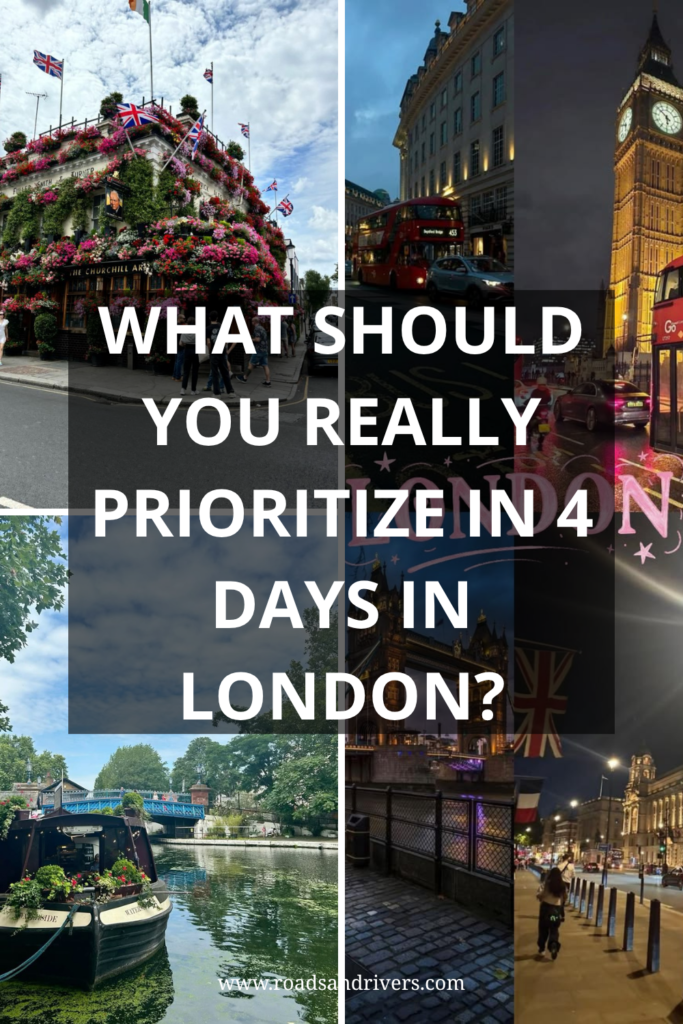
Four days is a lot less than it sounds in a city that’s 36 miles wide. The first thing you need to accept: you won’t see everything. The second thing: that’s fine.
The key to a good London trip is organizing by neighborhood, not by attraction. Planning to visit the Tower of London in the morning and Notting Hill in the afternoon sounds reasonable on a map and is actually a 50-minute Tube journey each way. London punishes visitors who try to zigzag across the city. It rewards those who pick a zone and go deep.
What to Prioritize for First-Timers
For a first visit, these are the non-negotiables:
Westminster and South Bank: Big Ben, Westminster Abbey, the Houses of Parliament, the London Eye, and the Tate Modern. All walkable from each other. This is the classic London you came for.
Tower Bridge and the City: Tower Bridge, the Tower of London, and Borough Market. Historically dense, walkable, and absolutely stunning on a clear day.
South Kensington: Three world-class free museums (Natural History, V&A, Science) within five minutes’ walk of each other. One afternoon here can cover centuries of human history.
Notting Hill and Portobello Road: For the colourful townhouses, independent cafés, and the aesthetics that make London photography shine even on a grey day.
Shoreditch: Street art, vintage shops, Brick Lane bagels, and London’s best brunch scene. This is where the city feels most alive and least touristy.
Pro tip: Use Google Maps or Citymapper to check walking distances before planning your day. Many central London attractions are within a 10 to 15-minute walk of each other but look far apart on the Tube map.
For a bigger picture of European travel, our guide to backpacking Europe for beginners pairs well with this itinerary if London is your first European stop.
5 London Itinerary Mistakes That Waste Precious Time
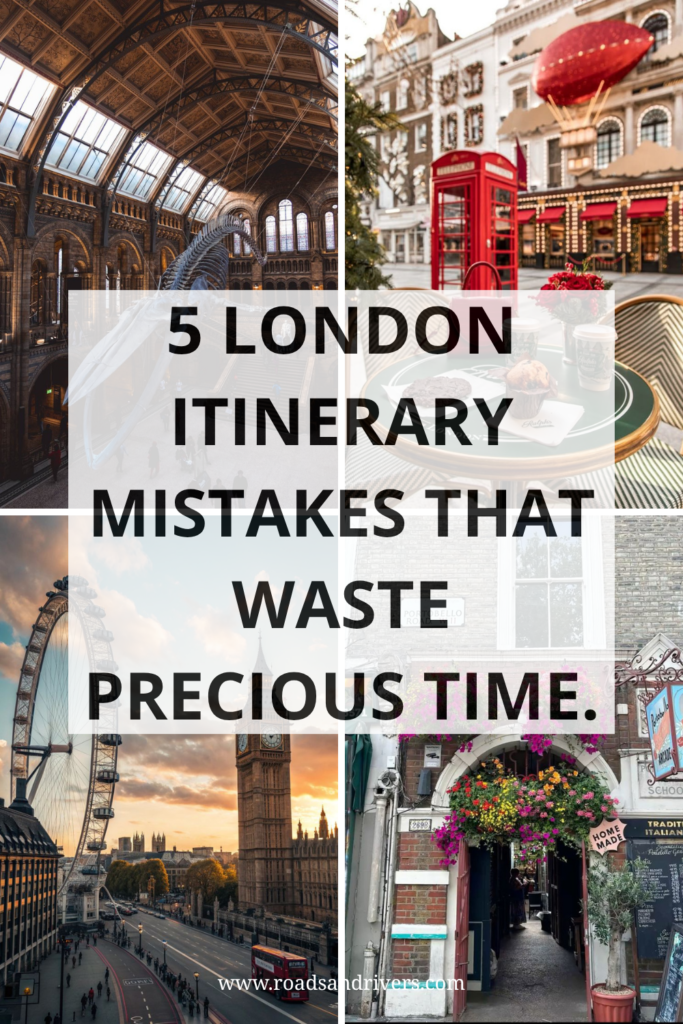
Before the day-by-day plan, here are the five errors that silently eat your time in London.
Mistake #1: Cramming Too Much Into Day One
You land, you’re jet-lagged, and you’ve scheduled the Tower of London, Westminster Abbey, afternoon tea, and a West End show all before 10 PM. Day one should be gentle. A walk along the Thames, a pub dinner, and an early night will do more for your trip than exhausting yourself before it’s really begun.
Mistake #2: Planning by Sight Instead of by Neighborhood
Tower Bridge to Notting Hill is nearly an hour on the Tube. Covent Garden to Leicester Square is a two-minute walk, yet most visitors get the Tube between them. Cluster your sights by zone and you’ll see twice as much with half the travel time.
Mistake #3: Eating Near the Tourist Attractions
The restaurants around the Tate Modern, the Tower of London, and Buckingham Palace are uniformly overpriced and underachieving. Walk two blocks in any direction and the quality doubles while the price drops. Borough Market, Broadway Market, and Brick Lane are where Londoners actually eat.
Mistake #4: Skipping the Free Museums
London’s national museums are free to enter, and they are world-class. The British Museum, the Natural History Museum, the V&A, the Tate Modern, and the National Gallery charge nothing. Many first-timers either don’t realize this or skip them assuming they’re secondary attractions. They’re not. These museums are among the best in the world.
Mistake #5: Not Booking Key Attractions in Advance
Westminster Abbey, the Tower of London, and the London Eye all benefit from advance booking. Turn up on the day during peak season and you’re looking at 60 to 90-minute queues. Book online a week ahead, show up at your time slot, and skip the line entirely.
Pro tip: The Changing of the Guard at Buckingham Palace happens roughly four times per week (check the official schedule before visiting). It’s also less crowded at Horse Guards Parade on Whitehall, where a smaller but equally ceremonial version happens at 11 AM daily.
Day 1: Westminster, South Bank, and the City
Morning: Westminster and Parliament Square
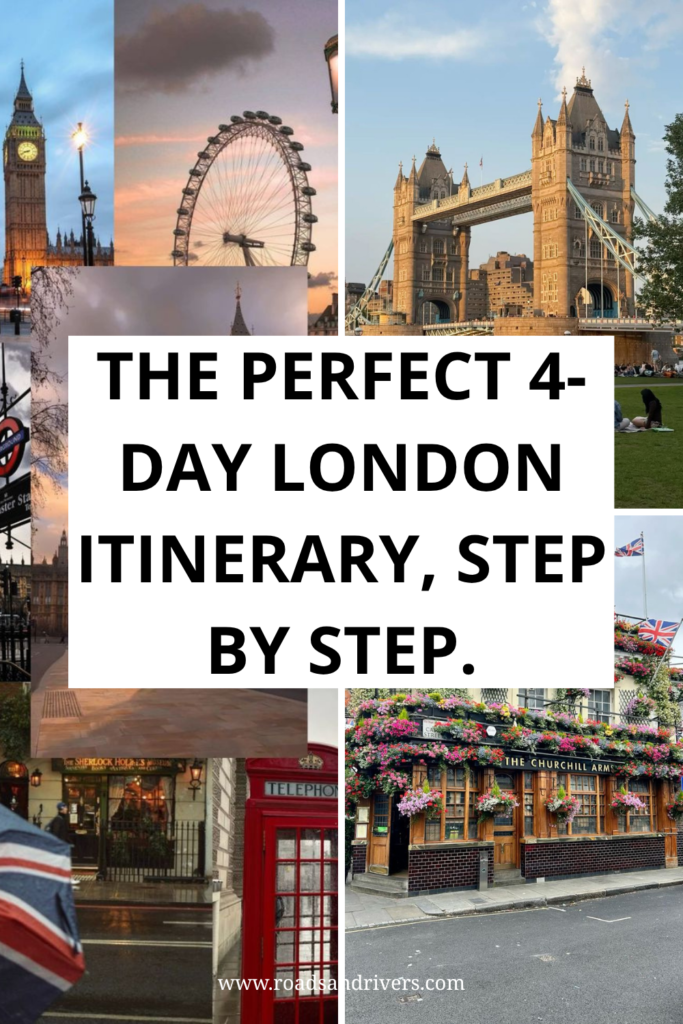
Start at Westminster Bridge for the view that earns its place on every London mood board: Big Ben to your right, the London Eye across the water, the Thames stretching both directions. This is your establishing shot.
From Westminster Bridge, walk to Westminster Abbey. Book tickets in advance (around £27 for adults in 2026). The Abbey is genuinely extraordinary: coronation chairs, royal tombs going back to 1066, Poets’ Corner, and the medieval Gothic architecture that defined a style. Allow 90 minutes minimum.
Walk around Parliament Square and down Whitehall, passing the Cenotaph, Downing Street, and Horse Guards Parade before reaching Trafalgar Square and the National Gallery. Entry to the National Gallery is free. Even 30 minutes here, looking at a handful of masterworks, is worth the stop.
Afternoon: South Bank
Cross Hungerford Bridge or Waterloo Bridge on foot for the best skyline views in London. The South Bank is London’s cultural mile: the Tate Modern (free, one of the great modern art museums in the world), the Globe Theatre, the Southbank Centre, and a constant stream of street performers, food vendors, and secondhand book stalls at the riverside market.
Walk east along the river toward Borough Market (open Tuesday to Saturday, peak hours 10 AM to 5 PM) for a late lunch. This is genuine London food culture: Neal’s Yard cheese, Bread Ahead doughnuts, Himalayan momos, Monmouth Coffee, and dozens of hot food traders. Budget £10 to £15 for a generous lunch.
Evening: A Classic London Pub
End day one at a proper pub. The Churchill Arms in Kensington is the most flower-covered pub in London and instantly recognizable. The Ye Olde Cheshire Cheese in the City dates back to 1667. Pick a neighborhood local, order a pint of whatever’s on cask, and settle in. This is as London as it gets.
Pro tip: The Tube is fast but walking along the South Bank from Westminster Bridge to Tower Bridge takes about 45 minutes and is one of the great free walks in any city on earth. Do it on a clear day and you won’t regret it.
Day 2: South Kensington, Notting Hill, and Hyde Park
Morning: The Museum Mile
South Kensington is home to three of London’s finest museums, all free, all within five minutes’ walk of each other. The Natural History Museum is the visual showstopper: the cathedral-like Victorian entrance hall, the blue whale skeleton (Hope) hanging from the ceiling, and the dinosaur galleries make it essential. The V&A next door covers 5,000 years of art, design, fashion, and craftsmanship across 145 galleries. If you only have time for one, choose based on your interests. You could spend a full day in either.
Afternoon: Notting Hill and Portobello Road
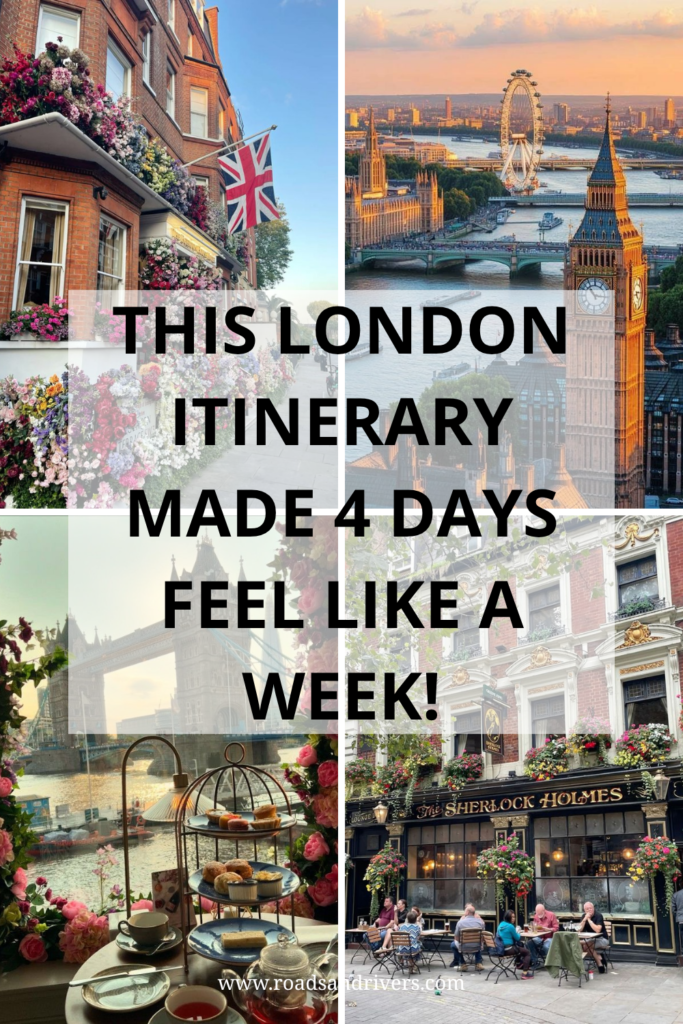
Take the Tube or walk north to Notting Hill, the neighborhood that invented the pastel townhouse aesthetic. Portobello Road Market runs Friday and Saturday (smaller on other days) with antiques, vintage clothing, street food, and flowers. Wander the side streets off Portobello Road, particularly Elgin Crescent and Blenheim Crescent, for the residential architecture that makes this area so photogenic.
The neighborhood is also a paradise for independent coffee shops and brunch spots. Try The Farm Girl café for açaí bowls and flower-wall photos, or seek out a quieter spot on the quieter end of Ledbury Road. Notting Hill rewards slow walking, not schedules.
Hyde Park is a 10-minute walk east. At 350 acres, it’s one of the largest parks in central London. Walk through the park, cross the Serpentine (the lake), and exit near Kensington Palace. The palace exterior and Kensington Gardens are free and beautiful.
Pro tip: Portobello Road is most atmospheric on Saturday mornings when the full antiques market runs from about 8 AM. Go before 11 to beat the crowds.
Day 3: Shoreditch, Borough Market, and Tower Bridge
Morning: Shoreditch and Brick Lane
Shoreditch is where London stops performing and starts living. Take the Tube to Old Street or Shoreditch High Street and start walking. The Shoreditch Street Art Tour (self-guided or guided, both excellent) covers the murals around Brick Lane, Bethnal Green Road, and the Redchurch Street area. Some pieces are by internationally known artists. New murals appear constantly. Bring your camera.
Brick Lane is famous for its bagel shops (the two originals, Beigel Bake and Beigel Shop, are open 24 hours), its curry houses, and its weekend market. Even on weekdays it has a strong character: vintage shops, independent galleries, and a general sense of creative energy that more polished parts of London lack.
Grab a Brick Lane bagel for breakfast. Salt beef with mustard and pickles is the classic. It costs under £5 and will ruin you for every other bagel.
Afternoon: Tower Bridge and the Tower of London
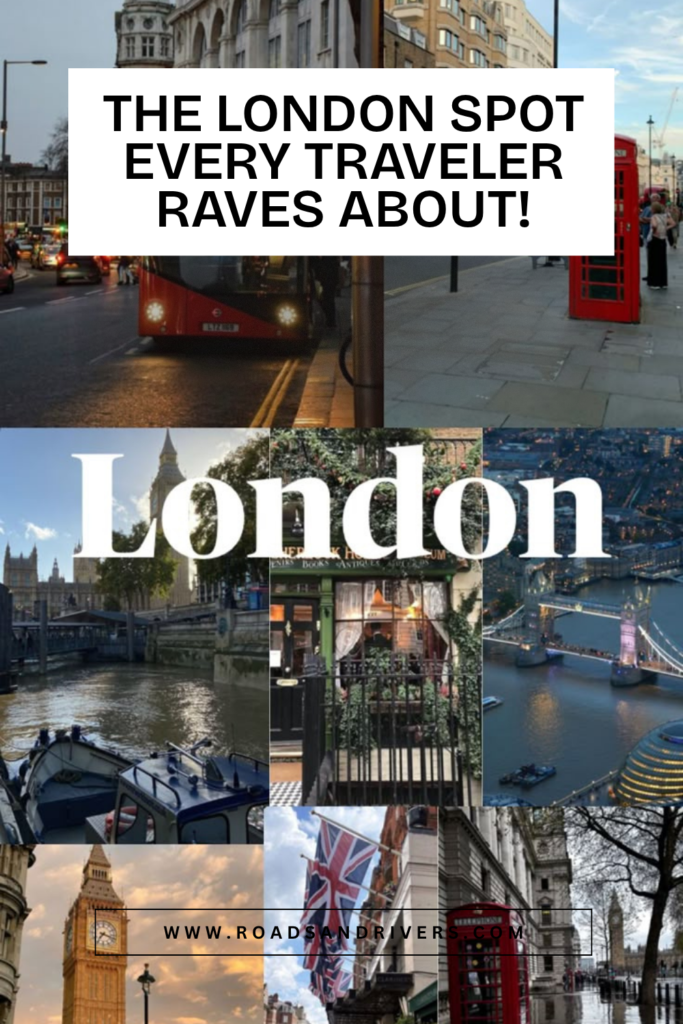
Head south to Tower Bridge, one of the most beautiful bridges in the world and worth the admission to the Tower Bridge Exhibition (around £11 for adults), which includes access to the high-level walkways with glass floors and great views of the Thames. The nearby Tower of London (£33 for adults in 2026) covers a thousand years of history including the Crown Jewels, the Beefeaters, and the White Tower. Book well in advance for both.
After, walk west along the Thames Path toward London Bridge. The views of Tower Bridge from the south bank, especially in the late afternoon light, are among the best London photography spots in the city.
Evening: Bermondsey or Maltby Street
For dinner, head to Maltby Street Market (open on weekends) or Bermondsey Street, which has some of the best independent restaurants in central London at prices that won’t hurt. The area around Borough and Bermondsey is also excellent for wine bars, craft beer pubs, and the kind of food scene that justifies a trip to London on its own.
Day 4: The London Spot Every Traveler Raves About
Morning: Camden and Regent’s Canal
Camden Market is one of London’s most famous and most divisive attractions. It’s loud, crowded, full of food stalls from every corner of the world, and genuinely enjoyable if you go in knowing what to expect. The main market runs daily, with Saturdays and Sundays being the most lively. Lock Market, Stables Market, and the Electric Ballroom area all have a different character.
For a quieter, more locals-only experience, walk the towpath of Regent’s Canal from Camden Lock east toward Islington or west toward Little Venice. The canal path is flat, easy walking, lined with narrowboats, and gives you a completely different perspective on the city that most visitors never find.
Read more: If you’re building a bigger European adventure around your London trip, our guide to the best Interrail routes in Europe maps out 10 itineraries that start or end in London.
Afternoon: Greenwich or Covent Garden
If the weather is good, take the Thames Clipper (a river bus) down to Greenwich. It costs around £5.50 one way with an Oyster card and the journey itself is excellent, passing the City, Canary Wharf, and the O2. Greenwich offers the Royal Observatory (where you can stand on the Prime Meridian), the Cutty Sark, the National Maritime Museum (free), and Greenwich Park with one of the best views of the London skyline from the hilltop.
If you’d rather stay central, Covent Garden is lively, walkable, and connects well to the West End. The market building, the street performers in the piazza, Neal’s Yard (a hidden courtyard off Shorts Gardens with colourful walls and good food), and the independent shops around Long Acre are all worth an hour or two.
Evening: A Send-Off Dinner
For a final London dinner, skip the chains near tourist areas. Soho has some of London’s most creative restaurants on Dean Street, Frith Street, and Berwick Street. Chinatown is a three-minute walk for excellent and genuinely inexpensive Chinese food. Dishoom (Indian) has queues but no bookings for most tables; arrive by 5:30 PM to get ahead of the wait.
If budget allows, book a rooftop drink. Sky Garden at the top of 20 Fenchurch Street (the “Walkie Talkie” building) is free to visit but requires advance booking. Sushi Samba, Radio Rooftop, and Duck & Waffle are all worth the splurge for the views.
4 Days in London: A Day-by-Day Plan That Works
Here’s the full itinerary condensed:
Day 1: Westminster Bridge → Westminster Abbey → National Gallery → South Bank walk → Borough Market lunch → Tate Modern → evening pub
Day 2: Natural History Museum and/or V&A → Notting Hill and Portobello Road → Hyde Park and Kensington Gardens
Day 3: Shoreditch street art → Brick Lane bagels → Tower Bridge → Tower of London → Bermondsey dinner
Day 4: Camden Market → Regent’s Canal walk → Greenwich or Covent Garden → Soho or Chinatown dinner → Sky Garden drinks
Getting Around
Oyster card or contactless bank card: Tap in and tap out on every Tube and bus. Daily fare caps mean you won’t overpay no matter how many journeys you take. A full day of Tube travel typically caps at £8.10 in Zones 1 and 2.
Walk more than you think: Central London landmarks are often closer on foot than the Tube map suggests. The South Bank walk from Westminster Bridge to London Bridge, the walk from South Kensington to Hyde Park, and the stroll from Covent Garden to the British Museum are all more pleasant on foot than underground.
Buses: The double-decker bus is slower than the Tube but gives you an actual view of London. Routes 15, 11, and RV1 cover key tourist areas and are worth taking at least once.
Pro tip: Download Citymapper before your trip. It’s the best transit app for London and gives you real-time walking, bus, Tube, and river bus options between any two points in the city.
For practical trip-planning foundations, our guide on how to plan an outdoor trip from gear to route to safety covers the logistics principles that apply just as well to city breaks.
Where to Stay
For a first London trip, staying in or near Zones 1 and 2 makes the most sense. Central neighborhoods like Soho, Fitzrovia, Southwark, and King’s Cross give you fast Tube access to every part of the itinerary. South Kensington is ideal if museums are a priority. Shoreditch suits travelers who lean toward food, nightlife, and creative energy.
Budget hostels in central London start around £30 to £40 per night for a dorm. Mid-range hotels average £120 to £200 per night. Boutique hotels in Notting Hill or Fitzrovia run £200 to £350.
Read more: If you’re planning to continue across Europe after London, our backpacking Europe for beginners guide covers budgeting, transport passes, and where to go next.
Packing for London
Pack for rain. Always. Even in summer, London weather changes fast, and a lightweight waterproof takes up no space but saves whole days. Comfortable walking shoes are non-negotiable. London rewards walkers, and you’ll easily cover 15,000 to 20,000 steps per day.
Our guide on how to use packing cubes correctly helps keep your bag organized for a city break where you’ll be moving a lot.
Key Takeaways
- Plan by neighborhood, not by attraction. London is too big to zigzag across. Group your sights geographically and you’ll see twice as much with half the stress.
- London’s world-class museums are free. The British Museum, Natural History Museum, V&A, Tate Modern, and National Gallery charge nothing. Don’t skip them.
- Book key attractions in advance. Westminster Abbey, the Tower of London, and the London Eye have long queues during peak season. Online booking skips the line.
- Eat away from the tourist sites. Borough Market, Brick Lane, Shoreditch, and Bermondsey Street are where the food is actually good.
- Walk and use the bus more than the Tube. Many central London sights are close enough to connect on foot, and the double-decker bus is one of the best ways to see the city above ground.
Four days in London won’t make you a Londoner. But it’ll give you a real sense of what the city actually is: massive, layered, constantly changing, and somehow simultaneously ancient and cutting-edge. You’ll leave with things you meant to see but didn’t, which is exactly right. London doesn’t end. It just picks up where you left off next time.
Share your London favorites in the comments. Whether it’s a pub no one talks about, a museum corner that stopped you in your tracks, or a market you discovered by accident, we’re always adding to this guide.
FAQ
Is 4 days in London enough for a first visit?
Yes. Four days is enough to cover the major landmarks, spend quality time in two or three distinct neighborhoods, visit at least one or two of the free museums, and get a genuine feel for the city. You won’t see everything (nobody does), but you’ll see enough to know you want to come back.
What is the cheapest way to get around London?
Use an Oyster card or tap your contactless bank card directly on Tube and bus readers. Daily fare caps mean you won’t pay more than £8.10 for unlimited Zone 1 and 2 travel. Walking between nearby sights is often faster than the Tube for short distances and saves money. The bus network is cheaper than the Tube for single journeys at around £1.75.
What should I book in advance for London?
Westminster Abbey, the Tower of London, the London Eye, and Sky Garden all benefit from advance booking. The Tower of London especially: queues of 60 to 90 minutes are common in peak season, and pre-booked tickets skip the queue entirely. Book free attractions like the Natural History Museum or the British Museum on the day, as no advance booking is needed.
What is the best neighborhood to stay in for a first London visit?
For first-timers, Soho, Fitzrovia, Covent Garden, and King’s Cross are all excellent. They put you in Zone 1 with fast Tube access to every part of the city. Shoreditch is great for travelers who prioritize food and nightlife. South Kensington works well if museums are central to your trip.
What is the one thing not to miss in London?
The walk along the South Bank from Westminster Bridge to Tower Bridge on a clear day. Free, endlessly photogenic, and one of the most satisfying urban walks in any city in the world. You pass the London Eye, the Tate Modern, the Globe Theatre, Borough Market, and end at Tower Bridge. Allow two to three hours to walk slowly and stop.