

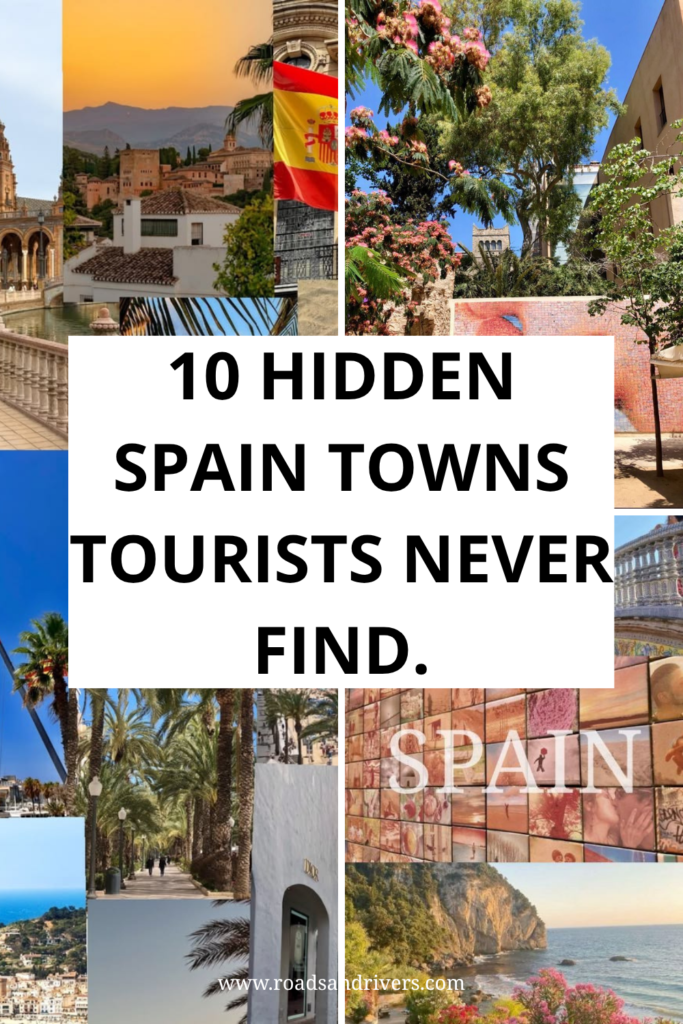
Spain is the second most visited country in the world, and it shows. Barcelona’s Gothic Quarter is perpetually shoulder-to-shoulder. The Alhambra sells out weeks in advance. The Costa del Sol is lined with hotel towers. Madrid’s Plaza Mayor is a tourist circus from the moment the sun rises. But here’s the thing about a country this size and this varied: the crowds are concentrated in a handful of places, and everywhere else, Spain is still waiting.
Beyond the big names, there are medieval cities where you can walk ancient Roman walls without another tourist in sight. Coastal villages built into cliff faces above the Atlantic. Moorish cities whose architecture rivals anything in Andalucía but whose streets stay quiet through entire summer afternoons. Market towns with centuries-old tapas traditions and zero coach parties.
This is the Spain most visitors never find. Ten towns that deserve a spot on your itinerary, especially if you’ve already done the obvious stops and want to understand what the country actually is when it’s not performing for tourists.
Table of Contents
- Why Spain’s Most Beautiful Towns Are Not the Famous Ones
- What Gorgeous Spain Towns Are Most Travelers Missing?
- 10 Hidden Spain Towns Tourists Never Find
- Tired of Crowded Spain? Try These 10 Hidden Towns
- The Insider’s Guide to Hidden Spain
- Key Takeaways
- FAQ
Best time to visit hidden Spain towns: April to June and September to November (avoid August when Spanish locals also travel)
Getting there: Spain’s AVE high-speed rail connects major cities; buses cover smaller towns
Average daily budget: €60 to €120 in smaller towns (40 to 50% less than Barcelona or Madrid)
Days needed: 2 to 3 days per town is ideal; most are reachable as day trips from bigger cities
Why Spain’s Most Beautiful Towns Are Not the Famous Ones
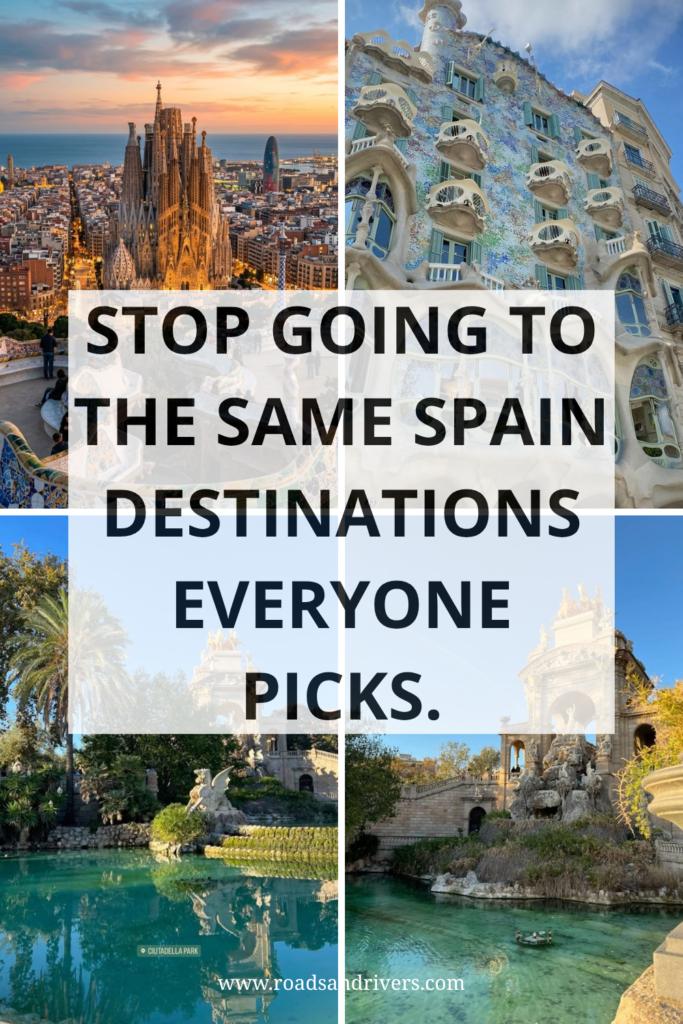
Spain’s top cities are genuinely excellent. Barcelona’s Gaudí architecture is unlike anything else on earth. Seville’s Plaza de España is one of the most beautiful public squares in Europe. Granada’s Alhambra justifies its queues. But these cities also absorb the vast majority of international visitors, which means the pressure falls unevenly. Over 96 million tourists visited Spain in 2025, most of them concentrated in a handful of destinations.
The result: Barcelona actively limits tourism in certain districts, locals protest in Málaga and the Canary Islands against the volume of visitors, and you can spend a full day in Madrid’s city center without encountering anything that feels like daily Spanish life.
Spain’s smaller towns and cities have no such problem. In Teruel, Lugo, Cudillero, or Córdoba, tourism exists on a scale where visitors feel welcome rather than like an imposition, prices stay sane, and the food and culture are still clearly aimed at locals rather than photo opportunities.
Pro tip: Spain’s Renfe network offers extremely affordable advance train tickets between smaller cities. A Madrid to Cuenca ticket can cost as little as €9 to €15 if booked early. Check the Renfe website directly rather than third-party booking platforms for the best prices.
If you’re building a longer European trip around Spain, our backpacking Europe for beginners guide covers the logistics of moving between countries on a budget.
What Gorgeous Spain Towns Are Most Travelers Missing?
The answer is: most of the interior of the country, the entire northern coast, half of Andalucía, and the Aragonese highlands. International itineraries default to a coastal circuit (Barcelona, Valencia, Málaga) plus Madrid, occasionally adding Seville and Granada. This leaves enormous regions essentially unvisited.
The Towns That Keep Coming Up
Ask frequent Spain travelers which destinations surprised them most, and certain names appear repeatedly: Girona (100 km from Barcelona, medieval walls still intact, far quieter than the capital), Cáceres (a World Heritage old town in Extremadura that barely registers on international radar), Oviedo (a handsome northern city with arcaded streets and some of the best cider culture in Europe), and Ronda (a dramatic clifftop town in Málaga province that somehow doesn’t get nearly the attention it deserves).
These aren’t obscure or difficult to reach. They’re simply overlooked by itineraries that default to the same six cities.
Read more: If your Spanish trip is focused on culture and food, our guide to the best Italian destinations for your trip applies the same principle to finding authentic regional experiences over tourist-trail destinations.
10 Hidden Spain Towns Tourists Never Find
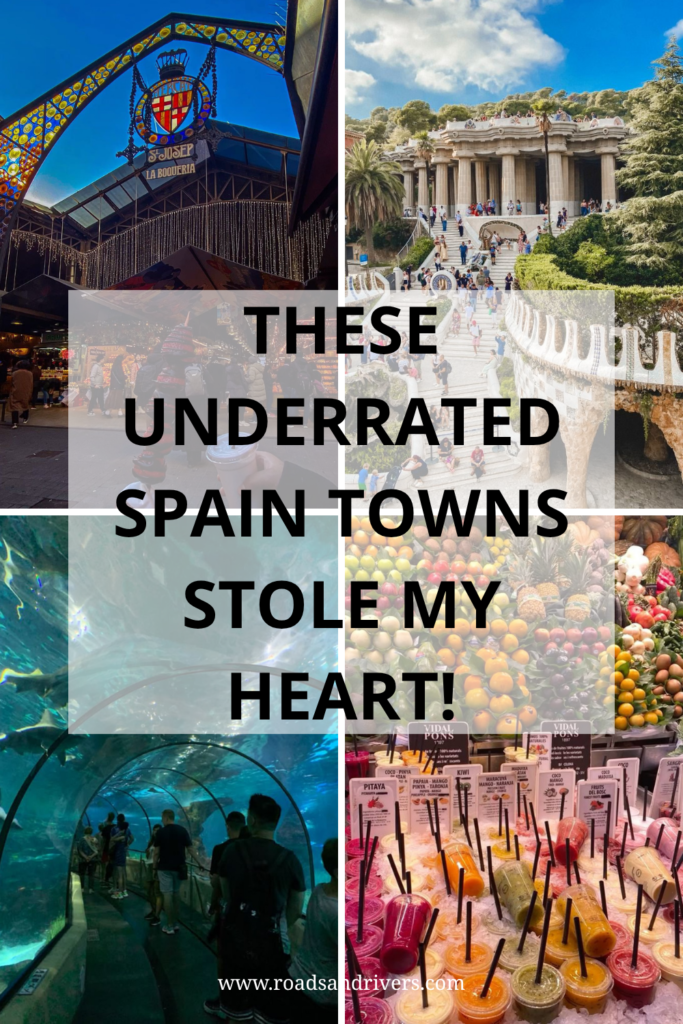
Here are ten towns that deliver the Spain experience without the crowds.
1. Girona, Catalonia
One hundred kilometers north of Barcelona, Girona is everything the capital used to be before it became one of Europe’s most-visited cities. The medieval Jewish Quarter (El Call) is one of the best-preserved in Spain: narrow stone alleyways, hidden archways, and staircases that disappear into old walls. The city’s Roman walls are still walkable, offering rooftop-level views over the old town. The Rambla and the Onyar riverside houses (painted in warm ochres and reds) are beautiful in any light. Day trip from Barcelona or stay two nights to feel the pace properly.
How to get there: Direct train from Barcelona Sants, 37 minutes by high-speed rail.
2. Córdoba, Andalucía
Barcelona and Madrid get the attention, but Córdoba was once the largest city in Western Europe. During the 8th century, it was the capital of the Moorish Empire, and the architectural evidence remains extraordinary. La Mezquita (mosque-cathedral) is a UNESCO World Heritage Site and one of the most stunning buildings in Spain: 850 Moorish columns in red and white stripes, with a Renaissance cathedral somehow built in the center. Visit in May for the Patio Festival, when residents open their flower-filled courtyards to the public.
How to get there: High-speed AVE train from Madrid (1 hour 45 minutes) or Seville (45 minutes).
3. Cáceres, Extremadura
Cáceres might be the most underrated city in Spain. The entire old town is a UNESCO World Heritage Site, a remarkably intact medieval stone city with towers, palaces, and cobblestone plazas where storks nest on every rooftop. Unlike Toledo (which draws heavy day-trip traffic from Madrid), Cáceres receives a fraction of the visitors despite being equally impressive. The restaurant scene is quietly excellent, with some of Spain’s best Iberian pork and truffle dishes.
How to get there: Train from Madrid (3 to 4 hours) or bus from Seville or Badajoz.
4. Teruel, Aragón
Teruel is consistently cited as one of the most overlooked cities in Spain. Set in the rugged hills of Aragón, it’s a UNESCO-recognized center of Mudéjar architecture: elaborately decorated brick towers that blend Islamic geometric patterns with Gothic and Romanesque styles in a combination found nowhere else in Europe. The city also has a legend of romantic tragedy (Romeo and Juliet-style) woven into its folklore, celebrated annually with a medieval festival.
How to get there: Bus from Zaragoza (2 hours) or Valencia (3 hours); limited rail connection.
5. Cudillero, Asturias
Cudillero is the fishing village that looks like it was painted. Brightly colored houses cascade down a steep hillside to a small harbor on the Cantabrian coast, the buildings stacked so closely together that you can only reach some of them by stair. The village is famous throughout northern Spain for its seafood: spider crab, percebes (barnacles), and freshly landed anchovies served in restaurants that have been cooking the same recipes for generations. Asturias also produces excellent cider (sidra), poured from shoulder height into wide glasses for aeration.
How to get there: Bus from Oviedo (45 minutes); rental car recommended for exploring the wider coast.
6. Albarracín, Aragón
Albarracín is one of the most beautiful medieval villages in Spain, a terracotta-colored walled city perched on a rocky outcrop above the Guadalaviar River. Its narrow streets, Arab-influenced architecture, and extraordinary state of preservation make it one of the most photographed places most people have never heard of. The population is under 2,000, which means even in summer you can walk the castle walls essentially alone.
How to get there: Car from Teruel (40 minutes) or Zaragoza (3 hours); limited public transport.
7. Lugo, Galicia
Lugo is the only city in the world with intact Roman walls encircling its entire perimeter. These walls date to the 3rd century AD and are 2 km in circumference, wide enough to walk along their top. Locals use them as an evening promenade. The city’s bars follow a long Galician tradition of serving free tapas with every drink, which makes exploring the old town both easy and affordable. Lugo sits in a green, rainy corner of northwest Spain that feels more Celtic than Mediterranean.
How to get there: Bus from Santiago de Compostela (1 hour) or A Coruña (1.5 hours).
8. Ronda, Málaga Province
Ronda is technically on many lists, but it remains dramatically undervisited relative to its quality. The city perches on a plateau split by a 120-meter gorge, with the 18th-century Puente Nuevo bridge arching across it. The views from the gorge edge are among the most dramatic in Spain. The old Moorish quarter (La Ciudad) is a maze of whitewashed houses and bougainvillea-draped lanes that the Costa del Sol crowds never seem to find. From Ronda, the white villages of the Sierra de Grazalema are accessible by car.
How to get there: Train from Málaga (2 hours) or Seville (2.5 hours); also accessible by bus.
9. Sigüenza, Castilla-La Mancha
An hour and a half northeast of Madrid by train, Sigüenza is a quiet medieval town built around a 12th-century cathedral and a castle-hotel (Parador de Sigüenza) that has been welcoming guests since it was converted from a medieval fortress. The town center feels frozen in the 15th century: stone houses, Roman-arched doorways, and a cathedral with one of the finest collections of Gothic art in Spain. It’s exactly the kind of place you end up extending your stay.
How to get there: Direct train from Madrid Chamartín (1 hour 40 minutes).
10. Cadaqués, Catalonia
On the northern tip of the Costa Brava, Cadaqués is the whitewashed fishing village that Salvador Dalí called home and inspiration. The Dalí House-Museum in nearby Portlligat is one of the most fascinating artist residences in Europe. The village itself is accessible only by a winding mountain road, which has kept mass tourism at bay. The rocky coves around the Cap de Creus National Park are as clear and blue as the Balearics, and the village’s evening atmosphere, with fishermen returning and restaurants lighting their terraces, is genuinely unchanged by decades of tourism elsewhere on the coast.
How to get there: Bus from Figueres (1 hour); car recommended for flexibility.
Tired of Crowded Spain? Try These 10 Hidden Towns
Spain’s overtourism problem is real, but it’s not evenly distributed. The cities above collectively received a fraction of Barcelona or Madrid’s annual visitors, which means: shorter queues, lower prices, easier restaurant reservations, and a level of interaction with local culture that’s impossible in places where the tourist-to-resident ratio has tipped past a reasonable point.
How to Build a Spain Itinerary Around Hidden Towns
The best Spain trips pair one major city with two or three smaller stops. Some suggested combinations:
Madrid-based: Madrid (2 days) → Sigüenza day trip → Cuenca (2 days) → Cáceres (2 days). This route covers extraordinary landscapes, medieval cities, and Extremaduran food culture with no flight required.
Andalucía circuit: Seville (2 days) → Ronda (2 days) → Córdoba (2 days) → Granada (2 days). This is the Andalucía circuit that combines the famous (Seville, Granada) with the underrated (Ronda, Córdoba), all connected by fast, affordable trains.
Northern coast: Bilbao (2 days) → Santillana del Mar → Cudillero (2 days) → Oviedo (2 days) → Lugo (1 day). The green north of Spain is an entirely different country from the Mediterranean coast: Celtic heritage, constant seafood, mountain landscapes, and almost no mass tourism.
Barcelona-based: Barcelona (2 days) → Girona (2 days) → Cadaqués (2 days). All accessible by train or bus, all massively different in character, and the whole route costs a fraction of staying exclusively in Barcelona.
Pro tip: In smaller Spanish towns, many of the best bars and restaurants operate only for lunch (2 to 4 PM) and dinner (9 to 11 PM). Restaurants rarely open before 8:30 PM in the evening. Showing up at 6 PM expecting dinner will leave you eating a sad tourist meal near the main square. Eat when Spain eats.
For beach-focused Spain trips, our beach day essentials guide covers what to pack for the Costa Brava, the Cantabrian coast, and everywhere in between.
The Insider’s Guide to Hidden Spain
Getting Around Without a Car
Many hidden Spain towns are accessible by train or bus, though the connections are less frequent than between major cities. Renfe’s regional network covers Córdoba, Ronda, Girona, and Sigüenza easily. For more remote spots (Albarracín, Cudillero, parts of the Extremaduran interior), a rental car gives you significantly more flexibility.
Spain’s bus network, operated by companies like ALSA and Socibus, fills gaps where trains don’t reach and is generally reliable and affordable. Journey times by bus are longer but often take you through landscapes a train would bypass.
Where to Stay
Smaller Spanish towns have excellent budget accommodation options. Rural casas rurales (country houses rented as guesthouses) are common outside major cities and typically cost €40 to €80 per night with breakfast included. Spain’s Paradores network (state-run hotels in historic buildings, including castles, convents, and palaces) operate in towns like Cáceres, Sigüenza, and Ronda and offer genuinely memorable accommodation at prices that compare favorably with city center hotels in Barcelona or Madrid.
Hostels are less common outside major cities, but small family-run pensions and one-star hotels remain affordable and often come with local knowledge you can’t find on any app.
Food and Budget
Hidden Spain towns are significantly cheaper than the tourist circuit. A full lunch menu (usually three courses with wine) costs €10 to €15 at a local restaurant in most smaller cities, compared to €20 to €30 for equivalent food in Barcelona’s tourist areas. Evening tapas culture means you can eat extremely well for €15 to €20 per person by ordering rounds of pintxos, montaditos, or simple raciones with wine or beer.
Grocery shopping in Spanish markets is an experience in itself. Every decent-sized town has a covered Mercado, selling local produce, cured meats, cheeses, and fresh fish. Buying from the Mercado for lunch is both cheaper and more culturally interesting than any restaurant.
Pro tip: In Lugo (and much of Galicia), bars still serve free tapas with every drink. This tradition makes it genuinely possible to eat a filling lunch purely by ordering rounds of wine or beer and accepting whatever comes with it.
If you’re planning a bigger European journey that includes Spain, our best Interrail routes in Europe guide maps 10 rail routes that connect Spain’s hidden towns to the wider European network.
What Makes These Towns Worth the Detour

The common thread between all ten towns on this list is authenticity. Not the performed authenticity of tourist-facing flamenco shows and sangria bars, but the actual daily rhythm of places where people live normal Spanish lives, where the bar on the corner has been the same bar for 40 years, and where the festival in May is celebrated because the town has always celebrated it in May, not because it appears on a tourist calendar.
This is what most visitors to Spain miss, not through lack of interest but through lack of time or information. The country is large enough that you could visit every year for a decade and still discover somewhere new. The ten towns above are a starting point, not an exhaustive list.
For those building a broader trip around Spain’s cultural depth, our guide to how to plan an outdoor trip from gear to route to safety covers the planning fundamentals that apply whether you’re hiking the Camino de Santiago or building a multi-stop cultural itinerary through Aragón.
Key Takeaways
- Spain’s most rewarding experiences are often outside the famous cities. Córdoba, Cáceres, Girona, and Ronda offer comparable historical and cultural depth to Barcelona or Seville at a fraction of the crowds and cost.
- The northern coast (Asturias, Galicia, Basque Country) is an entirely different Spain. Green, seafood-focused, Celtic-influenced, and almost untouched by international mass tourism.
- Smaller towns are meaningfully cheaper. Expect to save 40 to 50% on accommodation and food compared to Barcelona or Madrid’s tourist districts.
- Spain’s rail and bus network reaches most of these towns. A car helps for the most remote stops, but isn’t essential for a well-planned itinerary.
- Eat on Spanish time. Lunch is 2 to 4 PM and dinner is 9 to 11 PM. Adjusting your schedule to this rhythm unlocks the best local restaurants.
Spain doesn’t run out of surprises. The bigger revelation isn’t any single town on this list; it’s the realization that the most-visited country in continental Europe has entire regions that international tourism has barely touched. The towns above are starting points. Head to one of them, slow down, eat lunch at 2:30 and dinner at 9:30, and let Spain show you the version that doesn’t make it onto the brochures.
Share your own hidden Spain discoveries in the comments. The list above is ten towns, but Spain has hundreds more worth finding.
FAQ
Which underrated Spanish town is easiest to reach from Barcelona?
Girona is the easiest: 37 minutes by high-speed train from Barcelona Sants, arriving in one of the best-preserved medieval cities in Catalonia. Cadaqués (on the northern Costa Brava) requires more travel but rewards it with dramatic scenery, the Dalí Museum in Portlligat, and a village atmosphere unchanged since the 1960s.
Which underrated Spanish town is easiest to reach from Madrid?
Sigüenza (1 hour 40 minutes by direct train) is the most convenient hidden gem from Madrid. Cuenca (1 hour 40 minutes by AVE) offers another extraordinary medieval option with its famous hanging houses over a gorge. Cáceres is a longer journey (3 to 4 hours) but a full destination rather than a day trip.
Is Córdoba considered underrated compared to other Andalucían cities?
Yes. Córdoba receives far fewer visitors than Seville, Málaga, or Granada despite having architecture that rivals all three. La Mezquita is one of the most significant and beautiful buildings in Europe. The historic center, old Jewish quarter (Judería), and the Patios Festival in May make it arguably the most rewarding single-day visit in Andalucía.
Can you visit these towns without speaking Spanish?
In smaller Spanish towns, English is less widely spoken than in Barcelona or Madrid, particularly at local restaurants and bars. Basic Spanish phrases (please, thank you, ordering food, asking for the bill) go a long way and are genuinely appreciated. Google Translate’s camera function handles menus that don’t have pictures.
What is the best time of year to visit hidden Spain towns?
April to early June and September to October are the best windows: warm enough for outdoor activities, far below peak-season prices and crowds, and aligned with harvest festivals, spring wildflowers, and cultural events. August is Spain’s own holiday month and smaller towns often have reduced services or are busy with Spanish domestic tourists.