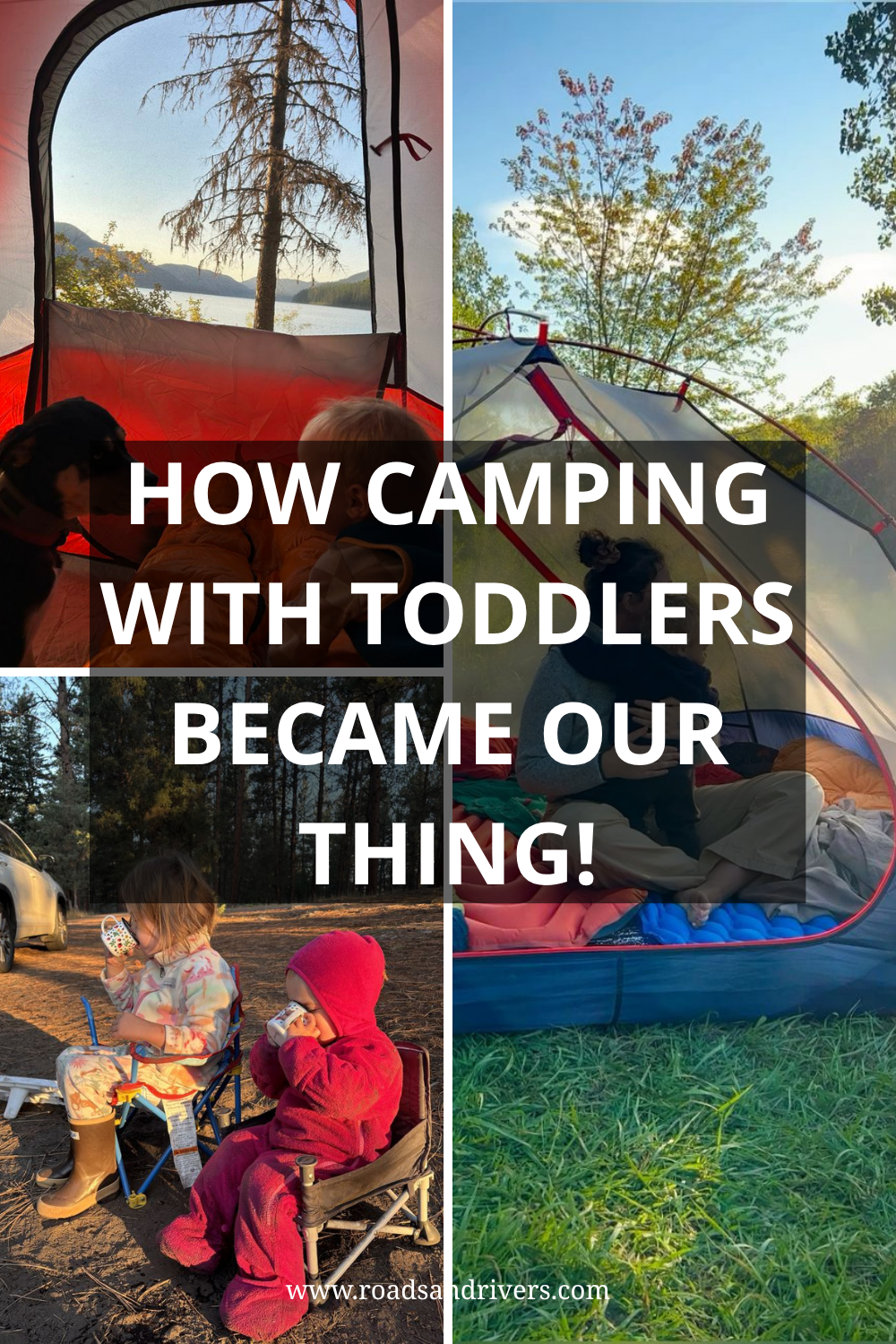
Let’s get the truth out of the way first: camping with toddlers is not relaxing. Not the first time, anyway. You’ll pack three times more than you need, someone will eat dirt, nap time will go off the rails, and bedtime will turn into a negotiation that would test a diplomat. But somewhere between the chaos of setting up camp and the moment your kid stares wide-eyed at their first campfire, something clicks. And suddenly, you get why families keep doing this.
Camping with toddlers is one of the best things you can do with your little ones. Unstructured outdoor time builds confidence, sparks curiosity, and gives everyone a break from screens. The trick isn’t avoiding the messy parts. It’s planning for them so the whole trip doesn’t unravel before the first s’more.
This guide covers everything you actually need to know: how to pick the right campsite, what to pack (and what to leave behind), how to handle sleep, meals, safety, and the one trick that makes the whole experience go from stressful to surprisingly fun.
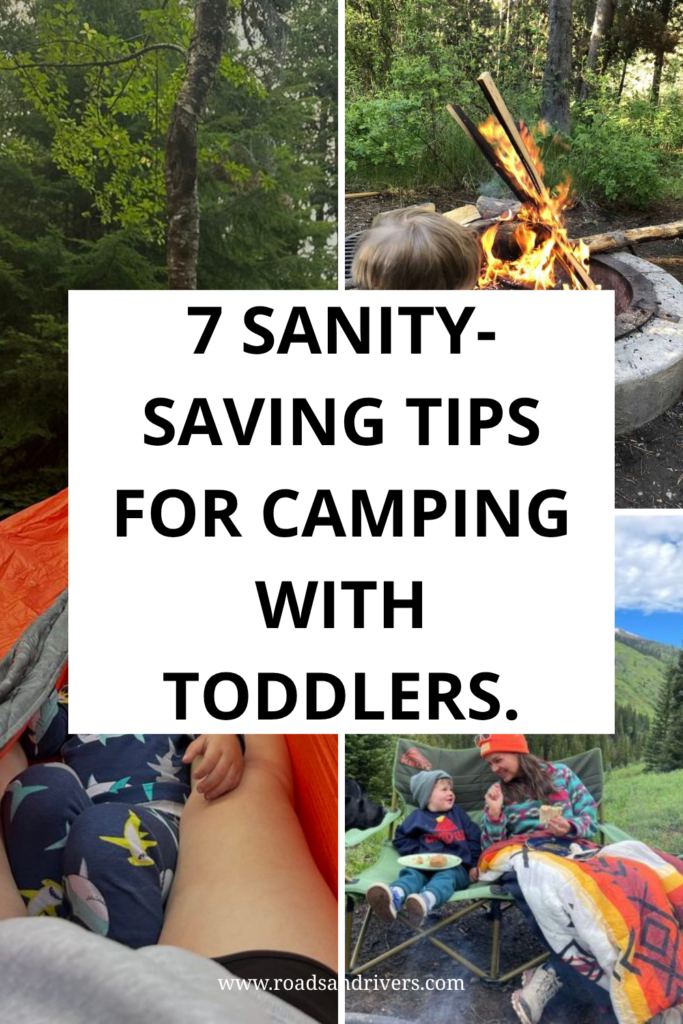
Table of Contents
- Why Families Are Going Camping with Toddlers Again
- The One Trick That Makes Camping with Toddlers Easy
- How to Choose the Right Campground for Toddlers
- 7 Sanity-Saving Tips for Camping with Toddlers
- Stop Overpacking: What You Actually Need (And What You Don’t)
- The Sleep Survival Guide for Camping with Toddlers
- Meals and Snacks That Keep Toddlers Happy at Camp
- Keeping Toddlers Safe at the Campsite
- Camping with Toddlers on a Budget
- Key Takeaways
- FAQ
Quick-Reference Info Box Best first trip: One night, developed campground with bathrooms, close to home Must-bring: Extra diapers/wipes, portable high chair, white noise machine, headlamp Sleep tip: Keep the bedtime routine identical to home (same books, same order) Golden rule: Lower your expectations and raise your sense of adventure
Why Families Are Going Camping with Toddlers Again
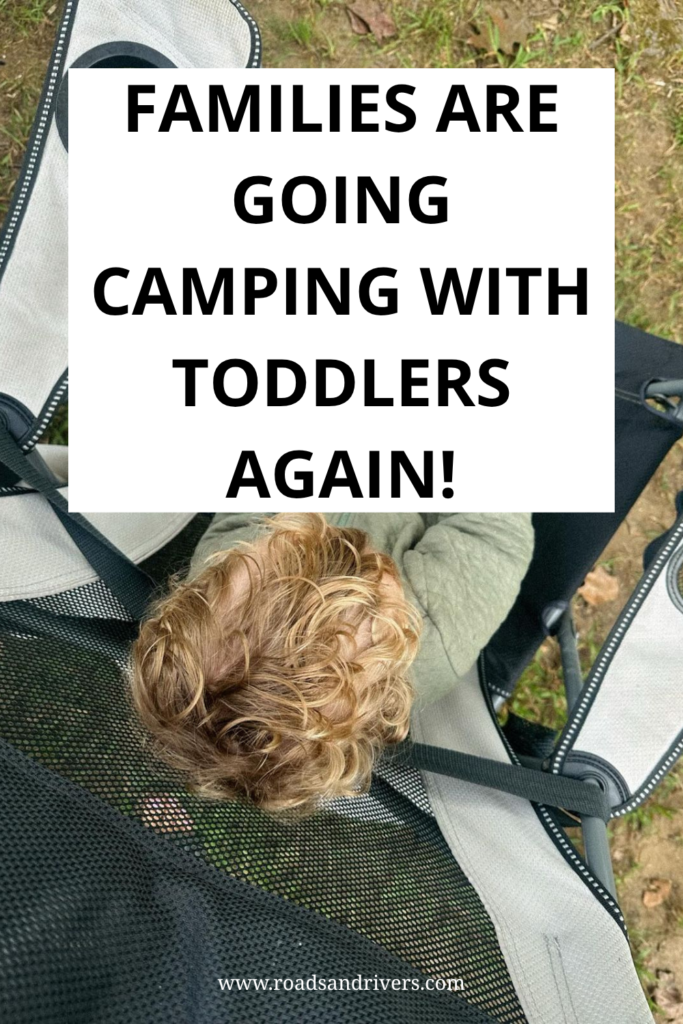
Family camping is having a real moment right now. Parents are realizing that you don’t have to wait until kids are “old enough” to go camping. Toddlers are actually incredible camping partners: they’re endlessly entertained by sticks, rocks, and bugs. They don’t need Wi-Fi. And they sleep hard after a day spent running around outside.
The real barrier isn’t the toddler. It’s the parents. The fear of “what if it goes wrong?” keeps a lot of families from ever trying. But experienced camping parents will tell you the same thing: your first trip will be imperfect, and your second trip will be way better. By the third, you’ll wonder why you waited so long.
Outdoor family experts at Take Them Outside emphasize that camping with toddlers doesn’t require special skills or fancy gear. It just requires some planning, flexible expectations, and a willingness to let things be a little messy.
Pro tip: Set up your tent in the backyard (or living room) a few days before your trip. Let your toddler play in it, sleep in it, and get used to the space. It removes the “scary new environment” factor and makes the first night at camp much smoother.
The One Trick That Makes Camping with Toddlers Easy
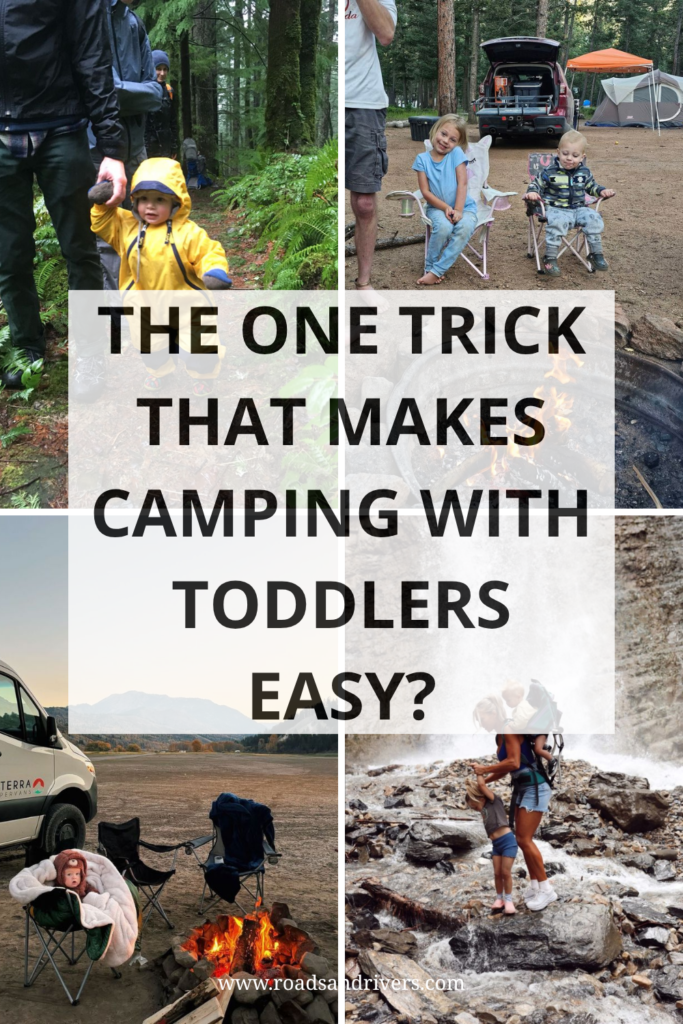
Here it is: start small.
Don’t plan a week-long trip to a remote national park for your first camping outing with a toddler. The Crazy Outdoor Mama’s toddler camping guide puts it perfectly: book one night at a developed campground close to home. If everything falls apart, you’re 30 minutes from your own bed. If it goes well, you’ve just built the confidence to plan a longer trip next time.
One night teaches you everything you need to know: how your toddler sleeps in a tent, what toys they actually play with, what gear you didn’t need, and what you forgot. It’s a low-pressure test run that takes the stakes out of the experience.
After one or two short trips, you’ll have a packing system, a sleep strategy, and enough confidence to go bigger. Families who start small almost always end up camping more, not less.
How to Choose the Right Campground for Toddlers
Not all campgrounds are created equal when you’re camping with toddlers. The right site makes your job ten times easier. The wrong one turns every moment into a chase scene.
Choose a developed campground for your first trips. Bathrooms with running water, established fire pits, flat tent pads, and other families nearby. KOA’s family camping guide recommends campgrounds with amenities like clean showers and camp stores, which reduce the number of things you need to pack and give you a safety net for forgotten items.
Pick a site away from roads and water. Toddlers wander. A campsite that backs up to a busy campground road or sits right next to a lake or creek adds a constant layer of anxiety. Look for open, flat sites in side loops with less traffic. You want your toddler to have room to roam without you sprinting after them every 30 seconds.
Think about playground proximity. If the campground has a playground, decide whether you want to be near it or not. For toddlers under 2, being out of visual range of the playground prevents them from spotting it and demanding to go constantly. For older toddlers who can play more independently, a site within view is a huge convenience.
Pro tip: Call the campground ahead of time and ask for a specific site recommendation for families with toddlers. Camp hosts know their campground better than anyone and can often point you to quieter, more open spots.

7 Sanity-Saving Tips for Camping with Toddlers
These are the tips that separate a miserable outing from a memory-making one.
1. Toys come out first, go in last. The toy bucket should be the first thing you unpack when you arrive and the last thing you pack when you leave. It keeps your toddler occupied during the two most chaotic parts of any camping trip: setup and breakdown.
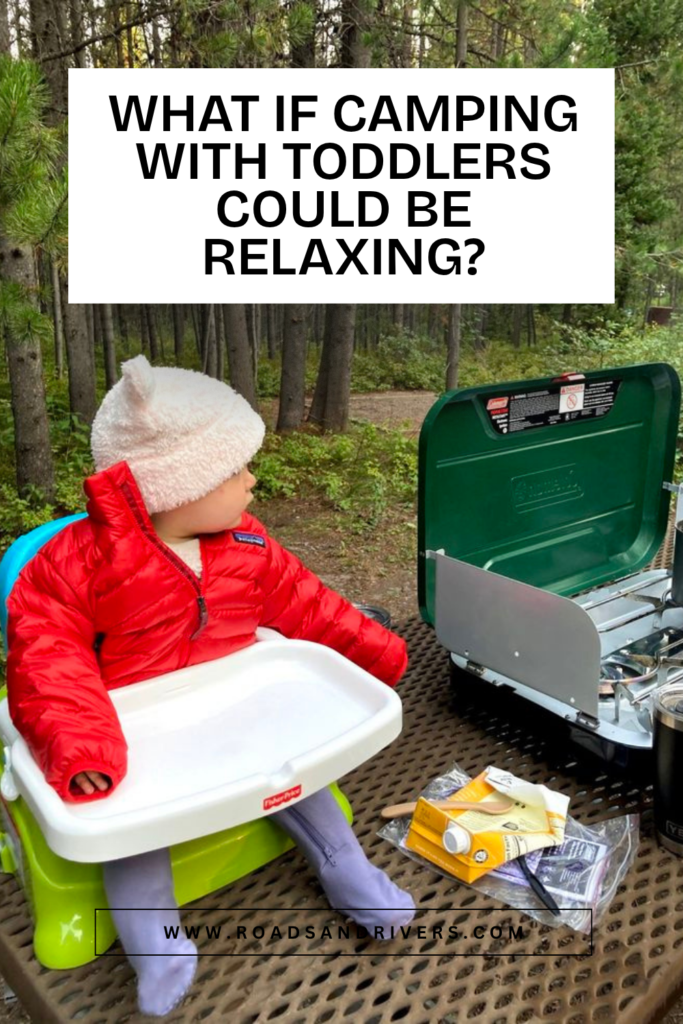
2. Bring a portable high chair or booster seat. Toddlers in camp chairs slide, squirm, and topple. A portable high chair or clamp-on seat keeps them contained during meals and snacks, which means less food on the ground and less stress for you.
3. Use a white noise machine. Campgrounds are surprisingly loud, even at night. Other campers, wildlife, wind in the trees. Sleep experts at Tales of a Mountain Mama swear by portable white noise machines for blocking out the sounds that wake toddlers mid-nap or in the middle of the night. A $30 investment that pays for itself on the first trip.
4. Pre-bag outfits by day. Pack each day’s clothes (shirt, pants, socks, underwear, pajamas) in a labeled zip-top bag. When your toddler has a blowout or falls in the mud, you grab the next bag and move on. No digging through a duffel at midnight.
5. Let go of the schedule. Naps will be shorter. Bedtime will be later. Meals will happen at odd times. That’s fine. One or two days of a disrupted schedule will not undo months of routines. Aim for “tired enough to sleep” rather than sticking to exact times.
6. Camp with another family. Toddlers entertain each other. Adults can take turns watching kids and actually sit down for five minutes. It’s not cheating. It’s strategy.
7. Bring way more diapers and wipes than you think. KOA’s toddler camping tips are blunt about this: however many diapers you think you need, bring more. Wipes do double duty cleaning hands, faces, sticky surfaces, and basically everything else.
Stop Overpacking: What You Actually Need (And What You Don’t)
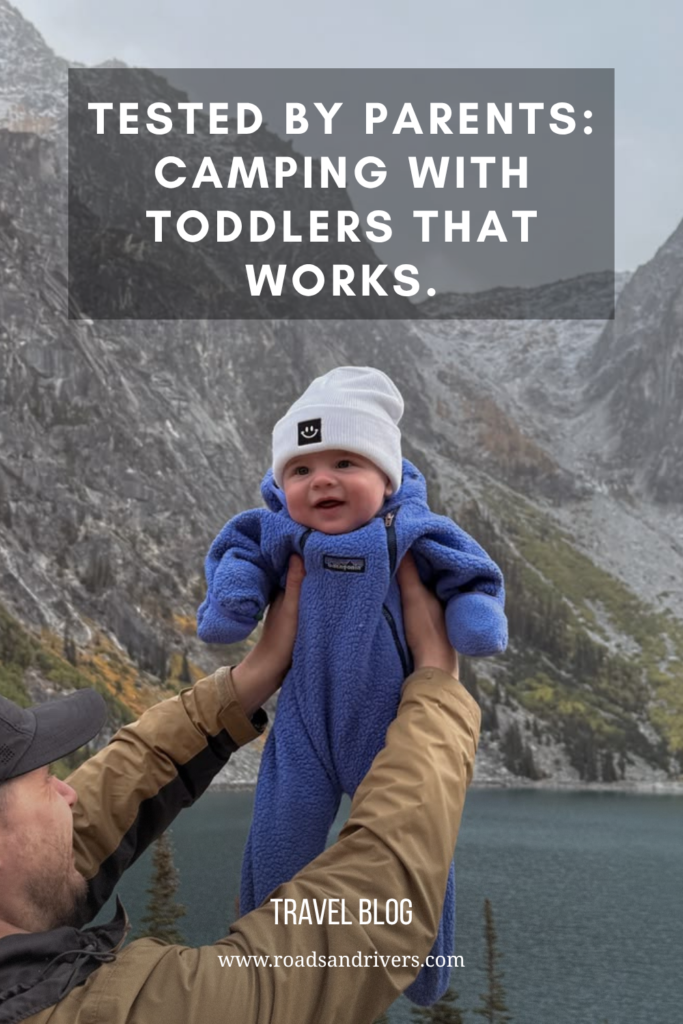
First-time toddler camping parents pack like they’re prepping for a natural disaster. By the third trip, you’ll bring half as much and wonder why you ever thought you needed all that stuff.
What you actually need:
A tent big enough to stand in (trust me, you’ll be changing diapers in there). Sleeping pads and a sleeping bag or fleece-lined sleep sack for your toddler. A portable crib or pack-and-play for younger toddlers. Extra layers for cold nights. A first-aid kit with children’s medications, a thermometer, and plenty of bandages. Sunscreen and bug spray made for kids. A headlamp for every family member (yes, even the toddler). A few favorite toys, books, and comfort items. And snacks. So many snacks.
What you can leave behind:
The full-size stroller (a carrier or hiking backpack works better on uneven ground). Half the toys you think they’ll play with (sticks and dirt will win every time). Complicated cooking setups (keep meals simple). Matching pajama sets (just bring warm layers). And the expectation that everything needs to be perfect.
Pro tip: Use a bin system instead of bags. Dedicate one bin to kitchen supplies, one to toddler gear, and one to bedtime items. It keeps your car organized and makes setup and cleanup much faster.
The Sleep Survival Guide for Camping with Toddlers
This is the section every parent is most nervous about. And the honest answer is: sleep will be different. But it doesn’t have to be a disaster.
Keep the bedtime routine identical
This is the single most important sleep tip. Mom Goes Camping’s toddler sleep guide stresses that the familiar routine (brush teeth, read the same book, sing the same song, hold the same stuffed animal) signals bedtime to your toddler even when the environment is completely different. Don’t skip steps just because you’re in a tent.
Make the tent dark
Toddlers wake up when it’s light. In summer, the sun is up by 5:30 AM, and your tent will glow like a lantern. Blackout tents or dark-room tent panels make a huge difference. If you don’t have one, drape a dark sheet or blanket over the tent section where your toddler sleeps.
Accept that naps will be off
Naps at camp rarely look like naps at home. Use a carrier for walking naps, try a car ride around the area, or snuggle up together in the tent during the heat of the day. Some toddlers nap perfectly at camp. Most don’t on the first trip. By the second trip, they adjust.
Layer up for warmth
Nighttime temperatures can drop 20 to 30 degrees from daytime highs, even in summer. Dress your toddler in warm layers, use a fleece sleep sack, and keep extra blankets within arm’s reach. A cold toddler wakes up. A warm toddler sleeps through.
Meals and Snacks That Keep Toddlers Happy at Camp
Camp meals with toddlers should be simple, familiar, and available constantly. This is not the trip to introduce new foods or attempt a gourmet dinner.
Snack all day. Pouches of goldfish crackers, fruit gummies, cheese sticks, apple slices, granola bars, and raisins. Keep a snack bin at toddler-accessible height so they can graze. Hungry toddlers are cranky toddlers, and cranky toddlers ruin camping trips.
Stick with familiar meals. Mac and cheese, quesadillas, hot dogs, scrambled eggs, PB&J sandwiches, and pasta with jarred sauce. This is not the time to push boundaries. If they eat it at home, bring it to camp.
Pre-make what you can. Experienced camping parents at Take Them Outside recommend bringing frozen pre-made meals that just need reheating. A frozen chili or pasta sauce keeps your cooler cold and means you’re warming food, not cooking from scratch while managing a toddler near an open flame.
Keep water everywhere. Toddlers dehydrate faster than adults, especially in the heat. Give them a sippy cup they can carry around and offer water constantly. High-water-content foods like watermelon, cucumbers, and grapes help too.
Pro tip: A portable high chair is worth its weight in gold at mealtimes. It keeps your toddler contained, upright, and focused on eating instead of wandering toward the fire pit.
Keeping Toddlers Safe at the Campsite
Toddlers have zero sense of danger and an alarming amount of speed. Campsite safety comes down to a few non-negotiable habits.
Establish a boundary early. Pick a visual marker (the picnic table, the fire ring, the car) and make it clear: we stay inside this area. Toddlers understand simple boundaries, especially if you walk the perimeter with them and repeat it a few times.
Never leave the fire unattended. This sounds obvious, but it’s easy to get distracted. A ring of camp chairs around the fire pit creates a physical barrier. Teach your toddler from the very first trip: fire is hot, we don’t touch.
Check for hazards at eye level. Get down to toddler height and look around the campsite. Sharp sticks, ant hills, poison ivy, tent stakes sticking up, and cooler latches at grabbing height. A five-minute sweep when you arrive prevents most problems.
Bring a comprehensive first-aid kit. Seattle’s Child camping guide recommends upgrading to a kit that includes children’s pain reliever, a thermometer, tweezers for splinters, antihistamine for bug bites, and any medications your toddler takes regularly. A basic bandage kit isn’t enough when you’re an hour from the nearest pharmacy.
Pro tip: Dress your toddler in bright colors. A neon yellow jacket or a bright red hat makes them easy to spot in a crowded campground, on a trail, or in a group of kids at the playground.
Camping with Toddlers on a Budget
Camping is already one of the most budget-friendly family vacations. With toddlers, you can keep it even cheaper by using what you already own and resisting the urge to buy every “must-have” gadget.
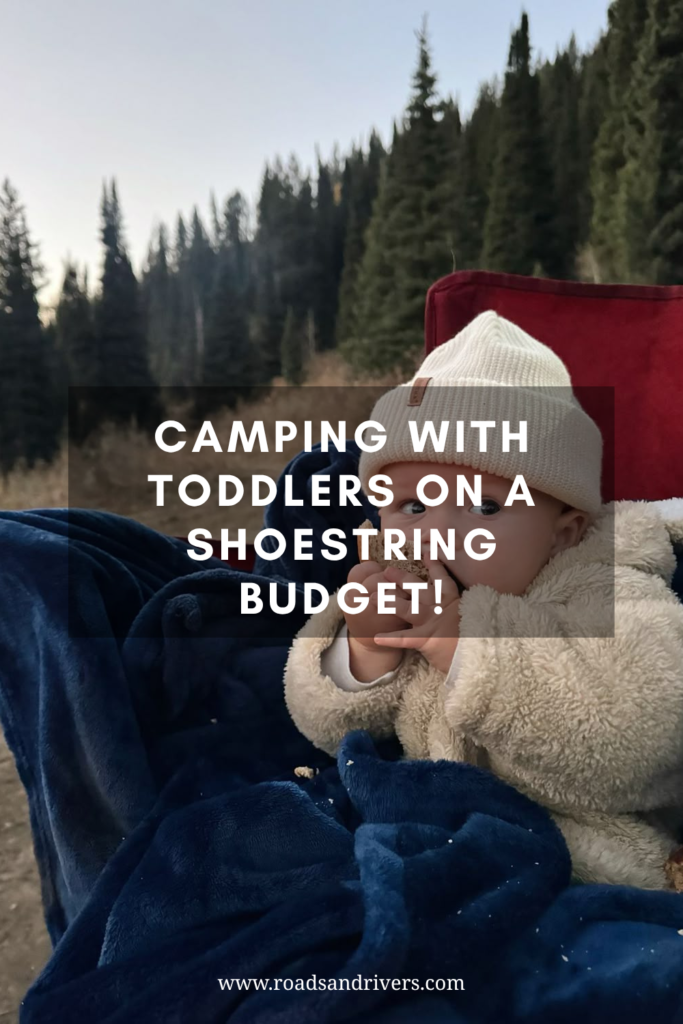
Use gear you already have. A pack-and-play from home doubles as a camp crib. Beach towels work as blankets. Tupperware containers hold snacks. You don’t need a separate camping wardrobe for a toddler who’s going to get muddy in the first 10 minutes anyway.
Camp at state parks and national forests. Campsite fees at state parks typically run $15 to $35 per night. National forest dispersed camping is often free. Compare that to a hotel room at $150+ per night, and the savings stack up fast.
Keep food simple and cheap. Hot dogs, eggs, pasta, and sandwiches are some of the cheapest meals you can make, and toddlers eat them without complaint. A weekend of camping food for a family of three or four can cost under $30.
Borrow before you buy. Ask friends and family if they have camping gear you can borrow for your first trip. There’s no point investing in a $300 tent before you know if camping with your toddler is going to become a regular thing.
Key Takeaways
- Start with one night at a developed campground close to home. Your first trip is a test run, not a performance.
- Keep the bedtime routine identical to home. Same books, same songs, same order. It’s the #1 sleep tip.
- Pack way more diapers and snacks than you think you need, and way fewer toys. Sticks and dirt are free entertainment.
- Choose a campsite away from roads and water. Open, flat sites with room to roam reduce stress for everyone.
- Let go of the rigid schedule. Naps will be weird, bedtime will be late, and it’s going to be fine.
Camping with toddlers won’t look like a magazine spread. There will be meltdowns, mud, and at least one moment where you question your life choices. But there will also be firefly chasing, sticky s’more faces, and the kind of belly-laughing that only happens outside. That’s the stuff your kid carries with them.
Start small. Pack smart. Lower your expectations. And go. The more you do it, the easier it gets, and before you know it, your toddler will be the one asking when you’re going back.
Have a camping-with-toddlers story (the good, the bad, or the hilarious)? Drop it in the comments. We want to hear it all.
FAQ
What is the best age to start camping with a toddler?
There’s no perfect age. Many families start camping with babies as young as a few months old, and toddlers aged 1 to 3 do well with the right preparation. The key is starting with short, low-pressure trips and choosing campgrounds with amenities like bathrooms and running water.
How do you get a toddler to sleep in a tent?
Keep your bedtime routine exactly the same as at home. Bring familiar comfort items (stuffed animals, blankets, sleep sacks), use a portable white noise machine, and make the tent as dark as possible. Most toddlers adjust by the second night of camping.
What should I pack for camping with a toddler?
The basics: a large tent with room for a portable crib, sleeping pads, extra layers for cold nights, a first-aid kit, sunscreen and bug spray, plenty of diapers and wipes, familiar snacks and simple meal ingredients, a portable high chair, a white noise machine, a headlamp, and a few favorite toys and books.
Is camping with a toddler worth it?
Yes. It’s more work than camping without kids, but the payoff is huge. Toddlers love the outdoors, and camping builds confidence, curiosity, and family memories that last. The first trip is the hardest. Each one after gets easier and more enjoyable for everyone.
How do you keep a toddler safe at a campsite?
Set clear boundaries around the campsite, keep a physical barrier around the fire pit, check for hazards at toddler eye level, dress them in bright colors for visibility, and bring a well-stocked first-aid kit. Never leave a toddler unattended near fire, water, or campground roads.