
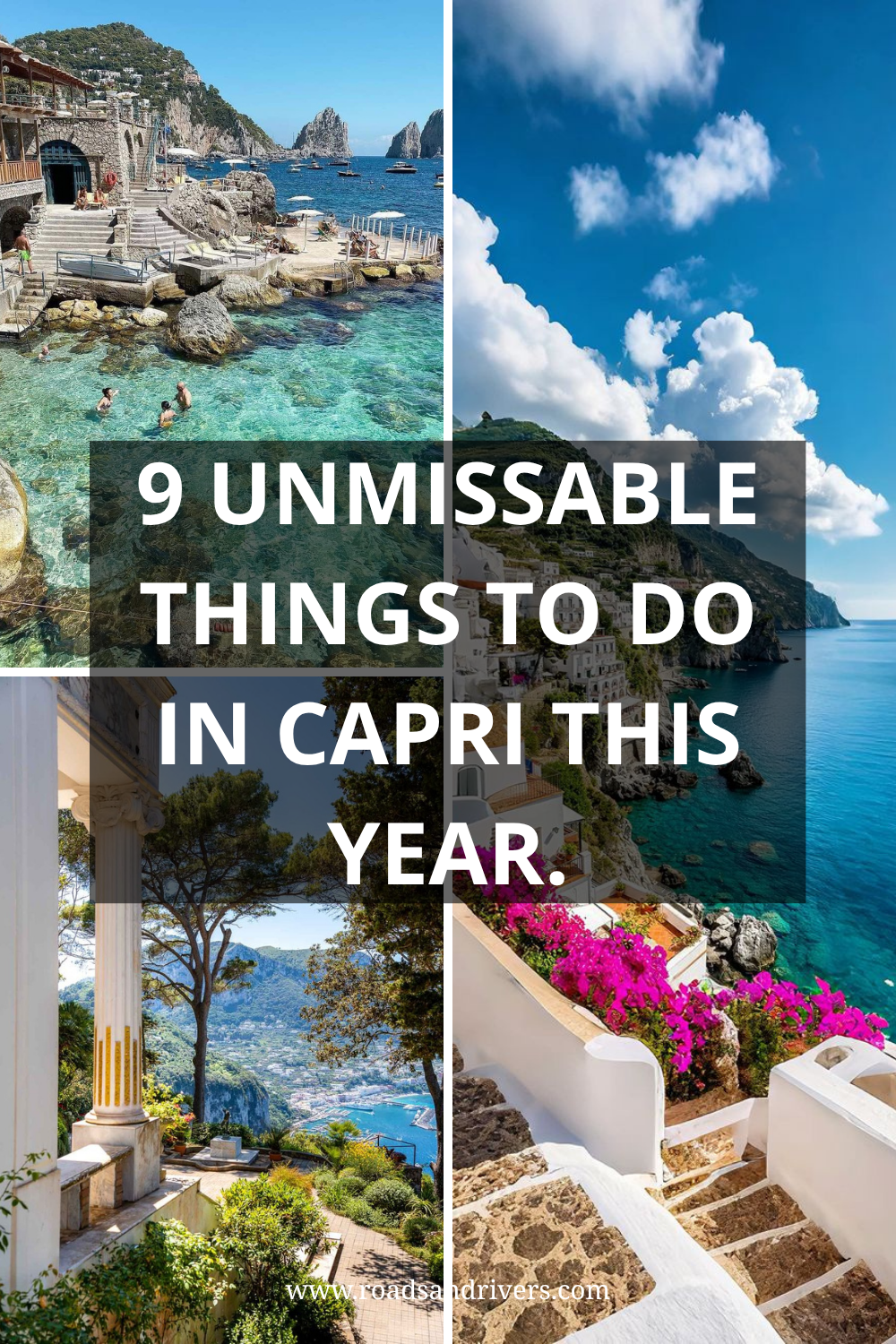
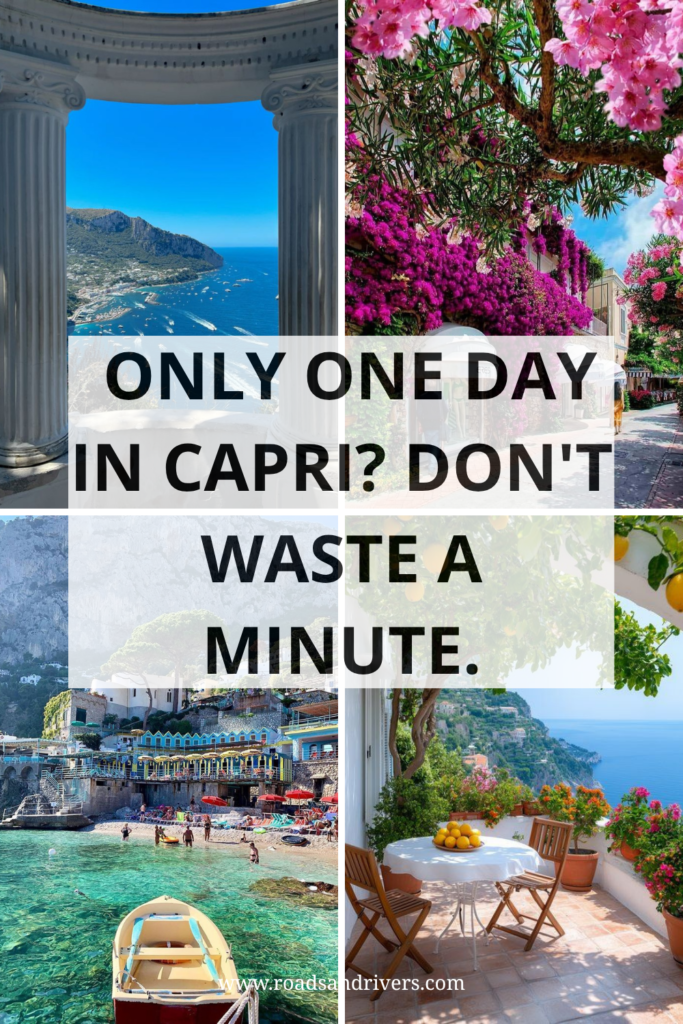
The ferry pulls into Marina Grande, and before you’ve even stepped off the boat, you can see why Roman emperors built their palaces here. Turquoise water so clear it looks photoshopped. Limestone cliffs dropping straight into the sea. Colorful buildings stacked up the hillside like a watercolor painting. Capri hits you all at once, and the only question is: where do you go first?
That’s where most visitors get it wrong. They hop on a quick day trip from Naples or Sorrento, spend an hour waiting in line for the Blue Grotto, eat an overpriced lunch in the Piazzetta, and take the ferry back thinking they’ve “done Capri.” They haven’t. Not even close.
The best things to do in Capri go well beyond the postcard highlights. There are cliffside walks with views that stop you mid-sentence, sea caves that glow green and white (not just blue), restaurants tucked into the rocks where the pasta tastes better than anything you’ve had on the mainland, and quiet corners of the island that most tourists never reach. This guide covers all of it: the iconic experiences, the local favorites, the tourist traps to skip, and an hour-by-hour plan for making the most of your time on the island.
Table of Contents
- How to Get to Capri (And When to Arrive)
- The 9 Best Things to Do in Capri
- Is the Blue Grotto the Best Thing to Do in Capri?
- 3 Capri Tourist Traps and What to Do Instead
- One Day in Capri: Your Hour-by-Hour Plan
- Where to Eat in Capri (Without Getting Ripped Off)
- The Best Time to Visit Capri
- Key Takeaways
- FAQ
Quick-Reference Info Box Getting there: Ferry from Naples (~50 min), Sorrento (~25 min), or Positano (~30 min) Best time to visit: May, June, or September (warm weather, fewer crowds) Budget tip: Shared boat tours start at ~€19/person; Blue Grotto entry is €18/person Days needed: 1 full day minimum; 2 days to do it right
How to Get to Capri (And When to Arrive)
Capri is a small island in the Bay of Naples, reachable only by boat. Ferries and hydrofoils run regularly from Naples (about 50 minutes), Sorrento (about 25 minutes), and Positano (about 30 minutes). You’ll arrive at Marina Grande, the island’s main port.
Here’s the first insider tip: take the earliest ferry you can. The day-trip crowds from the Amalfi Coast start flooding in around 10 to 11 AM, and by noon the island’s main attractions have lines. If you’re on the 7:30 or 8:00 AM ferry from Sorrento, you’ll have a solid two-hour head start on the majority of visitors.
Once you arrive at Marina Grande, you have two options for getting up to Capri Town: the funicular (a short cable railway that runs every 15 minutes, about €2.20 one-way) or a local minibus. The funicular is the faster and more scenic choice. From there, the island splits into two main towns: Capri (the glamorous, shopping-and-dining center) and Anacapri (quieter, higher up, and closer to the chairlift and Blue Grotto).
Pro tip: Buy a return ferry ticket before you start exploring. The last ferries fill up, especially in peak season, and you don’t want to be stuck on the island if you’re on a day trip.
The 9 Best Things to Do in Capri
These are the experiences worth your time, ranked by how much they’ll stick with you long after your tan fades.
1. Take a Boat Tour Around the Island
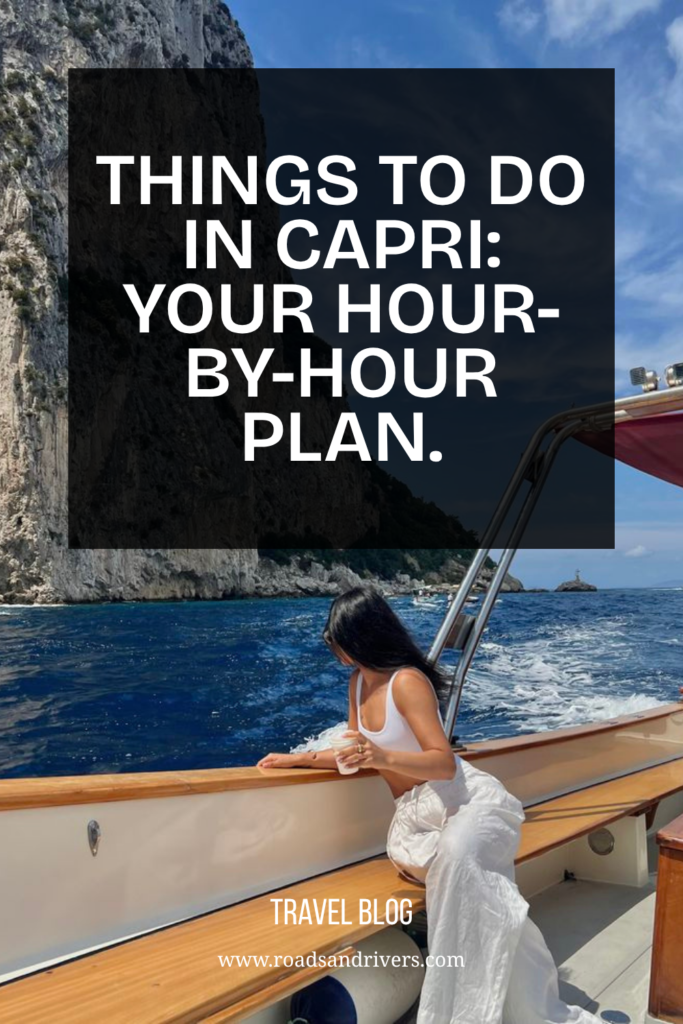
This is the single best thing you can do in Capri. A boat tour circles the entire coastline, passing the Faraglioni rock formations, the Natural Arch, hidden sea caves, Villa Malaparte perched on its cliff, and the Blue Grotto entrance. Capri.com’s boat tour guide lists shared group tours starting at about €19 per person for a two-hour circuit, or €24 with a Blue Grotto stop. Private tours run €300 and up for 3 to 4 hours but offer swim stops and complete flexibility.
From the water, you see a completely different Capri than from the land. The scale of the cliffs, the colors of the grottoes, and the clarity of the water are impossible to appreciate from above. If you only do one thing on the island, make it this.
2. Visit the Blue Grotto (Grotta Azzurra)
The Blue Grotto is Capri’s most famous attraction for a reason. Sunlight enters through an underwater opening and creates an electric blue glow that lights up the entire cave. You enter by lying flat in a small rowboat as the boatman pulls you through a tiny opening in the cliff face. The whole visit lasts about five minutes, but those five minutes are otherworldly.
The official Capri guide lists the entrance fee at €18 per person, which covers the rowboat and cave entry. Wait times can exceed an hour during peak midday hours, so arrive as early as possible (before 9 AM is ideal) or go late in the afternoon when the crowds thin out. The grotto closes when seas are rough, so entry can never be fully guaranteed.
Pro tip: The Blue Grotto is closed more often than people expect. If it’s closed on your visit, don’t panic. The boat tour alone is worth the trip, and the Green Grotto and White Grotto are also beautiful.
3. Ride the Chairlift to Monte Solaro
From Anacapri, a single-seat chairlift takes you to the top of Monte Solaro, the highest point on the island at 589 meters. The 12-minute ride floats you over lemon groves, gardens, and villa rooftops with the sea stretching out in every direction below. At the summit, the 360-degree panorama covers the entire island, the Amalfi Coast, and on clear days, all the way to Vesuvius.
This is one of the most photogenic things to do in Capri and one of the least crowded, since most day-trippers don’t make it up to Anacapri. The chairlift costs about €12 for a round trip.
4. Walk Through the Gardens of Augustus
These terraced botanical gardens sit on the southern edge of Capri Town and offer some of the best views on the island. From the viewing platforms, you look straight down at the Faraglioni rocks and across to the Via Krupp, a dramatic zigzag path carved into the cliff face. The entry fee is small (around €1 to €2), and the gardens take about 20 to 30 minutes to explore. Experienced Capri visitors at Earth Trekkers rate this as one of the most rewarding stops for the time invested.
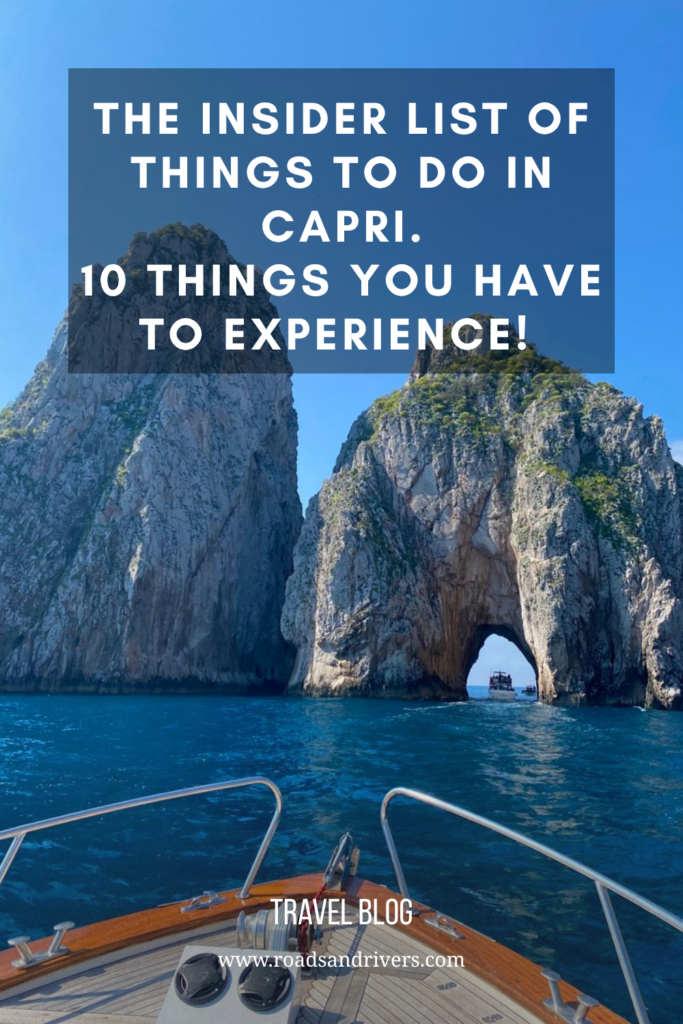
5. See the Faraglioni Up Close
These three massive limestone sea stacks rising out of the water are the symbol of Capri. You can see them from many points on the island, but the best way to experience them is from a boat, passing through the natural arch in the middle stack. It’s one of those moments where the scale of nature makes you feel very small, and it makes for an incredible photo.
6. Walk Via Krupp
Via Krupp is a narrow, winding path carved into the rock face connecting the Gardens of Augustus to Marina Piccola below. The switchbacks are tight and dramatic, and the views as you descend are some of the best on the island. The path has been closed on and off in recent years due to rockfall, so check its status before your visit. When it’s open, it’s a highlight of any Capri trip.
7. Explore Anacapri
While most tourists stick to Capri Town, Anacapri is quieter, more relaxed, and has its own charm. Wander the pedestrian streets, visit the Church of San Michele with its hand-painted tile floor, browse local artisan shops, and grab a lemon granita from a cafe that isn’t packed with tourists. It’s also the starting point for the Monte Solaro chairlift and one of the departure points for the Blue Grotto.
8. Swim at Marina Piccola
Marina Piccola is Capri’s south-side beach area, sheltered from the wind and overlooking the Faraglioni. The water is crystal clear and the setting is dramatic: cliffs on all sides, small beach clubs with lounge chairs, and restaurants right on the rocks. It’s one of the most popular swimming spots on the island, and rightly so. Arrive before noon for the best chance at a spot.
9. Wander the Piazzetta at Golden Hour
The Piazzetta (officially Piazza Umberto I) is the tiny central square in Capri Town where everyone eventually ends up. During the day it’s packed with tourists. But in the late afternoon and evening, when the day-trippers have left and the light turns golden, it becomes one of the most charming spots in all of Italy. Order a Spritz, sit at one of the outdoor tables, and watch the sunset light wash over the clock tower and the white buildings. Travel writers at Kelsey in London call this the perfect way to end a Capri day, and they’re right.
Is the Blue Grotto the Best Thing to Do in Capri?
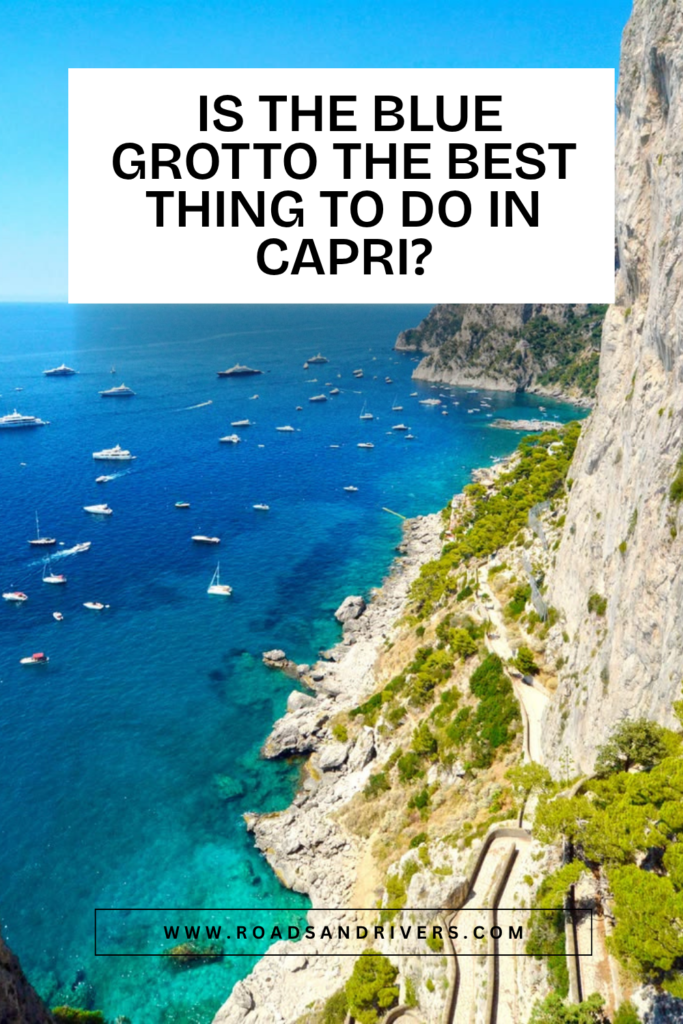
It’s the most famous, but it’s not necessarily the best. The Blue Grotto is a five-minute experience inside a small cave, and the lines can eat up 60 to 90 minutes of your day. The cave itself is genuinely beautiful, the blue glow is real and surreal, but whether it’s “worth it” depends on how much time you have.
If you’re spending two or more days on Capri, absolutely go. If you only have one day, you might get more value from a full boat tour, Monte Solaro, and an afternoon at Marina Piccola than from spending a chunk of your morning in a grotto queue.
The Blue Grotto’s official page notes that wait times are longest between 10 AM and 2 PM. Arriving first thing (before 9 AM by booking a separate boat directly from Marina Grande) or going after 3 PM gives you a much shorter wait and a less rushed experience inside.
3 Capri Tourist Traps and What to Do Instead
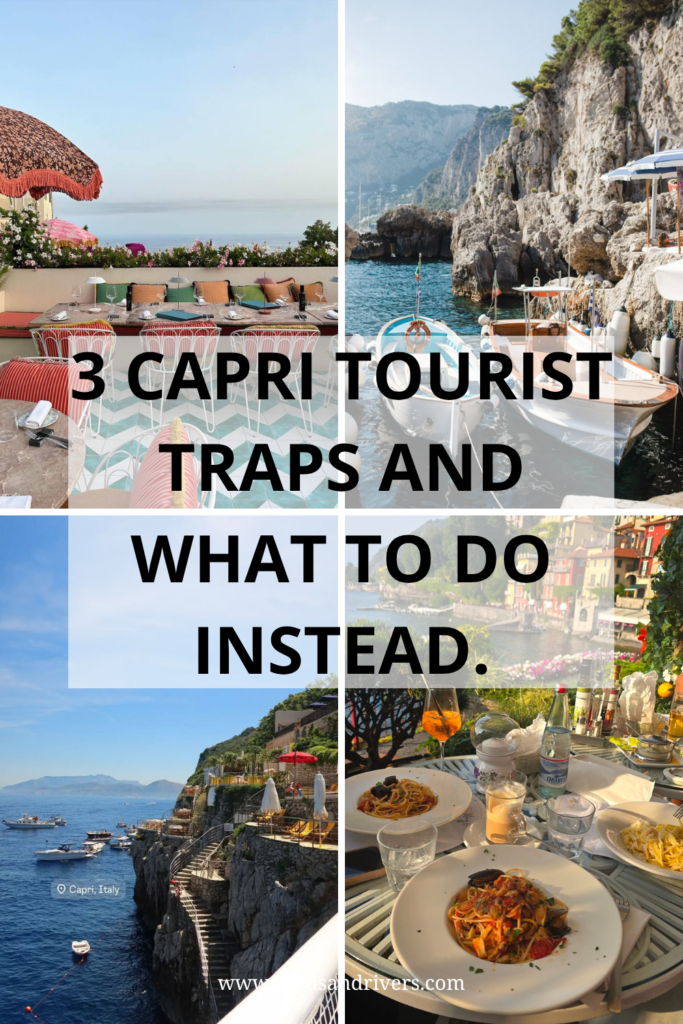
Trap 1: Eating lunch on the Piazzetta. The restaurants lining the main square charge premium prices for mediocre food because they know tourists will pay for the location. Skip it for lunch. Instead, walk five minutes in any direction and you’ll find trattorias with better food at half the price. Try the side streets near Via Le Botteghe for more authentic options.
Trap 2: Taking the bus to the Blue Grotto instead of a boat. Many visitors take the bus from Anacapri to the Blue Grotto, then queue at the cliff-side entrance. It’s chaotic, crowded, and you miss the coastline entirely. A boat tour that includes a Blue Grotto stop gets you there faster, with less waiting, and you see the rest of the island’s sea caves along the way.
Trap 3: Only visiting Capri Town. The majority of day-trippers ride the funicular up to Capri Town, walk around the Piazzetta and Via Camerelle, and take the funicular back down. They miss Anacapri, Monte Solaro, the quieter south-side beaches, and most of the island’s best walking trails. Capri is small enough to cover both towns in a day if you plan your route.
One Day in Capri: Your Hour-by-Hour Plan
If you only have one day, here’s how to spend it without wasting a minute.
7:30-8:00 AM: Take the early ferry from Sorrento or Naples. Arrive at Marina Grande before the crowds.
8:30-10:30 AM: Head straight to a boat tour (or directly to the Blue Grotto if it’s your priority). The morning light in the grotto is the best, and boat tours are less crowded before 10 AM.
10:30-11:30 AM: Take the funicular up to Capri Town. Walk through the Gardens of Augustus and look down at the Faraglioni and Via Krupp.
11:30 AM-12:30 PM: Early lunch at a trattoria off the main square. Eat before the noon rush.
12:30-2:00 PM: Take the bus to Anacapri. Ride the chairlift to Monte Solaro. Enjoy the view, take photos, ride back down.
2:00-3:30 PM: Explore Anacapri’s streets. Lemon granita, artisan shops, Church of San Michele.
3:30-5:00 PM: Head to Marina Piccola for a swim. Relax, cool off, soak in the view of the Faraglioni from the water.
5:00-6:30 PM: Return to Capri Town. Wander Via Camerelle. Settle into the Piazzetta for a Spritz as the light turns golden.
6:30-7:00 PM: Catch the evening ferry back.
Where to Eat in Capri (Without Getting Ripped Off)
Capri is expensive. There’s no way around that. But the difference between a €15 lunch and a €45 lunch is often just location, not quality. Here’s how to eat well without blowing your budget.
Eat off the Piazzetta. The main square is the most overpriced spot on the island. Walk a few minutes toward Via Le Botteghe, Via Fuorlovado, or the quieter streets near the Charterhouse of San Giacomo. You’ll find family-run trattorias serving fresh pasta and seafood at much more reasonable prices.
Get the ravioli caprese. This is Capri’s signature pasta dish: small ravioli filled with fresh local cheese, dressed simply in tomato and basil. It’s on almost every menu and it’s almost always good. Pair it with a glass of local white wine.
Try a lemon granita. Capri’s lemons are famous for a reason. A lemon granita from a local cafe is one of the best (and cheapest) things you’ll eat on the island. It’s refreshing, intensely citrusy, and costs a fraction of a sit-down meal.
Budget lunch option: Pick up a panino or focaccia from a bakery near Marina Grande and eat it at the viewpoint near the Gardens of Augustus. Best free dining room in Italy.
Pro tip: If you’re eating at a sit-down restaurant, check the coperto (cover charge) on the menu. Some Capri restaurants add a €3 to €5 per person service charge that isn’t always obvious upfront.
The Best Time to Visit Capri
Best overall: May, June, and September. Warm enough to swim, long daylight hours, and fewer crowds than the July-August peak. The Blue Grotto is also more likely to be open during calm spring and early summer seas.
Best for budget travelers: April or October. Ferries still run, most attractions are open, and hotel and restaurant prices drop. The water is cooler but the island is noticeably quieter.
Peak season (avoid if possible): July and August. The island gets packed, ferries sell out, restaurant waits are long, and the Blue Grotto queue can exceed two hours. If you must visit in summer, take the earliest ferry and consider staying overnight so you can enjoy the island after the day-trippers leave.
Winter: November through March is the island’s quiet season. Many restaurants and hotels close, ferry schedules are reduced, and the Blue Grotto is usually closed. But if you want solitude and dramatic weather over the cliffs, it has a moody beauty all its own.
Key Takeaways
- A boat tour around the island is the single best thing to do in Capri. It’s affordable (from €19/person) and shows you coastline, caves, and rock formations that are invisible from land.
- The Blue Grotto is worth visiting, but arrive early or late to avoid the worst queues. It closes in rough seas, so have a backup plan.
- Don’t just stay in Capri Town. Anacapri, Monte Solaro, Marina Piccola, and the Gardens of Augustus are all highlights.
- Eat off the Piazzetta for better food and lower prices. Ravioli caprese and lemon granita are the must-try local specialties.
- One day is enough for the highlights. Two days lets you slow down and enjoy the island at the pace it deserves.
Capri is one of those places that lives up to the hype, if you go beyond the surface. The Blue Grotto gets the headlines, but the boat tour, the Monte Solaro chairlift, a swim at Marina Piccola, and an evening Spritz in the Piazzetta after the crowds have gone: that’s where the real Capri lives.
Take the early ferry. Skip the tourist traps. And give yourself permission to just sit somewhere with a view and do nothing for a while. That’s what the island is for.
Been to Capri? Drop your favorite spot in the comments. The best recommendations always come from people who’ve been there.
FAQ
Is Capri worth visiting for just one day?
Yes. One full day is enough to take a boat tour, visit the Blue Grotto (conditions permitting), ride the Monte Solaro chairlift, and explore both Capri Town and Anacapri. Take the earliest ferry to maximize your time and leave on the evening return.
How much does a day trip to Capri cost?
A budget day trip runs roughly €50 to €80 per person, including ferry tickets (€15 to €25 each way), a shared boat tour (€19 to €24), Blue Grotto entry (€18), and food. A more comfortable day with a private boat tour and sit-down lunch can run €150 to €300+.
Is the Blue Grotto worth the wait?
For most visitors, yes, especially if you time it right. The blue glow inside the cave is genuinely impressive and unlike anything else. But if the line is over an hour and you only have one day, a full boat tour may be a better use of your time.
What should I wear in Capri?
Comfortable walking shoes are the most important thing. The island is hilly with cobblestone streets and uneven paths. Wear light, breathable clothing in summer, bring a swimsuit, and carry a light layer for boat rides where the wind picks up.
Can you swim in Capri?
Yes. Marina Piccola is the most popular swimming spot, with clear water and beach club facilities. Many boat tours also include swim stops at quiet coves around the island. The water is warm enough for swimming from late May through October.