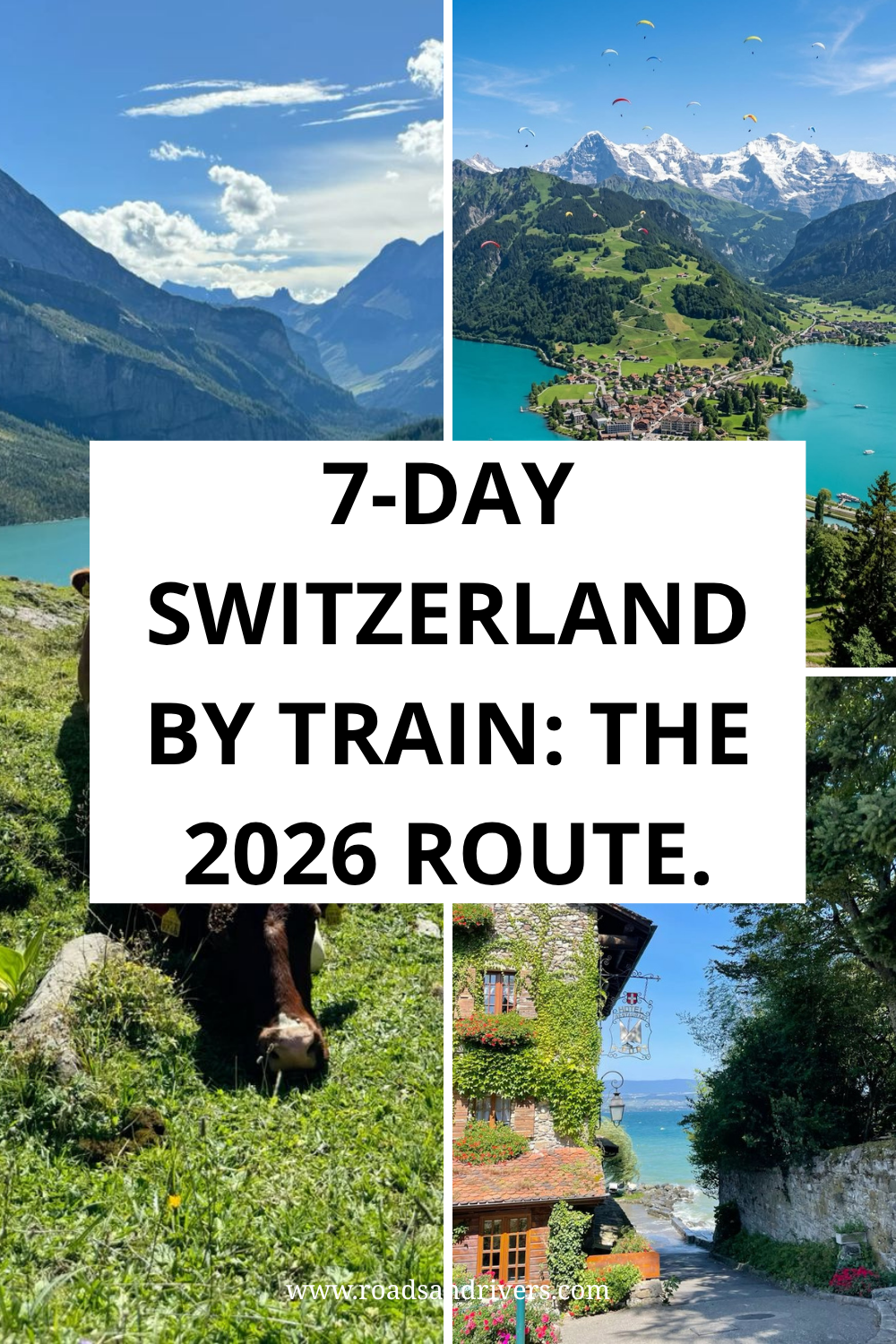
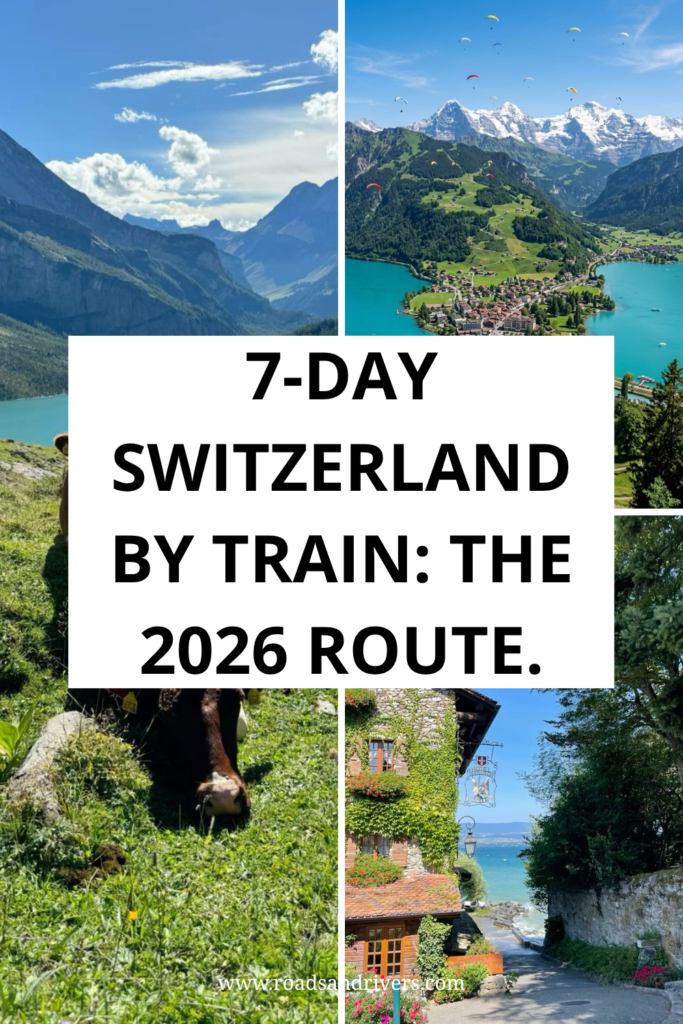
Switzerland is one of those countries where the journey is as good as the destination. The train glides between snow-capped peaks, skirts glacier lakes in impossible shades of turquoise, and slides through medieval towns so perfectly preserved they look like film sets. No country in the world has built a rail network through terrain like this, and no country rewards train travel more.
Seven days in Switzerland by train is the sweet spot. It’s enough time to move through the country properly: from Zurich’s polished lakeside promenade, through the wooden covered bridges of Lucerne, into the dramatic valleys of the Bernese Oberland, across to the Matterhorn in Zermatt, and along the Swiss Riviera to Geneva. Every day brings a new view, a new landscape, and a new reason to sit by the window and not put your phone down.
This is the 2026 route that delivers the best of Switzerland by rail, with practical tips on the Swiss Travel Pass, the scenic trains worth booking, and how to make seven days feel like much more.
Table of Contents
- What’s the Best Train Route Through Switzerland?
- The Switzerland Train Pass Mistake to Avoid in 2026
- Day 1 and 2: Zurich and Lucerne
- Day 3 and 4: Interlaken and Lauterbrunnen Valley
- Day 5 and 6: Zermatt and the Matterhorn
- Day 7: Montreux, Lake Geneva, and Geneva
- Switzerland by Train: Your Day-by-Day 2026 Plan
- Key Takeaways
- FAQ
Best time to visit: June to September for hiking and alpine views; December to March for skiing
Swiss Travel Pass: 7-day 2nd class costs CHF 449 in 2026; covers unlimited trains, buses, boats, and most scenic trains
Route summary: Zurich → Lucerne → Interlaken → Zermatt → Montreux → Geneva
Days needed: 7 days covers the highlights; 10 to 14 for a deeper experience
What’s the Best Train Route Through Switzerland?
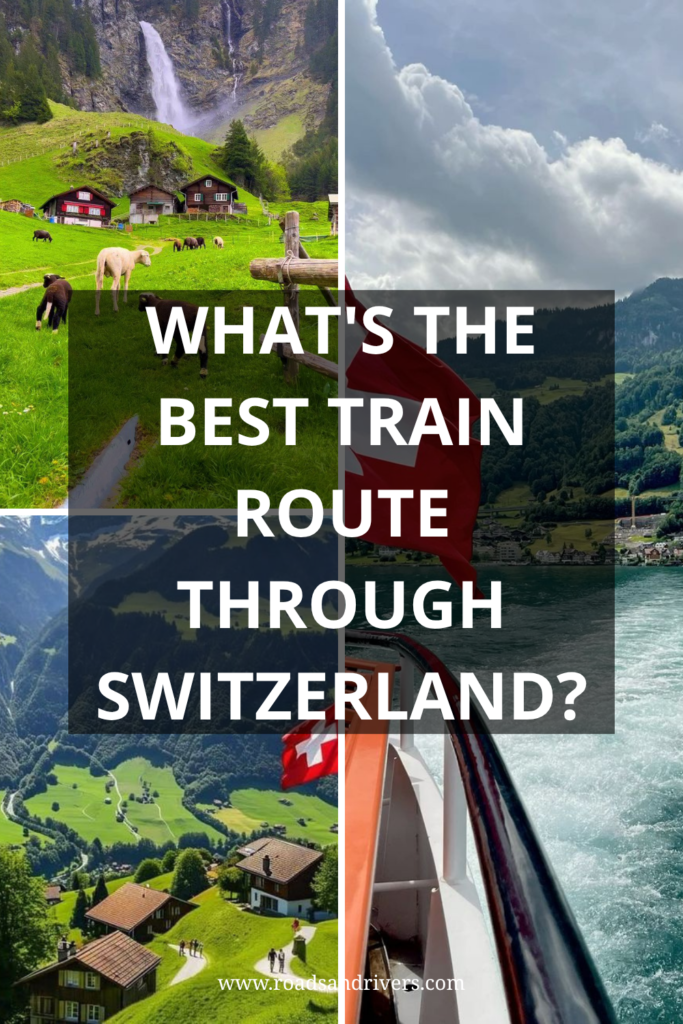
Switzerland’s rail network is so good that almost any route works. But for a first-time seven-day trip, the classic loop from Zurich to Geneva via the Alps hits the highest concentration of jaw-dropping scenery, charming towns, and bucket-list experiences.
The 2026 Route at a Glance
Zurich (1 day) → Lucerne (1 day) → Interlaken and Lauterbrunnen (2 days) → Zermatt (2 days) → Montreux → Geneva (1 day)
This route moves logically west and south through the country, ending in Geneva with easy international connections. Every leg is served by fast, frequent trains (departures every 30 to 60 minutes on most corridors), and the whole journey is either fully covered or heavily discounted by the Swiss Travel Pass.
Why the Train Is the Right Way to See Switzerland
Switzerland is only 350 km long, but it packs more scenery per kilometer than almost any country on earth. The Swiss Federal Railways (SBB) operate over 5,300 km of track, including some of the most dramatic mountain railways in the world. The Glacier Express, the GoldenPass Express, the Bernina Express, and the Jungfrau cogwheel railway are all travel experiences in their own right, not just transport.
Unlike driving, the train puts you in the window seat for every valley and every alpine panorama, without the stress of mountain roads in unfamiliar conditions. And with the Swiss Travel Pass, you can hop on and off at will without buying individual tickets for every journey.
Pro tip: Swiss trains are remarkably on time. Plan connection windows of at least 10 minutes between trains, and you’ll rarely miss a connection. The SBB app (available in English) shows real-time departures, track numbers, and journey planning for the entire network.
The Switzerland Train Pass Mistake to Avoid in 2026
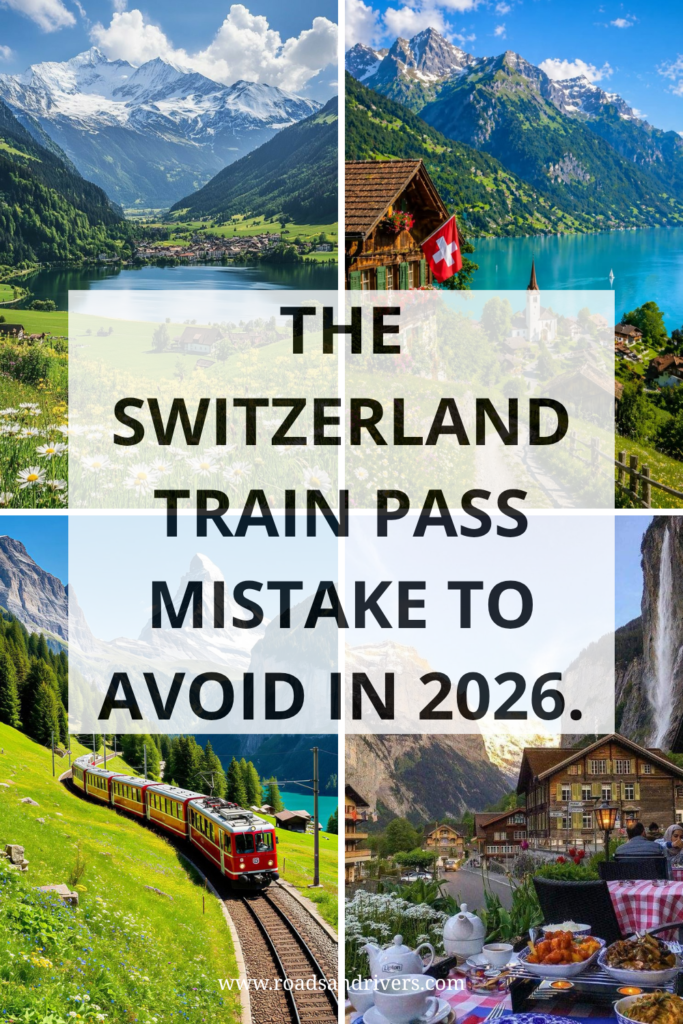
The Swiss Travel Pass is the most popular and most misunderstood product in Swiss tourism. Here’s what most people get wrong.
What the Swiss Travel Pass Covers (and Doesn’t)
The 2026 Swiss Travel Pass for 7 consecutive days in 2nd class costs CHF 449 per adult. It covers unlimited travel on national trains, buses, boats, and trams. It also includes the scenic panoramic trains (Glacier Express, Bernina Express, GoldenPass Express) as your base ticket, though mandatory seat reservations are still required separately.
Where the pass saves the most is on intercity travel and scenic trains. A Zurich–Lucerne return ticket alone costs around CHF 100. Add a Glacier Express ride (around CHF 150 without a pass), plus boat rides on Lake Lucerne and Lake Geneva (included in the pass), and the math starts working in your favor quickly.
What the Pass Doesn’t Cover
The Swiss Travel Pass gives a 50% discount on most mountain railways and cable cars, but doesn’t cover them fully. The Jungfraujoch excursion (“Top of Europe”) costs around CHF 200 even with the pass discount. The Matterhorn Glacier Paradise cable car runs CHF 90 to CHF 110 with the pass discount applied. These are still wonderful, but budget for them separately.
The common mistake: Buying the pass and then assuming all mountain excursions are free. They’re not. But the 50% discount on most mountain transport is still significant, and the convenience of not buying individual train tickets for every intercity journey makes the pass worth it for this seven-day itinerary.
Pro tip: Book your Glacier Express seat reservation well in advance, especially for summer travel. The mandatory reservation costs around CHF 49 per person and is not included in the pass. Seats sell out weeks ahead in high season.
For a broader look at budget-friendly European rail travel, our best Interrail routes in Europe guide shows how Switzerland fits into a wider European itinerary.
Day 1 and 2: Zurich and Lucerne
Day 1: Zurich
Fly into Zurich Airport (ZRH) and take the direct SBB train to Zurich Hauptbahnhof (15 minutes, covered by the pass). Drop your bags at the hotel and start walking.
Zurich’s Altstadt (Old Town) is built on either side of the Limmat River, divided into two distinct halves. On the west bank, the narrow lanes of Lindenhof Hill lead to panoramic views over the rooftops and lake. The twin towers of the Grossmünster Cathedral define the east bank skyline. Marc Chagall’s stained glass windows in the Fraumünster Church on the west bank are genuinely breathtaking and are included with most Zurich museum passes.
Walk south down Bahnhofstrasse, Zurich’s famous luxury shopping street, all the way to Lake Zurich. In summer, the lake is warm enough to swim in (Zürisee bathers treat the lake as a public pool from June onwards). A short sunset lake cruise from Bürkliplatz takes about 90 minutes and offers views of the city against the Alpine backdrop.
For dinner, Zeughauskeller in the Old Town is a cavernous, centuries-old restaurant serving Swiss classics (Zürcher Geschnetzeltes, rösti, fondue) at reasonable prices with fast service and generous portions.
Day 2: Lucerne
Take the train from Zurich to Lucerne (45 minutes, every 30 minutes). Lucerne might be the most visually perfect city in Switzerland. The wooden Chapel Bridge (Kapellbrücke) with its medieval tower and the lion sculpture carved directly into a cliff face are the two most photographed sights, but the city delivers on every corner.
Spend the morning on the covered bridges and walking the old city walls. The Swiss Museum of Transport (reachable by lake boat) is excellent for families or anyone genuinely curious about how Switzerland built its rail network through the Alps. In the afternoon, consider a mountain excursion to Mount Pilatus or Mount Rigi (both heavily discounted with the Swiss Travel Pass). Pilatus in particular offers one of the most dramatic cable car rides in Europe.
For a broader base from which to explore Switzerland’s mountain cities, our guide to the best Swiss cities and destinations to visit on your first trip covers every major stop in depth.
Pro tip: Stay overnight in Lucerne rather than returning to Zurich. The city is smaller and calmer after the day-tripper crowds leave, and the early morning light on the lake and bridges is exceptional.
Day 3 and 4: Interlaken and Lauterbrunnen Valley
Day 3: Interlaken and the Harder Kulm
The train from Lucerne to Interlaken Ost takes about 1 hour 50 minutes through dramatic lake and valley scenery, part of the Luzern-Interlaken Express route (fully covered by the Swiss Travel Pass).
Interlaken sits between Lake Thun and Lake Brienz at the gateway to the Bernese Oberland, one of the most spectacular alpine regions in the world. The town itself is a compact tourist hub, but its setting is extraordinary. Take the Harder Kulm funicular up to the Two Lakes Bridge for the view that defines the Bernese Oberland: both lakes stretching in opposite directions, with the Eiger, Mönch, and Jungfrau dominating the horizon.
In the afternoon, rent bikes or take the lake boat across Lake Brienz (covered by the Swiss Travel Pass). The lake is a vivid turquoise, ringed by steep forested slopes and tiny lakeside villages. The boat stop at Giessbach allows a short walk to the Giessbach Falls, a thundering series of waterfalls dropping through the forest directly above the lake.
Day 4: Lauterbrunnen Valley and the Jungfraujoch
This is the day that changes how most visitors think about Switzerland. The Lauterbrunnen Valley is a world unto itself: sheer cliff walls rising 300 meters on either side, 72 waterfalls cascading down the rock faces, tiny villages clinging to impossibly green ledges above the valley floor. The Staubbach Falls at the valley entrance are free to walk behind.
From Lauterbrunnen, cogwheel trains and cable cars connect upward to the car-free villages of Wengen and Mürren, both sitting on sunny terraces above the valley with unobstructed views of the triple peak skyline. Mürren is the quieter and more scenic of the two.
The Jungfraujoch excursion to the “Top of Europe” (3,454m) is Switzerland’s most famous mountain trip. The cogwheel train from Lauterbrunnen to the summit station takes about 2 hours. Even with the 25% Swiss Travel Pass discount, expect to budget around CHF 150 to CHF 180 per person. Book well in advance. On clear days, the views of the Great Aletsch Glacier are worth every franc.
Pro tip: Check the Jungfraujoch weather forecast before booking your specific day. The summit is often in cloud even when Interlaken is sunny. The Jungfrau webcam shows real-time conditions.
Day 5 and 6: Zermatt and the Matterhorn
Getting to Zermatt
The train from Interlaken Ost to Zermatt via Spiez and Visp takes around 2 hours 15 minutes and is one of the great train journeys in Switzerland: the Rhône valley opens out into wide agricultural plains before the train climbs again into the high Valais. Zermatt is car-free; a small electric shuttle brings luggage from the train station to hotels.
Day 5: The Matterhorn and the Gornergrat Railway
The Matterhorn is more dramatic in person than in any photograph. It rises above Zermatt at 4,478 meters, an almost perfectly triangular pyramid of rock and ice that appears to belong to a different geological era from everything around it. The best views are free: the Sunnega Paradise cable car (discounted 50% with Swiss Travel Pass) or the trail from Zermatt village toward Schwarzsee.
The Gornergrat Railway is a must. This cogwheel train climbs from Zermatt to 3,089 meters in 33 minutes, offering panoramic views of the Matterhorn and 29 surrounding four-thousanders. At the top, the Gornergrat Kulm restaurant serves reasonable lunches with a view that is difficult to describe to people who haven’t seen it. The railway is discounted 50% with the Swiss Travel Pass.
Day 6: The Five Lake Trail
The Five Lake Trail (Fünf-Seenweg) is a 10 km loop around five glacier lakes, each at a different elevation and each reflecting the Matterhorn at a different angle. It’s one of the most photogenic hikes in the Alps, takes about 3 to 4 hours at a comfortable pace, and requires no technical skill.
The hike starts at Sunnegga (reached by the underground funicular from Zermatt village). Pack a lunch and take your time at the lakes. The views from Stellisee, where the Matterhorn reflects perfectly in still water on calm mornings, are among the most beautiful in Switzerland.
Pro tip: Book Zermatt accommodation at least two months in advance for summer travel (June to September). The village has a limited number of beds, and the most-viewed rooms (facing the Matterhorn) sell out fast. Even a budget guesthouse with a Matterhorn view is worth paying slightly more for.
Day 7: Montreux, Lake Geneva, and Geneva
Montreux and the Swiss Riviera
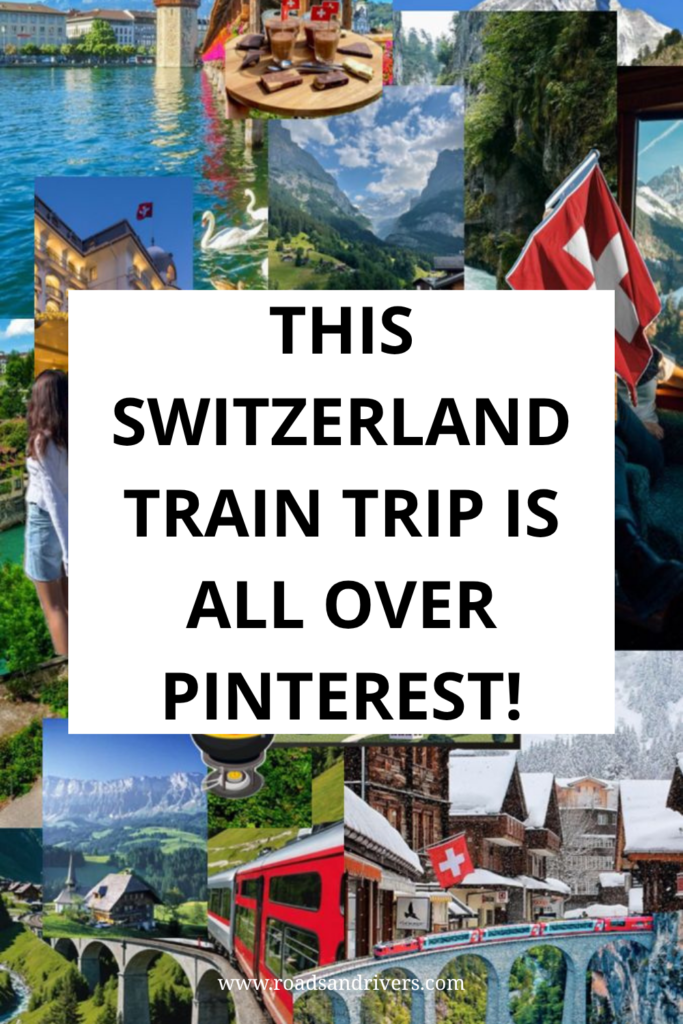
The GoldenPass Express from Interlaken to Montreux (book this scenic train in advance; seat reservation required) is one of the greatest train journeys in Europe. The panoramic windows deliver three hours of mountain lakes, chalets, and vineyard-covered hillsides on the descent to Lake Geneva. The train connects Zermatt via Visp and Brig toward Montreux. If you’re following this itinerary linearly, you’ll pass through this corridor on the way from Zermatt.
Montreux sits on the northern shore of Lake Geneva (Lac Léman) in what the Swiss call the Riviera. Palm trees line the lakeshore promenade. The medieval Château de Chillon, a perfectly preserved lake castle built on a rocky islet, is a 20-minute walk east of the town center and arguably the most beautiful castle in Switzerland. Admission runs CHF 13.50 and is discounted with the Swiss Travel Pass.
The walk along the Montreux lakeshore promenade toward Vevey, with the Alps reflected in the lake and the vineyards rising above the town, is free and genuinely one of the best walks in the country.
Geneva
The train from Montreux to Geneva takes 45 minutes (every 30 minutes). Geneva is Switzerland’s most international city, home to the United Nations, the Red Cross Museum, and the Jet d’Eau: a 140-meter water jet shooting from the middle of the harbor that’s visible from most of the city.
The Old Town on the hill above the lake has good museums and the Cathedral of Saint-Pierre with free rooftop views. The lakefront Parc des Bastions and Parc Mon Repos offer easy afternoon walking before an evening departure from Geneva Airport (GVA), directly connected to the city by a four-minute train.
Read more: If Geneva sparks interest in a wider European journey, our backpacking Europe for beginners guide covers everything you need to plan a longer trip.
Switzerland by Train: Your Day-by-Day 2026 Plan
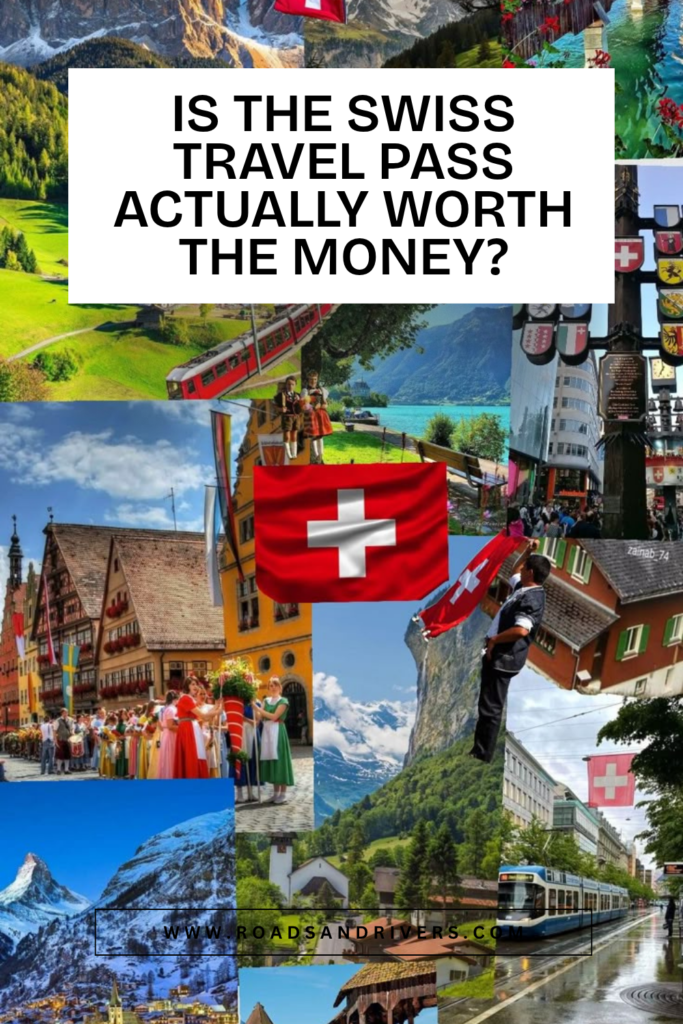
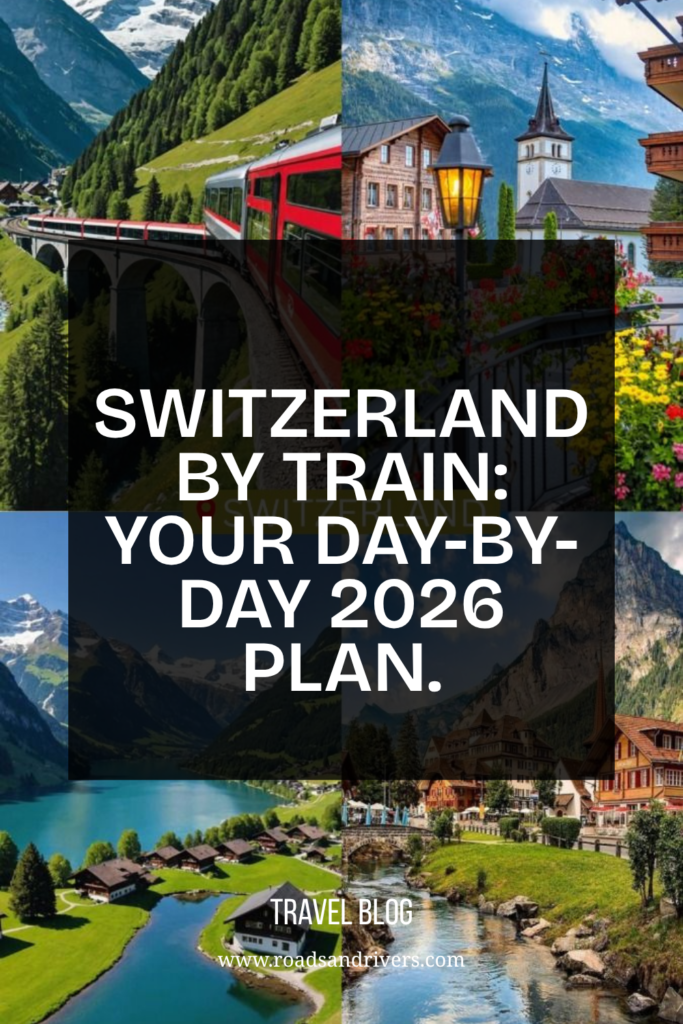
Here’s the full seven-day route condensed:
Day 1: Arrive Zurich → Old Town walk → Lake Zurich → evening dinner
Day 2: Train to Lucerne → Kapellbrücke → old town → optional Mount Pilatus or Rigi
Day 3: Luzern-Interlaken Express → Harder Kulm → Lake Brienz boat cruise
Day 4: Lauterbrunnen Valley → Mürren → Jungfraujoch excursion
Day 5: Train to Zermatt → Gornergrat Railway → Matterhorn views
Day 6: Five Lake Trail hike → evening in Zermatt
Day 7: Train toward Montreux → Château de Chillon → lake promenade → Geneva → depart
Practical Information
Budget: Switzerland is expensive. A realistic daily budget for mid-range travelers (comfortable guesthouse or hotel, three meals, one activity or mountain excursion) is CHF 200 to CHF 350 per day, not including the Swiss Travel Pass. Budget travelers in hostels spending carefully can manage CHF 120 to CHF 170. Luxury options (Zermatt mountain-view hotels, Montreux lake hotels) run CHF 400 to CHF 800+ per night.
Food: Swiss supermarkets (Migros and Coop) are the budget traveler’s best friend. An excellent picnic from either chain costs CHF 8 to CHF 12 and tastes better at 2,000 meters with a mountain view than any restaurant. Swiss restaurants serve large portions; sharing starters is normal. Fondue is cheapest and best in small mountain villages rather than tourist centers.
Weather: Alpine weather changes fast at any time of year. Always carry a lightweight waterproof layer, even in July. Summer thunderstorms roll in quickly in the afternoons. Start mountain hikes early and aim to be below the highest exposed ridges by 2 PM.
For packing advice that works for both mountain hikes and city exploration, our guide on how to use packing cubes correctly helps you stay organized across a multi-destination trip.
When to go: June through September is the best window for hiking and alpine views, with July and August being peak season and most crowded. Late May and October offer fewer crowds and still good conditions in lower elevations. Winter (December to March) transforms Switzerland into a ski destination, with Zermatt and St. Moritz as the premier resorts.
Our guide on how to plan an outdoor trip from gear to route to safety covers the planning basics that apply to any Swiss alpine adventure.
Key Takeaways
- The route Zurich → Lucerne → Interlaken → Zermatt → Montreux → Geneva covers Switzerland’s best in seven days with logical connections and no backtracking.
- The Swiss Travel Pass (7 days, CHF 449 in 2026) is worth it for this itinerary. It covers intercity trains, scenic trains (base ticket), boats, and gives 50% off most mountain railways.
- Mountain excursions cost extra. Budget CHF 100 to CHF 200 per person for the Jungfraujoch and CHF 60 to CHF 100 for Gornergrat or Pilatus, even with pass discounts.
- Book scenic trains and mountain-view accommodation well in advance. The Glacier Express, Jungfraujoch, and popular Zermatt hotels sell out weeks ahead in summer.
- Slow down in Zermatt and Lauterbrunnen. These are the areas where Switzerland rewards time. Two nights in each is better than one rushed day.
Switzerland by train doesn’t just get you from place to place. It shows you the country. Every valley, every lake, every switchback climb through the Alps happens from a window seat, and after seven days of it, you’ll understand why so many people come here once and spend years trying to come back.
The route above isn’t the only way to see Switzerland. But it delivers the mountains, the lakes, the medieval towns, and the scenic railways that define the country, in an order that makes sense, on a schedule that actually works. All that’s left is to book your seat reservation for the Glacier Express and point yourself at the mountains.
Have a Switzerland train tip or a favorite stop from this route? Leave it in the comments.
FAQ
Is the Swiss Travel Pass worth it for a 7-day itinerary?
Yes, for this specific route. The pass pays for itself through a combination of intercity train tickets, the Glacier Express (base ticket covered), and boat rides on Lakes Lucerne, Thun, Brienz, and Geneva. The 7-day 2nd class pass costs CHF 449 in 2026. For travelers doing a lot of mountain excursions, consider comparing it with the Half Fare Card (CHF 120 for one month), which gives 50% off all transport but requires you to buy tickets individually.
How many days do you actually need in Switzerland?
Seven days is a solid first visit covering the main highlights. Ten to fourteen days allows you to slow down, spend more time in the Alps, and add destinations like Bern, Lugano, or St. Moritz. If you only have five days, cut the Montreux to Geneva section and spend the extra day in Zermatt or Lauterbrunnen.
Do I need to speak German or French to travel in Switzerland?
No. English is widely spoken throughout Switzerland, including in train stations, mountain restaurants, hotels, and tourism facilities. Swiss train staff and conductors almost universally speak English. You’ll encounter German in Zurich and Lucerne, French in Geneva and Montreux, and Italian in the Ticino region (Lugano). A few words of each are appreciated but not necessary.
What is the most scenic train ride in Switzerland?
The Glacier Express from Zermatt to St. Moritz (or vice versa) is the most famous, running for 8 hours through 291 bridges and 91 tunnels across the central Alps. For a shorter but equally stunning option, the Bernina Express from Chur to Tirano and the GoldenPass Express from Interlaken to Montreux both rank among Europe’s great train journeys. The Luzern-Interlaken Express is also underrated for its lake and mountain scenery.
Is Switzerland safe for solo travelers?
Switzerland is one of the safest countries in the world for solo travel. Crime is low, infrastructure is excellent, trail markings are impeccable, and the country is small enough that you’re never far from a village or train station. The main safety considerations are weather-related: mountain weather changes quickly, and proper layering and weather awareness are essential on any alpine hike above 2,000 meters.