Switzerland has a way of making every other country feel slightly insufficient. The train pulls out of the tunnel and suddenly there are snow-capped peaks out both windows, a turquoise lake below, and a village of wooden chalets clinging to a hillside in a way that looks completely impossible. It is a lot to take in before your coffee is even finished.
The problem is not finding things to see in Switzerland. The problem is having too many choices and too few days. The swiss cities and destinations on every first-timer’s list are wildly different from each other: cosmopolitan Zurich, medieval Bern, lakeside Geneva, fairy-tale Lucerne, and Alpine villages like Grindelwald and Lauterbrunnen that look like they were designed by someone who had never heard of understatement. This guide cuts through the noise and tells you exactly which places are worth your time, what most first-timers get wrong, and how to build an itinerary that does not leave you feeling like you missed the best parts.
Table of Contents
- Quick Trip Planner: How Many Days Do You Need?
- Swiss Cities Ranked: Where to Go First
- The Swiss Cities Mistake Most First-Timers Make
- The Destinations That Exceeded Every Expectation
- Which Swiss Cities Should First-Timers Prioritize?
- Zurich or Lucerne: Which Swiss City Wins?
- Too Many Swiss Cities, Too Few Days? Here Is the Fix
- The Swiss City Everyone Is Adding to Their Itinerary
- FAQ
Quick Trip Planner: How Many Days Do You Need?
| Destination | Minimum Days | Best For |
|---|---|---|
| Zurich | 1-2 days | City culture, day trip base |
| Bern | 1 day | Architecture, Old Town |
| Lucerne | 1-2 days | Lake views, mountain access |
| Geneva | 1-2 days | International vibe, lakeside walks |
| Interlaken | 2-3 days | Adventure sports, Jungfrau access |
| Grindelwald | 2-3 days | Swiss Alps scenery, hiking |
| Lauterbrunnen | 1-2 days | Waterfalls, village atmosphere |
| Zermatt | 2-3 days | Matterhorn views, ski/hike base |
Best time to visit: June to September for hiking and outdoor activities. December to February for skiing and snow scenery. Shoulder seasons (May and October) offer lower crowds and competitive pricing.
Average daily budget: CHF 150-200 (budget), CHF 250-350 (mid-range), CHF 400+ (comfortable). Switzerland is expensive. There is no workaround, but there are strategies covered below.
Getting there: Zurich, Geneva, and Basel are the main international airports. The Swiss Travel Pass covers trains, buses, and most lake boats, making it the most cost-effective way to get between cities.
Pro tip: Buy the Swiss Travel Pass before you arrive in Switzerland. It is cheaper outside the country and covers almost every form of public transport.
Swiss Cities Ranked: Where to Go First
If you only have one week and you are trying to cover the best of Switzerland, here is the honest ranking of where to spend your time.
1. Zurich is the obvious starting point for most international flights, and it delivers. The Old Town (Altstadt) is compact and walkable, the lake is gorgeous in any season, and the food scene has quietly become one of the best in central Europe. Do not make the mistake of treating it only as a transit hub.
2. Lucerne is the most immediately photogenic city in Switzerland. The Chapel Bridge, the snow-capped backdrop of Mount Pilatus, the swans on the lake. It photographs well in every season and has a manageable size that makes it easy to cover in a full day or a relaxed two days.
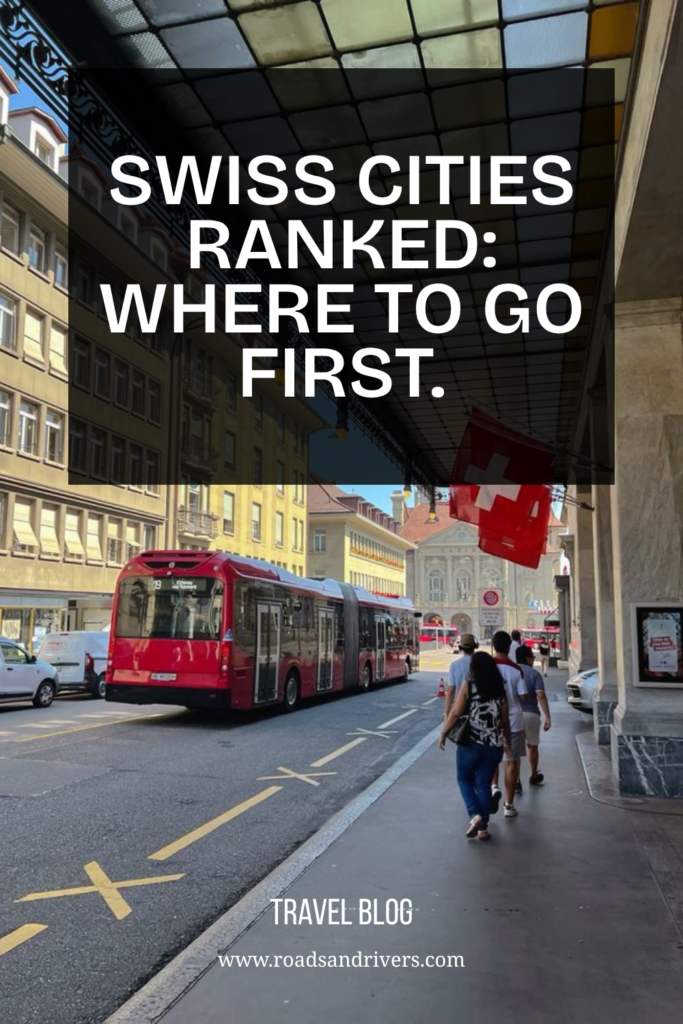
3. Bern is the most underrated city on this list. The capital sits in a curve of the Aare River, has some of the best-preserved medieval architecture in Europe, and carries none of the tourist-trap energy of Lucerne. Walk the arcaded streets, visit the bear park, and get up to the Rose Garden for one of the best views in the country.
4. Geneva is for the traveller who wants Switzerland with a side of French sophistication. The Jet d’Eau fountain, the Carouge neighbourhood, the lakeside promenade at sunset. It is not the most budget-friendly Swiss city but it rewards people who take the time to move past the postcard version.
5. Interlaken is your gateway to the Jungfrau region. On its own it is more of a logistics hub than a destination, but its position between two lakes and below some of the most dramatic Alpine scenery in the country makes it worth at least one night.
Read more: The Perfect 7-Day Switzerland Itinerary by Train for a complete day-by-day breakdown of how to connect these cities.
The Swiss Cities Mistake Most First-Timers Make
I spent two full days in Zurich on my first Switzerland trip and barely left the area around the main train station. I ate at the most obvious tourist restaurants, paid for a boat tour I could have done for a fraction of the cost on a public ferry, and skipped Bern entirely because someone told me it was “just a government city.”
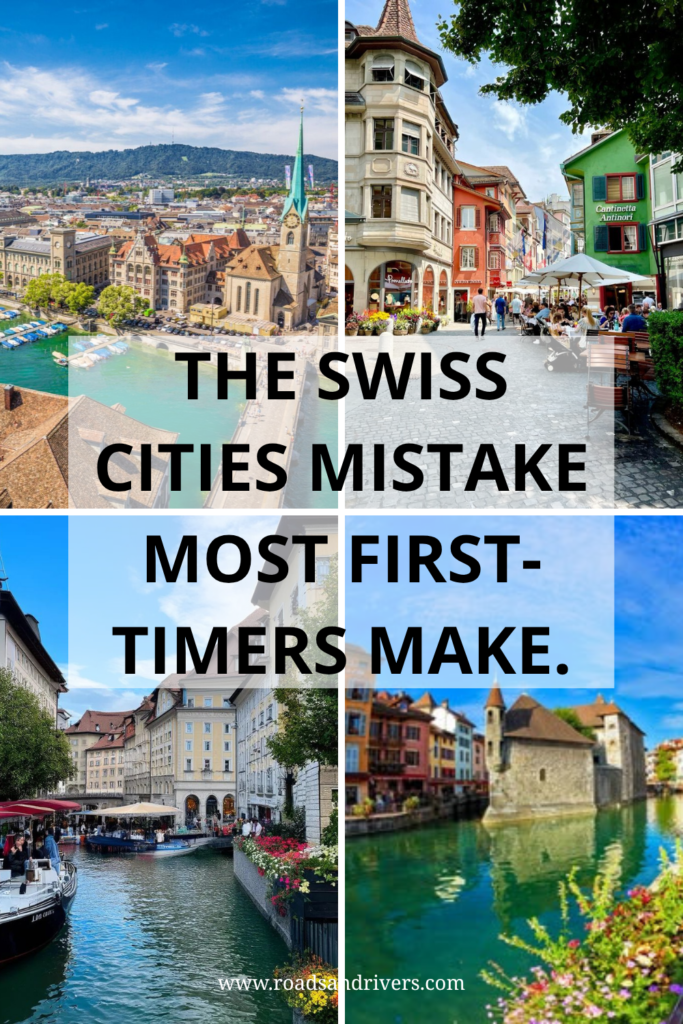
That was a mistake. The biggest error first-time visitors make in Switzerland is spending too much time in Zurich and Geneva and not enough time in the smaller cities and Alpine villages that are the actual soul of the country.
Here are the specific mistakes to avoid:
Skipping Bern. It is a two-hour train ride from almost everywhere and it has more character per square metre than any other Swiss city. The arcaded Lauben (covered walkways) have kept Bern’s streets protected from the elements since medieval times. Walk them at your own pace.
Treating Interlaken as just a base. Interlaken itself is pleasant for an evening, but if you are staying there, take the train up to Grindelwald or Lauterbrunnen. That is where the scenery shifts from pretty to genuinely breathtaking.
Overpaying for everything. Switzerland is expensive but not uniformly so. Supermarkets (Migros and Coop) have excellent prepared food. Outdoor swimming is almost always free. Most scenic viewpoints are accessible without paying for a gondola ticket, if you are willing to walk.
Missing lake towns entirely. Montreux, Thun, and Brienz do not get the same attention as Lucerne or Geneva, but they sit on lakes that are every bit as beautiful and have a fraction of the crowds.
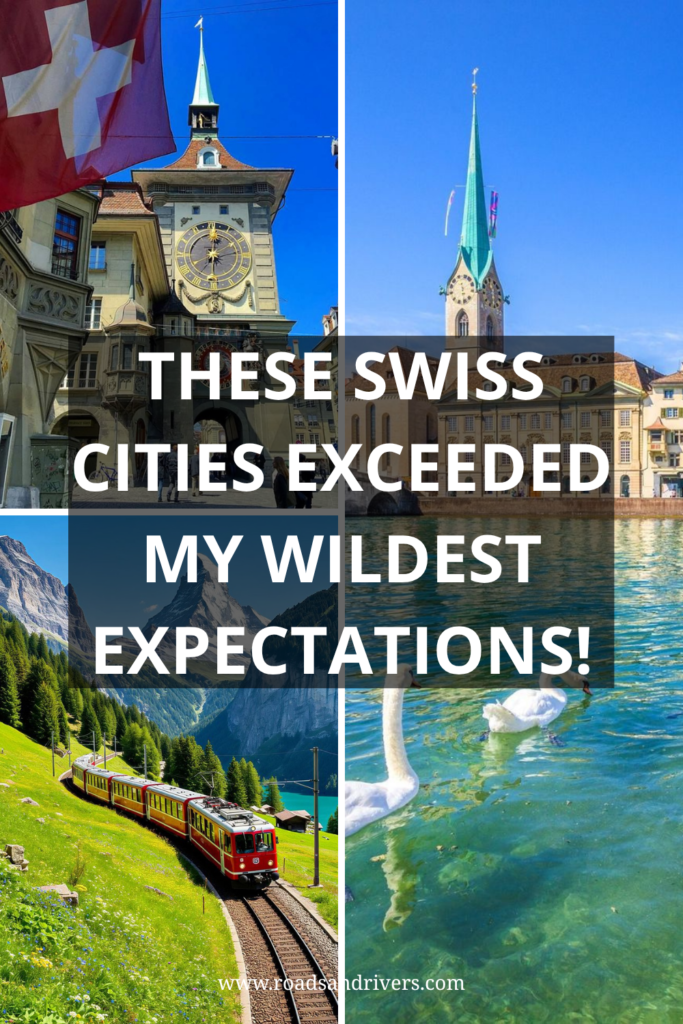
The Destinations That Exceeded Every Expectation
Some destinations you arrive at with high expectations and leave mildly deflated. Switzerland is not one of them. These are the places that consistently deliver more than the photos promise.
Lauterbrunnen
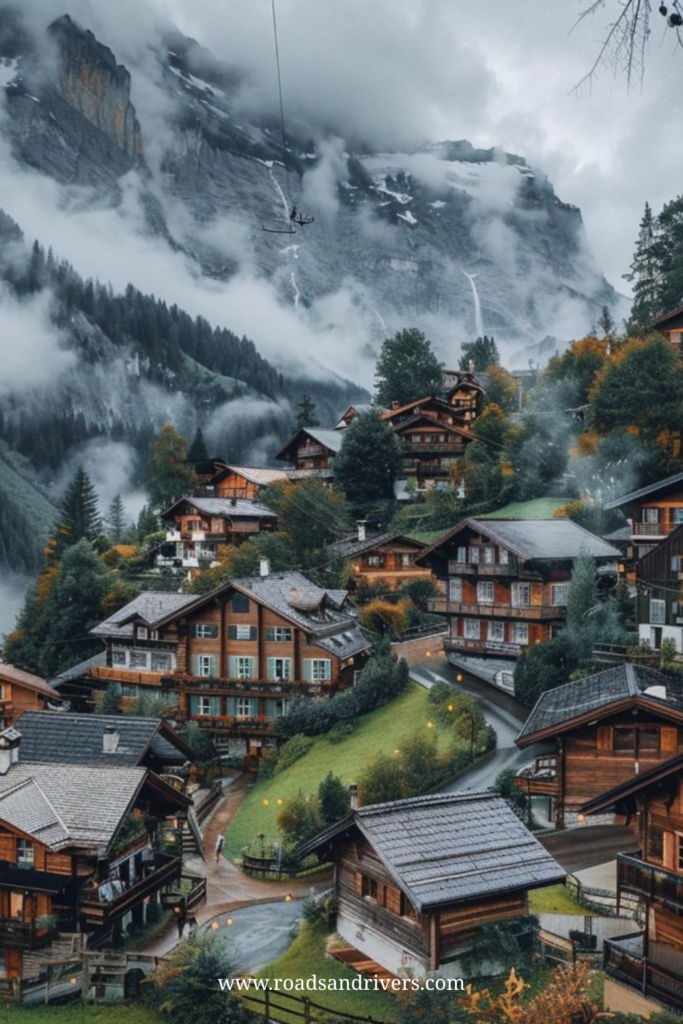
No photo prepares you for Lauterbrunnen. The valley is so steep and narrow, with waterfalls cascading down sheer rock walls on both sides, that it feels more like a film set than a real place. Tolkien reportedly used it as inspiration for Rivendell. Standing in the main street as the Staubbachfall drops 297 metres behind the village rooftops is one of those travel moments that genuinely stops you in your tracks.
The village itself is tiny and car-free (you park at the edge and walk in), which adds to the atmosphere. You can stay here for two days and not run out of things to do: the waterfall walk, the Trümmelbach Falls inside the mountain, and the cable car up to Mürren, a car-free Alpine village with direct views of the Eiger, Mönch, and Jungfrau.
Grindelwald
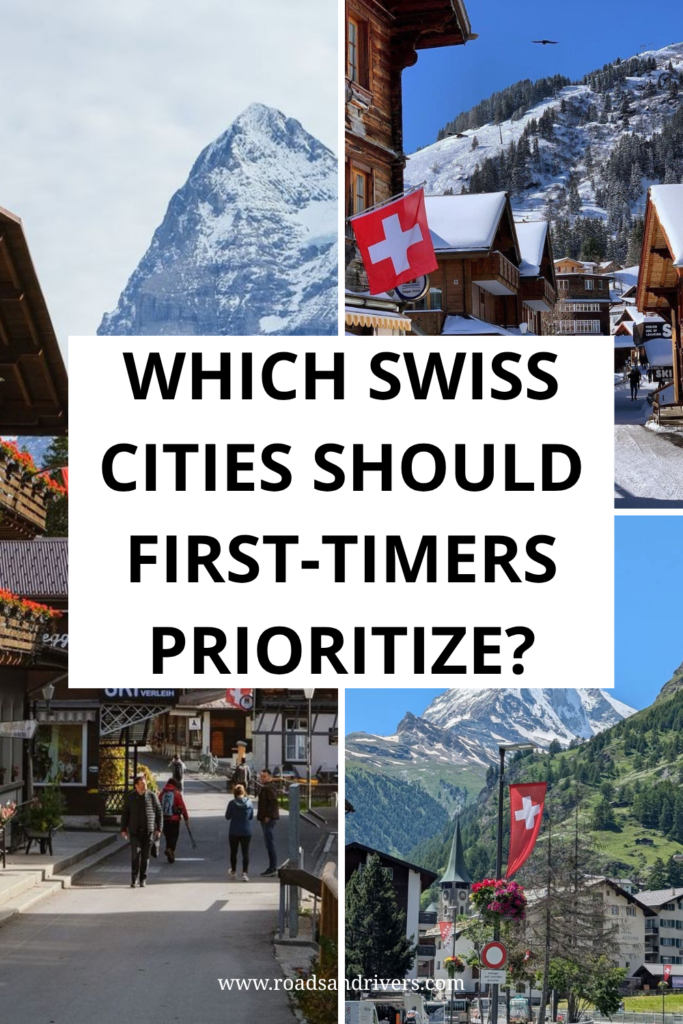
Grindelwald sits directly below the north face of the Eiger, one of the most legendary mountains in alpinism history. In summer, the meadows are covered in wildflowers and the hiking trail network is world-class. In winter, it transforms into a full ski resort with access to the Jungfrau ski region.
The village has more accommodation options than Lauterbrunnen and a slightly more developed tourist infrastructure, but it retains its character. The views from the main street looking up at the Eiger’s sheer wall are a reminder that some places really do look better in person than online.
Pro tip: Take the first gondola up to First (yes, that is the name of the peak) before 9 AM. The early light on the Bernese Alps is extraordinary and the trails are empty.
The Scenic Train Routes
The Glacier Express, the Bernina Express, and the GoldenPass Line are not just transport. They are destinations. The Bernina Express in particular, crossing from Chur in Switzerland into Tirano in Italy through some of the highest railway passes in the Alps, is worth planning your entire trip around. If you are already using Switzerland as a base for broader European rail travel, this connects naturally to a wider Interrail route through Europe.
Which Swiss Cities Should First-Timers Prioritize?
The answer depends on what you are actually looking for from Switzerland. Not everyone wants the same trip, and Switzerland covers enough ground to satisfy very different travellers.
If you want Alpine scenery above everything else: Skip the cities almost entirely. Fly into Zurich, take one night there, then head straight to the Bernese Oberland. Base yourself in Grindelwald or Lauterbrunnen for three nights. You will not regret it.
If you want a mix of city culture and scenery: Zurich (2 nights) + Lucerne (2 nights) + Interlaken or Grindelwald (2 nights) is the classic first-trip formula and it works. The Swiss rail connections between these three points are fast and frequent.
If you want something beyond the tourist trail: Bern plus the Valais region (Sion, Zermatt) gives you medieval architecture, local culture, and the Matterhorn without fighting through the same crowds as Grindelwald or Lauterbrunnen. Zermatt at the end of a Switzerland trip is almost unfair. The town is car-free, the air is clean, and the Matterhorn is visible from almost every street corner.
If you are combining Switzerland with other countries: Geneva is your best base for reaching France (Lyon is 2 hours by TGV, Chamonix is 90 minutes), while Zurich connects easily to Munich, Vienna, and Milan. The rail connections make Switzerland a natural hub for a wider European trip, especially if you are planning a backpacking Europe route that crosses multiple countries.
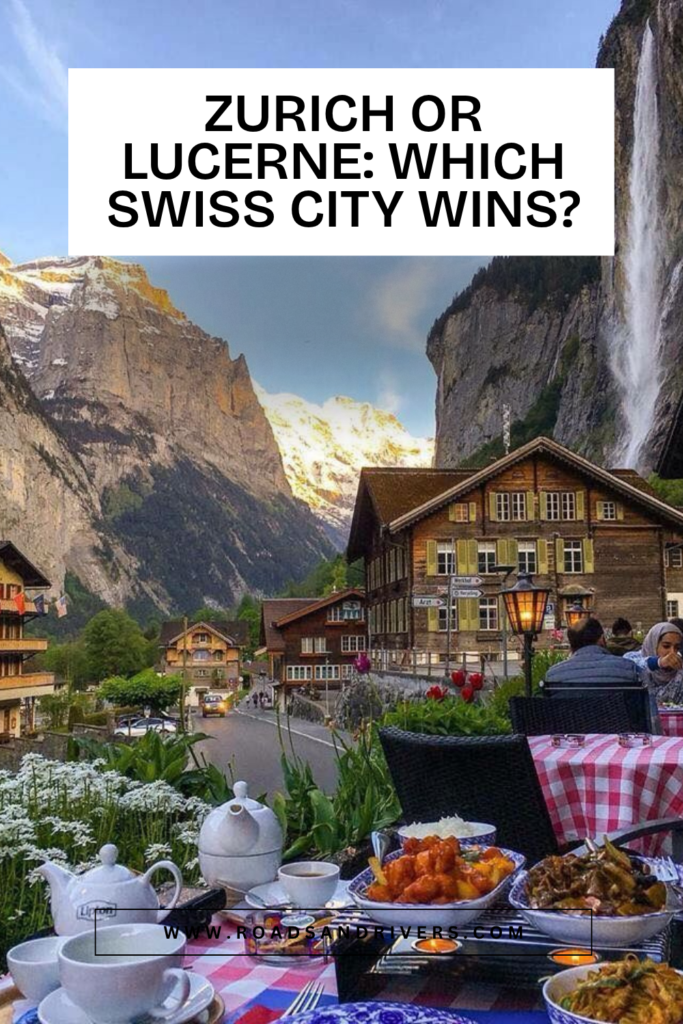
Zurich or Lucerne: Which Swiss City Wins?
This question comes up in every Switzerland planning conversation and the honest answer is: they are not really competing for the same thing.
Choose Zurich if: you want a proper city experience, you are arriving or departing by international flight, you are interested in contemporary art and food, or you want a full day of walking and eating without needing to leave for a mountain excursion.
Choose Lucerne if: you want the postcard Switzerland experience, you are travelling with people who want beautiful photos with minimal effort, you want quick access to Mount Pilatus or Rigi, or you only have one day and want the most visually rewarding place to spend it.
The practical answer for most first-timers is to do both. They are under two hours apart by train and together they give you the full picture of what urban Switzerland offers. Zurich is the city that surprises people. Lucerne is the city that delivers exactly what they expected.
Pro tip: In Lucerne, do not pay for the overpriced Chapel Bridge viewpoint cafes. Walk to the other side of the Reuss River for the same view, better light in the afternoon, and half the price for a coffee.
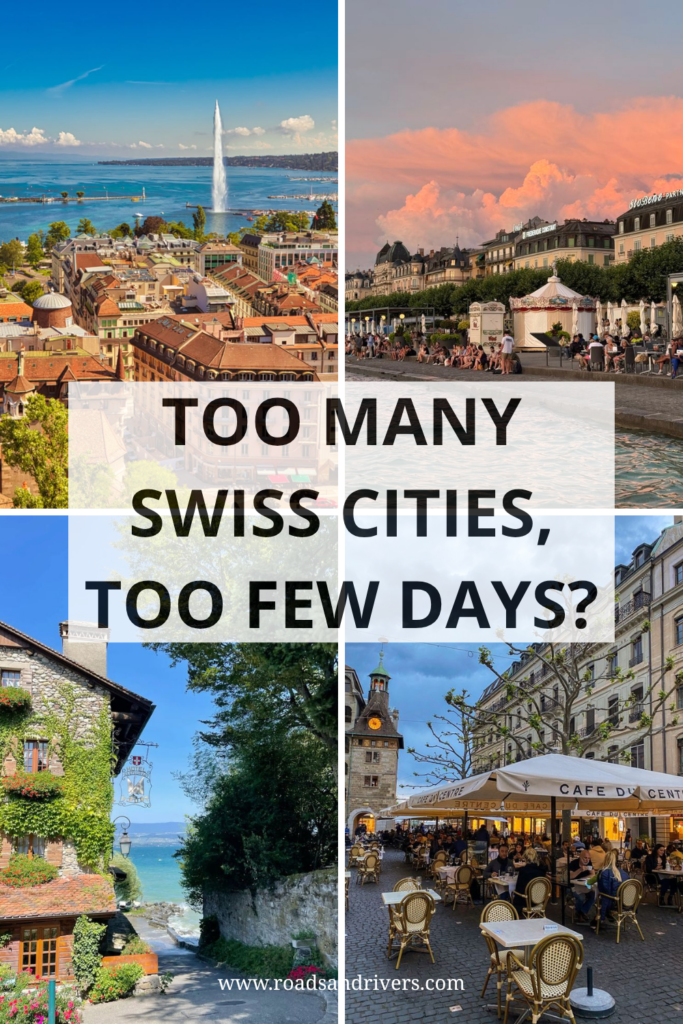
Too Many Swiss Cities, Too Few Days? Here Is the Fix
Switzerland is small enough that you do not need to sacrifice cities to cover ground. The country is roughly 300 km from west to east and the rail network is so efficient that distances that would take half a day in other countries take 90 minutes here.
The fix for the “too many cities, too few days” problem is to think in zones rather than individual cities:
Zone 1: German-speaking central Switzerland (Zurich, Lucerne, Bern). These three can be covered in 4-5 days with train day trips and overnight stays. They are all within 90 minutes of each other.
Zone 2: The Bernese Oberland (Interlaken, Grindelwald, Lauterbrunnen, Mürren). This is one region, not four separate destinations. Base yourself in one place and explore the others as day trips. Three nights gives you enough time to see the highlights without rushing.
Zone 3: French-speaking Switzerland (Romandy) (Geneva, Lausanne, Montreux). These three sit along the northern shore of Lake Geneva. One base with day trips covers all three.
Zone 4: The Valais (Zermatt, Saas-Fee, Sion). This is for travellers who want the Matterhorn and are willing to travel a bit further south. Worth at least two nights.
A 10-day Switzerland trip can realistically cover Zones 1, 2, and one stop in Zone 3 without ever feeling rushed, especially if you travel by Swiss Travel Pass on the national rail network.
The Swiss City Everyone Is Adding to Their Itinerary
Zurich has always been on the list. But the Swiss city that is quietly showing up in more and more first-trip itineraries right now is Bern.
Bern does not look like the Switzerland of Instagram. There are no lake reflections or cable cars. What it has instead is six kilometres of covered arcades (the Lauben) that have sheltered pedestrians for over 700 years, a working medieval clock tower that draws a crowd at every hour, a river bend that frames the Old Town in a way that is genuinely remarkable from above, and a level of local life that Lucerne and Zurich, with their high visitor numbers, have largely lost.
The Rosengarten (Rose Garden) viewpoint above the city is one of the best free views in Switzerland: the red-roofed Old Town in the middle ground, the Bernese Alps in the distance, the Aare curving around the peninsula below. It takes about 15 minutes to walk up from the centre.
Bern is also the best city in Switzerland for eating affordably. The market at Bundesplatz on weekday mornings, the Migros supermarket basement cafeterias, and the neighbourhood restaurants in the Länggasse district all serve proper food at prices that feel almost reasonable by Swiss standards.
Switzerland rewards travellers who push past the obvious. Bern is obvious to Swiss people and almost entirely off the radar for first-time visitors. That gap is exactly why it belongs at the top of your list.
Read more: Best Interrail Routes in Europe if you are planning to connect Switzerland with a broader European rail trip. And if you want to compare Switzerland’s dramatic scenery with another off-the-beaten-path Alpine-adjacent destination, the Lofoten Islands guide covers Norway’s most visually striking destination.
Key Takeaways
- Switzerland is small enough to cover multiple zones in a single 7-10 day trip using the Swiss Travel Pass.
- The biggest first-timer mistake is spending too much time in Zurich and Geneva at the expense of the Alpine villages and underrated Bern.
- Lauterbrunnen and Grindelwald consistently over-deliver on expectations. They are not optional.
- Zurich and Lucerne serve different purposes: Zurich for city culture, Lucerne for the postcard experience. Do both.
- Bern is the most underrated city in Switzerland for first-time visitors and the best place to experience the country without the tourist-trap pricing.
Switzerland is one of those places that does not need to be oversold. The train pulls into Grindelwald, you look out the window at the Eiger, and you understand immediately why people save for years to come here. The challenge is simply allocating your days well enough to see the parts that matter most to you.
Pick your zone. Buy the rail pass. The Alps will sort out the rest.
Have you been to Switzerland? Drop a comment below with the city or destination that surprised you most. And if you are still in the planning phase, the comments are a good place to ask specific questions about routes and timing.
FAQ
What are the best Swiss cities to visit for first-timers?
Zurich, Lucerne, and Bern form the core first-timer circuit in German-speaking Switzerland. For Alpine scenery, Grindelwald and Lauterbrunnen in the Bernese Oberland are the most visually rewarding destinations in the country. Geneva works well as a western Switzerland base or entry point if you are flying in from France or southern Europe.
How many Swiss cities can you visit in one week?
Realistically, a 7-day Switzerland trip can cover 3-4 cities plus one or two Alpine village stays. The Swiss rail network is fast enough that Zurich, Lucerne, Bern, and Interlaken (with a day trip to Grindelwald) can all fit into one week without rushing. The key is to resist overpacking the itinerary with more stops than you can genuinely enjoy.
Is Switzerland worth visiting for the first time?
Yes, without qualification. Switzerland is one of the few countries where the reality consistently matches and often exceeds the photographs. The scenery, the infrastructure, and the sheer variety of experiences available within a small geographic area make it worth the high daily costs. The trick is to budget honestly before you go rather than being surprised on arrival.
What is the Switzerland aesthetic and where can you find it?
The Switzerland aesthetic most associated with social media travel is the combination of wooden Alpine chalets, misty mountain backdrops, turquoise lakes, and red-and-yellow trains winding through green valleys. Lauterbrunnen, Grindelwald, and Mürren deliver this most directly. Lucerne provides the lakeside version. Bern offers the medieval cobblestone alternative that is less photographed but equally rewarding.
What is the best Swiss city for a short trip of 2-3 days?
Lucerne is the most rewarding Swiss city for a short trip. It is compact, immediately beautiful, and gives easy access to Mount Pilatus and Lake Lucerne within a day trip. Bern is the better choice if you want a quieter, more authentic experience with less tourist infrastructure. For someone flying in and out of Zurich with limited time, spending 2 nights in Zurich with a day trip to Lucerne is the most efficient option.