

You plan the whole trip. You book the flights, research the neighborhoods, save the gelato spots. Then you arrive in rome, walk up to the Colosseum at 10 AM, and find yourself staring at a line that wraps around the entire block.
For too many visitors, that queue becomes the memory of Rome — not the gladiator arena, not the frescoed ceilings, not the cacio e pepe eaten at a sidewalk table in Trastevere. Just the waiting. Two hours, sometimes more, gone before you’ve seen a single thing.
It doesn’t have to go that way. Rome’s crowds are real, but they’re also predictable — and predictable crowds can be beaten with the right plan. This guide covers everything you actually need to know: which sites require advance booking, the queue mistake everyone still makes, the best times to visit each landmark, and the Rome nobody talks about but everyone should see. By the end, you’ll have a clear strategy for seeing Rome’s best without wasting a single hour in line.
Table of Contents
- Quick-Reference Info Box
- The Rome Queue Mistake Everyone Still Makes
- What’s the Real Secret to Beating Rome’s Crowds?
- Colosseum Skip-the-Line: Everything You Need to Know
- Vatican Museums and St. Peter’s Basilica: How to Skip the Line
- Dreading Rome’s Endless Tourist Lines? Other Sites to Pre-Book
- Can You Actually Avoid Every Line in Rome?
- Skipping Rome’s Lines Saved Us Hours: What Worked for Us
- The Insider’s Guide to Crowd-Free Rome
- Key Takeaways
- FAQ
Info Box
Best time to visit (fewest crowds): November–March, or early mornings year-round
Peak season: June–August (longest lines, highest prices)
Colosseum tickets: Book at least 2 weeks ahead in peak season — same-day tickets sell out by 10 AM
Vatican Museums: Book 7+ days ahead April–October; early-morning tours open 60–90 minutes before regular hours
Average daily budget: €80–120 mid-range
Days needed: 3–4 days for the main sites; 5–6 days to do it properly
Getting around: Walking + metro Line A and B; taxis and ride-share are reliable
The Rome Queue Mistake Everyone Still Makes
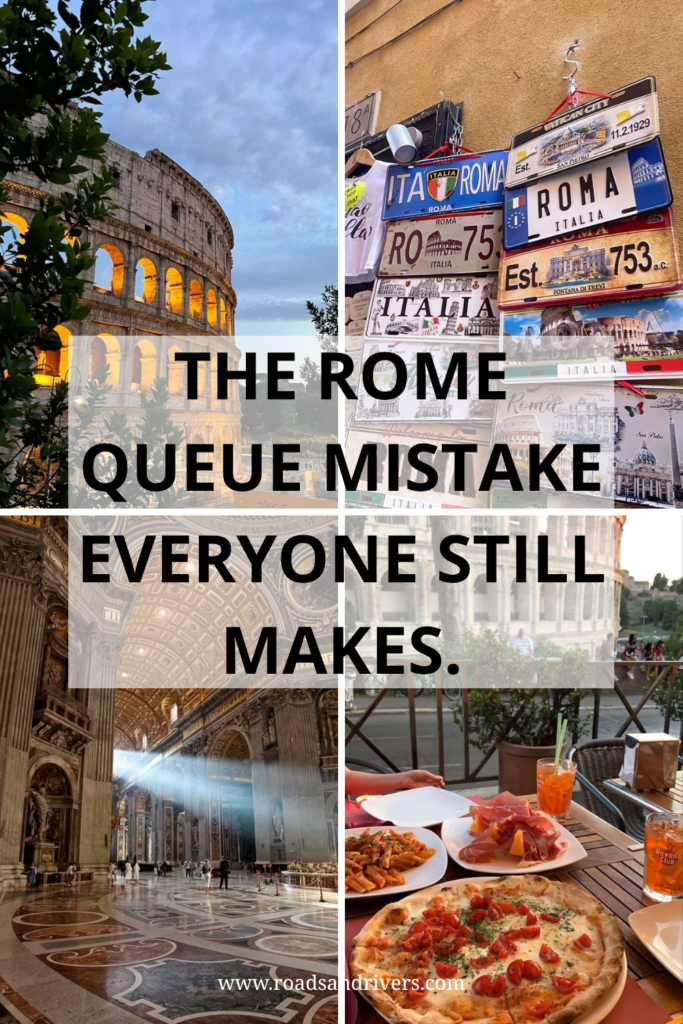
We’ve all done it or know someone who has. You arrive at the Colosseum without pre-booked tickets because you figured you’d sort it out on the day. The signs look manageable. The line doesn’t look that bad from a distance.
An hour and a half later, you’re still outside.
The single biggest mistake tourists make in Rome is underestimating how fast timed-entry slots sell out. For high-demand sites like the Colosseum and Vatican Museums, same-day tickets at the gate often sell out by 10 AM. This isn’t an edge case — it’s standard during spring, summer, and holiday periods. Even skip-the-line tickets won’t help if you haven’t secured a timed entry slot in the first place.
The second mistake: confusing “skip the line” with “skip everything.” Even with priority tickets, you’ll still pass through security — and in peak season, the security queue alone can add 10–15 minutes. The difference is that you skip the ticket queue, which is where most of the waiting actually happens.
The third mistake: assuming a city pass covers priority access to all sites. Not all Rome passes include skip-the-line access to every attraction, so read the details before buying.
Pro tip: Book Colosseum tickets at least 2 weeks in advance during April–October. Book Vatican Museums tickets at least 7 days ahead during the same period. Don’t leave either to chance.
What’s the Real Secret to Beating Rome’s Crowds?

Timing is everything, and the answer is simpler than most people expect: go early or go late, and book before you leave home.
The Colosseum is busiest between 10 AM and 3 PM, with wait times for walk-up visitors regularly exceeding an hour. Arriving at opening time, with a pre-booked ticket already in hand, puts you inside before the bulk of the day-tour groups arrive. That alone changes the experience entirely.
For the Vatican Museums, early-morning entry tours open 60–90 minutes before the public doors, and the Sistine Chapel at 7:30 AM is a genuinely different place than the Sistine Chapel at noon. The art is the same. The atmosphere is not.
Beyond timing, the real secret is this: spread your big-ticket visits across multiple days and use the gaps for the Rome that doesn’t require tickets at all. The Pantheon, Trastevere, the Campo de’ Fiori market, the Borghese Gardens, the view from the Gianicolo hill — none of these need a booking. Rome has more than enough to fill days between the paid attractions.
Pro tip: Skip the audio guide rental at the Vatican. The official Vatican Museums app is free, better organized, and doesn’t slow you down with physical equipment to return.
Read more: How To Pick the Best Italian Destinations for Your Trip
Colosseum Skip-the-Line: Everything You Need to Know
The Colosseum is the most visited monument in Italy and one of the most visited in the world. Built almost 2,000 years ago by Emperor Vespasian, it held up to 80,000 spectators and hosted gladiatorial games for centuries. It earns every superlative. It also earns every line if you show up unprepared.
Here’s how to do it right:
1. Book a timed-entry ticket in advance
The official ticketing site (coopculture.it) sells Colosseum tickets with specific entry slots. These are the same tickets sold at the gate, but with a reserved time. Book as early as possible — slots for popular morning windows disappear weeks out in summer.
2. Your Colosseum ticket covers more than just the arena
Standard entry includes the Colosseum, the Roman Forum, and Palatine Hill — all on one ticket, valid for two consecutive days. Most people don’t realize the Roman Forum and Palatine Hill are included. Spread them out if you want to see them properly.
3. Consider a guided tour for context
The Colosseum without context is a very large oval ruin. The Colosseum with a guide who explains what happened in each section, how the gladiatorial system actually worked, and where the emperors sat transforms into something that stays with you. Early-morning semi-private tours offer exclusive access before general opening and cost more but deliver a noticeably quieter experience.
4. Arena Floor access is worth considering
Standard entry doesn’t include the arena floor itself. An upgraded ticket or specific guided tour adds access to walk where the gladiators actually stood. Given the price difference, most visitors find it worth it.
5. The best time to visit
Opening time (first slot) or the last entry of the day, 90 minutes before closing. The midday window is the most crowded and also the hottest in summer.
Vatican Museums and St. Peter’s Basilica: How to Skip the Line

The Vatican Museums house one of the greatest art collections ever assembled in one place. Michelangelo’s Sistine Chapel ceiling, Raphael’s Rooms, the Gallery of Maps — it takes most visitors 3–4 hours to get through, and that’s moving at pace. Entry is timed but the security line is where people get stuck.
Vatican Museums and Sistine Chapel
Book a timed entry slot well in advance — at least a week ahead in peak season, two weeks for a comfortable buffer. Arrive 15–20 minutes before your slot; security adds time even with pre-booked tickets. The route is one-way and well-signed. You will not get lost.
Monday closings are important to know: the Vatican Museums are closed on Mondays (except the last Sunday of each month, when entry is free and therefore extremely crowded). If you’re visiting on a free-entry Sunday, book an early-morning paid tour for a different day instead.
St. Peter’s Basilica
St. Peter’s itself is free to enter — but the lines to get in can still stretch 45 minutes in summer. The fix: go before 8 AM when it opens, or after 4 PM when tour groups have largely cleared out. The basilica stays open until 7 PM (6 PM in winter). Dress code is strictly enforced: no bare shoulders, no shorts or skirts above the knee. Bring a light scarf if needed.
The dome climb (separate ticket) is 231 stairs to a landing, then 320 more to the top. The view over Rome from St. Peter’s dome is one of the best in the city.
Pro tip: Combination Vatican and Colosseum tickets sold by reputable operators can save time and money if you plan to visit both. They often include skip-the-line access to both sites plus an audio guide. Buying this type of combo ticket has been reported to save visitors 30–45 minutes of waiting compared to booking sites separately.
Dreading Rome’s Endless Tourist Lines? Other Sites to Pre-Book

The Colosseum and the Vatican aren’t the only places where lines can derail your day. These other sites warrant advance planning:
The Pantheon
As of recent years, the Pantheon now requires a timed entry ticket (€5). The good news: booking is easy online and the site never gets as backed-up as the big two. Still, book the day before at minimum. Inside, you’re looking at one of the best-preserved Roman buildings in existence — a 2,000-year-old unreinforced concrete dome that remains the largest of its kind in the world.
Borghese Gallery
This is Rome’s best-kept secret for art lovers. The Borghese Gallery limits visitors to 360 people every two hours, which means the experience inside is always calm — but also means tickets sell out weeks ahead in high season. This is not a site you can walk up to. Book before you leave home.
Sistine Chapel Evening Access / Early Morning Tours
Night tours and early-morning Vatican access exist and are worth every extra euro. The Sistine Chapel in near-silence, with fewer than 20 people in the room, is a completely different experience from the standard midday visit.
Trastevere and the Campo de’ Fiori
No tickets needed, no lines, no booking. These neighborhoods are the antidote to Rome’s major-site fatigue. Walk them in the morning before the tourists arrive, or in the evening when the city belongs to locals again.
Read more: Backpacking Europe for Beginners: Everything You Need to Know
Can You Actually Avoid Every Line in Rome?
Short answer: not entirely. Even with every ticket pre-booked, you’ll encounter security queues, bag checks, and the general density that comes with a city receiving millions of visitors a year. Rome is one of the most visited cities in the world, and some of that shows.
But can you avoid the worst of it? Yes. Completely.
Here’s the honest breakdown:
What you can skip entirely with advance booking: the ticket queue at the Colosseum, the Vatican Museums entrance line, the Pantheon queue, the Borghese Gallery wait.
What you can reduce with timing: security lines (arrive at opening), street crowds (visit main squares before 9 AM or after 6 PM), restaurant waits (eat lunch at 1 PM, not 1:30; eat dinner at 7:30 PM, not 8:30).
What you can’t avoid: the Trevi Fountain will be packed no matter when you go, though pre-dawn visits (it’s open 24 hours) offer a brief window of peace. The Spanish Steps are similarly crowded year-round.
The real crowd-free Rome is in the neighborhoods between the landmarks: the Pigneto district, the Testaccio market, the Garbatella quarter, the aperitivo bars away from the main piazzas. This is where the city actually lives.
Pro tip: Book all major sites 2–4 weeks ahead in peak season (April–October). In off-season (November–March), same-week booking often works fine — and the city is noticeably quieter and more affordable across the board.
Skipping Rome’s Lines Saved Us Hours: What Worked for Us
We had four days in Rome. We pre-booked the Colosseum for the first morning slot, the Vatican for a Wednesday early-morning tour, the Pantheon for 9 AM on day three, and the Borghese Gallery for our final afternoon.
The Colosseum at opening time: inside within five minutes of arriving. By 10 AM, the queues outside stretched the full length of the building. We were already at the Roman Forum.
The Vatican at 7:30 AM: the Sistine Chapel with perhaps thirty other people in it. We stood there longer than we planned to. There was room to stand there.
The Borghese Gallery at 3 PM on a Thursday: one of the best museum experiences in Europe. Bernini sculptures in rooms you can actually walk around. No crowds pressing in.
What didn’t work: we tried to walk up to the Trevi Fountain at noon on a Saturday. You already know how that went. Go before 7 AM. Set an alarm. It’s worth it.
The practical time saved across the four days was at least six to eight hours — time spent eating cacio e pepe in Trastevere, getting lost in Pigneto, watching the city at golden hour from the Gianicolo. That’s what Rome is for.
The Insider’s Guide to Crowd-Free Rome
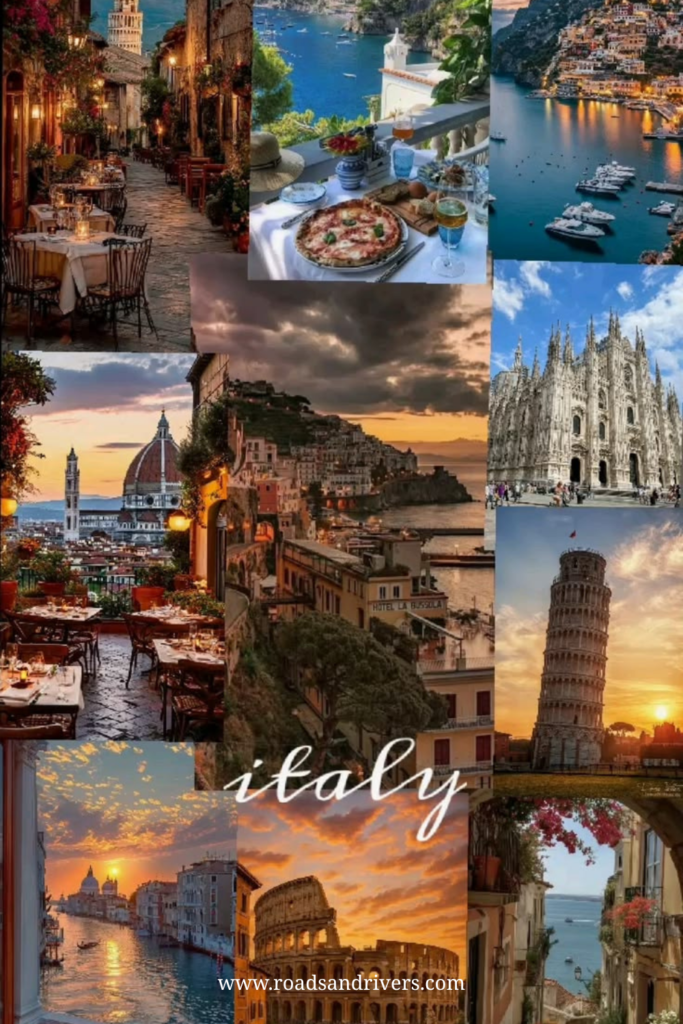
Skip-the-line strategy handles the major sites. This section covers the Rome that doesn’t require any strategy at all — just a willingness to walk slightly further than the tourist maps suggest.
Trastevere
Cross the river from the historic center and everything slows down. Trastevere is Rome’s most livable neighborhood: narrow cobblestone streets, ivy-covered walls, trattorias with handwritten menus, and locals who actually eat there. Go for dinner. Go for a morning coffee. Go whenever you need a break from being a tourist.
Testaccio
Rome’s old working-class neighborhood is now home to the city’s best food market and some of its most interesting restaurants. The Mercato di Testaccio is where Roman cooks buy their produce, cheese, and meat. It’s also where you’ll find the best suppli (fried rice balls) in the city.
The Gianicolo Hill
The best view of Rome isn’t from the top of St. Peter’s. It’s from the Gianicolo, a ten-minute walk uphill from Trastevere. Free, almost always uncrowded, and positioned to catch the late afternoon light over the entire city. There’s a cannon that fires at noon every day. It’s been going since 1847.
Campo de’ Fiori in the morning
The famous square fills with tour groups and overpriced aperitivo bars by mid-afternoon. At 7 AM, it’s a working market selling flowers, vegetables, and cheese. It’s one of the most purely Roman things you can do.
The Pantheon neighborhood at dusk
The Pantheon closes in the evening, but the piazza in front of it is at its best right after. The crowds thin out, the light turns gold, and the surrounding streets — full of good restaurants not trading entirely on foot traffic — make for a proper Roman dinner.
Rome’s food deserves its own mention. Cacio e pepe, carbonara, coda alla vaccinara, supplì, maritozzi, gelato from a place that isn’t near a major landmark — these are the tastes that stay with you. The further you walk from the Colosseum, the better the price-to-quality ratio generally becomes.
Read more: Best Interrail Routes in Europe: 10 Epic Itineraries to Try
Read more: How To Explore the Dolomites in Italy: Hiking, Views, and the 2026 Winter Olympics
Key Takeaways
- Book the Colosseum at least 2 weeks ahead in peak season; same-day tickets sell out by 10 AM
- Book Vatican Museums at least 7 days ahead April–October; early-morning tours (7:30 AM) are the best way to see the Sistine Chapel without crowds
- St. Peter’s Basilica is free — but go before 8 AM or after 4 PM to avoid the entrance queue
- The Borghese Gallery is Rome’s best museum experience and sells out weeks ahead — book before you leave home
- The Pantheon now requires a timed ticket (€5); book the day before at minimum
- Crowd-free Rome lives in Trastevere, Testaccio, Pigneto, and the Gianicolo — no tickets needed
FAQ
Is skip-the-line worth it for the Colosseum?
Yes, without question. In peak season (April–October), walk-up visitors regularly wait over an hour just for tickets. A pre-booked skip-the-line ticket bypasses the ticket queue and gets you inside in under 15 minutes, saving 1–2 hours of waiting. The price difference between a standard ticket and a priority one is small compared to the time saved.
When is the best time to visit Rome to avoid crowds?
November through March offers the smallest crowds and lowest prices. If you’re visiting in peak season, the best strategy within each day is to hit major sites at opening time or late afternoon. The Colosseum is quietest in the first and last hour of each day. The Vatican is quietest on early-morning tours before general admission begins.
Do I need to pre-book St. Peter’s Basilica tickets?
St. Peter’s Basilica is free and doesn’t require advance tickets, but lines can still be 30–45 minutes long in summer. Go before 8 AM or after 4 PM to walk straight in. The dome requires a separate entry (paid), and climbing there also has shorter waits early or late in the day.
What is the Rome queue mistake everyone makes?
Showing up to the Colosseum or Vatican Museums without a pre-booked timed entry slot. Same-day tickets at the gate sell out by 10 AM in peak season, and even if slots remain, the wait to buy them can be 90 minutes or more. Book online in advance — always.
How many days do you need in Rome?
Three days covers the main landmarks if you plan efficiently. Four to five days lets you see everything without feeling rushed and leaves time for the neighborhoods, markets, and day trips. Rome rewards slower travel. A rushed two-day visit will always leave you feeling like you missed it.
Visited Rome recently and found a crowd-free corner we haven’t mentioned? Drop it in the comments — the best tips always come from people who’ve just been there.