
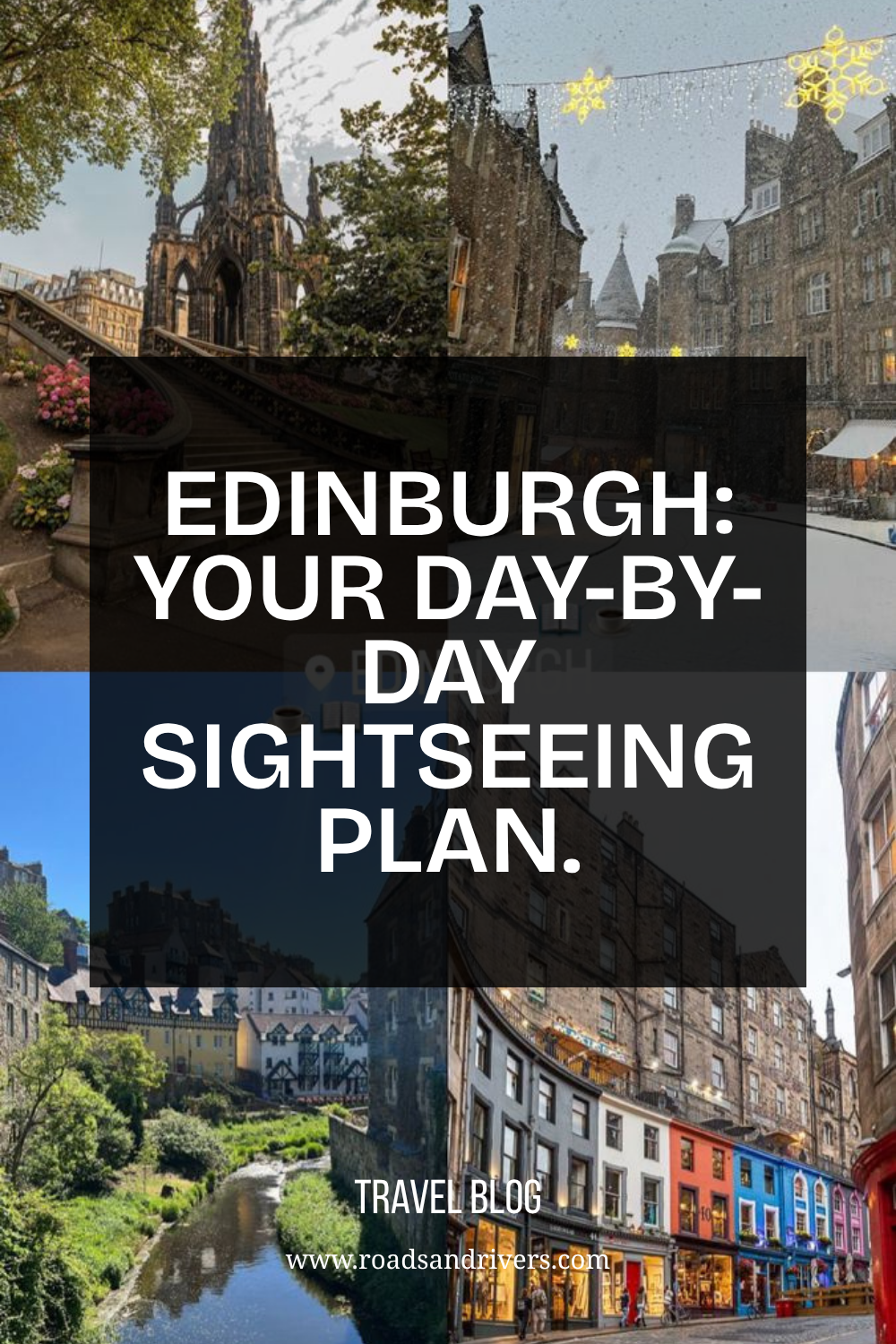
Edinburgh is the kind of city that earns its reputation and then exceeds it. Ancient castle on a volcanic rock, medieval closes threading between centuries-old tenements, a hilltop volcano in the middle of the city, Michelin-starred restaurants and chip shops on the same street — edinburgh packs more into two square miles than most cities manage in fifty.
It’s also a city that surprises people. Visitors arrive expecting history, architecture, and grey skies. They leave talking about the food, the atmosphere in the pub on the corner, the view from Calton Hill at dusk, and the way the Old Town glows at night when the lights come on and the closes empty out. Edinburgh surprised most of us more than any other UK city has. This guide covers why.
Table of Contents
- Quick-Reference Info Box
- Visiting Edinburgh and Don’t Know Where to Begin?
- Edinburgh: Your Day-by-Day Sightseeing Plan
- What Edinburgh Experience Do Most Visitors Miss?
- 5 Edinburgh Tourist Traps Not Worth Your Time
- Is Edinburgh Worth Visiting Outside Festival Season?
- Edinburgh Is Scotland’s Hottest Travel Pick for 2026
- Edinburgh Budget Breakdown and Practical Info
- Key Takeaways
- FAQ
Quick-Reference Info Box
Best time to visit: May–June (long days, good weather, pre-Festival prices) and September–October (autumn colour, quieter)
Edinburgh Fringe Festival: Three weeks in August — electric atmosphere but prices triple
Days needed: 2–3 days for the highlights; 4–5 to do it properly
Budget: £70–100/day for comfortable mid-range travel
Getting there: Edinburgh Airport has excellent UK and European connections; trains from London take 4.5 hours
Getting around: The Old Town is very walkable; Lothian Buses for outer neighborhoods
Weather: Pack layers regardless of season — Edinburgh weather changes fast
Visiting Edinburgh and Don’t Know Where to Begin?
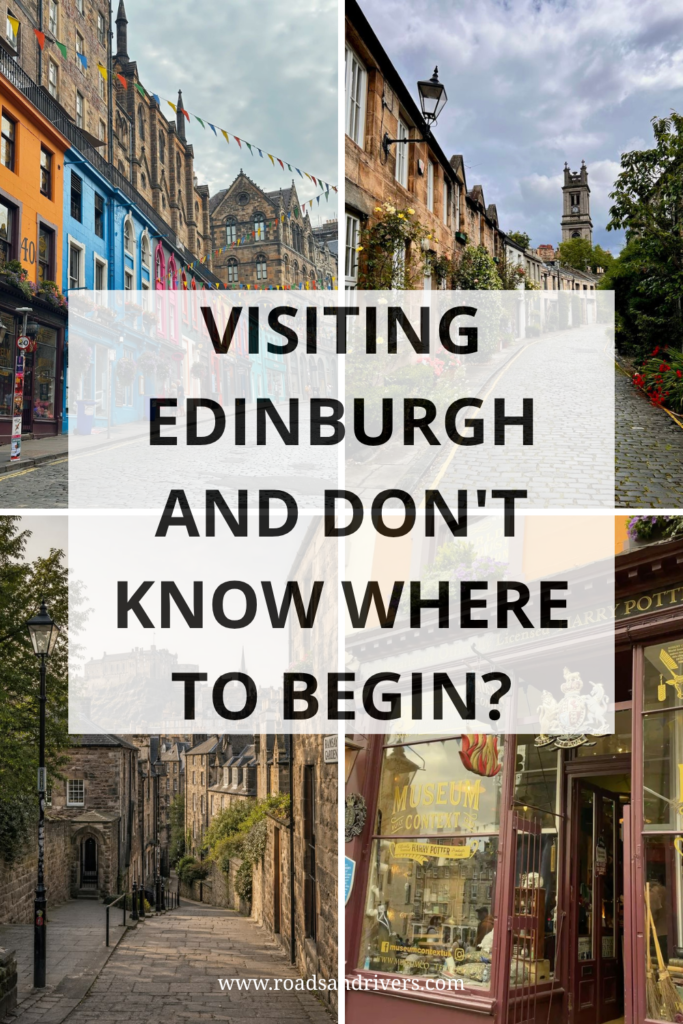
Start with the two halves. Edinburgh divides cleanly into the Old Town and the New Town, separated by Princes Street Gardens. Understanding this geography makes the whole city click into place.
The Old Town is the medieval city — the Royal Mile running from Edinburgh Castle at the top down to the Palace of Holyroodhouse at the bottom, lined with closes (narrow passageways), pubs, and centuries of accumulated history. This is where you walk, explore, get lost, and find the city’s most atmospheric corners.
The New Town is the Georgian planned city built in the 18th century — wide streets, classical architecture, independent boutiques, and the restaurant and bar scene that the Old Town can’t quite accommodate in its medieval footprint. Stockbridge, just below the New Town, is a neighborhood of independent shops, a Saturday farmers’ market, and Dean Village — one of the most photogenic spots in the city.
Where to base yourself: The Old Town puts you inside Edinburgh Castle. The New Town puts you near better value restaurants and bars. Either works well; the walk between them is easy and beautiful.
Your first morning: Walk the Royal Mile from top to bottom. Start at the Castle Esplanade for the view (even if you don’t go inside the castle on day one) and walk downhill toward Holyrood. Stop in every close that looks interesting. By the bottom you’ll have a mental map of the city that no amount of planning can replicate.
Edinburgh: Your Day-by-Day Sightseeing Plan
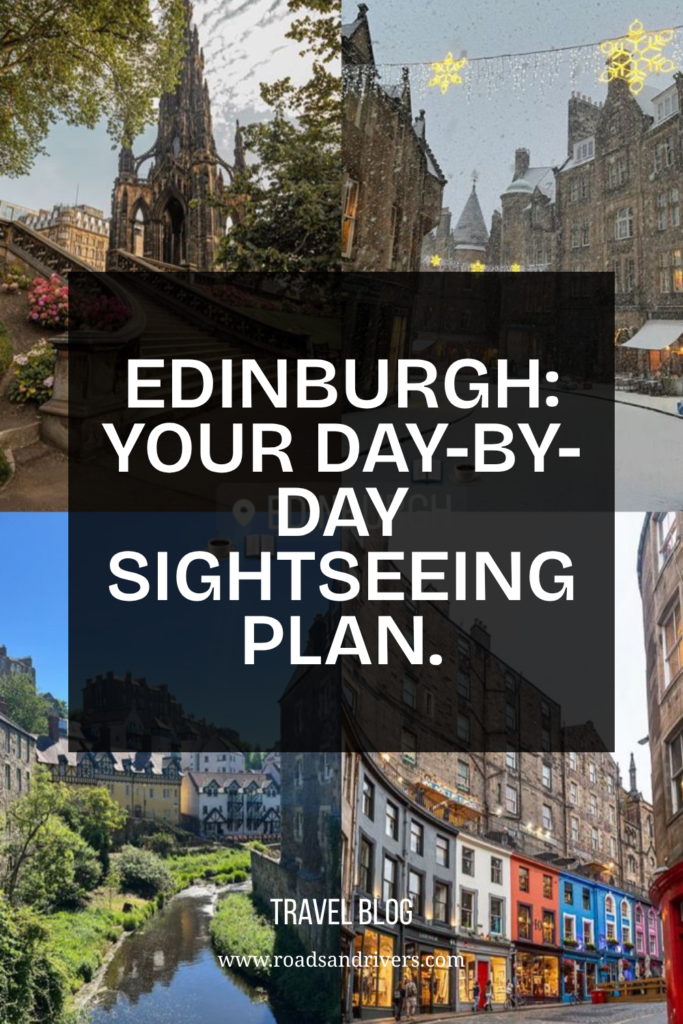
Day 1: Old Town, the Castle, and the Royal Mile
Morning: Edinburgh Castle opens at 9:30 AM. Go early, especially in summer — the crowds thicken fast by mid-morning. Ticket prices are around £19.50 for adults in 2026; book online to avoid the queue. The Scottish Crown Jewels, the Stone of Destiny, and the views from the ramparts are the highlights. Allow two hours.
Walk down the Royal Mile toward Holyrood. Step into the closes along the way: Wardrop’s Court, Riddle’s Close, White Horse Close. Many are free and most tourists walk straight past them. Greyfriars Kirkyard (the old cemetery behind the Royal Mile) is worth a detour — the inspiration for several Harry Potter characters and one of the most atmospheric spots in the city. Free entry.
Afternoon: The Palace of Holyroodhouse at the foot of the Royal Mile is the official Scottish residence of the King. Entry is around £18. The Queen’s Gallery next door is free for royal collection exhibitions. Behind the palace: Holyrood Park, dominated by Arthur’s Seat — the ancient volcano rising 251m above the city. The hike to the summit takes 45–60 minutes and the view from the top is extraordinary. Free.
Evening: Dinner in the Old Town. The Grassmarket area has a good concentration of pubs and restaurants at a range of price points. Bow Bar on Victoria Street is one of the best whisky pubs in Edinburgh.
Day 2: New Town, Calton Hill, and Dean Village
Morning: Calton Hill, a ten-minute walk from Princes Street, has the best panoramic view in Edinburgh. The National Monument (Scotland’s unfinished Parthenon), the Nelson Monument, and the City Observatory all sit on the top. Free, always open.
Walk down through the New Town — Charlotte Square, Princes Street, George Street. The Scottish National Gallery on the Mound is one of the finest free galleries in Britain, housing Botticelli, Raphael, Titian, and Monet in rooms that don’t feel overwhelmed by the work.
Afternoon: Walk to Dean Village — a former milling village wedged into the Water of Leith gorge just ten minutes from Princes Street, which looks like it belongs in a different city entirely. Walk the Water of Leith riverside path through Dean Village to Stockbridge. The Stockbridge Sunday market runs year-round for fresh food, street food, and local crafts.
Evening: Stockbridge has the best casual dining and wine bar scene in Edinburgh. The restaurant density here — good food at reasonable prices — is significantly better than the tourist-facing Royal Mile end of town.
Day 3: Arthur’s Seat, Leith, and Whisky
Morning: If you didn’t summit Arthur’s Seat on Day 1, do it now. Go early for the clearest views and the fewest people. The classic route from St Margaret’s Loch takes about an hour at a comfortable pace.
Afternoon: Walk or take the bus to Leith — Edinburgh’s port district, 2 miles from the city center, which has transformed over the last decade into the city’s best food and drink neighborhood. The Shore is the main drag along the water: wine bars, fishmongers, contemporary Scottish restaurants. The Royal Yacht Britannia is moored here if royal history interests you (tickets required).
Evening: A whisky tasting. Edinburgh has dozens of whisky bars with guided tastings. The Scotch Whisky Experience on Castlehill offers structured introductions; specialist whisky bars like The Pot Still and The Devil’s Advocate are better for serious exploration.
Read more: The Ultimate 4-Day London Itinerary for Every Type of Traveler
What Edinburgh Experience Do Most Visitors Miss?

The closes. Almost universally.
Edinburgh’s Old Town is riddled with narrow stone passageways called closes — some of them little wider than a person’s shoulders, tunneling between the multi-story tenements that line the Royal Mile. Most tourists walk straight past the arched entrances without a second glance. The ones who step inside find themselves in a completely different Edinburgh: shadowed, quiet, centuries-old, completely unlike anything on the main street.
Tucked behind 137 Canongate, Dunbar’s Close Garden is a lovingly restored 17th-century formal garden. Modelled on the knot gardens that once adorned Edinburgh’s grand townhouses, its clipped hedges, herb borders, and wooden benches make it one of the most peaceful spots on the Royal Mile — and most people have no idea it exists. Entry is free, and it’s open daily.
The second thing most visitors miss: the Water of Leith walkway. This riverside path runs for 12 miles through the heart of the city, entirely hidden from the streets above it. Follow it from Dean Village through Stockbridge and you move through a completely different Edinburgh — wooded gorges, old mill buildings, herons on the riverbank — within a ten-minute walk of Princes Street.
The third: Blackford Hill and the southern viewpoints. South of the city centre, Blackford Hill offers a full 360-degree panorama — Edinburgh Castle, Arthur’s Seat, the Pentland Hills, and on clear days, the Highlands beyond. Almost no tourists go there. It’s twenty minutes from the city centre by bus.
Pro tip: The Edinburgh Fringe runs in August and is genuinely one of the world’s great cultural events. But even outside festival season, Edinburgh has live music, comedy, theatre, and spoken word events running every night of the year. The Traverse Theatre and the Summerhall arts complex are worth checking regardless of when you visit.
5 Edinburgh Tourist Traps Not Worth Your Time
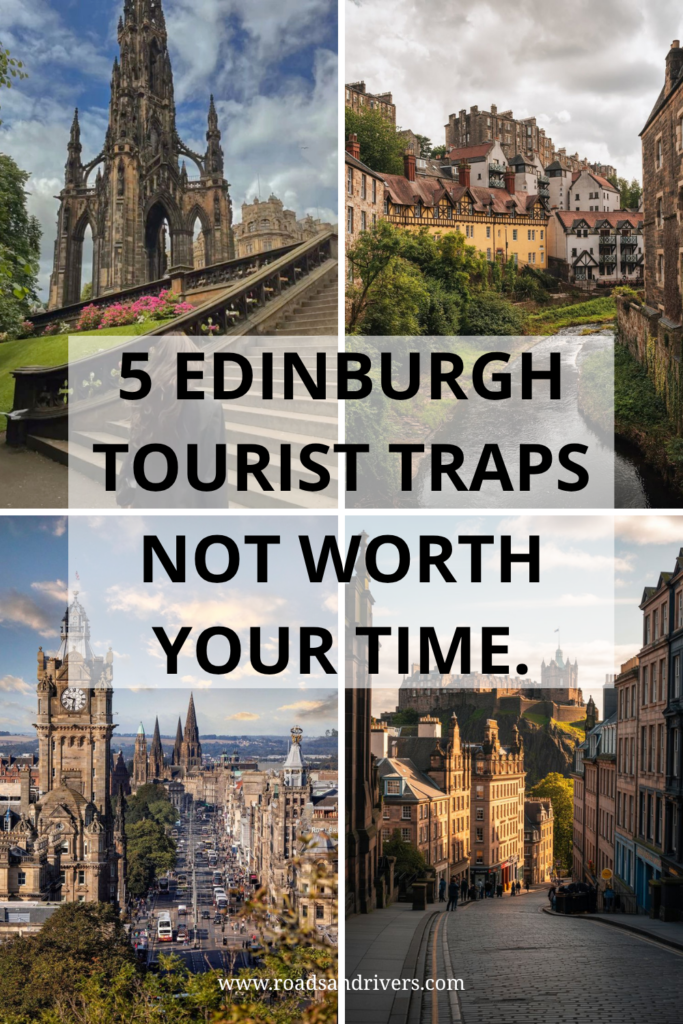
Edinburgh has excellent value-for-money attractions and a handful that charge premium prices for middling experiences. These five aren’t worth the slot in your itinerary.
1. The Camera Obscura (for the entry price)
The Camera Obscura itself is a genuine Victorian curiosity — a mirror system that projects a live image of the city onto a viewing table — and worth seeing for five minutes. But the building is padded with interactive exhibits that belong in a children’s science museum, and the entry price (around £20 in 2026) makes it poor value for adults. If you want city views, Calton Hill and Arthur’s Seat are free and dramatically better.
2. The Mary King’s Close underground tour at full price
The Close is a genuine buried street beneath the Royal Mile and the tour is atmospheric and well-done. The problem is pricing: at £18–20 per person, it’s expensive for a 60-minute underground walk. Book well in advance online for the best times and consider whether the Greyfriars Kirkyard ghost tours cover similar ground at lower cost.
3. Edinburgh Dungeon
A theatrical haunted house experience dressed up as history. Fun for teenagers; not worth the £20 entry for adults with limited time.
4. Tourist Royal Mile restaurants
The restaurants facing directly onto the Royal Mile charge tourist-area prices for food that is noticeably worse than what you find two streets back in either direction. The rule: any restaurant with a piper outside is priced for people who arrived that morning. Walk to Grassmarket, Cowgate, or Stockbridge instead.
5. The tartan souvenir shops
Worth a browse, not worth serious money. The same mass-produced items are sold at identical prices in every shop between the Castle and Holyrood. For genuine Scottish textiles, cashmere, and craft, go to the independent shops in the New Town and Stockbridge — the quality is different and the prices are more honest.
Is Edinburgh Worth Visiting Outside Festival Season?
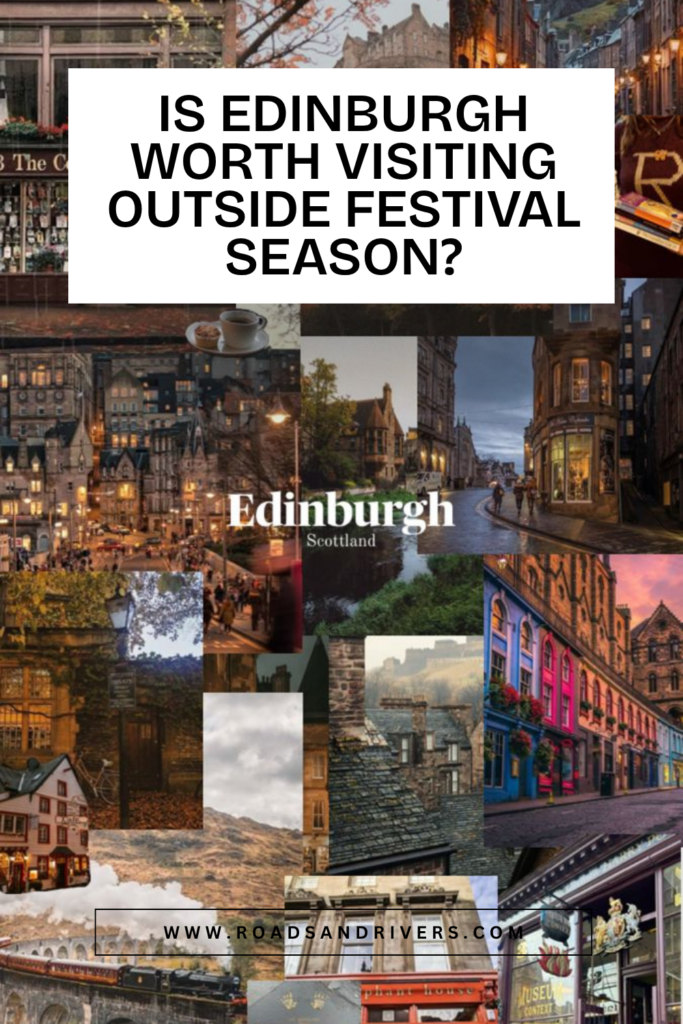
Yes. Emphatically.
The Edinburgh Fringe in August is extraordinary — three weeks of theatre, comedy, music, and performance spilling across every venue in the city, with a population that effectively doubles. But August prices reflect that. Hotel rooms that cost £80 in October cost £250 in Festival week. Restaurants add surcharges. The city is genuinely hard to move around.
The best time to visit Edinburgh for the experience-to-cost ratio: May, June, September, and October.
May–June: Long evenings with light until 10 PM, mild temperatures, manageable crowds. The city is genuinely beautiful in early summer — cherry blossom on the Meadows, gardens in bloom, outdoor tables outside every pub.
September–October: The Festival crowds have gone, prices drop significantly, and autumn brings the best photography conditions the city offers. The sandstone buildings glow amber in October light. The closes fog up on cold mornings. Edinburgh in autumn looks exactly like what you imagine when you picture Scotland.
Winter: Edinburgh’s Christmas market on Princes Street Gardens is one of the best in Britain — atmospheric, festive, and genuinely local in character. Hogmanay (New Year’s Eve) in Edinburgh is one of the world’s great celebrations. The city is cold and dark in December but completely alive.
When visiting Edinburgh at Christmas time, expect festive light displays, hot mulled wine, and plenty of opportunities to meet Santa Claus, or as the Scots call him, “Father Christmas.”
Read more: Backpacking Europe for Beginners: Everything You Need to Know
Edinburgh Is Scotland’s Hottest Travel Pick for 2026

Edinburgh surprised us more than any UK city. That’s not a comparison with London or Manchester — it’s about the city exceeding the version of itself you carry before you arrive.
The food alone is worth the trip. Edinburgh has 25+ Michelin-starred and Bib Gourmand restaurants, but the most compelling food story is below that level: independent cafés doing extraordinary things with Scottish produce, fish and chip shops that have been running since before most of us were born, the Saturday Stockbridge market where you eat breakfast while walking.
Traditional Scottish dishes do two things: warm you up and fill you properly. Stovies are slow-cooked potatoes with meat that locals eat year-round. Fish suppers get wrapped in paper and doused with Edinburgh’s signature brown sauce. Porridge has been a breakfast staple for centuries, while butter tablet — a sweeter version of fudge — appears in cafés across the city.
The literary dimension of Edinburgh sits on every corner. J.K. Rowling wrote early Harry Potter chapters in The Elephant House café. Ian Rankin’s Rebus novels mapped the city’s underside so precisely that guided tours of the fictional detective’s Edinburgh run year-round. Arthur Conan Doyle was born here. Robert Louis Stevenson grew up in the New Town. The Writers’ Museum on Lady Stair’s Close houses manuscripts and personal effects of Burns, Scott, and Stevenson — and entry is free.
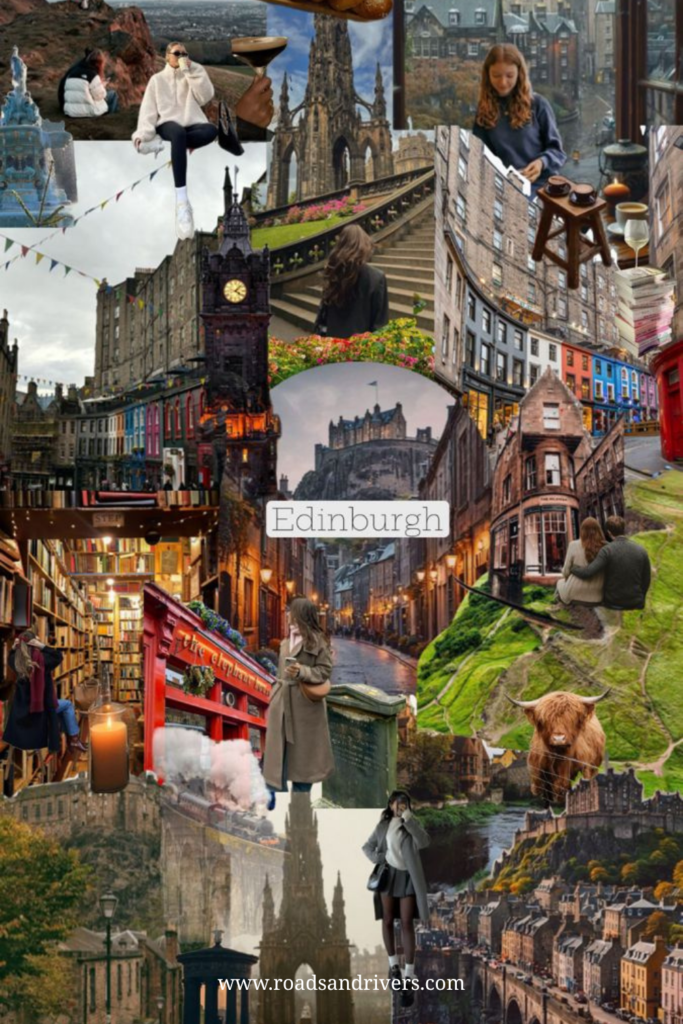
The photography is inexhaustible. Circus Lane in Stockbridge (a curved cobblestone mews lane) has become one of the most-photographed streets in Scotland. Victoria Street — the curved, colorful street in the Old Town that inspired Diagon Alley — looks different in every light and season. Arthur’s Seat at sunrise, Calton Hill at sunset, the Royal Mile in morning mist — Edinburgh’s visual vocabulary is practically unlimited.
Across Edinburgh, you’ll find a variety of viewpoints that showcase the Scottish capital’s beautiful landscapes, signature hilltops, and the Old Town’s medieval architecture. Experience impressive views from famous Edinburgh landmarks like Calton Hill, Arthur’s Seat, and the Scott Monument.
Read more: Germany Travel Guide: Best Cities, Food, and Budget Tips
Edinburgh Budget Breakdown and Practical Info
How much does Edinburgh cost in 2026?
Edinburgh is mid-range by UK standards — noticeably cheaper than London, broadly comparable to Bristol or Manchester. Budget travelers can manage £50–60/day covering a hostel dorm, self-catered meals, and mostly free attractions. Mid-range travelers should budget £100–150/day for a private room, two restaurant meals, and paid attractions.
| Category | Budget | Mid-Range |
|---|---|---|
| Accommodation | £25–40 (hostel dorm) | £80–120 (hotel/B&B) |
| Food | £20–30 (café + pub meals) | £40–60 (restaurants) |
| Transport | £5–10 (bus passes) | £10–15 (bus + occasional taxi) |
| Activities | £0–20 (many free + 1 paid) | £30–60 (castle + 2 attractions) |
| Total | ~£55–80/day | ~£150–220/day |
Getting there: Edinburgh Airport (EDI) connects to most UK cities and dozens of European destinations. Trains from London Kings Cross run 4.5 hours on the East Coast Main Line. Edinburgh Waverley station sits in the heart of the city, directly beneath the castle.
Getting around: The Old Town is entirely walkable. Lothian Buses cover the wider city efficiently; day tickets are available. The Edinburgh Tram connects the airport to the city center and runs to Newhaven (near Leith).
Free in Edinburgh (partial list): National Museum of Scotland, Scottish National Gallery, Scottish National Portrait Gallery, National Library of Scotland, all the closes and kirkyard gardens, Princes Street Gardens, Arthur’s Seat, Calton Hill, the Water of Leith walkway, Blackford Hill, and every public park in the city.
Read more: The Ultimate 4-Day London Itinerary for Every Type of Traveler
Key Takeaways
- Edinburgh divides into the medieval Old Town (Royal Mile, Castle, closes) and Georgian New Town — understand this and the city makes sense
- The closes, Water of Leith walkway, and Dean Village are the experiences most visitors miss
- Avoid Royal Mile restaurants; eat in Grassmarket, Stockbridge, or Leith
- Edinburgh is outstanding outside festival season — May–June and September–October are the best months for value and atmosphere
- Free highlights include: Arthur’s Seat, Calton Hill, all national museums and galleries, Greyfriars Kirkyard, closes, and Dean Village
- Edinburgh is Scotland’s best photography destination, year-round — autumn is peak season for dramatic images

FAQ
How many days do you need in Edinburgh?
Two days covers the major highlights if you’re efficient. Three days is the right amount for a complete first visit — the Old Town, New Town, Arthur’s Seat, Dean Village, Leith, and a proper evening in a whisky bar. Four or five days lets you add day trips to Rosslyn Chapel, the Pentland Hills, or Glasgow.
What is the best time of year to visit Edinburgh?
May–June offers long days, good weather, and crowds that are manageable. September–October has the best autumn light for photography, significantly lower prices than August, and fewer tourists at major sites. August has the Fringe Festival — extraordinary atmosphere but expensive and crowded. Winter is cold but Edinburgh’s Christmas market and Hogmanay celebrations make December and early January worth considering.
Is Edinburgh worth visiting in winter?
Yes. Edinburgh in winter is atmospheric and surprisingly lively. The Christmas market on Princes Street Gardens is excellent. Hogmanay (New Year’s Eve) is a world-class event. Museum and attraction prices are lower and queues are shorter. The castle, closes, and Royal Mile look magnificent in grey winter light. Pack proper waterproof layers.
Is Edinburgh expensive compared to London?
Noticeably cheaper. Accommodation in Edinburgh runs roughly 40–50% less than comparable London options. Restaurant meals are cheaper by a similar margin. Attractions are comparable or slightly cheaper. And a significant portion of Edinburgh’s best experiences — the national museums, galleries, parks, and outdoor viewpoints — are entirely free.
What are the most important things to see in Edinburgh?
Edinburgh Castle, the Royal Mile and its closes, Holyrood Palace, Arthur’s Seat, Calton Hill, the Scottish National Gallery, the National Museum of Scotland (free), Greyfriars Kirkyard, Dean Village, and the Water of Leith walkway. For food and atmosphere: Grassmarket, Stockbridge, and Leith.
Visited Edinburgh and found a close or a corner that completely changed the trip? Tell us in the comments — the best Edinburgh discoveries always come from people who wandered off the Royal Mile.