Croatia stole my heart on the first day and spent the rest of the trip making sure I could not get it back. I arrived in Split at midday, walked through the Diocletian’s Palace gate into a 1,700-year-old Roman ruin that people still live and work inside, turned a corner into a tiny square where a woman was hanging laundry between ancient columns, and thought: this country is absurd. In the best possible way.
This Croatia travel guide is built around a single truth that most first-timers discover too late: Croatia is not one destination. It is a chain of wildly different experiences connected by a coastline so beautiful that driving between them becomes part of the trip. Dubrovnik is the medieval fortress city. Split is the lived-in Roman palace. Hvar is the lavender-scented island. Plitvice is the waterfall park that looks digitally enhanced but is not. And between all of them, the Adriatic Sea stays impossibly, unreasonably blue.
How This Guide Works
Instead of the usual city-by-city walkthrough, this guide is structured as a decision tree. Each section answers a specific planning question, so you can build your own Croatia trip based on what you actually care about rather than following someone else’s itinerary.
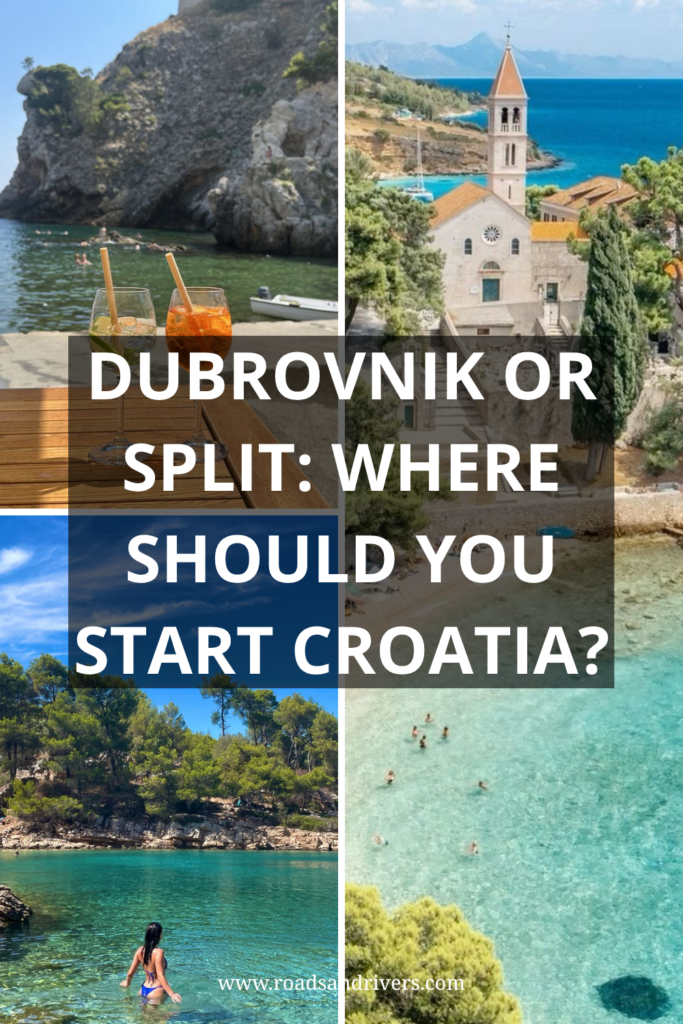
Decision 1: Where Should You Start — Dubrovnik or Split?
Every Croatia trip begins with this choice, and it shapes everything that follows.
Start in Dubrovnik if:
You want the most visually dramatic city in Croatia first. Dubrovnik’s walled Old Town, perched on cliffs above the Adriatic, is one of the most photographed cities in Europe. The city walls walk (2 km around the entire perimeter, 200 kuna entry) is the single best activity in the country. You look down on terracotta rooftops on one side and open sea on the other, and every 50 metres the view gets better.
Dubrovnik is smaller and more contained than Split. The Old Town is compact enough to cover on foot in a day, which makes it satisfying even on short visits. It is also the most expensive city in Croatia, with restaurant prices and accommodation costs that are noticeably higher than Split or the islands.
Best for: 2-3 nights. Walk the walls, swim at Banje Beach, take a kayak trip around the city walls at sunset, and eat fresh seafood at a konoba (traditional Croatian restaurant) in the backstreets.
Start in Split if:
You want a more lived-in, local experience. Split is Croatia’s second largest city and it feels like it: there is a working port, a green market, a nightlife scene, and a local rhythm that Dubrovnik, with its heavy tourist traffic, has largely lost. The Diocletian’s Palace is not a museum you visit. It is the city centre, with restaurants, bars, and apartments built into and around the Roman walls.
Split is also the better logistics hub. It has more frequent and cheaper ferry connections to Hvar, Brac, Vis, and Korcula, making it the natural starting point for island hopping.
Best for: 2-3 nights as a base, plus island day trips or overnights. Explore the palace, climb Marjan Hill for sunset views, eat at the Pazar market, and use Split as the ferry gateway to the islands.
Pro tip: If you have 7+ days, do both. The bus from Dubrovnik to Split takes 4-5 hours along the coast (one of the most scenic bus rides in Europe) or you can fly in 45 minutes. Starting in Dubrovnik and working north to Split gives you the most logical flow for adding islands.
Read more: Best Interrail Routes in Europe if you are connecting Croatia with a broader European rail trip through Italy, Slovenia, or the Balkans.
Decision 2: Which Islands Deserve Your Time?
Croatia has over 1,000 islands. Roughly 50 are inhabited. These are the four that matter for first-time visitors, ranked by what they offer.
Hvar
The most popular island and the one with the best infrastructure for tourists. Hvar Town has a lively harbour, excellent restaurants, and a fortress with panoramic views. The interior is covered in lavender fields and olive groves. The Pakleni Islands (reachable by water taxi from Hvar Town) have some of the best swimming coves in the Adriatic.
Vibe: Glamorous but not exclusive. Beach clubs sit next to family konobas. It works for couples, groups, and solo travellers. Time needed: 2-3 nights minimum. Getting there: Catamaran from Split (1 hour) or car ferry from Split to Stari Grad (2 hours).
Vis
The furthest major island from the mainland and the least developed. Vis was a Yugoslav military base until 1989, which kept it off the tourist map for decades. The result is an island that feels 20 years behind the rest of Croatia’s coast, in the best way. The Blue Cave on nearby Bisevo is one of the most popular excursions (book ahead), and Stiniva Beach, accessible only by boat or a steep trail, is regularly rated among Europe’s most beautiful.
Vibe: Quiet, authentic, food-focused. Vis has some of the best restaurants in Croatia relative to its size. Time needed: 2 nights. Getting there: Ferry from Split (2-2.5 hours). No catamaran option.
Korcula
Often called “mini Dubrovnik” for its walled old town on a peninsula, which is a reasonable comparison but undersells what makes Korcula different. The old town is smaller and less crowded than Dubrovnik, the surrounding coastline is pine-covered and swimmable, and the wine (Grk, a white grape grown only on Korcula) is worth the trip on its own.
Vibe: Cultural, relaxed, historical. Korcula claims to be the birthplace of Marco Polo. Time needed: 1-2 nights. Getting there: Catamaran from Split (2.5 hours) or ferry from Orebic on the Peljesac Peninsula (15 minutes).
Brac
The closest major island to Split and home to Zlatni Rat (Golden Horn), the most photographed beach in Croatia, a spit of white pebbles that shifts shape with the currents. Brac is the most accessible island for a day trip from Split, though an overnight stay gives you time to explore the quieter villages and the stone quarries that supplied Diocletian’s Palace.
Vibe: Beachy and accessible. Good for families and short visits. Time needed: 1-2 nights, or a day trip. Getting there: Car ferry from Split to Supetar (50 minutes).
Decision 3: How Many Days Do You Actually Need?
| Trip Length | What It Covers | Pace |
|---|---|---|
| 5 days | Split + one island (Hvar or Brac) | Comfortable |
| 7 days | Split + Dubrovnik + one island | Good first trip |
| 10 days | Split + Dubrovnik + 2 islands + Plitvice | Complete Croatia |
| 14 days | Full coast + islands + inland | Luxurious |
The 7-day version is the most common first-timer trip and it works well. The 10-day version is what most people wish they had booked after the trip is over.
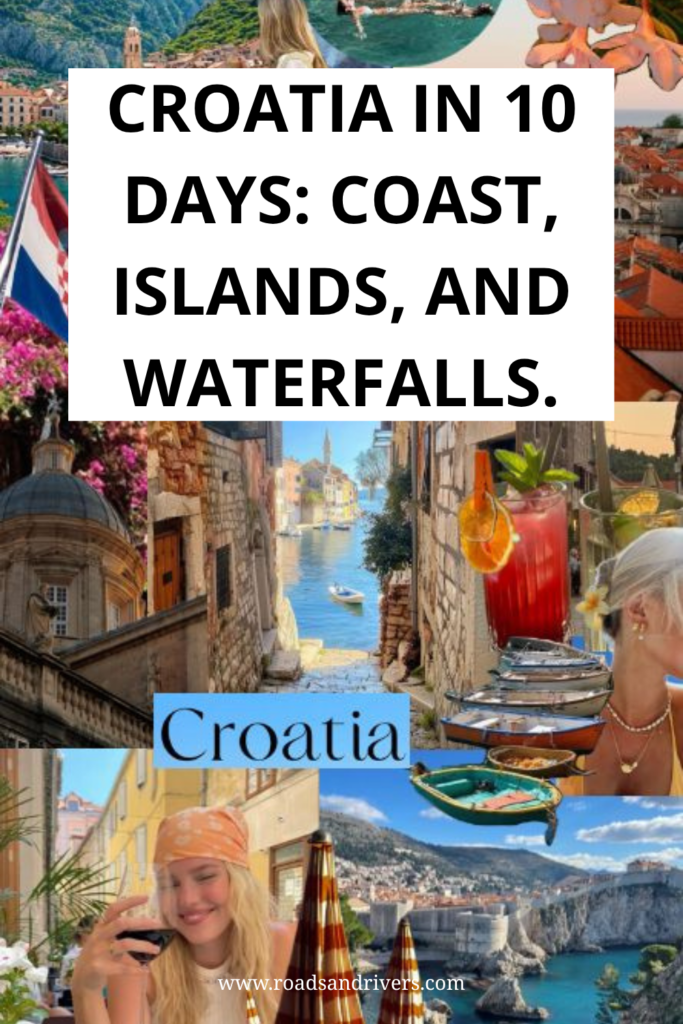
Decision 4: Coast, Islands, or Waterfalls?
Croatia has three distinct travel experiences and most people only plan for one.
The Coast (Dubrovnik, Split, Zadar, Rovinj)
The Dalmatian coast is the headline. Walled cities, Roman ruins, and seafood restaurants perched above turquoise coves. The coastal drive from Dubrovnik north through Split, Sibenik, and Zadar to Istria is one of the best road trips in Europe.
The Islands (Hvar, Vis, Korcula, Brac, Mljet)
Island hopping adds a completely different dimension. The pace slows, the water gets clearer, and the food improves. The ferry network from Split makes it easy to visit 2-3 islands in a week.
The Waterfalls and Inland Croatia (Plitvice Lakes, Krka)
Plitvice Lakes National Park is Croatia’s most visited natural attraction and one of the most beautiful in Europe. Sixteen interconnected lakes cascade through a limestone canyon connected by waterfalls and wooden boardwalks. The colours are almost unbelievable: the water shifts from turquoise to emerald to deep blue depending on the mineral content and the light.
Krka National Park, closer to Split, is smaller but allows swimming at the base of the Skradinski Buk waterfall. Both parks require a full day and are best visited early in the morning or in shoulder season to avoid crowds.
Pro tip: Plitvice is a 3-hour drive from Split or 2 hours from Zagreb. If you are flying in or out of Zagreb, Plitvice makes a natural stop between the capital and the coast.
Read more: The Ultimate Greece Travel Guide for First-Time Visitors if you are deciding between Croatia and Greece or considering doing both. And for another Mediterranean island comparison, the Santorini vs Mykonos guide helps with the Greek side of that decision.
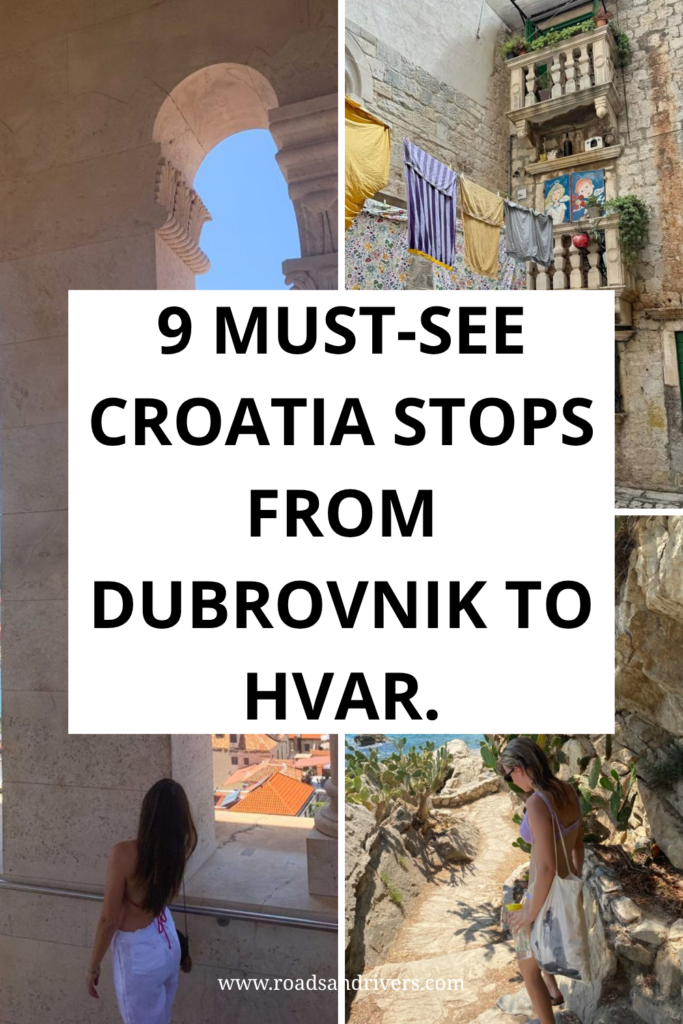
The 9 Must-See Stops From Dubrovnik to Hvar
If you are doing the classic south-to-north route, these are the stops worth building your trip around:
1. Dubrovnik Old Town and the city walls. The non-negotiable starting point. Walk the walls early morning or late afternoon to avoid the midday heat and cruise-ship crowds.
2. Lokrum Island. A 15-minute ferry from Dubrovnik’s Old Port. A forested island with swimming spots, peacocks, and a botanical garden. No cars, no hotels, just a nature reserve. Perfect half-day escape.
3. Ston. A small town on the Peljesac Peninsula with the second longest defensive walls in Europe (after the Great Wall of China) and the best oysters in Croatia. An easy stop between Dubrovnik and Split.
4. Split’s Diocletian’s Palace. Not a single building but an entire Roman complex that became the city itself. Wander without a map and discover bars in basement vaults, apartments built into towers, and a cathedral inside a mausoleum.
5. Trogir. A tiny island old town connected to the mainland by a bridge, 30 minutes from Split. UNESCO-listed and less crowded than either Dubrovnik or Split. Worth a half-day.
6. Hvar Town. The harbour, the fortress, the lavender, and the Pakleni Islands. This is Croatian island life at its most refined.
7. Stiniva Beach, Vis. Reachable by boat from Vis or a steep 20-minute hike. A narrow cove flanked by towering cliffs. The swimming is extraordinary.
8. Krka National Park. The swimable waterfall park. Easier to reach from Split than Plitvice and satisfying as a day trip.
9. Plitvice Lakes. If you have the time to fit it in, this is the inland crown jewel. Arrange it as a stop between Zagreb and the coast.
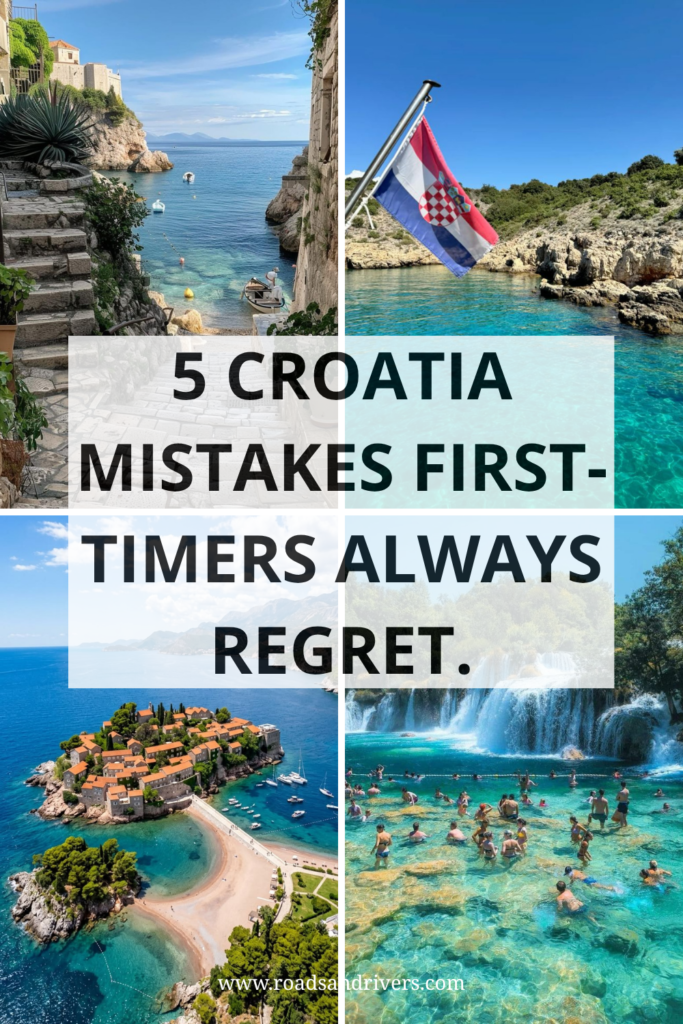
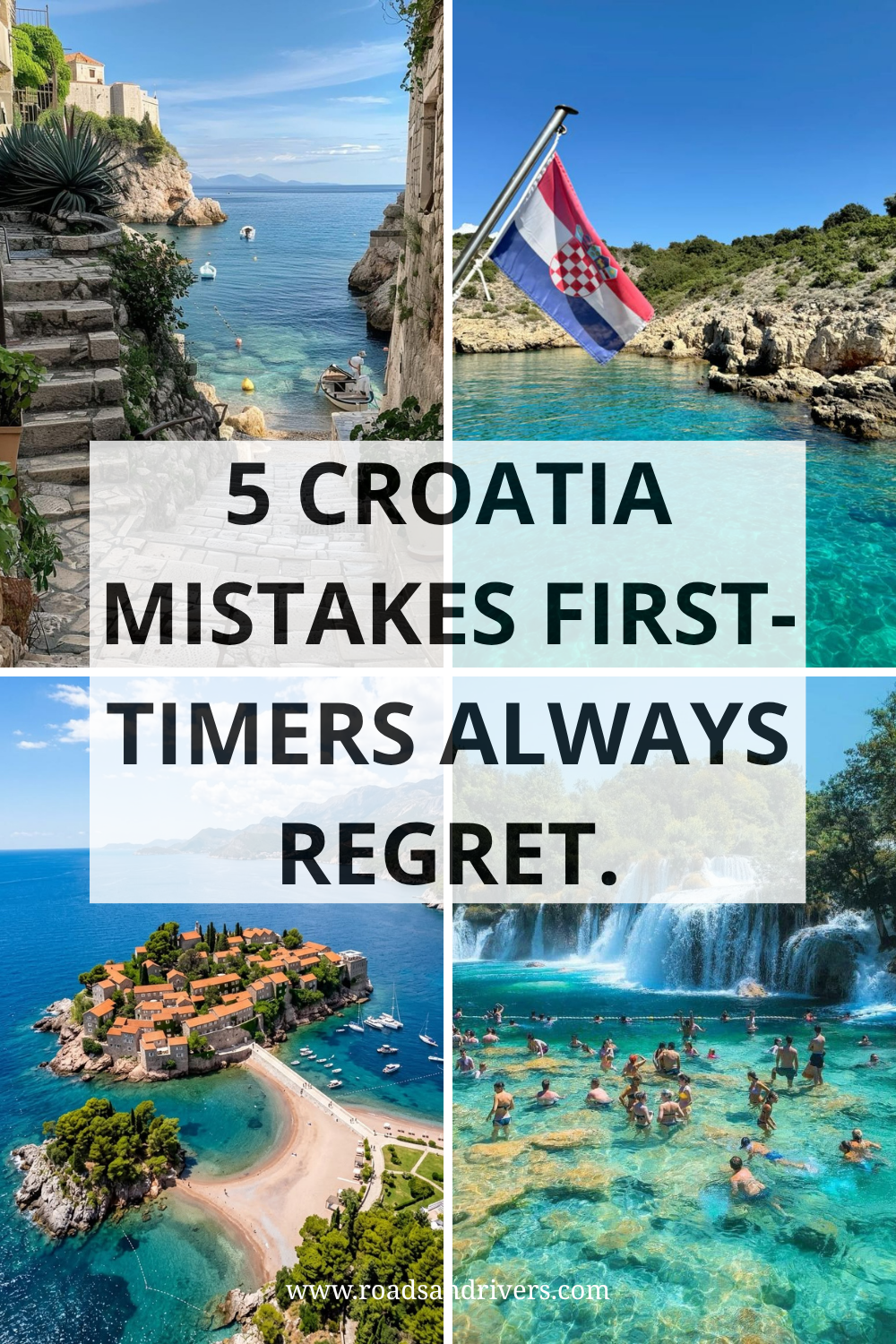
5 Croatia Mistakes First-Timers Always Regret
1. Only visiting Dubrovnik. Dubrovnik alone is not Croatia. It is the most famous part but also the most expensive, the most crowded (especially when cruise ships dock), and the least representative of what daily Croatian life feels like. Split, the islands, and the smaller coastal towns give you the full picture.
2. Visiting in August. Peak season in Croatia is July and August. Prices double, accommodation fills up months in advance, Dubrovnik’s Old Town becomes physically uncomfortable with crowds, and the heat is intense (35°C+). June and September offer nearly identical weather at half the price and a fraction of the tourists.
3. Skipping the islands entirely. Many first-timers stick to the coast and never take a ferry. The islands are where Croatia’s water is clearest, the pace is slowest, and the seafood is freshest. Even one overnight on Hvar or Vis transforms the trip.
4. Eating on the main squares. The restaurants on Dubrovnik’s Stradun or Split’s Riva promenade charge premium prices for average food. Walk two streets back from any waterfront and the quality improves while prices drop by 30-40%. Ask locals for their favourite konoba.
5. Not renting a car for at least part of the trip. The coastal bus network is decent but a rental car gives you access to hidden beaches, viewpoints, and small towns that buses do not reach. The Adriatic Highway between Dubrovnik and Split is one of the most scenic drives in Europe. Rent for 2-3 days even if you use ferries and buses for the rest.
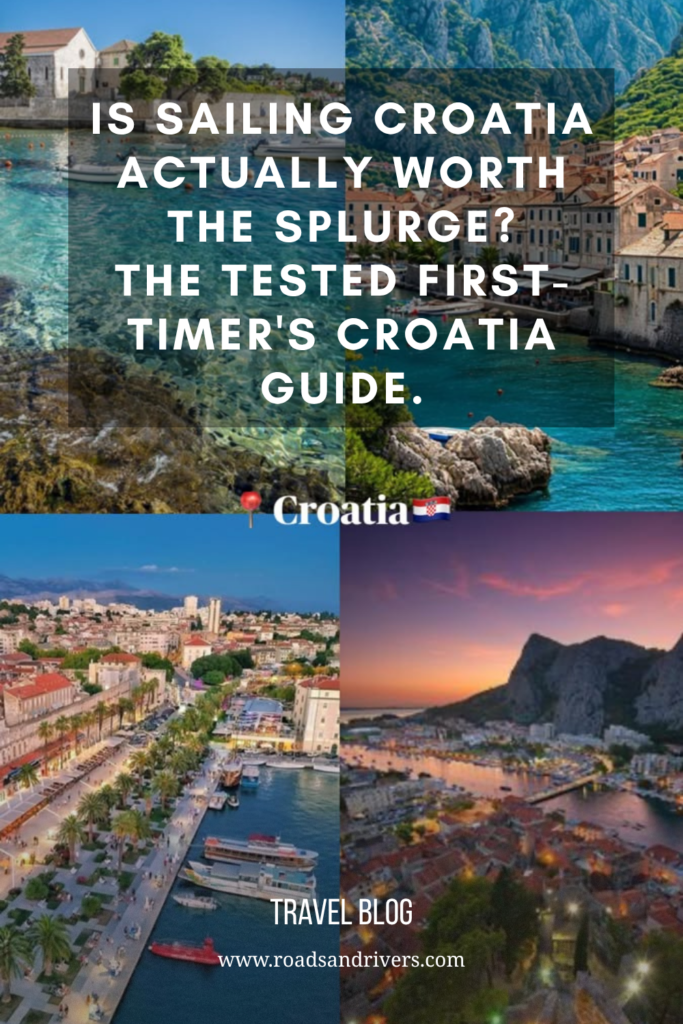
Is Sailing Croatia Actually Worth the Splurge?
Sailing trips (typically 7-day routes from Split or Dubrovnik, on either a skippered yacht or a flotilla group tour) have become one of the most popular ways to see Croatia. They cost €700-1,500 per person for a week depending on the boat, the season, and the level of luxury.
The case for sailing: you see 5-6 islands in a week without packing and unpacking, you access coves and swimming spots that are impossible to reach by land, and the experience of anchoring in a quiet bay and swimming off the back of the boat at sunset is something land-based trips cannot replicate.
The case against: you spend most of your time on water rather than in towns, the boats can be cramped (especially budget options with 8+ people sharing), and you have limited control over the itinerary. If you want deep exploration of one or two islands, a land-based trip with ferries gives you more time and flexibility.
The verdict: Sailing is worth it if you prioritise water and variety over depth and independence. It is not worth it if you want to spend time in the old towns, eat at specific restaurants, or control your own schedule. Both approaches see excellent Croatia. They just see different versions of it.
Read more: Backpacking Europe for Beginners for a broader European trip planning guide that includes Croatia routing options. And for beach day essentials if you are planning long days on the coast, the beach day essentials guide covers what to bring.
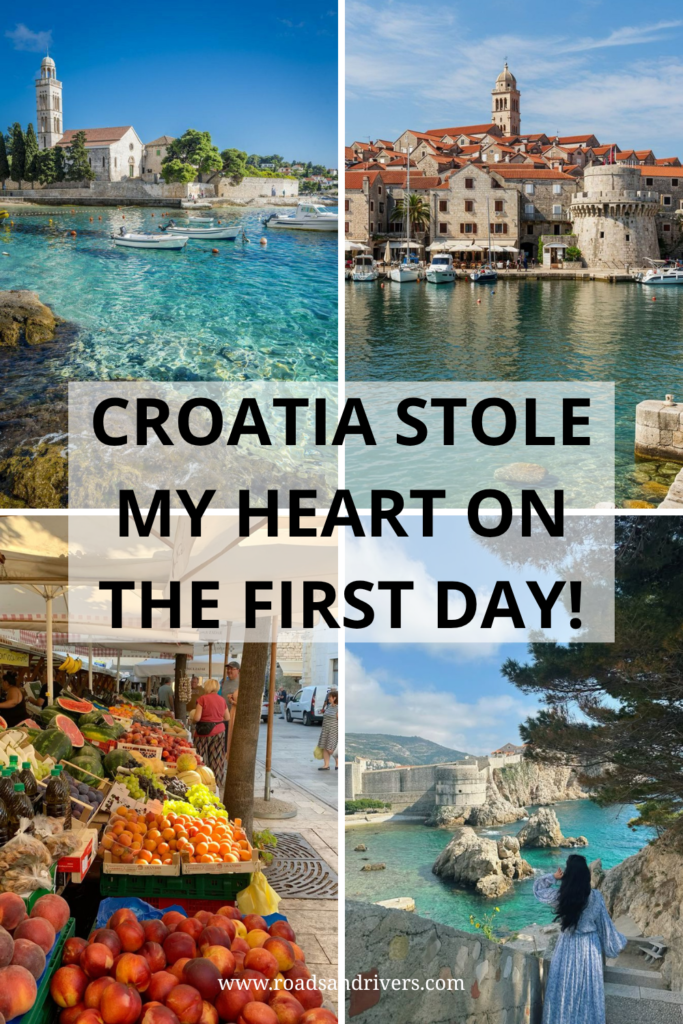
What Croatia Actually Costs
Croatia has joined the eurozone (as of 2023), which makes budgeting simpler but also means prices have risen to match its EU neighbours. It is no longer the budget Mediterranean alternative it was 10 years ago, but it remains cheaper than Italy or the French Riviera.
Budget traveller (€50-70/day): Hostel dorms or budget Airbnbs (€15-30/night), meals at bakeries, markets, and budget konobas (€15-25/day), public ferries and buses, free beaches.
Mid-range traveller (€100-150/day): Boutique hotel or private apartment (€50-80/night), mix of konobas and nicer restaurants (€30-50/day), car rental for part of the trip, 1-2 paid activities.
Comfortable traveller (€180-250/day): Seaside hotel or villa (€100-150/night), restaurants for most meals (€50-80/day), private tours or sailing, beach clubs.
Pro tip: Croatia is a cash-and-card country. Most places accept euros but smaller konobas and market stalls in rural areas may prefer cash. ATMs are widely available in all tourist areas.
Key Takeaways
- Start in Split if you want a lived-in city experience and better island access. Start in Dubrovnik if you want the dramatic walled city first.
- The islands are not optional. Even one overnight on Hvar, Vis, or Korcula changes the entire character of the trip.
- June and September are the best months. August is crowded, hot, and expensive.
- Plitvice Lakes is worth the detour from the coast. Time it as a stop between Zagreb and Split for the most efficient routing.
- Two streets back from any waterfront gives you better food at lower prices.
Croatia is one of those destinations that earns every superlative thrown at it. The water is that blue. The old towns are that beautiful. The seafood is that fresh. The only thing the photos get wrong is the scale: standing inside Diocletian’s Palace or looking down from Dubrovnik’s walls, the real thing is always bigger, older, and more alive than any image can carry.
Book the flight. Start in Split. Take the ferry to Hvar. Let the Adriatic sort out the rest.
What is your favourite Croatia stop or hidden beach? Drop it in the comments. Planning your first trip? Ask anything below.
FAQ
How many days do you need for Croatia?
Seven days is the minimum for a satisfying first trip covering Split, Dubrovnik, and one island. Ten days allows you to add a second island and Plitvice Lakes, which is the version most travellers wish they had planned. Five days works for a focused Split-and-islands trip or Dubrovnik with a day trip.
Is Croatia expensive?
Croatia is mid-range for Western Europe. Dubrovnik is the most expensive city and can feel comparable to Italy. Split, the islands (outside Hvar Town’s harbour restaurants), and smaller coastal towns are noticeably cheaper. A comfortable daily budget for a mid-range traveller is €100-150 per person including accommodation, food, and transport.
What is the best time to visit Croatia?
June and September are the best months. Both offer warm weather (25-30°C), manageable crowds, and reasonable accommodation prices. May and October are cooler but perfectly pleasant for sightseeing and offer the lowest prices. July and August are peak season with the highest prices and most intense crowds, especially in Dubrovnik.
Should you rent a car in Croatia?
A rental car is recommended for at least part of the trip, particularly the Dubrovnik-to-Split coastal drive and access to Plitvice Lakes. The coastal highway is scenic and well-maintained. On the islands, cars are useful on Brac and Korcula but less necessary on Hvar (which is navigable by scooter or bus) and Vis (which is small enough for scooter or taxi).
Can you island hop in Croatia without a car?
Yes. The catamaran and ferry network from Split connects all major islands. Jadrolinija (state ferries) and Krilo (fast catamarans) run frequent services in summer. You can build a complete island-hopping itinerary using public ferries, water taxis, and local buses on each island. Book catamaran tickets a day or two ahead in peak season as they sell out.