
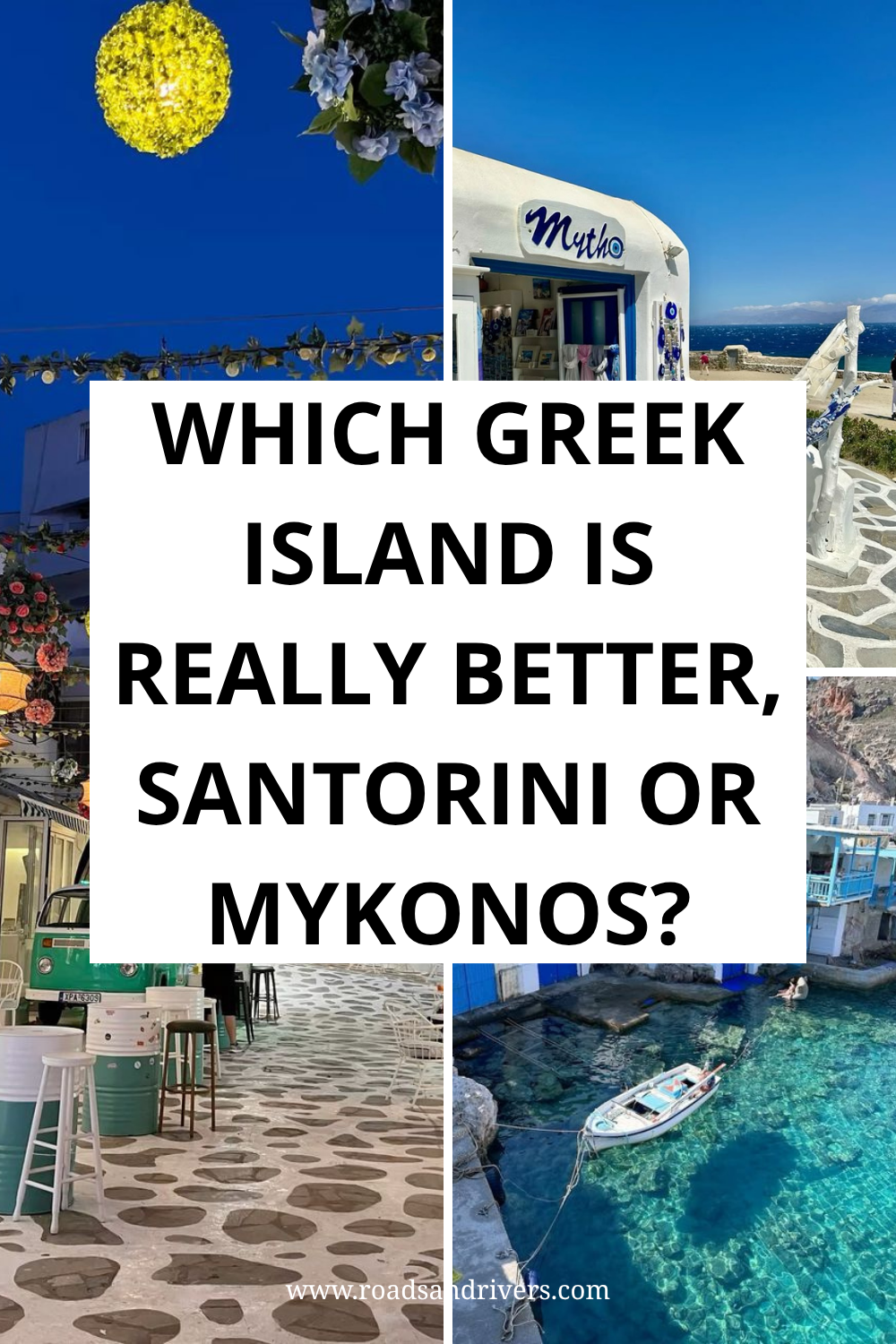
You have two weeks, one Greece trip, and a decision that has paralyzed better travelers than you. Santorini or Mykonos?
Both islands get the same stock answer from travel sites: “it depends on what you want!” Which is true, but also useless. So here is the actual breakdown — category by category, honest and direct — so you can stop overthinking and start booking.
The short version: Santorini wins for scenery, romance, and first-timers. Mykonos wins for nightlife, beaches, and people who want to party. But the long version is more interesting, because both islands have qualities the other simply cannot match — and the mistake most travelers make is choosing one for the wrong reasons.
Quick-Reference: Santorini vs Mykonos at a Glance
| Category | Santorini | Mykonos |
|---|---|---|
| Scenery | Caldera views, volcanic cliffs, blue domes | Windmills, whitewashed alleys, turquoise bays |
| Nightlife | Wine bars, sunset cocktails, low-key evenings | Full-on club scene, beach parties, late nights |
| Beaches | Dramatic volcanic black/red sand | Long sandy beaches with beach clubs |
| Food | Excellent local cuisine, fresh seafood, wine | International dining, beach club menus |
| Budget | Very expensive | Very expensive (often slightly worse) |
| Best for | Couples, honeymoons, first-timers, photographers | Party travelers, solo travelers, repeat Greece visitors |
| Getting there | Ferry or direct flight from Athens | Ferry or direct flight from Athens |
| Days needed | 4–5 days | 3–4 days |
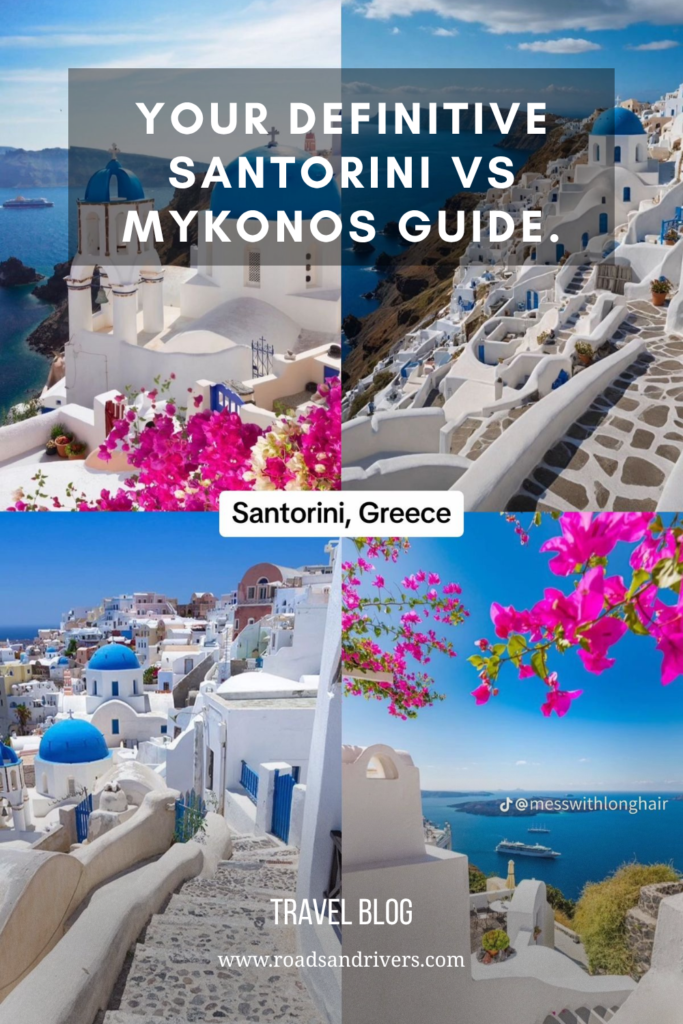
Round 1: Scenery — Which Island Actually Looks Better?
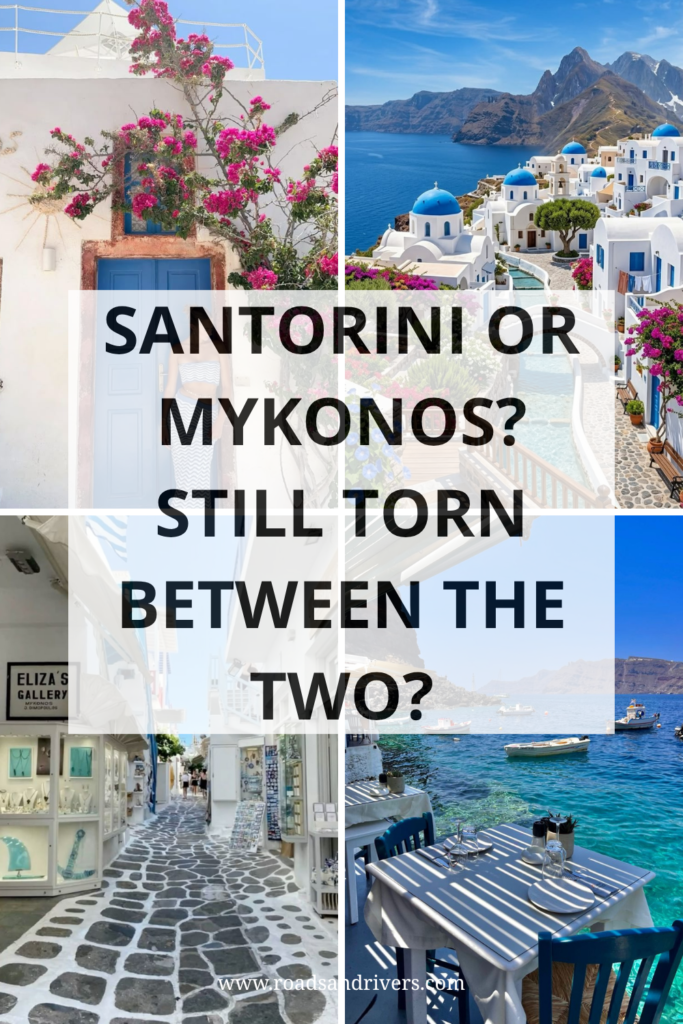
Santorini wins this one. Not even close.
Santorini sits inside the flooded crater of an ancient supervolcano. The caldera — the vast sunken bay at the island’s center — is one of the most dramatic natural landscapes in Europe. The clifftop villages of Oia and Fira cascade down the volcanic rock in layers of white plaster and blue domes, with the Aegean stretching below in every direction. This is the image that made Greece synonymous with summer in the first place.
Mykonos is genuinely pretty. The windmills above Little Venice, the flower-draped whitewashed alleys of Mykonos Town, the bright-blue painted doors — it all looks exactly like a Greek island should. But it is a different kind of beautiful. More intimate, more street-level. The jaw-dropping panoramas that Santorini offers from its caldera rim simply do not exist here.
Winner: Santorini. If scenery is your main reason for visiting Greece, this is non-negotiable.
Pro tip: In Santorini, stay in Oia or Imerovigli rather than Fira for the best caldera views. Fira is the main town and noticeably more commercial.
Round 2: Nightlife — Which Island Parties Harder?
Mykonos wins this one by a significant margin.
Santorini’s nightlife centers on wine bars and sunset cocktail spots — civilized, beautiful, and usually over by midnight. There are bars, there are clubs, but the island’s energy leans romantic rather than raucous. You are not flying to Santorini to dance until 4 AM.
Mykonos is a different conversation entirely. It has been one of Europe’s premier party destinations for decades. The beach clubs at Paradise Beach and Super Paradise Beach are legendary on the international circuit. DJs fly in from Ibiza. The bars around Little Venice stay packed until sunrise. Nammos — one of the most famous beach clubs in the Mediterranean — is here.
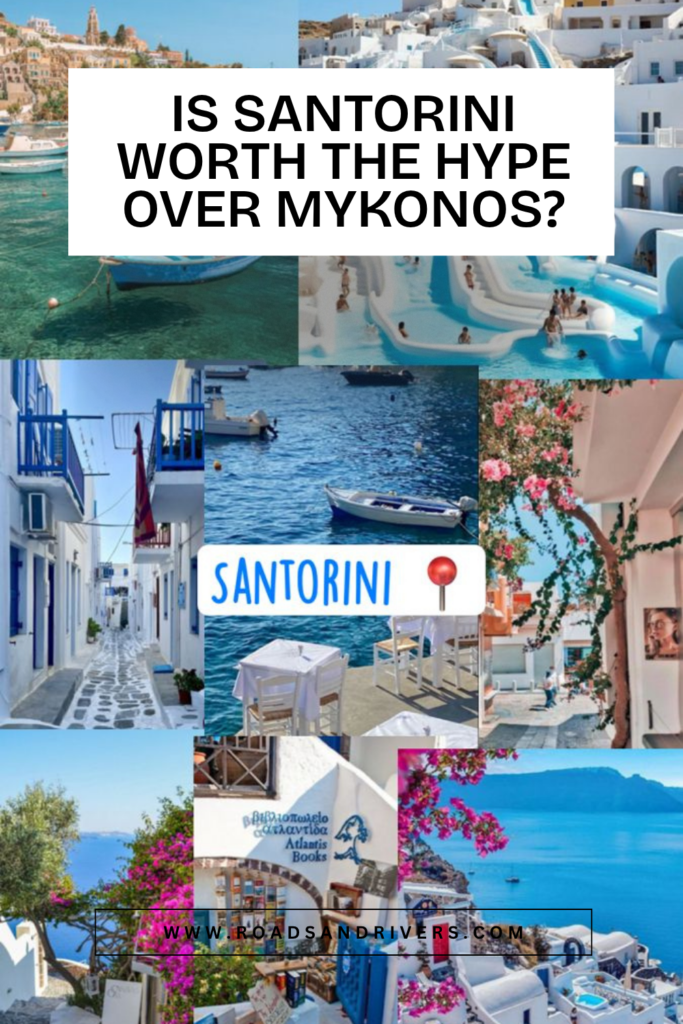
If you are traveling solo, in a group of friends, or specifically looking for a high-energy nightlife scene, Mykonos is the obvious choice. Santorini will feel sedate by comparison.
Winner: Mykonos. It is not a competition.
Pro tip: Mykonos in July and August is peak party season — accommodation prices surge and the main clubs are at maximum capacity. If you want the nightlife without the worst of the crowds, late June or early September hits a better balance.
Round 3: Beaches — Where Is the Swimming Better?
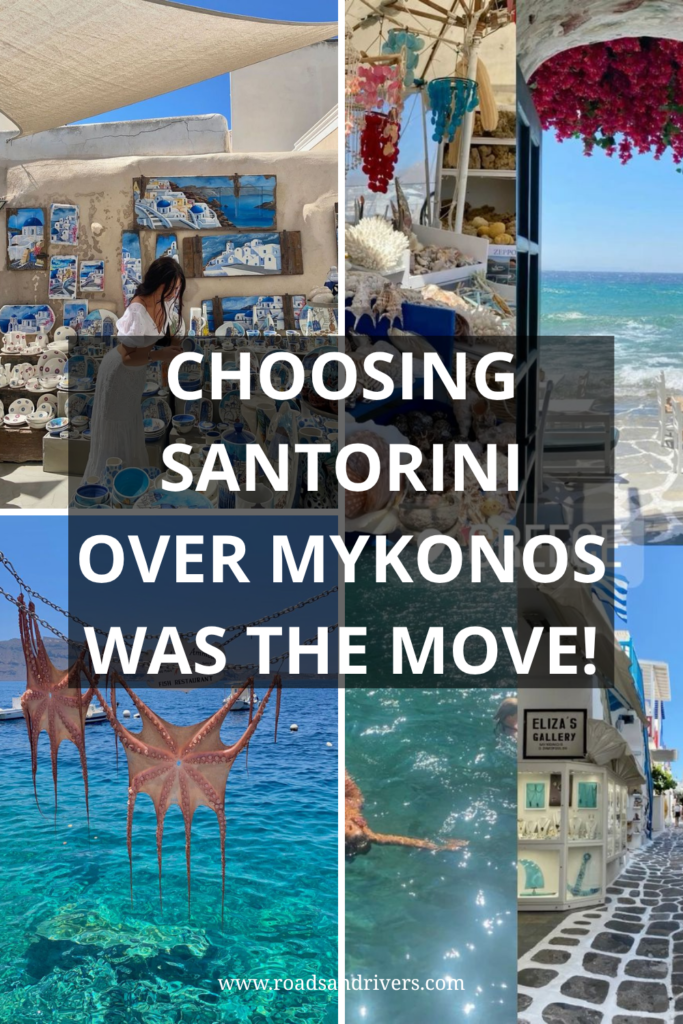
This one is closer than you might expect — and it depends what kind of beach you want.
Santorini’s beaches are volcanic and dramatic. Red Beach, near Akrotiri, has deep red cliffs plunging into the sea. Perissa and Perivolos have long stretches of black volcanic sand. They look extraordinary and the swimming is good, but they are not the classic soft white sand and turquoise water combination many people picture when they think of Greece.
Mykonos has better conventional beaches. Psarou, Elia, Agios Sostis, and the famous Paradise Beach all deliver the fine sand and clear warm water that Greece is known for. Many of them have beach clubs attached — umbrellas, loungers, cocktail service, the whole setup. For a classic beach day, Mykonos is the stronger choice.
Winner: Mykonos for traditional sandy beaches. Santorini wins on visual drama and uniqueness.
Round 4: Food and Wine — Where Do You Eat Better?
Santorini has the edge here, particularly for local cuisine and wine.
The island produces its own wine — primarily Assyrtiko, a crisp dry white that pairs perfectly with local seafood. Santorini also grows its own tomatoes (Santorini cherry tomatoes are genuinely different — grown in volcanic soil with almost no water, they are intensely sweet), white eggplant, and capers. The local food culture is specific and worth seeking out beyond the tourist tavernas.
Restaurants on the caldera are expensive regardless of quality — you are paying partly for the view. The better strategy is to eat in the inland villages like Pyrgos or Megalochori, where the food is just as good and the prices are significantly more honest.
Mykonos food is excellent too — it is a cosmopolitan island with international dining options, excellent fresh fish, and strong taverna culture. But it does not have the same local agricultural identity that Santorini has.
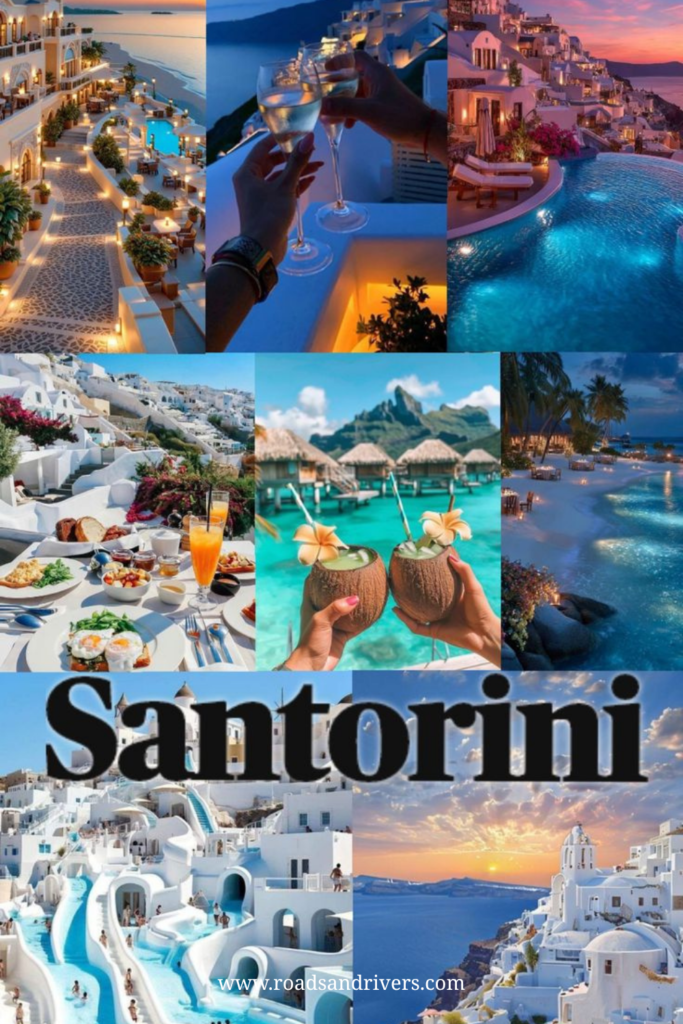
Winner: Santorini, specifically for wine and local produce. Both islands are strong on fresh seafood.
Pro tip: At both islands, walk five minutes off the main tourist drag before choosing a restaurant. The places with menus posted in six languages and a tout standing outside are almost never the best options.
Round 5: Budget — Which Island Is Cheaper?
Neither. Both are among the most expensive destinations in Greece, and both get significantly pricier in high season (July–August).
That said, Mykonos has a slight reputation for being the more aggressively expensive of the two — particularly for nightlife, beach clubs, and mid-range hotels. A sun lounger at Nammos can cost more than most people’s daily accommodation budget. Table service at the top beach clubs runs to genuinely extraordinary numbers.
Santorini is expensive, but the pricing feels more structured. Caldera-view accommodation commands a real premium, but move inland to Akrotiri, Fira, or Kamari and prices drop substantially. Budget travelers can do Santorini reasonably well with some advance planning.
Winner: Slight edge to Santorini for budget-conscious travelers — but neither island is a budget destination by any honest measure.
Pro tip: At both islands, visiting in May–June or September–October cuts accommodation costs by 30–50% compared to peak July–August prices, while still getting good weather and open businesses.
The Mistake Most Travelers Make When Choosing
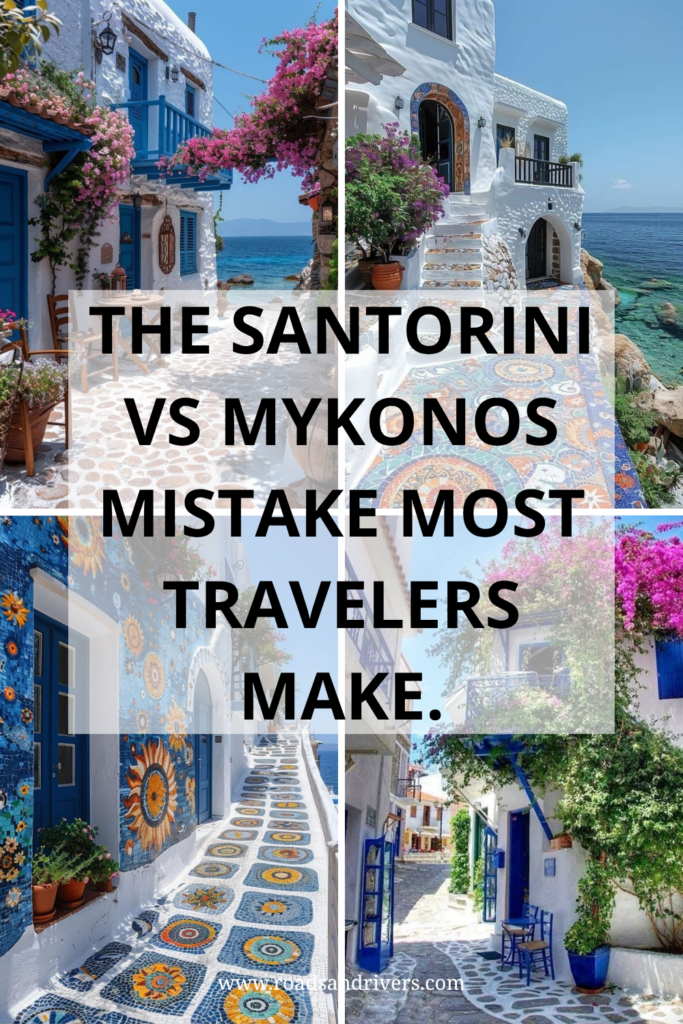
Most people choose Santorini because it is the “famous one” and Mykonos because someone told them it is the party island. Neither reason is wrong — but both islands have much more going on beneath the obvious surface.
Santorini’s most common disappointment: travelers who show up expecting deserted caldera views find themselves shoulder to shoulder with cruise ship day-trippers in Oia between 11 AM and 4 PM. The island gets around 2 million visitors a year, heavily concentrated in peak summer. If you are not staying at least 3–4 nights, you may not experience the island at the times of day when it is actually peaceful.
Mykonos’s most common disappointment: travelers who are not there specifically for the party scene find it expensive and crowded, with beaches that feel more like club annexes than actual beach experiences. If you want to relax and read a book by the sea, Mykonos in August is the wrong choice.
Read more: Not sure Greece is the right fit for your trip? The Best Islands in Thailand: How to Pick the Right One for You covers a very different island-choosing framework that might help clarify your priorities.
Who Should Pick Santorini?
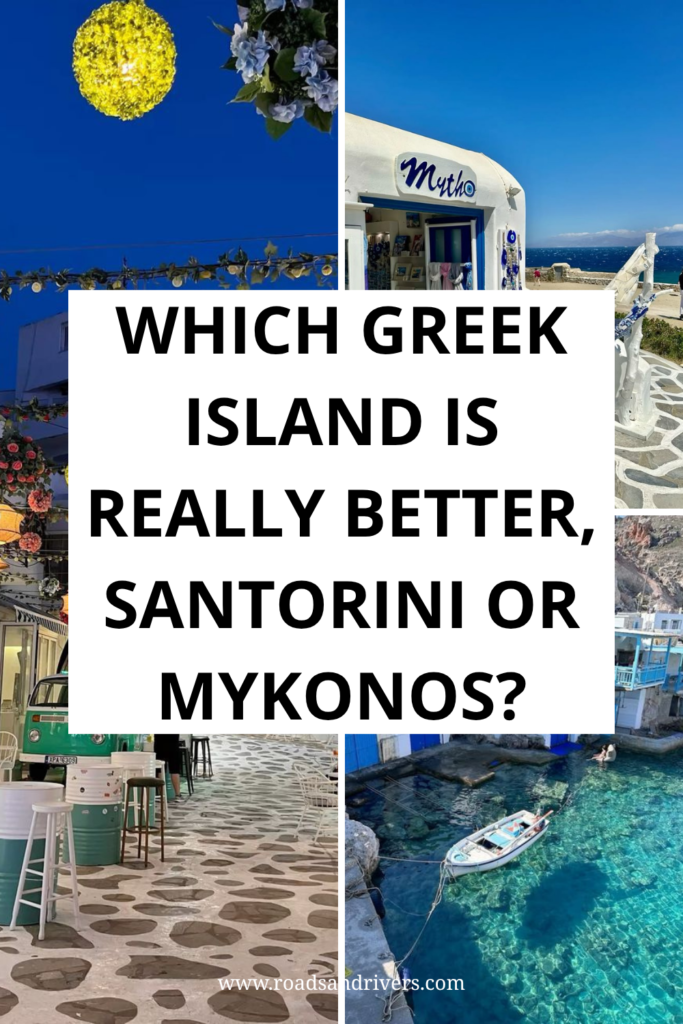
Go to Santorini if you are:
On a honeymoon or anniversary trip. The caldera at sunset with a glass of Assyrtiko in hand is one of the most romantic travel experiences in Europe. Santorini does this better than anywhere else in Greece.
Visiting Greece for the first time. Santorini is the image of Greece that most people carry in their heads. Seeing it in person — even once, even with the crowds — satisfies something that cannot be replicated.
Interested in local food and wine. The Santorini wine trail, the volcanic-soil produce, and the traditional cuisine make it a genuinely interesting destination for food-focused travelers.
A photographer. The caldera light is extraordinary. Early morning in Oia, before the cruise ship crowds arrive, is one of the best photography windows in all of Europe.
Who Should Pick Mykonos?
Go to Mykonos if you are:
Traveling in a group of friends. The nightlife, the beach clubs, and the general energy of Mykonos is designed for groups. It is more fun with people.
A solo traveler looking to meet people. Mykonos has a genuinely social atmosphere — at beach clubs, in bars, on the ferries between islands. Santorini’s romance-focused vibe can feel isolating when you are traveling alone.
Returning to Greece. If you have already done Santorini and want something with a different energy, Mykonos scratches a completely different itch.
LGBTQ+ travelers. Mykonos has a long history as one of the most welcoming LGBTQ+ destinations in Europe. The island is genuinely and openly inclusive in a way that Santorini, while not unwelcoming, is not specifically known for.
Can You Do Both?
Yes — and if your time allows, this is actually the best answer.
Santorini and Mykonos are connected by ferry (roughly 2–3 hours depending on the route and operator). A typical itinerary might be 4 nights in Santorini followed by 3 nights in Mykonos, or vice versa. The contrast between the two islands makes each one feel even more distinctive.
This is also how most experienced Greece travelers approach the Cyclades — not as an either/or choice but as part of a longer island-hopping trip that might also include Naxos, Paros, or Ios.
Read more: For a broader Greece trip framework, the Ultimate Greece Travel Guide for First-Time Visitors covers the full picture beyond just these two islands.
If you are coming from further afield as part of a longer European trip, the Best Interrail Routes in Europe has itineraries that include Greece as a natural endpoint to a train-and-ferry journey.
Santorini vs Mykonos: The Final Verdict
Pick Santorini if: you want scenery, romance, food, wine, and the classic Greek island experience that everyone pictures when they close their eyes and think of Greece. Accept the crowds. Stay more than two nights. Go at sunrise.
Pick Mykonos if: you want beaches, nightlife, energy, and a more social atmosphere. Know what you are paying for. Book early. Lean into the scene rather than fighting it.
Do both if: you have 10+ days in Greece and want the full spectrum of what the Cyclades can offer.
Neither island is overhyped for the right traveler. Both are worth every euro for someone who goes in with the right expectations. The worst version of both islands is arriving with the wrong agenda.
If Greece is inspiring you toward a broader European trip, the First-Timer’s Guide to Croatia: Dubrovnik, Split, and the Islands is a natural next stop — Croatia and Greece share a similar ferry-hopping, island-exploring travel logic. And for city-vs-city comparison posts like this one, Lisbon vs Porto: Which City Deserves More of Your Time? applies the same honest framework to Portugal.
Which island are you leaning toward? Drop it in the comments — and if you have been to both, tell us which one won you over.
Key Takeaways
- Santorini wins on scenery, romance, food, and caldera views — it is the better choice for first-timers and couples
- Mykonos wins on nightlife, beaches, and social atmosphere — it is the better choice for groups and party-focused travelers
- Both islands are expensive, with Mykonos edging slightly higher in peak season
- Visiting May–June or September–October avoids the worst crowds and cuts costs significantly
- Combining both islands on a 10-day trip is the best solution when you genuinely cannot choose
- The most common mistake is choosing Santorini without accounting for crowds, or choosing Mykonos without wanting the party scene
FAQ
Is Santorini or Mykonos better for couples?
Santorini is widely considered the better choice for couples. The caldera sunsets, the romantic dinner terraces, and the generally quieter atmosphere make it a natural fit for honeymoons and anniversaries. Mykonos is more social and nightlife-focused, which can feel less intimate.
Which is more expensive, Santorini or Mykonos?
Both are among the priciest destinations in Greece. Mykonos has a slight edge in overall expense, particularly when it comes to beach clubs and nightlife costs. At both islands, visiting outside July–August cuts costs significantly.
How many days do you need in Santorini vs Mykonos?
Most travelers spend 4–5 days in Santorini to cover the caldera villages, beaches, and wine region without rushing. Mykonos can be done well in 3–4 days. If you are combining both on one trip, budget 7–10 days total.
Can you visit both Santorini and Mykonos on one trip?
Yes. They are connected by ferry (roughly 2–3 hours). A 10-day Greece trip commonly includes 4–5 nights in Santorini and 3–4 nights in Mykonos, often with a stop on another Cycladic island like Naxos or Paros in between.
What is the best time to visit Santorini?
May–June and September–October offer the best combination of good weather, open businesses, and manageable crowd levels. July and August are the hottest months and the most crowded — Oia in particular can feel overwhelmed with day-trippers during peak summer.