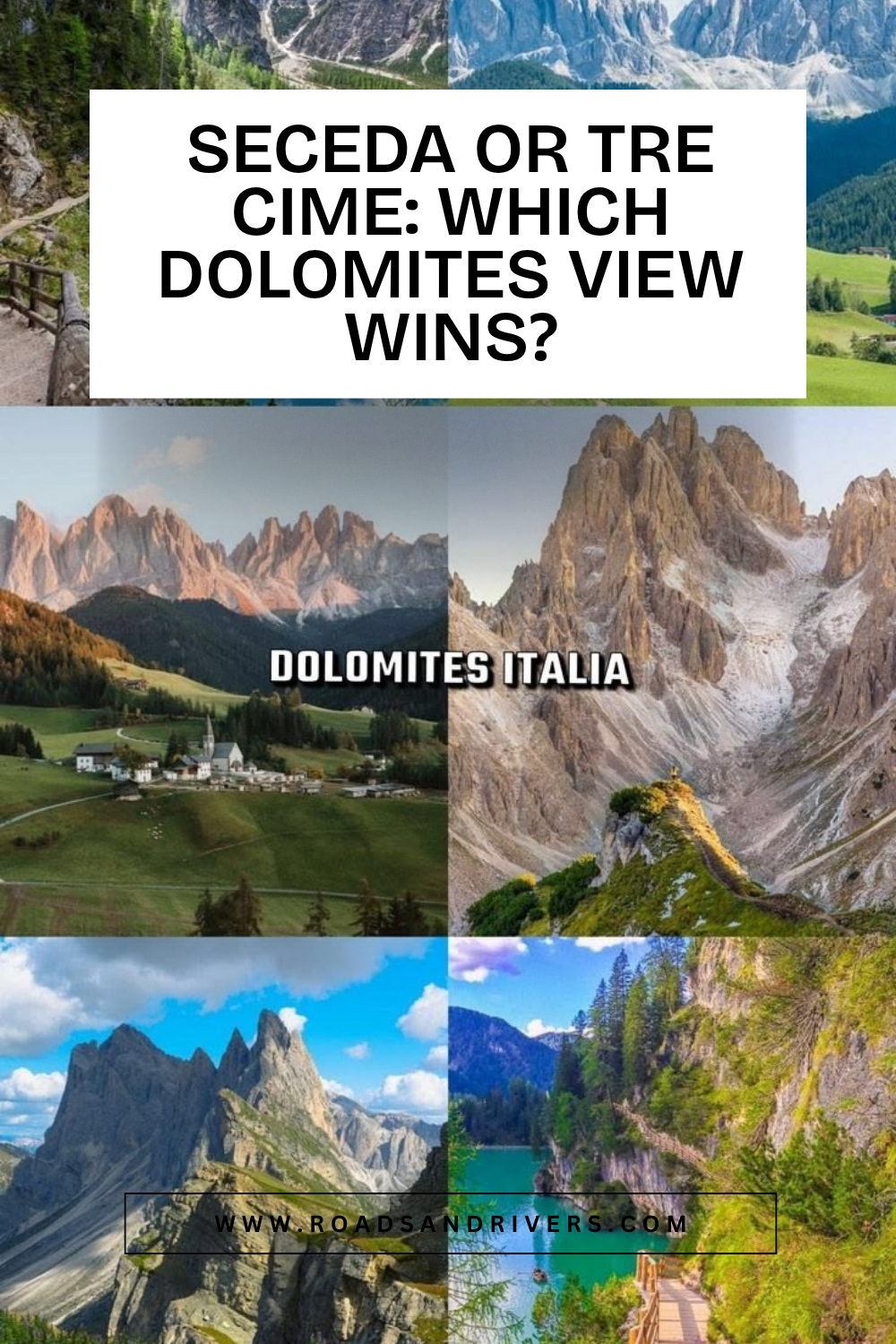
The Dolomites do not look real. I know that is a cliché written about beautiful places, but in this case it is literally true. The rock formations are so vertical, so jagged, and so pale against the green valleys below them that the first time you round a hairpin bend and see the Odle peaks or the Tre Cime from a distance, your brain briefly rejects what your eyes are showing it. These cannot be real mountains. They look like a film set. They look like a painting. They look like someone turned the contrast up on reality and forgot to turn it back down.
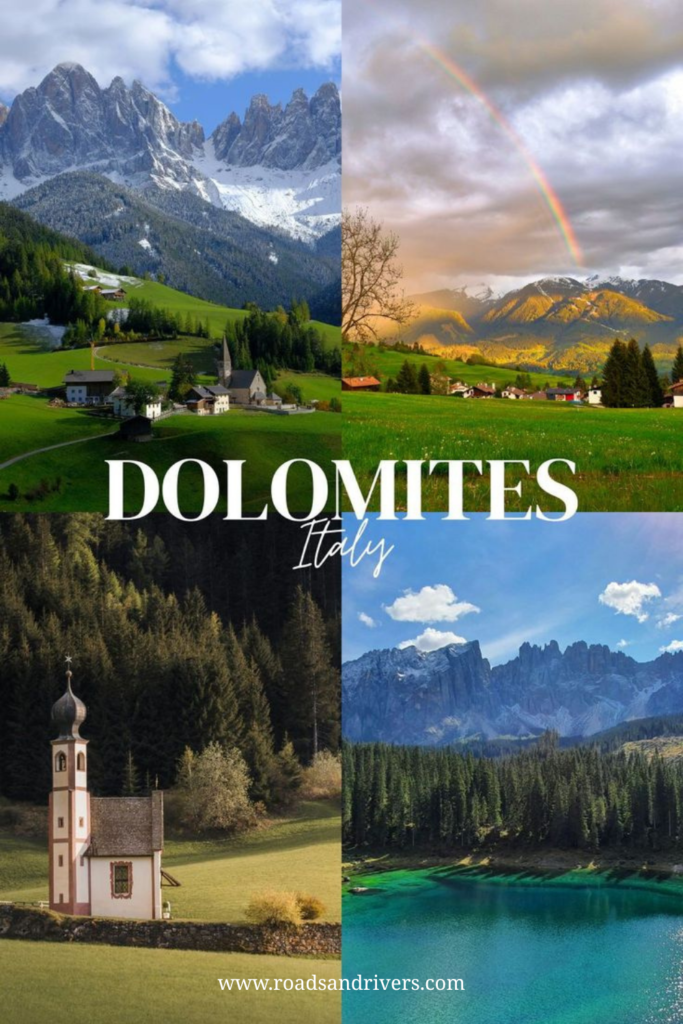
The Dolomites Italy are a UNESCO World Heritage mountain range in northeastern Italy, spanning the provinces of South Tyrol, Trentino, and Belluno. They are simultaneously one of the best hiking destinations in Europe, one of the most photogenic mountain landscapes on earth, and in 2026, one of the venues for the Milan-Cortina Winter Olympics. This guide covers how to explore them by car and on foot, which hikes and viewpoints are worth prioritising, and the timing mistakes that ruin most first-timers’ trips.
How This Guide Is Organised
This guide is structured around a trail rating system. Instead of the typical day-by-day itinerary, each section covers a specific Dolomites experience and rates it on three axes: physical difficulty, crowd level, and visual payoff. This lets you build your own trip based on your fitness level and tolerance for other tourists.
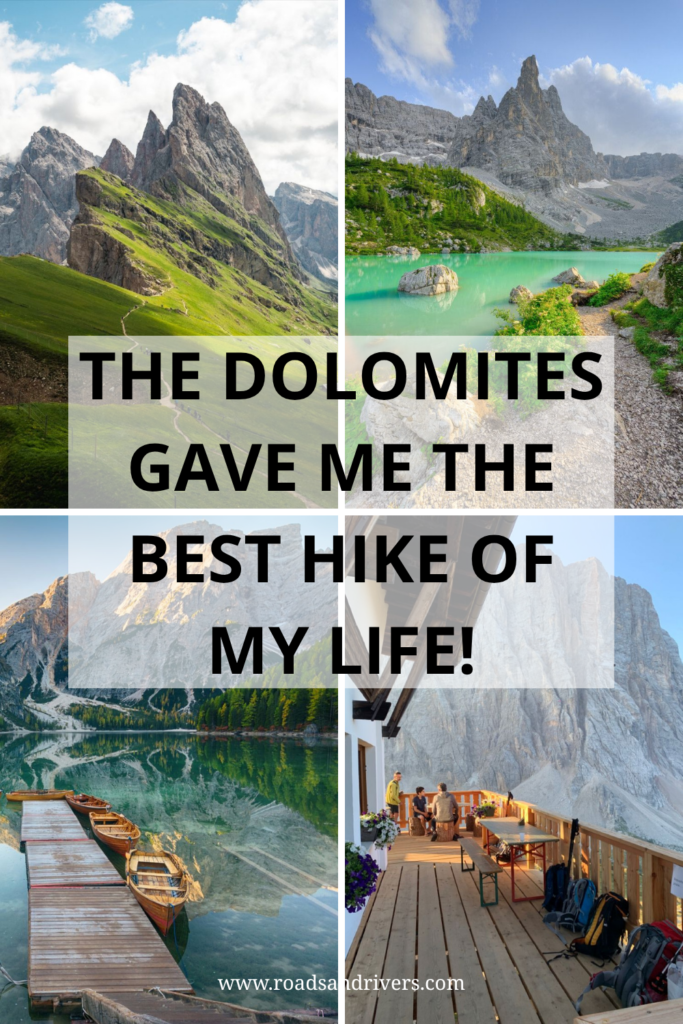
The Dolomites Gave Me the Best Hike of My Life
I need to say this upfront because it colours everything that follows: the Dolomites contain the single best hike I have ever done. It was the Tre Cime di Lavaredo circuit, and the reason it was the best was not the difficulty (it is moderate) or the length (10 km, roughly 3-4 hours). It was the moment I came around the back of the three towers and the entire amphitheatre of rock opened up in front of me, and I realised that every photograph I had ever seen of this place had undersold it.
That is the consistent theme of the Dolomites. The photos are extraordinary. The reality is better. And unlike many hyped destinations, the infrastructure here (trails, rifugios, cable cars, parking) is so well maintained that the experience of actually being here matches the fantasy.
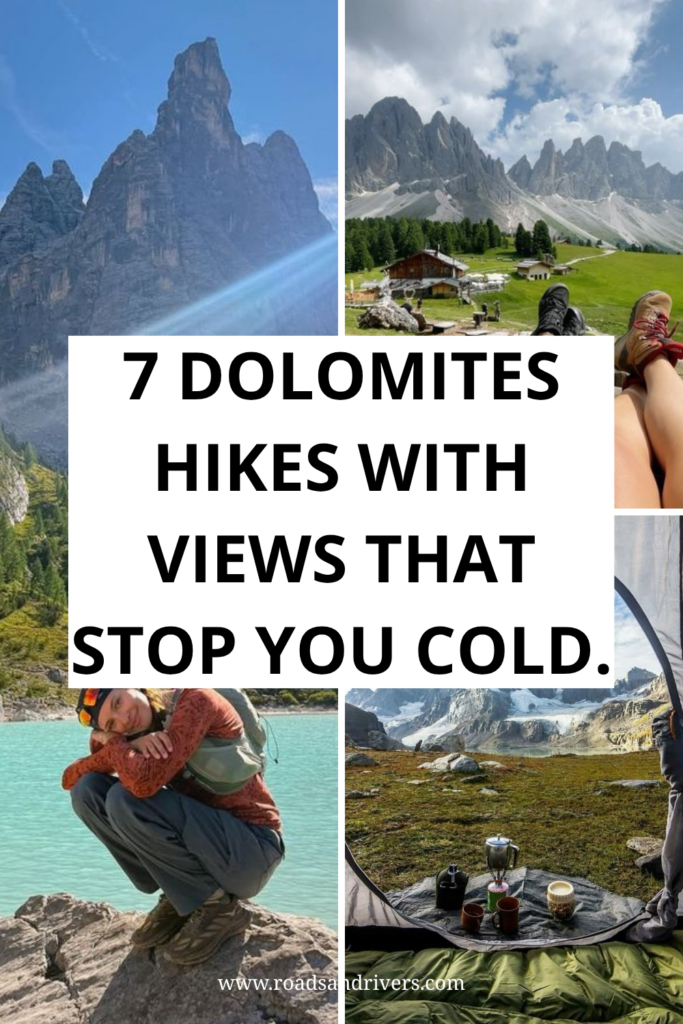
7 Dolomites Hikes With Views That Stop You Cold
1. Tre Cime di Lavaredo Circuit
Difficulty: Moderate | Crowds: High in summer | Visual payoff: 10/10
The most famous hike in the Dolomites and it earns every bit of its reputation. The circuit loops around the three iconic towers, starting and ending at Rifugio Auronzo (reachable by car, €30 toll road fee). The trail itself is well-marked and mostly flat with one significant uphill section. The back side of the Tre Cime, where you see them reflected in small alpine lakes, is the moment everyone remembers.
Pro tip: Arrive before 8 AM to beat the tour buses. Better yet, stay overnight at Rifugio Auronzo or Rifugio Lavaredo and hike at sunrise when the towers glow orange.
2. Seceda Ridge Walk
Difficulty: Easy (cable car access) | Crowds: High | Visual payoff: 10/10
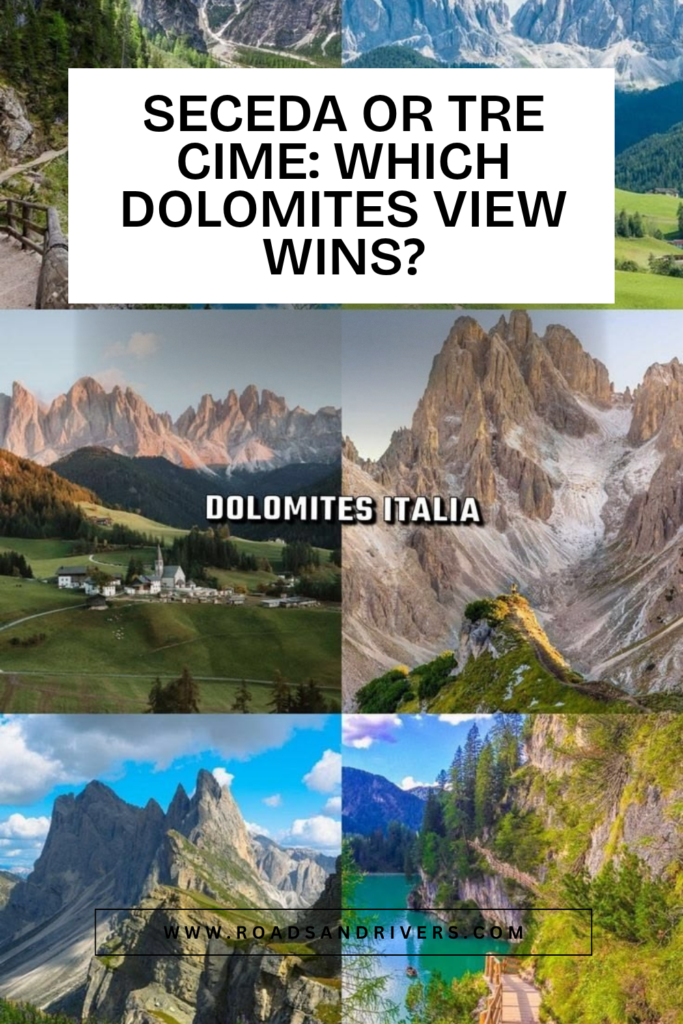
The Seceda ridgeline above Val Gardena is the single most photographed viewpoint in the Dolomites: a grassy ridge that drops away sharply on one side with the Odle peaks rising directly behind. Take the cable car from Ortisei to the top (€35 return) and walk along the ridge for as long as you like. The view is immediate and overwhelming.
Choose Seceda if: you want the most dramatic view with the least physical effort. The cable car does the hard work.
Choose Tre Cime if: you want to earn the view through a proper hike and experience the peaks from multiple angles.
3. Lago di Sorapis
Difficulty: Moderate | Crowds: Very high | Visual payoff: 9/10
A turquoise alpine lake at 1,925 metres surrounded by vertical rock walls. The colour is real (caused by mineral deposits) and it is staggering in person. The hike is 12 km return from Passo Tre Croci with some exposed sections that require a head for heights. Chains and cables protect the trickiest spots.
4. Adolf Munkel Trail (Odle/Geisler Group)
Difficulty: Easy to moderate | Crowds: Moderate | Visual payoff: 9/10
A valley trail that runs beneath the Odle peaks, passing through alpine meadows and traditional farmsteads. This is the hike that delivers the Dolomites aesthetic at its purest: wooden huts, wildflower meadows, and jagged peaks rising vertically from green pastures. Start from Malga Zannes and walk toward Rifugio Genova.
5. Lago di Braies (Pragser Wildsee)
Difficulty: Easy (lakeside walk) | Crowds: Extremely high | Visual payoff: 8/10
The emerald lake with the wooden boathouse that launched a thousand Pinterest boards. Lago di Braies is beautiful but it is also the most overcrowded single spot in the Dolomites. Arrive before 7 AM (parking fills up by 9 AM in summer) or visit in shoulder season. The lakeside walk takes about an hour. The rowing boats are iconic but queue times can exceed 90 minutes in peak season.
6. Puez-Odle Altopiano
Difficulty: Challenging | Crowds: Low | Visual payoff: 9/10
The high plateau above the Odle group, accessed from the Adolf Munkel Trail via a steep climb to Rifugio Genova and then Forcella de Putia. This is where the crowds disappear and the landscape becomes lunar: bare rock, wide plateaux, and 360-degree views of the central Dolomites. Requires proper hiking fitness and boots.
7. Cinque Torri
Difficulty: Easy | Crowds: Moderate | Visual payoff: 8/10
Five rock towers near Cortina d’Ampezzo, reachable by chairlift from the Cinque Torri base. The area also contains preserved World War I trenches and tunnels carved into the rock, adding a historical dimension to the scenery. An easy circuit walk around the towers takes 1-2 hours.
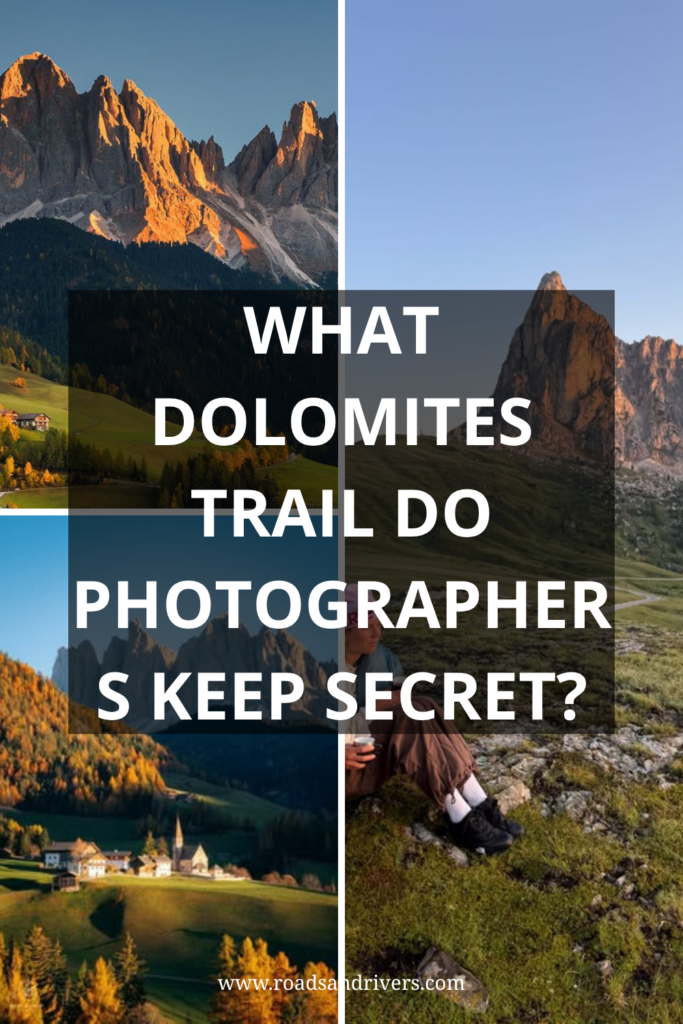
What Dolomites Trail Do Photographers Keep Secret?
The trails that produce the most striking images are not always the most famous ones. Photographers working in the Dolomites tend to gravitate toward three less-publicised locations.
Val di Funes (Villnoss Valley): The valley below the Odle peaks, specifically the view from the St. Magdalena church with the Geisler group rising behind it. This is the image that appears on every Dolomites calendar and poster, and the viewpoint is free, accessible by car, and best photographed at sunrise or golden hour.
Passo Gardena at sunset: Most tourists drive the Dolomite passes during the day. Photographers return at sunset when the rock turns from grey to orange to pink in a phenomenon called enrosadira (the Ladin word for the alpenglow that hits dolomite rock). Passo Gardena, Passo Sella, and Passo Falzarego all offer this.
Cadini di Misurina from above: A lesser-known viewpoint reached by a short hike from Rifugio Auronzo (the same starting point as Tre Cime but heading in the opposite direction). Looking down into the Cadini group at dawn, with mist in the valleys, is one of the most powerful landscape views in the Alps.
Read more: 15 Cute Mountain Trip Outfits That Are Stylish and Practical for what to actually wear on Dolomites trails that photographs well against these backdrops.
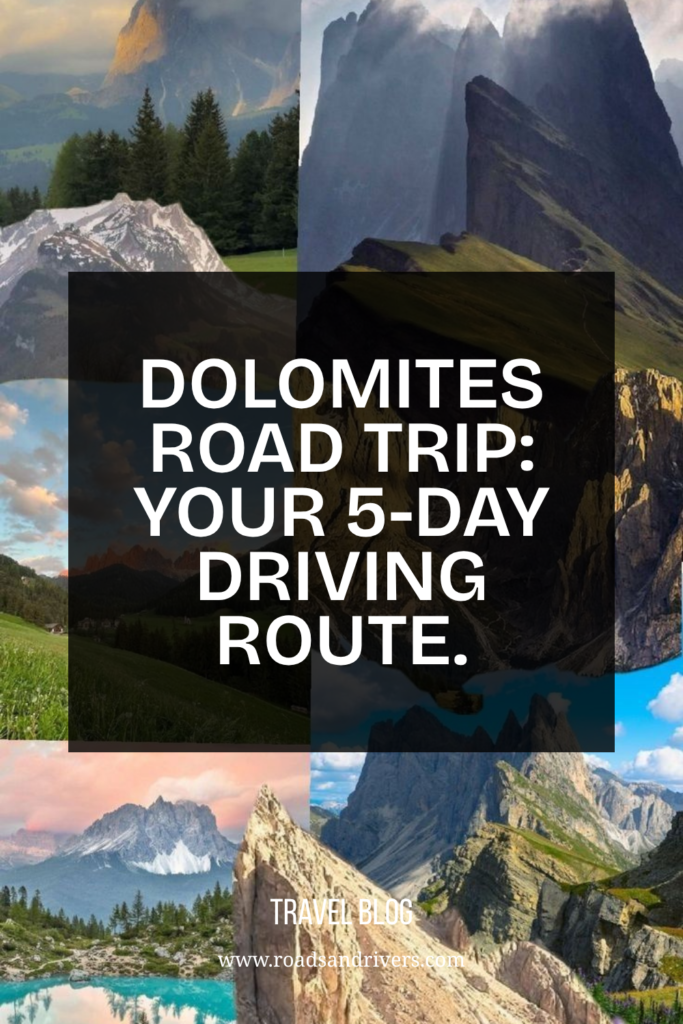
The Dolomites Road Trip: Your 5-Day Driving Route
A car is the best way to see the Dolomites. The mountain passes are among the most dramatic drives in Europe and the flexibility to stop at viewpoints, trailheads, and rifugios when the light is right is essential.
Day 1: Arrive in Bolzano, drive to Val di Funes. Fly into Bolzano, Innsbruck, or Venice and drive to Val di Funes (1-2 hours depending on airport). Settle into accommodation and walk to the St. Magdalena viewpoint for sunset.
Day 2: Seceda and the Odle Group. Morning cable car to Seceda for the ridge walk. Afternoon hike on the Adolf Munkel Trail. Evening in Ortisei, which has excellent restaurants and the strongest South Tyrolean village character.
Day 3: Drive the Passes — Sella, Gardena, Pordoi. A loop drive through three of the highest Dolomite passes. Stop at each summit for views, short walks, and coffee at the rifugios. This is the day the Dolomites reveal their scale. Return via Passo Falzarego with an optional stop at Cinque Torri.
Day 4: Tre Cime di Lavaredo. Drive to the Tre Cime toll road (open June-October, €30 per car). Hike the full circuit. Return via Lago di Braies if time allows (better in late afternoon when morning crowds have left).
Day 5: Lago di Sorapis or Cortina. Hike to Lago di Sorapis from Passo Tre Croci (full morning), or spend a relaxed day in Cortina d’Ampezzo, the elegant mountain town that will host alpine skiing events for the 2026 Winter Olympics. Browse the town, eat well, and drive out.
Pro tip: The Dolomite pass roads close in winter (typically November-May). Summer driving is excellent: wide, well-maintained roads with hairpin bends that feel cinematic. Fill up with petrol before heading into the passes as stations are sparse at altitude.
Read more: How to Plan an Outdoor Trip: From Gear to Route to Safety for gear and route-planning essentials that apply to any mountain road trip.
The Dolomites Timing Mistake That Ruins Your Views
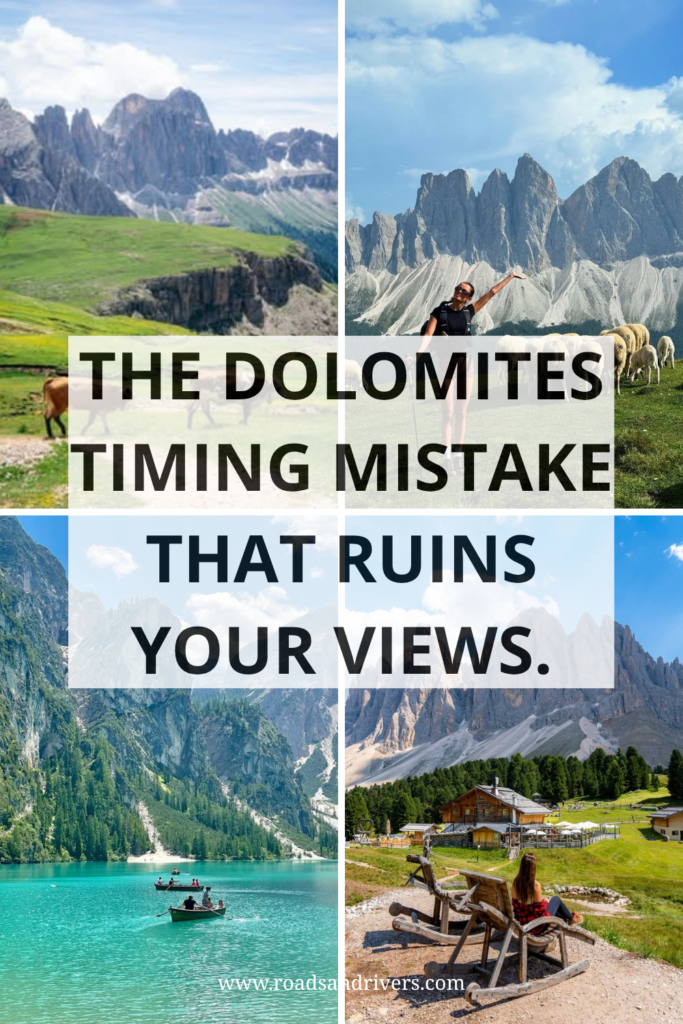
The single biggest mistake first-timers make in the Dolomites is visiting in the wrong two-week window. The difference between a good Dolomites trip and a transcendent one often comes down to timing.
Late July to mid-August is when most tourists visit. The trails are crowded, the car parks fill before 9 AM, Lago di Braies becomes a queue, and rifugio availability is scarce without advance booking. The weather is warm but afternoon thunderstorms are common, which means the best light (morning and evening) is when most tourists are either still in bed or already back at their hotels.
Mid-June to mid-July is the sweet spot for hiking. The snow has melted from most trails, the wildflowers are at peak bloom, the days are long, and the crowds have not yet reached August levels. Accommodation is 20-30% cheaper than peak season.
Mid-September to mid-October is the photographer’s season. The larch trees turn gold against the pale dolomite rock, creating a colour contrast that is unique to this landscape. The weather is cooler but often stable, and the morning light is extraordinary. Most rifugios close by mid-October so check availability.
Late October to May is ski season or off-season depending on elevation. The passes close, many hiking trails are snow-covered, and the Dolomites become a winter sports destination. Cortina, Val Gardena, and Alta Badia are the main ski areas.
The Dolomites and the 2026 Winter Olympics
The Milan-Cortina 2026 Winter Olympics bring the Dolomites onto the global stage in a way that will significantly impact travel to the region. Cortina d’Ampezzo hosts alpine skiing, bobsled, luge, and skeleton events. Antholz hosts biathlon. The cross-country skiing and ski jumping take place in the Val di Fiemme and Predazzo areas.
For travellers, this means two things. First, the infrastructure improvements being made for the Olympics (road upgrades, transport links, accommodation expansion) will benefit visitors for years to come. Second, the summer after the Olympics (2026) will see a surge in visitor numbers as people who watched the events on television decide to visit the locations in person.
If you are planning a 2026 Dolomites trip, book accommodation earlier than you normally would, especially in the Cortina area. And consider basing yourself in Val Gardena, Val di Funes, or the Tre Cime area rather than Cortina itself, which will be the most in-demand (and most expensive) base in the region.
Read more: Best Interrail Routes in Europe if you are connecting the Dolomites with Venice, Innsbruck, or a wider Italian or Alpine rail itinerary.
Where to Stay: The Three Dolomites Bases
Val Gardena / Ortisei
The most developed tourist valley with excellent restaurants, shops, and cable car access to Seceda and the Sella group. Ortisei is the main town. Santa Cristina and Selva are smaller alternatives. This is the best base for the western Dolomites (Seceda, Odle, Sella passes).
Cortina d’Ampezzo
The most elegant and expensive base. Cortina is a proper mountain town with boutiques, espresso bars, and a cosmopolitan atmosphere. Best for the eastern Dolomites (Cinque Torri, Lago di Sorapis, Tre Cime access). It will be the primary Olympics base in winter 2026.
Alta Badia / San Cassiano
The quietest of the three, tucked into a valley with fewer tourists and a strong Ladin (the local minority language and culture) identity. Excellent food, rifugio access, and proximity to both the western and eastern Dolomites. Best for travellers who want quality accommodation and a sense of local culture.
Pro tip: South Tyrol (the northern Dolomites) is culturally Austrian despite being politically Italian. The local language is German, the food blends Italian and Tyrolean traditions (speck, canederli, strudel alongside pasta and wine), and the efficiency and punctuality lean more Innsbruck than Rome. This is part of what makes the region distinctive.
Read more: Best Swiss Cities and Destinations To Visit on Your First Trip if you are comparing the Dolomites with the Swiss Alps for a mountain trip. And for the hiking gear you need on these trails, the trekking essentials guide covers the non-negotiable equipment.
Key Takeaways
- The Dolomites deliver on every photograph you have seen. The reality exceeds the images, which almost never happens.
- Tre Cime and Seceda are the two essential experiences. Tre Cime is the better hike. Seceda is the easier access to the most dramatic view.
- Mid-June to mid-July and mid-September to mid-October are the best windows. August is crowded and expensive.
- A rental car is essential. The pass drives are a destination in themselves and trailhead access requires flexibility.
- The 2026 Winter Olympics will increase demand for Cortina accommodation. Book early or base yourself in Val Gardena or Alta Badia instead.
The Dolomites are one of those places where the gap between expectation and reality runs in the right direction. You arrive expecting beautiful mountains and discover something that operates on a completely different scale. The rock is taller, the valleys are greener, the lakes are bluer, and the rifugio coffee tastes better than it has any right to taste at 2,500 metres.
Rent the car. Drive the passes. Hike to the Tre Cime. And when you round that corner and the amphitheatre opens up, let yourself stand there for a minute before reaching for the camera. Some views deserve to be experienced before they are captured.
What is your favourite Dolomites trail or viewpoint? Drop it in the comments. Planning your first trip? Ask anything below.
FAQ
How many days do you need in the Dolomites?
Five days is the ideal first trip. That gives you time for 3-4 hikes, the pass drives, and at least one rest day for village exploration and eating. Three days works for a focused trip covering Seceda and Tre Cime. Seven days allows you to add Lago di Sorapis, the Puez-Odle plateau, and a deeper exploration of the valleys.
Do you need a car in the Dolomites?
A car is strongly recommended. The Dolomites are spread across a wide area and public transport, while it exists (SAD buses run between major towns and some trailheads), is infrequent and does not reach many of the best starting points. The pass drives are themselves a highlight of the trip. Rent the smallest car that fits your group; mountain parking spaces are tight.
What is the best base for the Dolomites?
Val Gardena (Ortisei) is the best all-round base with cable car access to Seceda and proximity to the Sella passes. Cortina d’Ampezzo is best for the eastern hikes (Tre Cime, Sorapis, Cinque Torri). Alta Badia offers the quietest atmosphere and strongest local food culture. Most 5-day trips benefit from splitting accommodation between two bases.
Are the Dolomites expensive?
The Dolomites are mid-to-high range by European standards. Accommodation runs €80-150 per night for a good double room in summer. Cable cars cost €25-40 return. Rifugio meals cost €10-20 for a main course. A mid-range daily budget of €120-180 per person covers accommodation, food, transport, and one cable car or activity.
When do the Dolomite passes open?
The high passes (Stelvio, Pordoi, Sella, Gardena, Falzarego) typically open in late May or early June and close in late October or November, depending on snow conditions. Check the provincial road authority (Provincia di Bolzano) website for real-time pass status before planning a driving trip.