

Most travel photographers fly home from Budapest with 800 photos and only 3 they actually love. Here’s why: they spent all their time at the same two locations, shot at the wrong hour, and missed the spots that make Budapest one of the most photogenic cities in Europe.
Budapest photo spots range from fairy-tale castle terraces to golden-lit river banks, ornate gilded interiors, and sweeping hilltop panoramas that make every single frame look like a film still. The city genuinely delivers at every turn. You just need to know where to point your camera.
This guide covers 10 specific locations across Budapest, what makes each one worth the trip, and exactly when to show up for the best light.
Fisherman’s Bastion: The Spot That Earns Its Hype

Yes, everyone goes here. There is a reason for that.
Fisherman’s Bastion is a 19th-century terrace complex on the Buda side of the city, built with seven turreted towers that frame the Danube and the Parliament building like nothing else in the city. The stone archways create natural frames for portrait shots, and the blue-hour light that settles in just after sunset turns the whole scene into something out of a storybook.
What makes it so photogenic
The arches. Specifically, shooting through the arches toward the city gives you layers: stone foreground, open sky, glowing Parliament in the distance. It works at dusk, at dawn, and in the golden hour before sunset. The tiered staircases also create great leading lines for portraits.
When to visit for the best light and fewest crowds
Arrive before 8am or after 9pm. During the day it gets packed, and a clean shot without strangers in it is nearly impossible. According to photography guides familiar with the area, early morning gives the softest light and the calmest atmosphere. Evening entry is free after the ticketed daytime hours close, which makes it one of the best Budapest photo spots that costs nothing to shoot at night.
Gellért Hill: Budapest’s Best Panoramic Photo Spot

If you want a wide, sweeping shot of Budapest at golden hour, Gellért Hill is where you go. The 235-metre hill on the Buda side offers some of the most complete panoramic views in the city, covering the Danube, the bridges, Parliament, and the Castle District all in one frame.
How to reach the top without the struggle
The most accessible route up starts from Elizabeth Bridge. The path is steep but manageable. Budget around 30 to 40 minutes for the climb. If you prefer to drive, there is a parking lot near the top. Note: as of late 2024, the Citadel fortress at the very top is fenced off for renovation, but the surrounding viewpoints are still fully accessible and give you the same panoramic range.
What to shoot from the hill
The classic shot is the full city panorama at sunset, with the Danube catching the last light and the bridges lit against the darkening sky. For portraits, use the city as your backdrop and shoot toward the west during golden hour. The light is warm, the background is dramatic, and the results are consistently good.
Vajdahunyad Castle: The Hidden Budapest Photo Spot That Makes Friends Jealous

Most visitors to City Park walk straight past Vajdahunyad Castle, which is genuinely baffling. This castle sits on a small island surrounded by a moat, built in a mix of Gothic, Romanesque, and Baroque styles that make it look completely unreal. In autumn it is surrounded by gold and red foliage. In winter the ice rink opens right in front of it. There is no bad season here.
Why this one makes friends jealous
It is free to visit, it is not overrun with tour groups, and it photographs beautifully from every angle. The combination of architectural styles means every corner of the building looks different in a frame. The moat reflection adds a painterly quality to shots when the water is still. It feels like a castle from a different era, tucked quietly inside a Budapest park.
Best angles around the moat
Sit along the moat edge on the south side for a low, close composition with the full castle tower reflected in the water. Walk around to the bridge for a straight-on symmetrical shot. For portraits, the stone bridge and arched gatehouse give a strong, framed background that works at any time of day.
New York Café: The Most Ornate Indoor Budapest Photo Spot

The New York Café is often called the most beautiful café in the world, and after one visit you understand why people say that. Built in 1894, the interior is a masterpiece of gilded ceilings, marble columns, frescoed arches, and velvet-red staircases that photograph like a Renaissance painting.
What to know before you visit
This is a working café, not a free attraction. You will need to purchase something to stay, and prices are on the higher end. That said, the cost of a coffee here is effectively the cost of a photo session inside one of the most extraordinary interiors in Europe. Arrive as soon as it opens at 10am on a weekday for the best chance at a quieter interior and cleaner shots.
How to get a clean shot in a crowded space
Position yourself at the base of the grand staircase and shoot upward toward the gilded ceiling. The vertical lines and ornate detail fill the frame completely. For portraits, stand on the staircase mid-way up and use the gold balustrades and arched gallery behind you as your backdrop. Even with other guests around, the scale of the space means you can usually find an angle that keeps the background clean.
Gellért Hill Statue Viewpoint: A Budapest Photo Spot Most Tourists Miss

Partway up Gellért Hill, before you reach the top, there is a terrace near the Statue of St. Gellért with columns framing an open view down toward the Danube and the glowing Parliament. Most people rush past it on their way to the summit. Stop here.
The framing trick that makes this shot
Use the columns on either side as a natural frame. Position yourself between them and shoot straight ahead toward the city below. The Parliament lights up beautifully from this angle at dusk, and the statue itself adds a dramatic silhouette element to wider compositions. The layers of city, river, and sky visible through the columns create real depth in a single frame.
Best time of day
This spot works best at blue hour, in the 20 to 30 minutes after sunset when the sky holds a deep navy and the city lights are fully on. The contrast between the warm city glow and the cool sky is hard to replicate at any other time of day.
The Hungarian Parliament at Night: A Budapest Photo Spot Worth Staying Up For

The Hungarian Parliament building is the third-largest parliament building in the world, and it looks even more extraordinary at night. When the floodlights hit the neo-Gothic facade and the reflection settles on the Danube, the whole scene becomes genuinely breathtaking. This is one of those Budapest photo spots that requires almost no technical skill: point your camera at it and the shot does itself.
Where to stand for the perfect shot
Cross to the Buda side of the Danube and find the area near the Novotel Hotel. This vantage point puts the Parliament directly across the river, front-on, with the full reflection in the water below. It is consistently one of the most impressive compositions in the city.
Danube cruise vs. riverbank: which gives the better photo?
Both work, for different reasons. The riverbank gives you a stable, controllable shot with time to compose. A Danube cruise gives you changing angles and a moving perspective. If you want a classic, clean image of the Parliament at night, the Buda riverbank wins. If you want variety and atmosphere, the cruise is worth it.
Heroes’ Square: Wide Open Space, Wide Open Shots
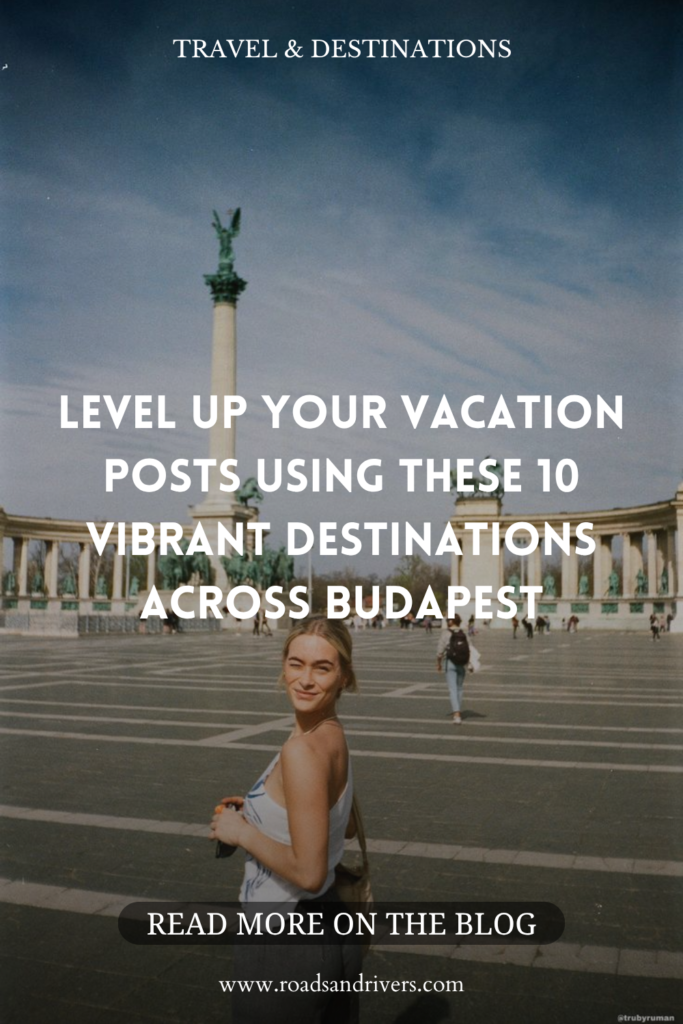
Heroes’ Square is the kind of place that looks better on film than in person, which means it photographs beautifully. Built in 1896 to mark Hungary’s millennium, the square features a towering central column surrounded by statues of Hungarian kings and leaders, flanked by two symmetrical museum buildings. The scale is enormous. The sky above it feels vast.
How to work the architecture
The column and statues give you a strong central anchor for compositions. Stand at the far end of the square and shoot straight toward the monument for a classic wide-angle perspective with the semicircular colonnade behind. For portraits, position your subject in the lower third of the frame with the full monument rising above them. The contrast between the human scale and the architectural scale is what makes this shot.
Why the film photography aesthetic works here
The muted tones of the stone and the wide, open plaza suit a slightly desaturated, filmic edit. The cobblestones, the pale sky, and the classic architecture all work together in a cooler palette. If you shoot on a slightly overcast day, the flat light is actually ideal here: no harsh shadows, no blown-out sky.
Liberty Bridge: Budapest’s Most Colourful Budapest Photo Spot
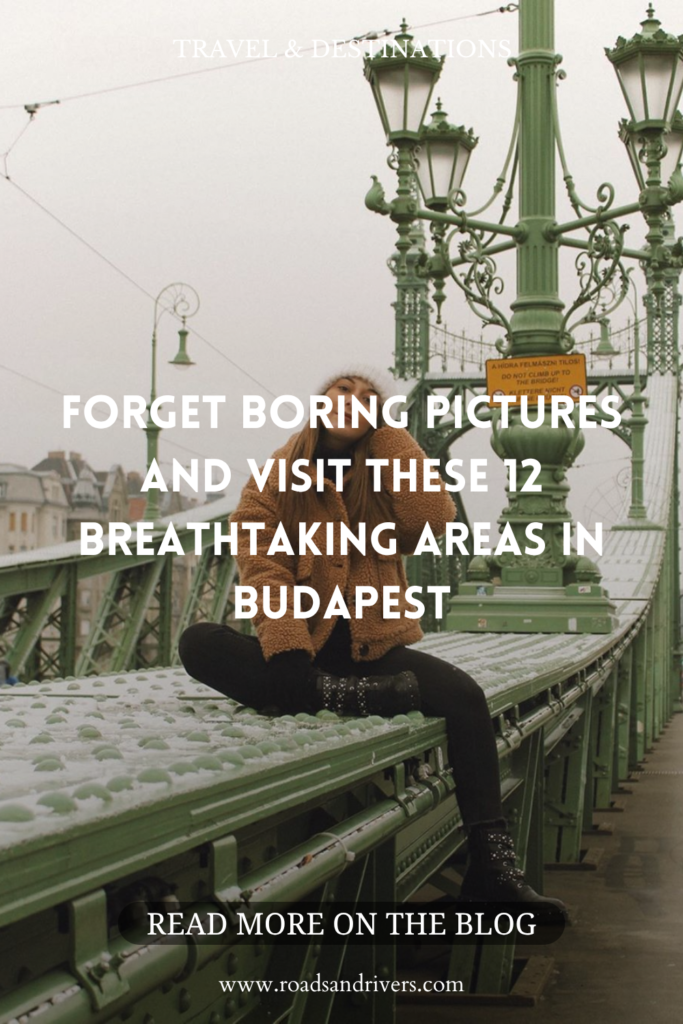
Liberty Bridge is painted a distinctive art nouveau green that makes it immediately recognizable and instantly photogenic. It spans the Danube between the Central Market Hall and the Gellért Hotel, and it photographs beautifully in every season: lush green in summer, golden-brown in autumn, and especially striking in winter when frost or light snow settles on the metalwork.
Shooting from the bridge vs. shooting the bridge
Shooting from the bridge gives you open water views up and down the Danube, and the ornate lamp posts create strong repeating vertical elements. Shooting the bridge from a distance, especially from the Buda riverbank, gives you the full green structure against the sky or city. Both approaches produce strong images. The bridge also serves as a social gathering spot, which means candid, life-in-the-city shots are easy to find here on any warm evening.
The secret sitting spot locals use
Walk to the upper railings and find a spot to sit with the full city visible behind you. This is where the most interesting environmental portraits happen: the green ironwork in the foreground, the Danube in the midground, and Pest or Buda filling the background depending on which side you face.
St. Stephen’s Basilica: The Street-Level Shot That Stops Scrollers

St. Stephen’s Basilica is one of the largest churches in Budapest, and the street-level approach along Zrínyi Street offers one of the most satisfying symmetrical compositions in the city. The two towers flank a central dome, the street leads directly toward the facade, and the surrounding buildings create a corridor effect that draws the eye straight to the church.
The best street approach for symmetry
Walk to the far end of Zrínyi Street and center yourself on the road. The buildings on either side and the patterned cobblestones below create strong leading lines converging on the Basilica. Position your subject in the lower center of the frame and shoot with a slightly wider lens to capture the full height of the towers. This is the shot that performs consistently well on social media because the symmetry is clean and instantly satisfying.
Going up to the panorama terrace
The Basilica also has a 360-degree panorama terrace accessible via stairs or a lift. The view from the top covers the full city skyline and is particularly good at sunset. Arrival about 30 minutes before sunset gives you the best light on the city below while keeping the terrace manageable in terms of crowds.
Gellért Hill Summit: When One Budapest Photo Spot Deserves Its Own Section
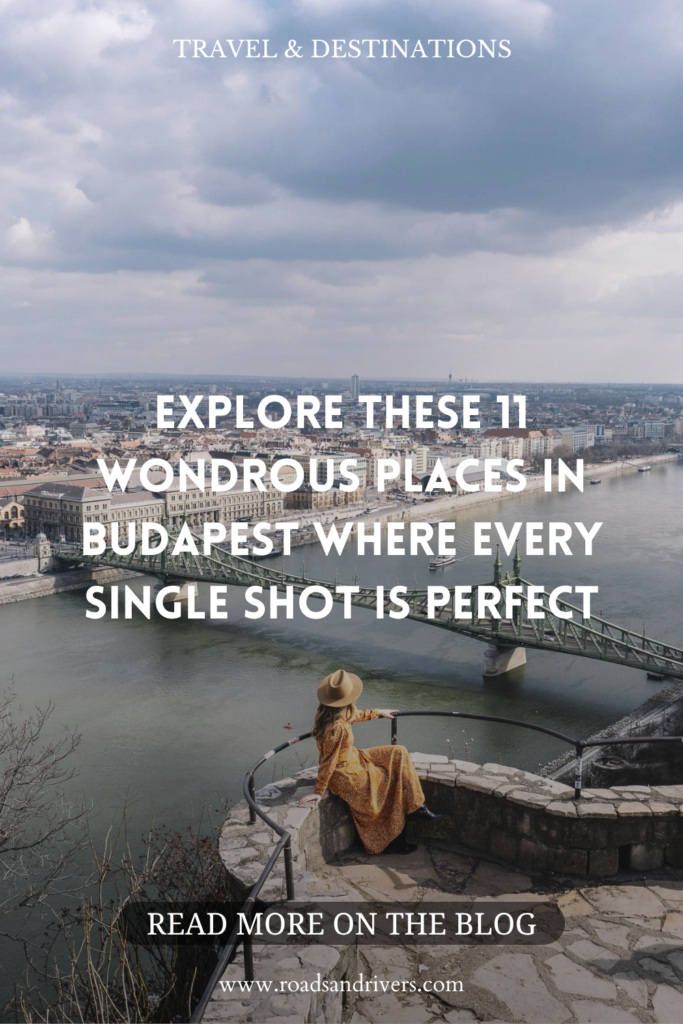
Yes, Gellért Hill appeared earlier in this list. It earns a second mention because the summit view and the mid-hill viewpoints are genuinely different shots. From the very top, looking south along the Danube, you can capture Liberty Bridge in the foreground with the full city stretching behind it. This is a broader, more aerial perspective that the mid-hill spots simply do not offer.
Why this view is different from the lower viewpoints
The elevation at the summit (235 metres) puts you high enough to see the city as a full landscape rather than a collection of landmarks. Liberty Bridge arches across the Danube in the lower half of the frame, and the Pest skyline stretches to the horizon behind it. On a clear day, the depth and scale of the city is extraordinary. On an overcast day, the moody sky adds atmosphere that warmer shots cannot replicate.
Golden hour tips
Position yourself on the south-facing slope of the summit about 45 minutes before sunset. The light comes in from the west and hits the bridge and the river at a low, warm angle. Shoot both wide for landscape compositions and tighter for detail shots of the bridge structure and water reflection. Stay for blue hour: the city lights come up gradually and the Danube holds the colour of the sky long after the sun has dropped.
What Is the Best Time to Visit Budapest Photo Spots?
The shoulder seasons, April to May and September to November, offer the best combination of mild weather, good light, and manageable crowds. Summer brings long golden hours but also large tourist groups at the major spots. Winter is underrated: the cold keeps crowds away, frost and occasional snow add real atmosphere, and the Christmas market at St. Stephen’s Basilica from late November onward is one of the most photogenic seasonal setups in the city.
Are Budapest Photo Spots Free to Visit?
Most of them, yes. Fisherman’s Bastion charges a small daytime fee but is free after ticketed hours close in the evening. Heroes’ Square, Liberty Bridge, the Gellért Hill viewpoints, Vajdahunyad Castle grounds, and the Parliament riverbank vantage point are all free. St. Stephen’s panorama terrace and the New York Café both require payment, but both are worth it for what they offer.
What Camera Gear Works Best for Budapest Photography?
A wide-angle lens (15–35mm equivalent) handles the grand architecture and panoramic views. A short telephoto (70–200mm equivalent) is useful for compressing the Parliament from across the river and isolating details in the city skyline. For night shots at Parliament and Fisherman’s Bastion, a tripod makes a real difference. That said, the city photographs well on a phone too: the landmarks are dramatic enough that composition matters more than gear.
Budapest is one of those rare cities where almost every frame works. The architecture is grand, the light over the Danube is consistently beautiful, and the mix of Gothic, Baroque, and art nouveau buildings means variety is built into every walk.
Pick 3 to 4 of these Budapest photo spots per day rather than rushing through all 10 in one go. The best shots come from slowing down, returning at a different hour, and letting the light do its work.
Save this guide for your trip, and drop your favorite Budapest photo spot in the comments below. I’d love to know which one you end up loving most.