

There is a moment, walking through the Great Gate at Agra, when you get your first unobstructed view of the Taj Mahal. Every photograph you have ever seen of it suddenly collapses into something real and much larger. It stops people mid-step. It makes grown adults go quiet.
Then someone asks you to move because you are blocking their selfie.
That is the honest Taj Mahal experience in 2026: one of the most genuinely beautiful buildings on earth, surrounded by enough visitor logistics to overwhelm anyone who shows up unprepared. The ticket system confuses people. The best viewing times are specific and non-obvious. The queues are punishing if you get them wrong.
This guide walks you through the whole visit in order — from booking your tickets weeks out to the hour-by-hour experience on the day — so you spend your time looking at the monument instead of standing in the wrong queue at the wrong gate.

Phase 1: Before You Go — Timing, Season, and What to Book Ahead
The Best Time of Year to Visit
October through March is the window. Temperatures are manageable (15–25°C in peak winter months), the air quality is better than the summer haze, and the monument looks its best in clear winter light.
Avoid May and June. Agra in summer reaches 45°C and the heat radiating from the marble makes the grounds nearly unbearable by mid-morning. Monsoon season (July–September) brings humidity and reduced visibility, though it also brings far fewer tourists and an atmospheric mist that some photographers specifically target.
November and February are the sweet spots: cooler, drier, and slightly less crowded than the peak December–January holiday rush.
The Best Time of Day
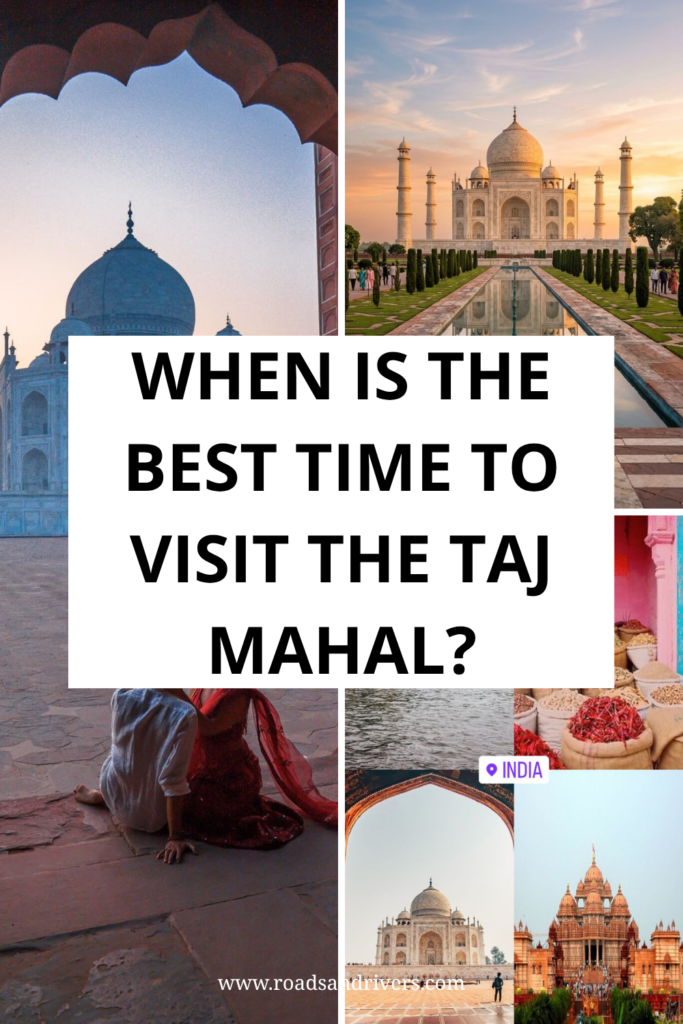
Sunrise. This is not a tourism cliché — it is functionally correct, and for specific reasons.
Admission opens roughly 30 minutes before sunrise at the East Gate. Arriving before the gate opens puts you inside before the majority of visitors, including the enormous day-tripper crowd from Delhi that tends to arrive from 9 AM onward. The light at this hour turns the white marble pink, then gold, then the brilliant white it is famous for. The reflecting pool is at its most photogenic.
Sunset is the second best option and noticeably less crowded than the post-sunrise midday period. The marble shifts to warm amber tones that are different from anything you see earlier in the day.
Avoid 10 AM to 3 PM in peak season. This is when tour groups from Delhi converge on the site and the experience inside becomes largely about crowd management.
Pro tip: The Taj Mahal is closed every Friday to general tourists, as Friday is reserved for prayers. Plan around this — an accidental Friday arrival means turning back.
Full Moon Nights
The Taj Mahal offers limited-ticket moonlight viewing on the full moon night and the two nights on either side. Entry is tightly capped (around 400 tickets per night), tickets sell out weeks in advance, and no photography is permitted inside during the viewing. It is worth booking purely for the experience — the monument lit only by moonlight is extraordinary.
Phase 2: Getting to Agra — Your Options From Delhi
Most visitors to the Taj Mahal come as a day trip or short stay from Delhi, roughly 230 km away.

Gatimaan Express (Fastest)
The Gatimaan Express runs between Hazrat Nizamuddin station in Delhi and Agra Cantonment in about 1 hour 40 minutes. It is the fastest and most comfortable option. Book tickets on IRCTC (Indian Railways’ official booking site) well in advance — this train fills up. Arrive at Agra Cantonment station and take a pre-paid taxi or auto-rickshaw to the South Gate.
By Road
Taxis and private cars from Delhi take 3–4 hours depending on traffic. The Yamuna Expressway is the fastest route. This option suits travelers who want flexibility to stop at Fatehpur Sikri (an abandoned Mughal city about 40 km from Agra that is well worth a detour) on the way.
Agra Fort Station
If you are already in Agra, Agra Fort station is closer to the East Gate than Agra Cantonment. Factor this into your routing if you are arriving from Jaipur or Varanasi rather than Delhi.
Pro tip: If India is part of a longer Asian trip, the Ultimate Guide on Backpacking Asia in a Budget Friendly Way has practical routing advice for connecting the Taj Mahal into a wider itinerary.
Phase 3: Tickets — The Mistake That Costs You Hours
This is the section most travel guides underplay, and it is where most unprepared visitors lose time.
The Ticket System
There are three separate admission categories at the Taj Mahal:
Main Taj Mahal complex ticket: Covers entry to the outer complex and the main garden. This is what most visitors buy and need.
Taj Mahal monument ticket: An additional charge to enter the mausoleum building itself (the interior chamber containing the cenotaphs). If you want to go inside — and you should, at least once — this is a separate payment at the gate.
Archaeological Survey of India (ASI) composite ticket: Covers multiple Agra monuments including the Taj Mahal and Agra Fort on the same day. If you plan to visit both, this offers better value.
Ticket Prices (subject to change — verify before travel)
Foreign tourists pay significantly more than Indian nationals. As of 2025, the foreign visitor entry fee to the main complex was approximately 1,100 INR (~$13 USD). The additional fee to enter the mausoleum building was approximately 200 INR. Indian nationals pay a fraction of this.
The mistake that costs hours: Turning up at the ticket window without a pre-booked ticket on a busy day. The queues at the main ticket counters during peak season can be 45–90 minutes long. Online pre-booking through the official ASI website or authorized ticketing portals eliminates this wait. Print or download your ticket before arrival.
Which Gate to Use
The Taj Mahal has three public entry gates: South (Main), East, and West. The South Gate is the most popular and most crowded. The East Gate consistently has shorter queues and is the recommended entry point for early morning visits.
Phase 4: Your Visit, Hour by Hour
Step 1: Security
All bags are screened on entry. Prohibited items include food, tobacco, tripods, and selfie sticks. A small bag is fine. Leave large backpacks at your hotel or at the cloakroom near the gate — the complex provides free shoe covers at the mausoleum entrance (marble protection policy).
Step 2: The Great Gate (Darwaza-i-Rauza)
Do not rush through the Great Gate. Stop under its archway and look directly south. This is the framing shot — the Taj Mahal appears centered in the arch, perfectly proportioned. Most visitors walk straight through; the ones who pause get a photograph that most postcards miss.
Step 3: The Main Garden
The char bagh (four-part garden) leading to the mausoleum is laid out in precise geometric symmetry, bisected by a long reflecting pool. Walk slowly. The Taj Mahal changes appearance as you get closer — it seems to grow rather than simply get larger, which is an intentional illusion created by the sloped garden design.
Best photography positions in the garden:
- Directly on the central axis at the far end of the reflecting pool
- The raised marble platform at the pool’s edge (the classic “Diana bench” shot)
- The side paths, which give a less frontal but less crowded angle
Step 4: The Mausoleum Platform
The mausoleum itself sits on a raised marble platform with four minarets at each corner. The platform is elevated for flooding reasons — the Yamuna River runs behind the complex — and gives a different perspective to the building than you get from the garden level.
Pay for the additional mausoleum entry here if you have not done so at the gate. Remove shoes before entering (booties provided free).
Step 5: Inside the Mausoleum
The interior is darker than most visitors expect. The central chamber contains the ornamental cenotaphs of Mumtaz Mahal and Shah Jahan (the actual tombs are in a lower chamber, not accessible to visitors). The pietra dura inlay work — semi-precious stones set into white marble in floral patterns — is worth examining closely. The detail is extraordinary and invisible in photographs taken from a distance.
No photography is permitted inside the mausoleum building.

Step 6: The Rear Terrace
Walk around the mausoleum to the rear terrace facing the Yamuna River. This is one of the least crowded spots in the entire complex and offers a view most visitors never see. The river behind the Taj Mahal, the low landscape beyond it, and the total absence of the crowds that pack the front garden make it worth the extra five minutes.
Pro tip: The rear terrace at sunset, when the sun sets behind you and lights the mausoleum’s front face from across the river, is photographically exceptional if you can time it.
Phase 5: What Nobody Tells You Before You Visit
The Taj Mahal is genuinely overwhelming at first sight. This is not hype. Even visitors who consider themselves immune to famous landmarks report something unexpected at the first clear view. Plan for a few minutes of just standing still before doing anything else.
Guides at the gate are mostly not official. Dozens of men will approach you between the parking area and the entry gate offering guide services. Some are legitimate, many are not. If you want a guide, hire one through your hotel or a verified tour operator in advance. The Archaeological Survey of India does maintain official licensed guides, identifiable by their ASI ID cards.
The Agra tourist corridor is aggressive. The area around the Taj Mahal has a dense concentration of souvenir sellers, rickshaw drivers, and touts. This is simply part of the experience — being politely but firmly disinterested is the most effective response. Once inside the grounds, it stops completely.
You need at least 2–3 hours inside. Most day-trippers from Delhi allot 90 minutes and then complain they did not see everything. The mausoleum platform, the interior, the rear terrace, the mosque on the western side, and the mirror image rest house on the east all take time. Budget properly.
Read more: If the Taj Mahal is part of a longer India trip, Backpacking India on a Budget: How Far Can $20 a Day Go? covers the cost realities of traveling India that nobody posts on Instagram.
Phase 6: Beyond the Taj — What Else to See in Agra
Most visitors treat Agra as a single-monument stop. That is understandable, but it misses two sites that are independently worth the trip.
Agra Fort
About 2.5 km from the Taj Mahal, Agra Fort is a UNESCO World Heritage site and the original seat of the Mughal Empire before the capital moved to Delhi. The red sandstone fortifications, the Diwan-i-Am and Diwan-i-Khas audience halls, and — most poignantly — the octagonal Musamman Burj tower from which Shah Jahan supposedly spent his final years gazing at the Taj Mahal across the river, are all worth serious time.
The ASI composite ticket covers both sites.
Fatehpur Sikri
40 km from Agra, this is the abandoned capital city that Emperor Akbar built and then deserted after only 14 years, apparently due to water supply problems. The scale of it — an entire Mughal capital frozen in the 16th century — is one of the most atmospheric experiences in northern India. It makes an easy stop if you are traveling by car between Agra and Jaipur.
Mehtab Bagh
Directly across the Yamuna River from the Taj Mahal, this Mughal garden offers the only view of the monument from the opposite bank. It is not well publicized and far less crowded than the main complex. The sunset view from here, with the Taj Mahal silhouetted across the water, is one of the best photographs in Agra — and you are likely to have it mostly to yourself.

Is the Taj Mahal Really Worth the Hype?
Yes. Unreservedly.
There are famous landmarks that disappoint in person — smaller than expected, more crowded than bearable, less impressive than the photographs. The Taj Mahal is not one of them. It is larger than most visitors expect, more detailed up close than any photograph conveys, and its setting — the formal Mughal garden, the river behind it, the red sandstone mosque flanking it — gives it a context that photographs always crop out.
The crowds are real. The hassle outside the gates is real. The logistics require preparation. But none of that diminishes what is inside the gate.
The moment everyone dreams about is real too. It happens to almost everyone, usually somewhere between the Great Gate and the reflecting pool, and it lasts as long as you let it.
Read more: The Taj Mahal pairs naturally with other world-class monuments that require similar advance planning. How To Visit Machu Picchu on a Budget: A Complete Guide applies the same kind of logistics-first thinking to South America’s equivalent landmark experience.
Key Takeaways
- Visit at sunrise through the East Gate for the shortest queues and best light — arrive before opening time
- The Taj Mahal is closed on Fridays; always check the date before booking transport
- Pre-book tickets online to skip the 45–90 minute ticket counter queue in peak season
- Budget 2–3 hours minimum inside the complex — 90 minutes is not enough
- The mausoleum interior requires a separate additional ticket paid at the gate
- October–March is the best season; avoid May–June heat and the 10 AM–3 PM crowd peak year-round
- Agra Fort and Mehtab Bagh are both worth adding to a one-night Agra stay
Conclusion
The Taj Mahal will not let you down if you give it the time it deserves and arrive with a plan. The plan is the difference between a rushed, frustrating visit and the moment everyone who has been there talks about.
Book tickets ahead. Go at sunrise. Walk slowly. Stay for the rear terrace. Come back at sunset if you can.
Have you been to the Taj Mahal, or are you planning a visit? Tell us your experience in the comments — or drop your questions and we will answer them.
FAQ
Do I need to book Taj Mahal tickets in advance?
You do not legally have to, but you should. Walk-up ticket queues at the main counters during peak season (November–March) regularly run 45–90 minutes. Online pre-booking through the ASI portal or authorized ticketing sites eliminates this completely. Moonlight viewing tickets must be booked well in advance as they sell out fast.
Is there an extra charge to go inside the Taj Mahal building?
Yes. The standard entry ticket covers the outer complex and gardens. Entering the mausoleum building itself requires an additional payment at the gate (approximately 200 INR for foreign visitors as of 2025). It is worth paying — the interior pietra dura stonework is one of the highlights.
How long does a visit to the Taj Mahal take?
Plan for at least 2–3 hours inside the complex. The gardens, mausoleum platform, mausoleum interior, rear river terrace, mosque, and rest house all take time. Many day-trippers from Delhi allow 90 minutes and feel rushed. If you are combining it with Agra Fort on the same day, budget a full day in Agra.
Can I visit the Taj Mahal as a day trip from Delhi?
Yes. The Gatimaan Express train covers the distance in about 1 hour 40 minutes and is the fastest option. Road transfers take 3–4 hours depending on traffic. A day trip is feasible but a one-night stay in Agra allows for both sunrise and sunset visits, which are the two best times.
What is the best gate to enter the Taj Mahal?
The East Gate is the recommended entry point for early morning visits — it consistently has shorter queues than the main South Gate. The West Gate is the least used. All three gates lead to the same inner complex.