The first time you land in Greece, the light hits different. It’s sharper, warmer, and it makes every whitewashed wall glow like it was painted that morning. The Aegean stretches out in a shade of blue you didn’t think existed outside of photo filters, and within five minutes of stepping off the plane, you understand why people keep coming back.
But here’s the thing: Greece is massive. Over 6,000 islands (only about 200 are inhabited), a mainland stacked with ancient ruins and mountain villages, and a food scene that will wreck your relationship with every Greek restaurant back home. For first-time visitors, the sheer number of choices can turn trip planning into a full-time job.
This guide is built to cut through the noise. You’ll walk away knowing when to go, where to go, what mistakes to avoid, what to pack, and how much it all actually costs. No fluff, no filler. Just the practical, honest advice you need to plan a Greece trip that lives up to the hype.
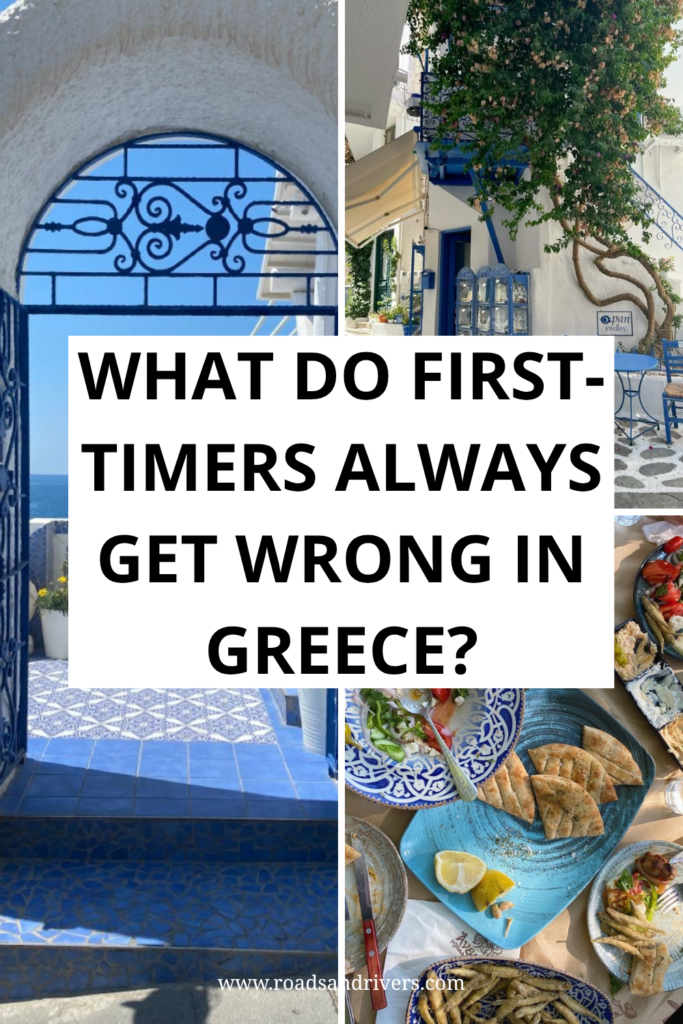
Table of Contents
- What Do First-Timers Always Get Wrong About Greece?
- Planning Greece for the First Time: A Step-by-Step Approach
- 11 Greece Tips Every First-Time Visitor Needs
- The Best Places to Visit in Greece for First-Timers
- What Should You Wear in Greece (and What Should You Pack)?
- Is Greece the 2026 Trip Everyone Should Be Booking?
- Key Takeaways
- FAQ
Quick-Reference Info Box
Best time to visit: Late April to mid-June, or September to mid-October (warm weather, fewer crowds, lower prices)
Average daily budget: €60-90/day budget, €120-180/day mid-range, €250+/day comfort
Getting there: Fly into Athens International (ATH). Direct flights from most European cities and major US hubs. Ferries connect the islands from Piraeus port.
Days needed: Minimum 7 days for Athens + 2 islands. 10-14 days for a proper trip.
What Do First-Timers Always Get Wrong About Greece?
I showed up for my first Greece trip with an itinerary that included Athens, Santorini, Mykonos, Crete, and Rhodes. In ten days. Looking back, I spent more time on ferries than on beaches.
That’s the single biggest mistake first-timers make: cramming too many islands into too few days.
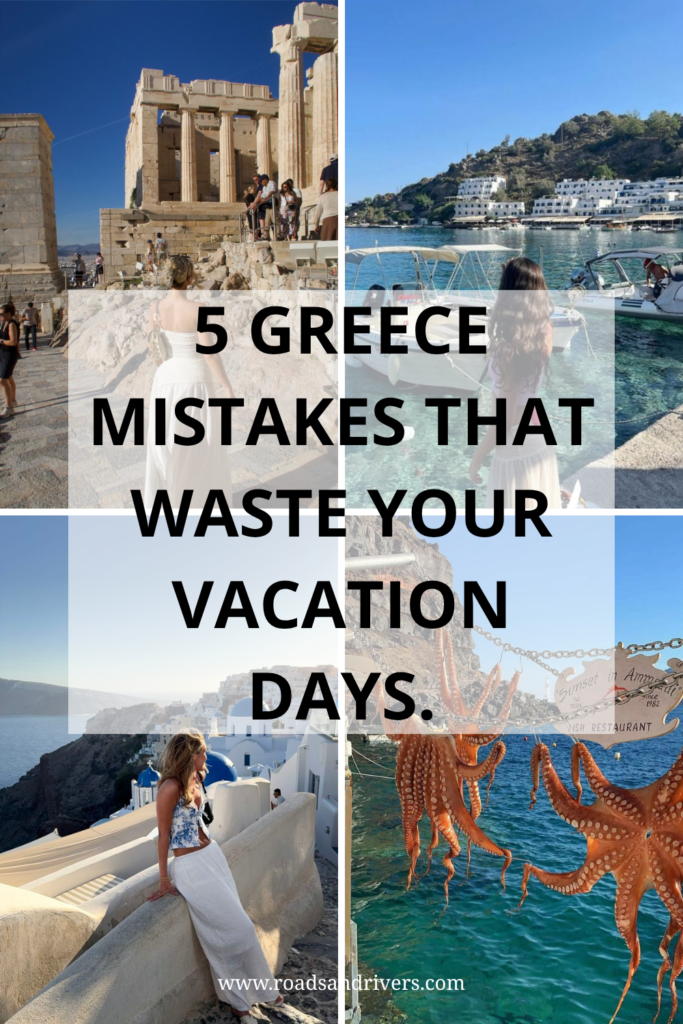
Trying to See Too Many Islands in One Trip
Greece looks small on a map. It’s not. The ferry from Athens to Crete takes about 9 hours. Santorini to Rhodes? You’re looking at 7+ hours with connections. Every island hop eats half a day (or more), and if the Meltemi winds kick up in July or August, ferries get cancelled without warning.
Pick 2-3 islands maximum for a 10-day trip. You’ll see more, stress less, and actually remember the places instead of just the ferry terminals.
Only Booking Santorini and Mykonos
Santorini and Mykonos are beautiful. They’re also the most expensive and most crowded islands in the country. A sunbed on a Mykonos beach can run you €80-150 for a set of two. A basic hotel room in Santorini during peak season regularly tops €300/night.
Meanwhile, islands like Paros, Naxos, Milos, and Sifnos offer the same white-and-blue Cycladic aesthetic, better beaches, better food, and prices that won’t make you wince.
Pro tip: If you absolutely want the Santorini caldera views, go in late September or early October. Prices drop by 30-40% and the sunsets are just as good.
Underestimating Distances and Ferry Times
This applies to the mainland too. Athens to Meteora is a 4-hour drive. Athens to Thessaloniki is 5 hours by car or about 4 hours by train. Greece has real geography: mountains, peninsulas, and winding coastal roads that don’t allow for quick transfers.
Always check actual travel times before locking in your itinerary. The website FerryHopper is the best tool for comparing ferry routes and schedules across different operators.
Read more: If you’re thinking about combining Greece with more of Europe, check out our guide to the best Interrail routes across Europe.
Planning Greece for the First Time: A Step-by-Step Approach
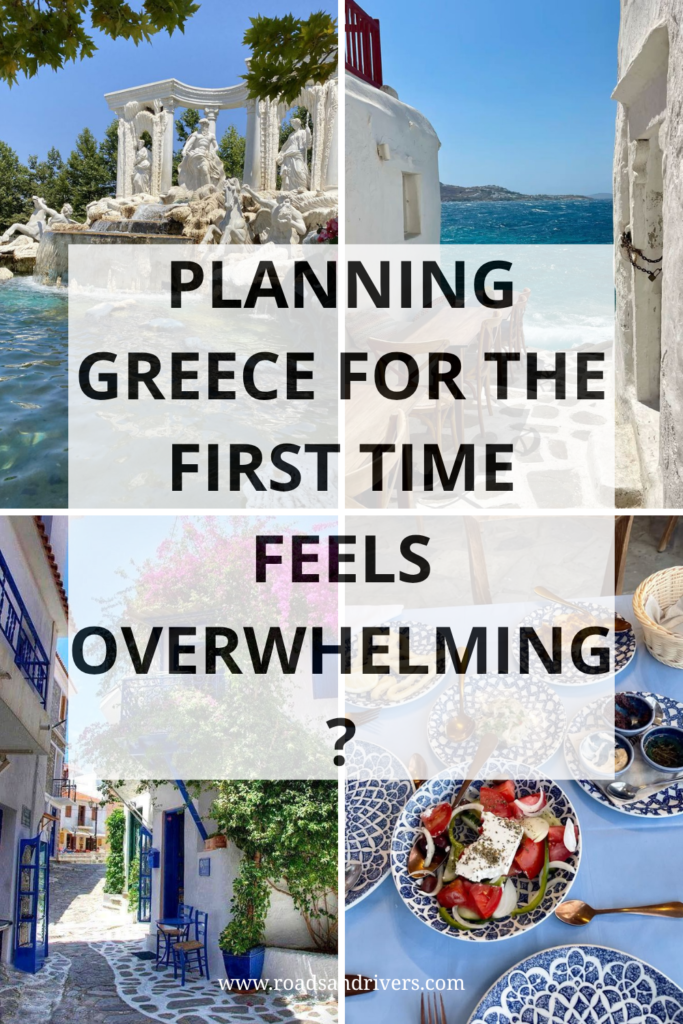
Planning a trip to Greece doesn’t need to be complicated. The key is making three big decisions early and letting everything else fall into place.
How to Pick the Right Islands for Your Travel Style
Not all Greek islands are the same, and the right one depends entirely on what you’re after.
1. For the classic Greece aesthetic: Santorini (caldera views, sunsets) or Paros (white villages, great nightlife, more affordable).
2. For beaches and outdoor adventure: Crete (Samaria Gorge, Elafonissi Beach, Balos Lagoon) or Milos (volcanic coastline, sea caves, Sarakiniko moonscape).
3. For food and local culture: Sifnos (considered the food capital of the Cyclades), Syros (the actual capital of the Cyclades with year-round local life), or Crete’s Rethymno region (Venetian old town, mountain villages, incredible Cretan cuisine).
4. For a quieter, off-the-beaten-path vibe: Naxos (huge island, rural interior, family-friendly beaches) or the Peloponnese mainland (Nafplio, ancient Olympia, coastal drives).
Pro tip: Syros is one of the most underrated islands in Greece. Unlike most Cycladic islands, it has a large permanent population, meaning restaurants and shops stay open year-round. The capital, Ermoupoli, has some of the most beautiful neoclassical architecture in the country.
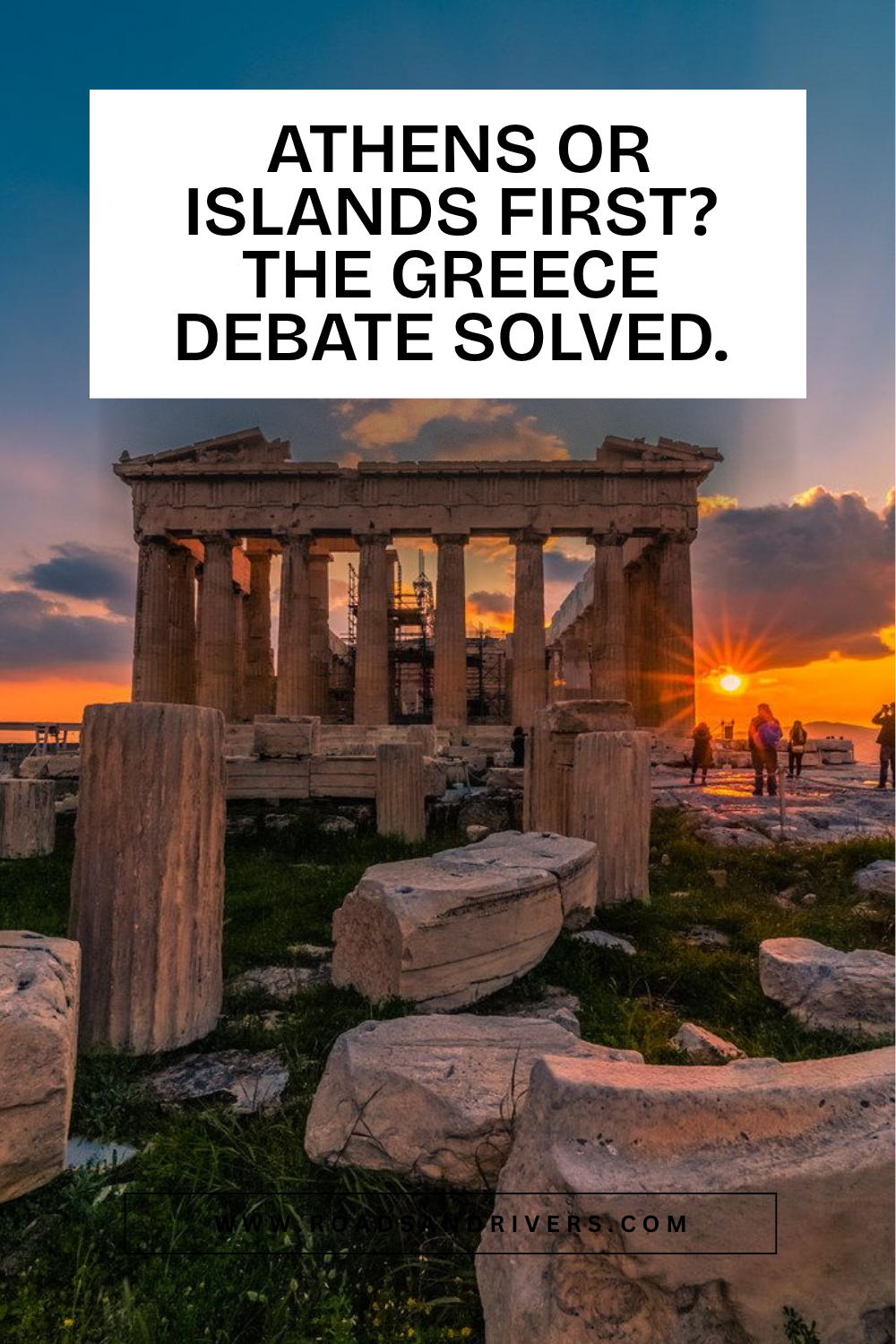
Athens or Islands First? The Greece Debate Solved
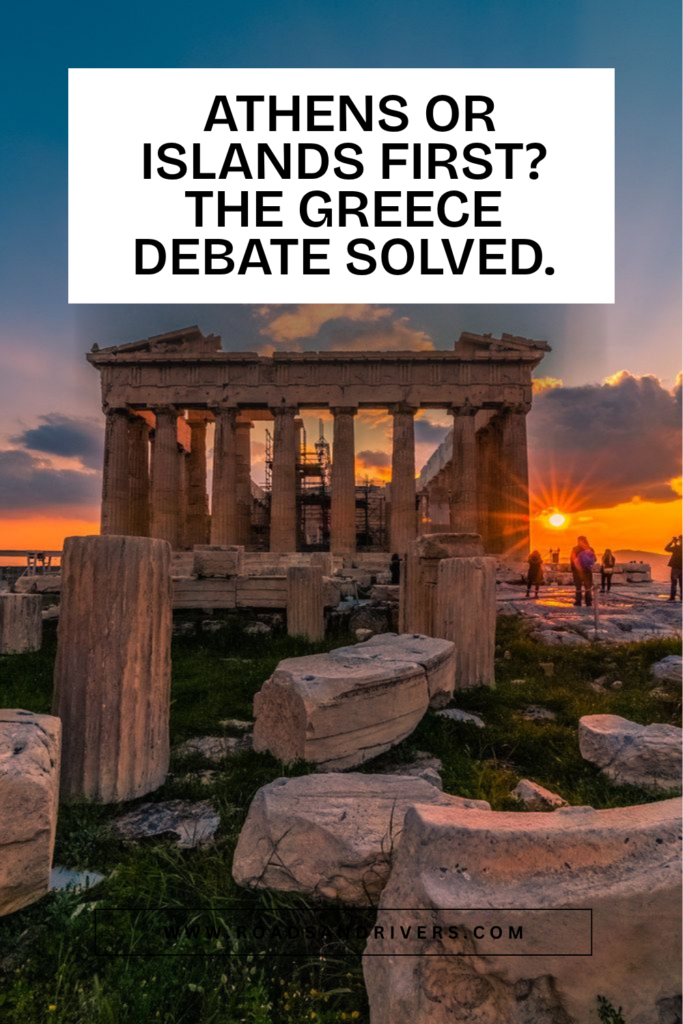
Start with Athens. Always.
Here’s why: flights from abroad land in Athens, ferry connections leave from Piraeus (Athens’ port), and jet lag is easier to shake off in a city with endless restaurants and rooftop bars than on a quiet island where everything closes at midnight.
Spend 2-3 days in Athens. See the Acropolis (go early, before 9 AM, to beat the heat and the crowds). Wander through Plaka and Anafiotika. Eat souvlaki in Monastiraki. Then catch a morning ferry or a short flight to your first island.
Ending on the islands also means you finish your trip in relaxation mode, not in big-city chaos.
How Many Days Do You Actually Need in Greece?
Seven days is the bare minimum for Athens plus one or two islands. Ten days is the sweet spot for Athens plus two islands at a comfortable pace. Two weeks lets you add a third island or mix in some mainland time (Meteora, Delphi, or Thessaloniki in the north).
Don’t try to do Greece in a long weekend. It deserves more than that, and so do you.
11 Greece Tips Every First-Time Visitor Needs
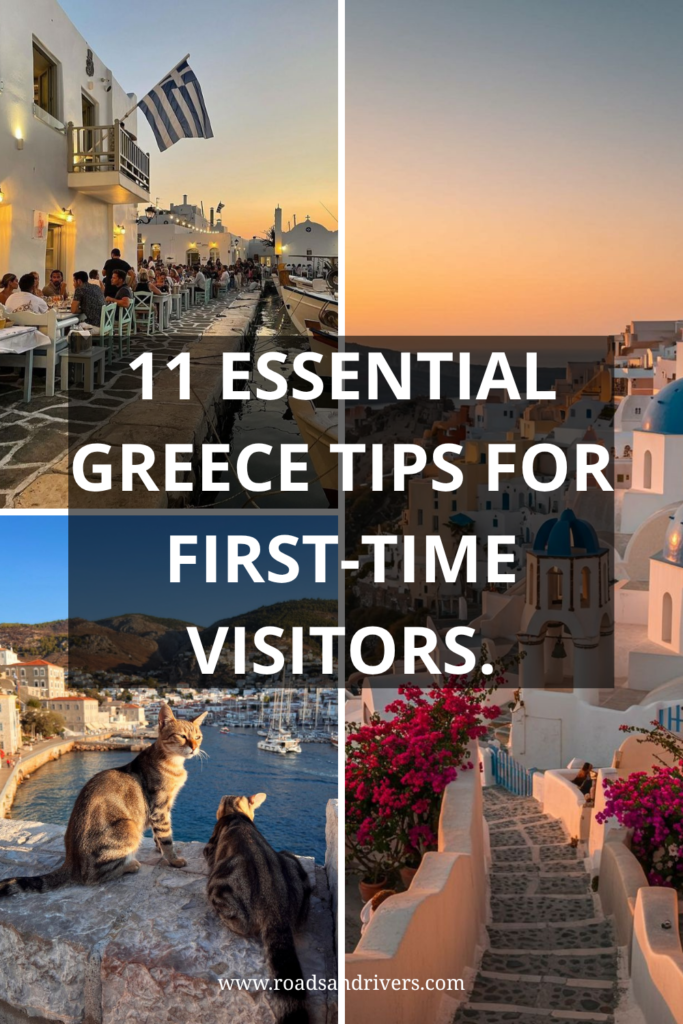
1. Go in shoulder season. Late May, early June, September, and early October give you warm weather (25-30°C), swimmable seas, and a fraction of the July/August crowds.
2. Carry cash. Many tavernas, small shops, and island businesses are cash-only. ATMs exist on most islands, but they run out of cash during peak season. Bring a backup.
3. Book ferries early. Summer ferry tickets sell out, especially for popular routes like Athens to Santorini. Book at least 2-3 weeks ahead through FerryHopper or directly through operators like Blue Star Ferries.
4. Use the Greek salad rule. If a Greek salad costs under €7, the restaurant is budget-friendly. Between €7-9 is average. Over €10? You’re in tourist-trap territory.
5. Cover your shoulders at churches and monasteries. Greece takes this seriously. Carry a light scarf or shawl in your bag.
6. Wear real sunscreen. The Greek sun is brutal, especially on the islands where the white buildings reflect light from every angle. SPF 50, reapply every two hours, no exceptions.
7. Bring comfortable walking shoes. Cobblestone streets, steep island paths, and uneven surfaces are everywhere. Those cute sandals are fine for dinner. They’re not fine for a full day of sightseeing.
Pro tip: Pack a pair of water shoes too. Many of the best beaches in Greece are rocky or pebbly, and the volcanic beaches in Santorini get scorching hot.
8. Respect the siesta. Between roughly 2 PM and 5 PM, especially outside of Athens, many shops close. Plan your afternoons for the beach or a long lunch, not shopping.
9. Tipping is appreciated but not required. Rounding up the bill or leaving 5-10% is standard. Service charges are sometimes included.
10. Learn five Greek words. “Efharisto” (thank you), “Parakalo” (please/you’re welcome), “Yassas” (hello/goodbye formal), “Kalimera” (good morning), and “Nero” (water). Locals appreciate the effort, even if they switch to English immediately.
11. Pack light. You’ll be hauling your luggage on and off ferries, up narrow island staircases, and through airports without elevators. A carry-on-sized bag or backpack is the move.
Read more: If this is your first big trip abroad, our backpacking Europe guide for beginners covers everything from packing to budgeting.
The Best Places to Visit in Greece for First-Timers
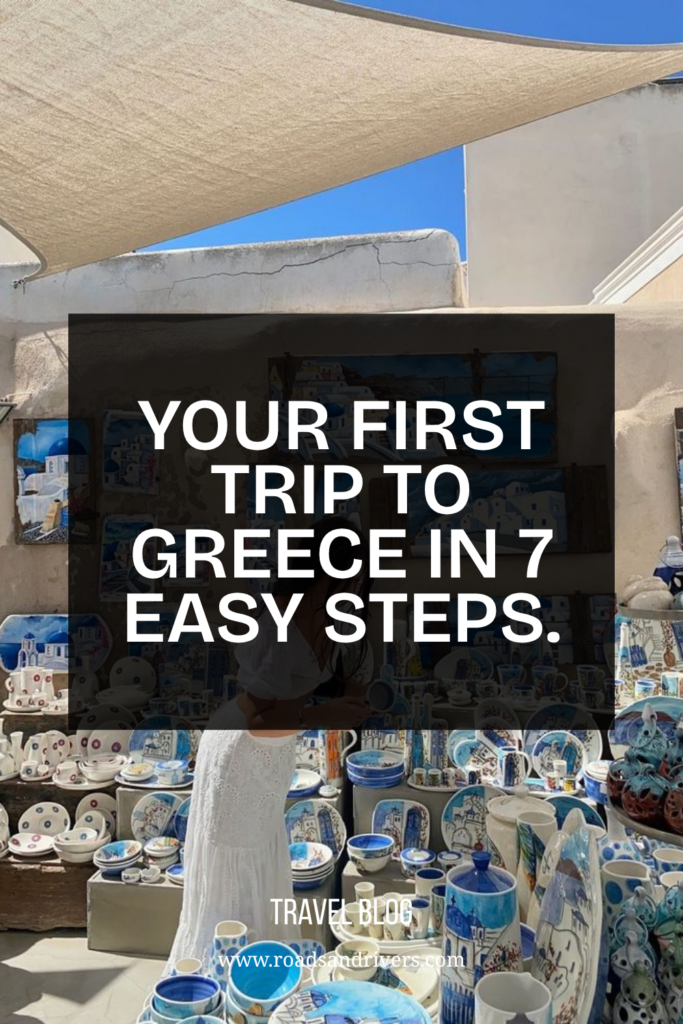
Athens: Where Ancient Meets Modern
I almost skipped Athens entirely on my first trip. Everyone told me it was “just a stopover.” They were wrong.
Athens is loud, gritty, and layered in thousands of years of history. The Acropolis is as impressive as you think it will be. The Plaka neighborhood feels like a village dropped into a major city. And the food scene in neighborhoods like Psyrri and Koukaki is world-class. Don’t miss the rooftop bars with Acropolis views at sunset. Budget at least two full days here.
Pro tip: The combined archaeological ticket (€30) covers the Acropolis plus six other major sites and is valid for 5 days. It saves you money and lets you skip individual ticket lines.
Santorini: Beyond the Instagram Clichés
Yes, the caldera is as breathtaking as the photos suggest. But Santorini has more to offer than Oia sunsets and blue-domed churches.
Hike the trail from Fira to Oia (about 3-4 hours, free, and the best views on the island). Visit the ancient Minoan ruins at Akrotiri. Try the local fava (yellow split pea puree) and tomatokeftedes (tomato fritters) at a taverna away from the caldera edge. Rent a scooter and ride to the quieter south side of the island where the volcanic beaches at Perissa and Kamari are less crowded.
If you’re torn between the two most famous Greek islands, we wrote a detailed breakdown on comparing Santorini and Mykonos side by side to help you choose.
Crete: The Big Island With Everything
Crete is the largest Greek island and it feels like its own country. The western half (Chania, Rethymno) has Venetian harbors, pink-sand beaches, and dramatic gorges. The eastern half (Heraklion, Agios Nikolaos) has the Minoan palace of Knossos and quieter coastal towns.
Rethymno alone is worth several days. The Venetian old town is one of the best-preserved in Greece, and the restaurants in the backstreets serve some of the most honest, affordable Cretan food you’ll find anywhere.
You need a rental car to see Crete properly. Public buses exist, but they’re slow and don’t reach the best spots.
Paros, Sifnos, and Syros: The Underrated Cyclades
If you want the Greek island experience without the Santorini price tag, these three islands deliver.
Paros has the white Cycladic villages, excellent beaches (Kolymbithres and Santa Maria are standouts), and a lively food and nightlife scene in Naoussa. Sifnos is where Greeks go to eat: the island is famous for its pottery-baked dishes and traditional recipes that have been passed down for generations. Syros has the grandest architecture in the Cyclades, a working port town that feels authentically Greek, and one of the most beautiful main squares in the islands.
All three are well-connected by ferry and can easily be combined into a 10-day island-hopping itinerary from Athens.
Thessaloniki: The Foodie Capital of the North
Most first-timers skip Thessaloniki entirely, and that’s a mistake. Greece’s second city has arguably the best food in the country, a walkable waterfront, Byzantine churches, and a young, energetic vibe thanks to its large university population. The Modiano food market was recently renovated and is one of the best places in Greece to graze through local produce, spices, and street food.
If you have extra time, Thessaloniki also makes a great base for day trips to Mount Olympus, the royal tombs at Vergina, and the monasteries at Meteora (about 2.5 hours by car).
What Should You Wear in Greece (and What Should You Pack)?
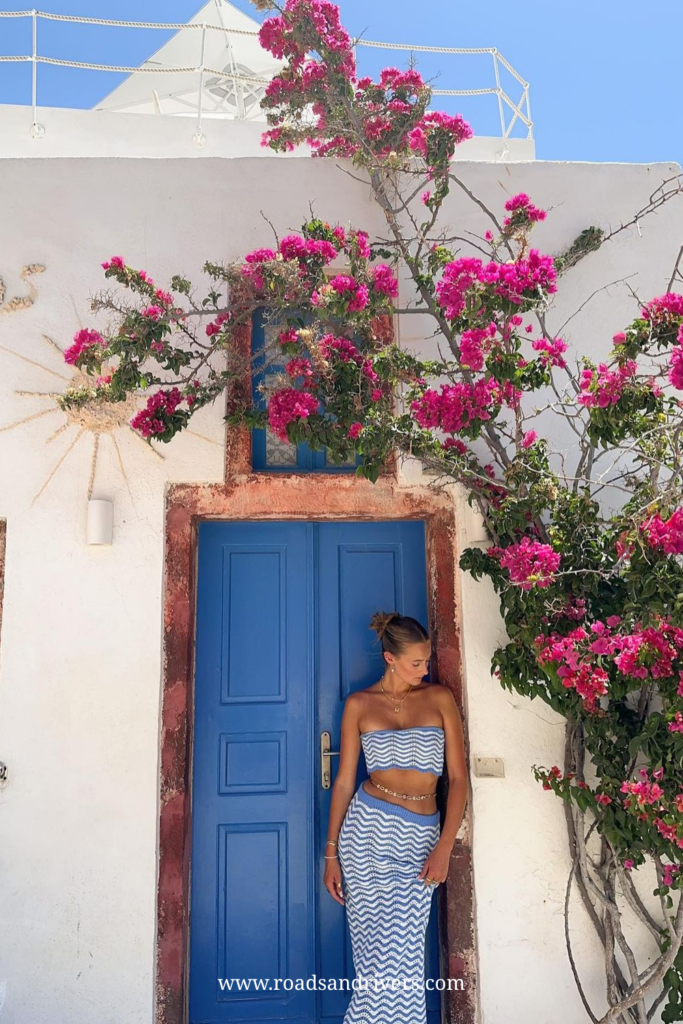
Santorini Greece Outfits That Actually Work
You’ve seen the flowing white dresses against blue domes on every travel account. Here’s what nobody tells you: Santorini is windy. Seriously windy. That maxi dress will be over your head before you get the photo.
Light, breathable fabrics in whites, blues, and earth tones photograph beautifully against the Greek landscape. Linen is your best friend. A midi-length skirt or dress handles the wind better than a floor-length one. And bring a light denim or linen jacket for evenings, because island nights cool down fast, especially on the caldera.
Footwear, Layers, and the Church Dress Code
Flat sandals with ankle straps (not flip-flops) work for casual days. Sneakers or supportive walking shoes for anything involving hills, cobblestones, or ancient sites. Water shoes for pebbly or volcanic beaches.
For visiting churches and monasteries, keep a lightweight scarf in your day bag. Both men and women need to cover their shoulders, and women need to cover their knees. Some larger churches have wraps available at the entrance, but don’t count on it.
Pro tip: Roll your clothes instead of folding them, use packing cubes, and aim for a color palette that mixes and matches. You’ll fit a full week of outfits into a carry-on.
Is Greece the 2026 Trip Everyone Should Be Booking?

Short answer: yes. Greece consistently ranks among the top destinations in Europe, and 2026 is shaping up to be one of its biggest tourism years yet. New boutique hotels are opening across the Cyclades, Athens’ food scene continues to grow, and the Greek government has been investing in better ferry infrastructure and cultural programming across the islands.
Why Greece Is Trending Harder Than Ever
The Mediterranean aesthetic has taken over social media, and Greece is at the center of it. But beyond the Instagram appeal, Greece offers something that many trending destinations don’t: genuine value. You can eat incredibly well for under €15 a meal, sleep in beautiful accommodation for under €100 a night (outside of Santorini and Mykonos), and fill your days with free activities like hiking, swimming, and wandering ancient ruins.
Budget Breakdown: What a Day in Greece Actually Costs
Here’s a realistic daily breakdown for a mid-range traveler in 2026:
Budget traveler (€60-90/day): Hostel dorm or budget guesthouse (€20-35), street food and self-catering (€15-25), local buses and slow ferries (€10-15), free beaches and hiking (€0), museum entry (€5-10).
Mid-range traveler (€120-180/day): 3-star hotel or boutique Airbnb (€60-100), sit-down taverna meals (€30-50), occasional taxi or scooter rental (€15-25), activities like boat tours (€30-50).
Comfort traveler (€250+/day): Boutique hotel with caldera view (€150-300+), fine dining (€60-80), private transfers and tours (€50-100+).
The biggest variable is which islands you pick. Athens, Crete, Naxos, and Paros are affordable. Santorini and Mykonos cost 50-100% more for the same quality.
If you’re building out a broader European trip around Greece, take a look at our backpacking Europe guide for beginners for more country-by-country budget tips.
Key Takeaways
- Pick 2-3 islands max for a 10-day trip. Quality beats quantity in Greece.
- Go in shoulder season (May-June or September-October) for the best balance of weather, crowds, and prices.
- Start with Athens, end on the islands. It’s the logical route and the best way to wind down your trip.
- Look beyond Santorini and Mykonos. Paros, Crete, Sifnos, and Syros offer the same beauty at half the price.
- Budget €120-180/day for a comfortable mid-range trip with good food, nice accommodation, and occasional activities.
Greece is one of those rare places that actually lives up to the fantasy. The light, the water, the food, the warmth of the people: it all hits exactly the way you hope it will. And once you stop trying to see everything and start letting the country unfold at its own pace, that’s when it really gets good.
So pick your islands, book that first ferry, and stop overthinking it. Greece has been welcoming travelers for thousands of years. It knows what it’s doing.
If you’re already thinking about where to go next after Greece, we have a great guide on planning the best Italian destinations and a first-timer’s guide to Croatia to keep the Mediterranean momentum going. Drop a comment below with your Greece questions, and save this post for when you’re ready to start booking.
FAQ
Is Greece Expensive for Tourists?
Greece is one of the more affordable countries in Western/Southern Europe. On the mainland and less touristy islands, you can eat well for €10-15 per meal and find accommodation for €50-80/night. Santorini and Mykonos are the exceptions, where prices rival Western European capitals. Sticking to shoulder season and choosing islands like Naxos, Paros, or Crete keeps costs down significantly.
How Many Days Do You Need in Greece for the First Time?
A minimum of 7 days gives you enough time for Athens (2 days) plus one or two islands. Ten days is the sweet spot for a relaxed pace with Athens and 2-3 islands. If you want to include mainland destinations like Meteora or Thessaloniki, aim for two weeks.
Is It Safe to Travel Around Greece Alone?
Greece is very safe for solo travelers, including solo female travelers. Petty theft (pickpocketing) can happen in crowded Athens tourist areas, but violent crime against tourists is extremely rare. The islands are among the safest places you’ll travel in Europe. Use common sense with your belongings and you’ll be fine.
What Is the Best Month to Visit Greece?
September is the single best month. The summer crowds have thinned, prices drop from peak levels, the sea is at its warmest after months of summer sun, and the weather is reliably sunny and warm (27-30°C). Late May and June are close runners-up, especially if you want to see wildflowers on the islands.
Do I Need to Speak Greek to Travel in Greece?
No. English is widely spoken in all tourist areas, on the islands, and in Athens. Younger Greeks in particular speak excellent English. That said, learning a handful of basic Greek phrases (hello, thank you, please) goes a long way. Locals genuinely appreciate the effort and will often go out of their way to help you.