
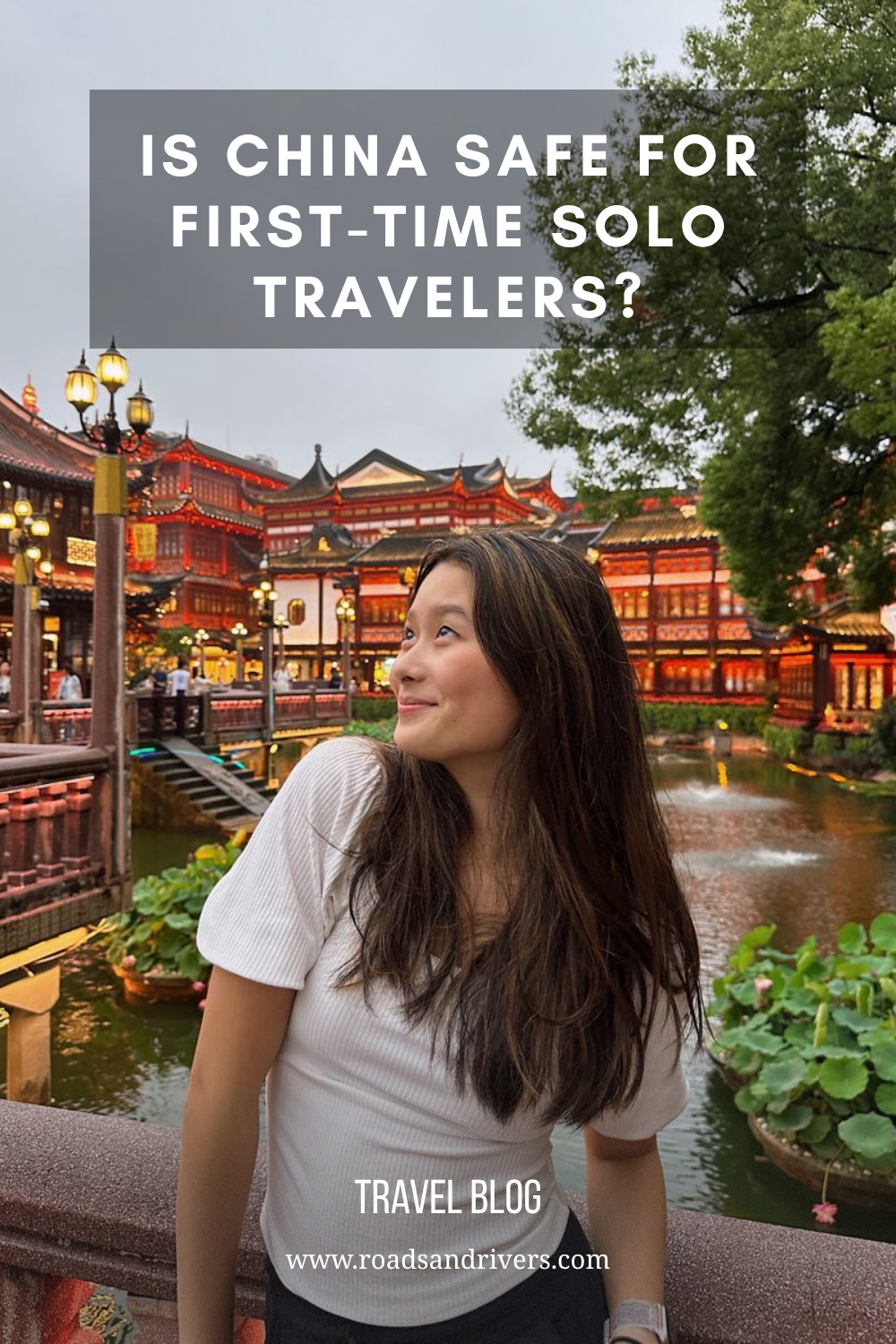
China is the trip that sits in the back of your mind for years. You see the photos: lantern-lit alleyways in Chongqing, the Shanghai skyline glowing across the Huangpu River, mist rolling through the Zhangjiajie mountains like something out of a painting. You want to go. But every time you start planning, the questions pile up. Do I need a visa? How do I pay for anything? Will I be able to communicate? Is it even safe to go alone?
Here’s what nobody tells you: planning a solo trip to China feels ten times harder than actually being there. Once you land, things click into place faster than you expect. The trains run on time. The food is cheap and incredible. People are helpful even when you don’t share a language. And in 2026, China is easier to visit than it’s been in years, with expanded visa-free policies for over 77 countries, fully digital payment systems that work with foreign cards, and a high-speed rail network that connects cities faster than flying.
This guide walks you through every step, from visas to apps to budgeting, so you can stop overthinking and start packing.

Quick-Reference Info Box
- Best time to visit: March to May (spring) or September to November (autumn)
- Average daily budget: $50-$80 (budget), $80-$150 (mid-range), $200+ (luxury)
- Getting around: High-speed rail between cities, metro within cities
- Days needed: 10-14 days for 3-4 cities; minimum 7 days for Beijing + Shanghai
Table of Contents
- Step 1: Sort Your Visa (It’s Easier Than You Think)
- Step 2: Pick Your Cities (Don’t Try to See Everything)
- Step 3: Set Up Your Digital Survival Kit Before You Land
- 5 China Solo Travel Myths You Should Ignore
- How Much Does Solo Travel in China Actually Cost?
- What Surprises Solo Travelers Most About China?
- FAQ
Step 1: Sort Your Visa (It’s Easier Than You Think)
The visa question stops more people from visiting China than anything else. But in 2026, entry rules are the most relaxed they’ve been in decades.
Citizens of 77 countries can now enter China visa-free for up to 30 days. This includes most European countries, the UK, Canada, Australia, New Zealand, and several Asian nations. The policy is valid through December 31, 2026, and covers tourism, family visits, and business.
If your country isn’t on the visa-free list (the US, for example), you have two main options. The 240-hour transit visa lets you stay up to 10 days without a traditional visa, as long as you’re transiting through China to a third country. So a route like New York to Beijing to Bangkok works. A round trip (New York to Beijing to New York) does not. You must enter and exit through eligible cities, which include Beijing, Shanghai, Chengdu, Guangzhou, and about 60 other ports.
For longer stays or round trips, apply for an L-visa (tourist visa) at your nearest Chinese embassy or consulate. Apply at least 30-60 days before your trip. The process is straightforward: fill out the application, submit your passport and a photo, and provide your flight and hotel bookings.
Pro tip: If you’re from a visa-free country, this is the simplest it gets. Book your flights, pack your bag, and show up. No paperwork, no embassy visits, no waiting.

Step 2: Pick Your Cities (Don’t Try to See Everything)
I made this mistake on my first research dive into China. I had Beijing, Shanghai, Xi’an, Chengdu, Guilin, Zhangjiajie, and Chongqing all on a 10-day itinerary. It looked great on paper. In reality, it was a recipe for exhaustion. China is roughly the size of all of Europe. You wouldn’t try to visit Paris, Rome, Barcelona, Berlin, and Amsterdam in 10 days. Apply the same logic here.
For a first solo trip, pick 3-4 cities over 10-14 days. Here are the best starting points:
Beijing is the obvious first stop. The Great Wall, the Forbidden City, the Temple of Heaven, and the hutong alleyways are all here. It’s imperial China concentrated into one city. Plan 3-4 days.
Shanghai is the other side of the coin. Futuristic skyline, the historic Bund waterfront, French Concession neighborhood, and some of the best street food in the country. The nighttime view from the Bund looking across to the Pudong skyscrapers is one of those moments you’ll remember forever. Plan 2-3 days.
Chengdu is where you go to slow down, eat the best Sichuan food of your life, visit giant pandas at the research base, and drink tea in centuries-old teahouses. It’s also the gateway to more adventurous destinations. Plan 2-3 days.
Chongqing is the city that’s been blowing up on social media, and for good reason. Built on steep hills where two rivers meet, its layered streets, hotpot culture, and neon-soaked nighttime vibe give it an atmosphere unlike anywhere else in China. Plan 1-2 days.
Xi’an is home to the Terracotta Warriors and has one of the best-preserved old city walls in the country. It’s also a fantastic food city, especially for Muslim Chinese cuisine in the Muslim Quarter. Plan 2 days.
The high-speed rail connects all of these cities. Beijing to Shanghai takes about 4.5 hours. Shanghai to Chengdu is about 7 hours. The trains are clean, fast, punctual, and affordable.

Pro tip: Book high-speed train tickets through Trip.com (available in English and accepts foreign cards). Tickets go on sale 15 days before departure. Popular routes during holidays sell out fast.
Read more: If you’re planning a bigger Asia trip, check out our guide to backpacking Asia on a budget for route ideas and money-saving strategies.
Step 3: Set Up Your Digital Survival Kit Before You Land
This is the step that makes or breaks a China trip. The country runs on a completely different digital ecosystem than the rest of the world. Google, Instagram, WhatsApp, Facebook, and most Western apps are blocked. Cash is almost never used. If you show up without the right apps on your phone, you’ll struggle from the moment you leave the airport.
Here’s what to set up before you board your flight:
Alipay is your primary payment app. Download it, link your international credit or debit card through the Tour Pass feature, and verify your passport. You’ll use Alipay for everything: restaurants, metro tickets, street food, convenience stores, taxis, and attraction tickets. Every vendor in China accepts it.
WeChat is China’s everything app. It’s WhatsApp, Facebook, Instagram, and a payment platform rolled into one. You need it for communication, booking attraction tickets (many state-run sites require WeChat mini-programs), and as a backup payment option. Set up WeChat Pay before you go. You’ll need someone already on WeChat to verify your account, so join a China travel Facebook group and ask for a referral.
A VPN is non-negotiable. Without one, you can’t access Google Maps, Gmail, Instagram, WhatsApp, or any Western social media while in China. Download and test a reliable VPN (ExpressVPN, NordVPN, or Astrill are popular choices) before you leave home. Don’t wait until you’re in China to set it up.
Didi is China’s Uber. The easiest way to use it is through the mini-program inside Alipay, which keeps it in English and linked to your payment. When your driver arrives, they’ll ask for the last four digits of your phone number to verify the ride.
AMap (Amap/Gaode) is the navigation app that actually works in China. Google Maps is unreliable here even with a VPN. AMap has an English interface and gives accurate metro, walking, and driving directions.
Translation apps are your lifeline. Download Baidu Translate or use Google Translate’s offline mode (download the Chinese language pack at home). The camera translation feature, where you point your phone at Chinese characters and see instant English, will save you dozens of times a day.

Pro tip: Do all of this at home, on your own Wi-Fi, at least a week before your trip. Testing apps on the ground in a foreign country while jet-lagged is not the time to troubleshoot payment failures.
5 China Solo Travel Myths You Should Ignore
Standing on the Bund in Shanghai at 11 PM, watching cargo ships drift past while the Pudong skyline pulsed with light, I realized how wrong most of the warnings I’d read about China actually were. The country I experienced didn’t match the country people kept telling me to be nervous about.
Here are the five myths that stop solo travelers from booking this trip:
Myth 1: “The language barrier makes it impossible.” Most signs in major cities have English translations. Metro systems are bilingual. Translation apps handle restaurant menus and conversations with shopkeepers. Hotel front desks in tourist areas speak enough English. You’ll have awkward moments, sure. But “impossible”? Not even close. Millions of foreign tourists visit China alone every year and navigate just fine.
Myth 2: “China isn’t safe for solo travelers.” China has one of the lowest violent crime rates of any major country. Cities are well-lit, public transport runs late, and petty crime is uncommon in tourist areas. For solo women, China feels surprisingly comfortable compared to many other destinations. Catcalling is rare, and public spaces stay busy and well-monitored. Standard precautions apply (watch your bag in crowded places, use licensed taxis), but overall safety is not a real concern.
Myth 3: “You can’t use the internet there.” You can. You just need a VPN. Set it up before you go, and you’ll have full access to Google, Instagram, WhatsApp, and everything else. Thousands of expats and travelers use the internet in China every day without issues.
Myth 4: “The food is scary.” This one is almost insulting to one of the world’s greatest food cultures. Chinese food in China is nothing like the takeaway food back home. You’ll eat hand-pulled noodles for $2, Sichuan hotpot that rewires your taste buds, xiaolongbao (soup dumplings) that burst with flavor, and street food that costs less than a dollar and tastes better than most restaurant meals in Europe. Eat where locals eat. Point at what looks good. You’ll eat some of the best meals of your life.
Myth 5: “China is too hard to travel alone.” The high-speed rail is the most efficient train system on earth. Metro systems in every major city are clean, modern, and clearly signed in English. Hotels are bookable through Trip.com in English. Millions of Chinese people travel their own country solo every day. The infrastructure is built for easy movement. You’ll be fine.
How Much Does Solo Travel in China Actually Cost?
China is one of the most affordable countries in Asia for the quality you get. The food-to-price ratio is arguably the best on the planet, and the transport network delivers speed and comfort at a fraction of what you’d pay in Japan or Europe.
Here’s what daily budgets actually look like:
Budget solo traveler ($30-50/day): Hostel dorm beds run ¥50-80 ($7-11) per night. Street food and local noodle shops cost ¥15-30 ($2-4) per meal. Metro rides are ¥3-7 ($0.40-$1). Major attractions like the Forbidden City cost ¥60 ($8). At this level, a 10-day trip runs about $300-500 on the ground before flights.
Mid-range solo traveler ($80-150/day): A clean 3-4 star hotel costs ¥300-600 ($40-80) per night. Sit-down restaurant meals run ¥50-100 ($7-14). High-speed rail tickets between cities average ¥200-500 ($28-70). At this level, a 10-day trip costs roughly $800-1,500 before flights.
A few real-price examples to ground this: A Beijing to Shanghai high-speed train (second class) costs about ¥575 ($80) for a 4.5-hour ride covering 1,300 km. The same distance in Japan would cost you nearly double. A bowl of hand-pulled beef noodles in Lanzhou or Chengdu costs ¥12-18 ($1.70-$2.50). A taxi ride across central Shanghai runs about ¥30-50 ($4-7).
For comparison, China is roughly 40-50% cheaper than Japan for accommodation and transport, and significantly cheaper for food if you eat local.
Pro tip: Eat local food exclusively. A $2 bowl of noodles in Chengdu will be more memorable than a $15 burger at a Western chain. Chinese food is the whole point. Don’t waste your budget (or your stomach) on familiar options.

Read more: If you’re considering combining China with another Asian destination, Vietnam’s best routes from north to south and Seoul’s K-food and neighborhood guide both make natural next stops.
What Surprises Solo Travelers Most About China?
The Great Wall was steeper than I imagined. Not the postcard version near Beijing where the stones are smooth and the path is wide. The wilder sections, where the wall crumbles into the mountainside and the trees grow right through the watchtowers. That’s the part that stays with you. That, and the fact that you can have the whole stretch to yourself if you go early enough.
But the biggest surprise about China isn’t any single landmark. It’s the feeling of the whole trip.
The safety surprises people. Solo travelers, especially women, consistently report feeling safer in Chinese cities than in most Western ones. Streets are busy and well-lit late into the night. Petty crime is genuinely low.
The food surprises people even more. Not because it’s different (it is), but because it’s so good and so cheap. You’ll eat meals that would cost $40 in a Western restaurant for $3-5 at a street stall in Chengdu or Chongqing. Hotpot, dumplings, skewered lamb, cold noodles, roasted sweet potatoes from a cart on the street. The variety is staggering.
The speed of travel surprises people. The high-speed rail network covers over 45,000 kilometers. You can cross half the country in an afternoon. Trains leave on time, arrive on time, and have comfortable seats with power outlets and food service. It puts most Western rail systems to shame.
The beauty beyond the big cities surprises people most of all. Zhangjiajie’s towering sandstone pillars look like they belong on another planet. The rice terraces in Guilin glow green and gold depending on the season. Ancient water towns like Wuzhen sit an hour from Shanghai and feel like stepping back 500 years. China’s natural landscapes are world-class, and most foreign tourists never make it past Beijing and Shanghai.
This is the trip that shifts your travel confidence. If you can navigate China solo, you can go anywhere.

If China gets you hooked on Asia, the best islands in Thailand are a perfect follow-up for when you need to decompress after all that city energy.
Key Takeaways
- 2026 is one of the easiest years to visit China solo, with visa-free entry for 77+ countries and a fully digital travel ecosystem.
- Pick 3-4 cities over 10-14 days. Beijing, Shanghai, Chengdu, and Chongqing make a strong first itinerary.
- Set up Alipay, WeChat, a VPN, and Didi before you leave home. This is the single most important step.
- Budget travelers can comfortably spend $30-50/day; mid-range travelers $80-150/day. China is 40-50% cheaper than Japan.
- The myths are wrong. China is safe, navigable, and far less intimidating on the ground than it seems from your couch.
Solo travel in China is one of those trips that changes the way you think about traveling. Not because it’s extreme or dangerous or “brave.” Because it’s proof that the places that seem hardest to plan are often the easiest to love once you’re there.
The lantern-lit streets of Chongqing at midnight. The silence on a wild stretch of the Great Wall at dawn. A ¥12 bowl of noodles in a shop with no English menu and a chef who smiles when you point at the picture. These are the moments you’ll carry home. And they’re closer than you think.
Stop reading about China. Start planning the trip. The visa rules are friendly, the trains are fast, the food is incredible, and 2026 is the year.
Have you traveled China solo, or is it on your list? Share your biggest question or your best tip in the comments.

FAQ
Is China safe for solo female travelers?
Yes. China consistently ranks as one of the safest countries for solo travelers, including women. Violent crime rates are very low, cities are well-lit and busy even late at night, and catcalling is uncommon. Standard precautions apply (stay aware in crowded tourist spots, use Didi instead of unmarked taxis), but the overwhelming majority of solo female travelers report feeling comfortable and safe throughout their trip.
Do I need a visa to visit China in 2026?
It depends on your nationality. Citizens of 77 countries (including most of Europe, UK, Canada, and Australia) can enter China visa-free for up to 30 days through December 2026. US citizens can use the 240-hour transit visa-free policy if transiting through China to a third country (up to 10 days, entering and exiting through eligible cities). For longer stays or round trips, apply for an L-visa at your nearest Chinese consulate 30-60 days in advance.
Can I use Google Maps in China?
Not reliably, even with a VPN. Google Maps data for China is often inaccurate or outdated. Download AMap (Gaode Maps) instead. It has an English interface, accurate navigation for walking, driving, and public transit, and works perfectly within China’s digital ecosystem. Download it before your trip and save your hotel addresses in Chinese characters.
How much money do I need per day in China?
Budget travelers can manage on ¥200-350 ($30-50) per day with hostels, street food, and public transit. Mid-range travelers spending on 3-4 star hotels, restaurant meals, and high-speed rail should budget ¥600-1,100 ($80-150) per day. Food is where China delivers the most value: you can eat outstanding meals for $2-5, which is cheaper than almost any other country at the same quality level.
Is the language barrier a big problem in China?
It’s a challenge, not a dealbreaker. Metro systems, major attractions, and airports all have English signage. Translation apps (especially Baidu Translate and Google Translate’s camera mode) handle menus, signs, and basic conversations. Hotel staff in tourist areas speak functional English. You’ll have moments of confusion, but with the right apps on your phone, you can navigate Chinese cities independently without speaking Mandarin.