
You’ve got a Portugal trip on the calendar. You know you want cobblestone streets, pastéis de nata, and views that make you forget about your inbox. But then comes the question that stops almost every traveler in their tracks: Lisbon or Porto?
Both cities are genuinely great. That’s the honest answer, and it’s also why this decision is so hard. Portugal’s two biggest cities are just three hours apart by train, yet they feel like completely different worlds. Lisbon is sun-drenched, cosmopolitan, and faintly Mediterranean. Porto is moody, compact, and built around port wine and the Douro River. Choosing between them isn’t really about which city is better. It’s about which one fits your trip.
This guide breaks down Lisbon vs Porto across every category that actually matters: vibe, things to do, food, budget, and day trips. By the end, you’ll know exactly where to base yourself — and whether you should try to squeeze in both.
Table of Contents
- Lisbon vs Porto: The Vibe Check
- Things to Do: Where You’ll Actually Spend Your Time
- Food, Wine, and Nightlife
- Lisbon vs Porto Budget Breakdown
- Day Trips: Which City Opens More Doors?
- Is the Portugal Itinerary Mistake Costing You?
- So Which Portugal City Should You Pick?
- Key Takeaways
- FAQ
| Lisbon | Porto | |
|---|---|---|
| Best time to visit | April-June, Sept-Oct | May-Sept |
| Average daily budget | €80-120/day | €60-90/day |
| Getting there | Direct flights worldwide | Direct flights (fewer routes) |
| Days needed | 3-5 days minimum | 2-3 days minimum |
| Best for | First-timers, beach access, nightlife | Wine lovers, atmosphere, slower pace |
Lisbon vs Porto: The Vibe Check
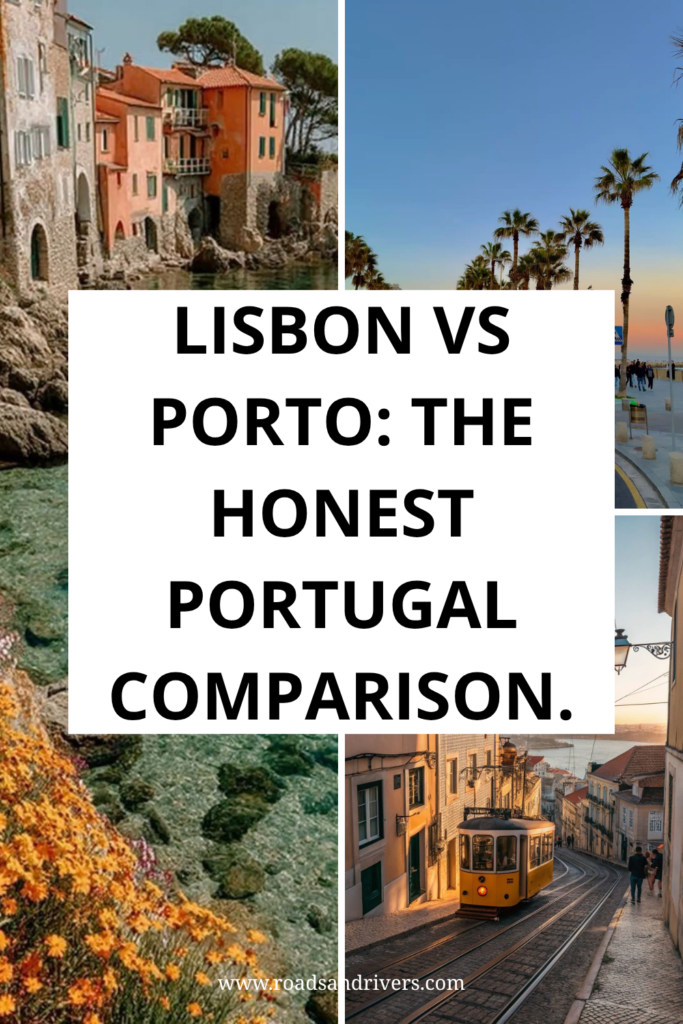
The first thing most travelers notice about Lisbon is the light. It’s golden and relentless, bouncing off white limestone buildings and the Tagus River below. Lisbon is a capital city that somehow still feels manageable. Seven hills, a famous yellow tram system (the iconic Tram 28), and a waterfront that blends modern restaurants with centuries-old monuments.
Porto hits differently. The city is darker, more layered, and absolutely packed with character. Buildings are draped in blue and white azulejo tiles, some crumbling in that gorgeous, photogenic way. The Douro River cuts through the city’s south edge, with the famous Ribeira district on one side and the port wine lodges of Vila Nova de Gaia on the other.
Pro tip: If this is your first time in Portugal, Lisbon gives you more variety in a shorter time. If you’re returning or want something with more raw atmosphere, Porto often wins people over for good.
Here’s the honest split:
- Lisbon feels open, sunny, and international. It’s a city that’s easy to love immediately.
- Porto takes a day to settle in, then refuses to let you leave. Travelers who expected to spend two nights end up staying five.
Things to Do: Where You’ll Actually Spend Your Time
What Lisbon Does Best
Lisbon’s greatest hits are genuinely great. The Alfama district is the oldest part of the city, a maze of steep alleys and fado music drifting from open doorways. Belém is where you get the Tower of Belém, the Jerónimos Monastery, and the best pastel de nata in Portugal (from Pastéis de Belém). The Bairro Alto neighborhood is where you go after dark.
Top things to do in Lisbon:
- Ride Tram 28 through Alfama (go early to avoid the crowds)
- Miradouro da Graça for the best panoramic views of the city
- LX Factory for markets, food, and independent shops
- Time Out Market for the full Portuguese food scene in one hall
- Belém waterfront for history and pastéis in the same afternoon
Pro tip: The Lisbon Card covers public transport and entry to most major museums. If you’re hitting more than three museums, it pays for itself fast.
What Porto Does Best
Porto is smaller, which means you can walk almost everything. The city’s UNESCO-listed historic centre is one of the most atmospheric urban areas in Europe. The São Bento train station alone, completely covered in azulejo tile murals, is worth a detour.
Top things to do in Porto:
- Livraria Lello — one of the most beautiful bookshops in the world (book a timed entry)
- Port wine tasting in Vila Nova de Gaia — cross the Dom Luís I bridge on foot and try at least two lodges
- Ribeira district — wander, eat lunch, watch the rabelo boats
- Clerigos Tower for panoramic views without the crowds
- Matosinhos beach — a quick metro ride for seafood right on the Atlantic
Read more: If you’re planning to connect your Portugal trip with Spain, check out 10 Underrated Towns in Spain That Most Tourists Never Visit for some brilliant detours on the way through.
Food, Wine, and Nightlife
Lisbon’s Food Scene
Lisbon eats big. The city has more Michelin-starred restaurants per capita than you’d expect, but the best meals are often the simplest ones: a bowl of cataplana (seafood stew) at a neighborhood tasca, a bifana (pork sandwich) from a street vendor, grilled sardines at a table outside in the Alfama.
The food market scene is excellent. Time Out Market is the most famous, but Mercado de Campo de Ourique is better for a local feel with less tourist density.
Nightlife in Lisbon is genuinely good. Bairro Alto gets going around midnight. Pink Street (Rua Nova do Carvalho) is the city’s most famous nightlife strip. Fado shows in the Alfama are worth doing at least once, even if live music venues aren’t normally your thing.
Porto’s Food Scene
Porto’s food is heavier, heartier, and proud of it. The francesinha is Porto’s signature dish: a layered meat sandwich soaked in a spiced beer and tomato sauce, topped with a fried egg. It sounds chaotic. It is. You will order it twice.
Seafood is incredible in Porto, particularly at the restaurants along the Ribeira waterfront and in Matosinhos. The port wine culture here isn’t tourist-facing the way it can feel elsewhere. The lodges in Gaia offer serious tastings, some of them covering decades of vintages.
Pro tip: Book a port wine tasting at Graham’s or Taylor’s in Vila Nova de Gaia. The views back over Porto from the terrace are as good as anything you’ll see from a miradouro.
Lisbon vs Porto Budget Breakdown
Porto is cheaper. That’s the consistent reality across accommodation, meals, and activities.
Accommodation (per night, mid-range):
- Lisbon: €90-140 for a good hotel, €50-80 for a hostel private room
- Porto: €65-100 for a good hotel, €35-60 for a hostel private room
Meals:
- Lisbon: €12-20 for a sit-down lunch, €25-40 for dinner
- Porto: €8-15 for a sit-down lunch, €18-30 for dinner
Activities:
- Lisbon: Belém sites €10-15 each, Lisbon Card from €22/day
- Porto: Many churches and viewpoints free, port wine tastings €8-20
Daily average:
- Lisbon: €80-120 per person (mid-range traveler)
- Porto: €60-90 per person (mid-range traveler)
Over a week, that gap adds up. If budget is a real consideration, Porto wins clearly.
Pro tip: Both cities have excellent free walking tours. They’re a brilliant way to get your bearings on day one and ask a local guide the questions that aren’t in any guidebook.
Day Trips: Which City Opens More Doors?

This is where Lisbon pulls ahead in a meaningful way.
Day Trips from Lisbon
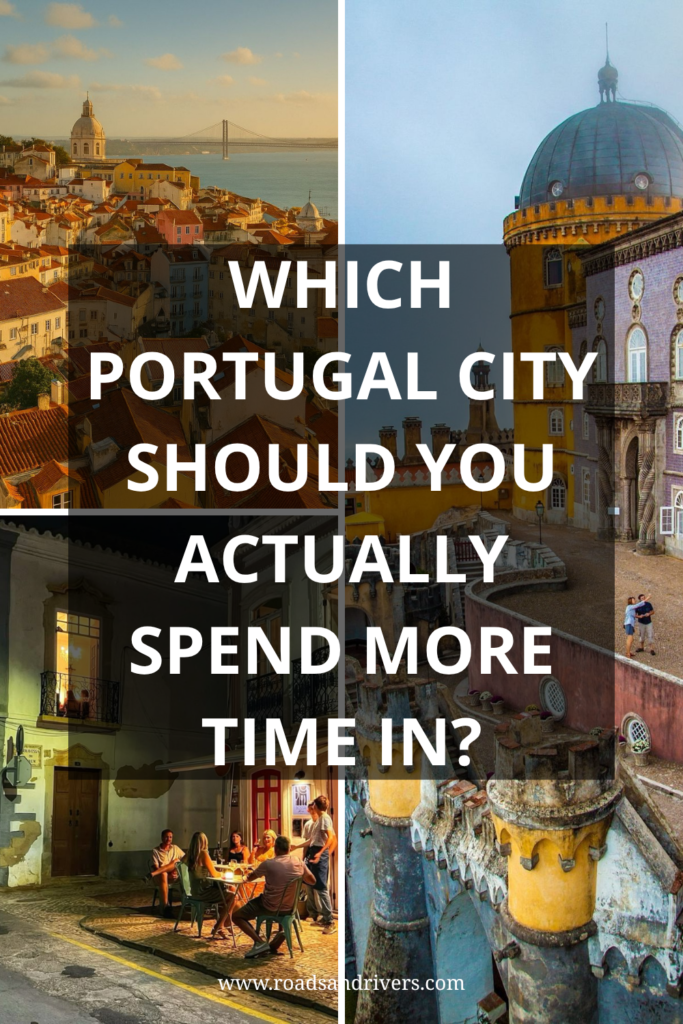
Sintra is 40 minutes by train from Lisbon’s Rossio station. The Pena Palace alone — a riot of yellow and red turrets set above the clouds on a forested hillside — makes it one of the most visited sites in Portugal. Quinta da Regaleira, with its mysterious spiral wells and hidden tunnels, is just as extraordinary. You could spend two full days in Sintra and still not see everything.
The Algarve is further (2-3 hours by train or car), but day trips are possible. Cascais and Estoril are 40 minutes from Lisbon and give you an elegant seaside town with solid beaches without the full Algarve commitment.
Setúbal and the Arrábida Natural Park are 45 minutes away — some of the clearest, most turquoise water in mainland Europe, with zero crowds compared to the Algarve.
Day Trips from Porto
The Douro Valley is Porto’s showpiece day trip: an hour by car through increasingly dramatic terraced vineyards alongside the Douro River. You can do a river cruise, visit a quinta for wine tasting, and be back in Porto by evening. It’s one of the most scenic regions in all of Portugal.
Braga (under an hour by train) is a genuine gem: a cathedral city with some of the best baroque architecture in the country and far fewer tourists than you’d expect.
Guimarães (also under an hour) is considered the birthplace of Portugal. Walking the medieval centre feels like stepping into a history lesson that actually wants to be there.
Read more: Planning a bigger European adventure around your Portugal trip? Best Interrail Routes in Europe: 10 Epic Itineraries to Try has you covered for the full rail journey.
Is the Portugal Itinerary Mistake Costing You?

Here’s the mistake most travelers make: they spend four nights in Lisbon, one night in Porto, and leave wishing they’d reversed the split.
Porto is the kind of city that needs at least two full days to give you what it’s actually offering. One day is enough to tick the boxes. Two days is when you stop ticking boxes and start actually being there.
The opposite mistake is going straight to Porto without seeing Sintra. The Pena Palace, the Quinta da Regaleira, the misty forested hills above the Atlantic: this is some of the most atmospheric scenery in Europe, and it’s half an hour from Lisbon.
The smartest Portugal itineraries look something like this:
7-day Portugal trip:
- Day 1-3: Lisbon (with a day trip to Sintra)
- Day 4: Travel to Porto (the train journey along the coast is scenic)
- Day 5-6: Porto (with one afternoon in Gaia for port wine)
- Day 7: Day trip to the Douro Valley before heading home
10-day Portugal trip:
- Day 1-4: Lisbon + Sintra + Arrábida
- Day 5-6: Algarve (Benagil Cave, Lagos)
- Day 7: Travel north to Porto
- Day 8-10: Porto + Douro Valley + Braga
If you have to pick just one city and can’t do both, use this filter: first trip to Portugal and you want maximum variety? Lisbon. You want raw atmosphere, wine culture, and a city that feels less polished and more lived-in? Porto.
Pro tip: The Lisbon-Porto train takes about 2h45m and costs around €25-35 booked in advance on CP (Comboios de Portugal). It’s a comfortable, scenic option that doesn’t waste a half-day at an airport.
For solo travelers making their first moves into European city-hopping, Backpacking Europe for Beginners: Everything You Need to Know lays out the practical framework you need before your first solo trip.
So Which Portugal City Should You Pick?
The honest answer is that most travelers who only pick one end up with a mild case of FOMO about the other. That’s not a bad problem to have in Portugal.
But if you have to choose:
Pick Lisbon if:
- This is your first time in Portugal
- You want beach access and day trip variety (Sintra, Cascais, Arrábida)
- You’re traveling with people who want a mix of nightlife, food markets, and history
- You have four or more days to spend in one city
Pick Porto if:
- You’ve already done Lisbon
- You want a more concentrated, atmospheric city experience
- Wine, architecture, and a walkable medieval centre are your priorities
- You want to feel like you’re somewhere most of your friends haven’t been
And if you have a week or more? Do both. Portugal rewards slow travel. The train between the two cities is cheap, fast, and easy. Two-city Portugal trips are genuinely one of the best value experiences in all of Europe right now.
For those planning to pair their Portugal trip with neighboring Spain, the Barcelona Travel Guide: Best Things To Do, Eat, and See is worth a look for the cross-border extension.
Key Takeaways
- Porto is cheaper than Lisbon by roughly 20-30% across accommodation, food, and activities
- Lisbon wins on day trip variety: Sintra, Cascais, and Arrábida are all within an hour
- Porto wins on atmosphere, wine culture, and that “I found something real” feeling
- The most common itinerary mistake is giving Porto only one night — give it two minimum
- A combined Lisbon + Porto trip on a 7-day budget is absolutely achievable and makes for a far more satisfying trip than picking just one

FAQ
Is Lisbon or Porto better for first-time visitors to Portugal?
Lisbon is the better base for a first visit. It has more variety packed into its different neighborhoods, easier connections to day trips like Sintra, and a broader food and nightlife scene. Porto is brilliant, but its appeal deepens on a second visit when you already know the broader Portuguese context.
How many days do you need in Lisbon vs Porto?
Three to four days is the sweet spot for Lisbon, including one day trip. Porto is best experienced over two full days at minimum, with a third day for a Douro Valley excursion if possible. A rushed one-night stopover in either city undersells what they’re offering.
Is Porto cheaper than Lisbon?
Yes, consistently. Accommodation in Porto runs roughly 20-30% cheaper than comparable options in Lisbon. Restaurants are also more affordable. For budget travelers, Porto is the stronger base.
Can you visit Sintra from Porto?
Technically yes, but it’s a long day trip from Porto (around 3.5 hours each way). Sintra is much better visited as a day trip from Lisbon, which is only 40 minutes away by train.
What is the best time of year to visit Portugal?
May to June and September to October are the ideal windows: good weather, manageable crowds, and lower prices than peak July-August. Summer works well but Lisbon and Porto both get extremely busy, and the Algarve in August is genuinely packed. Spring is arguably the best Portugal season overall.