
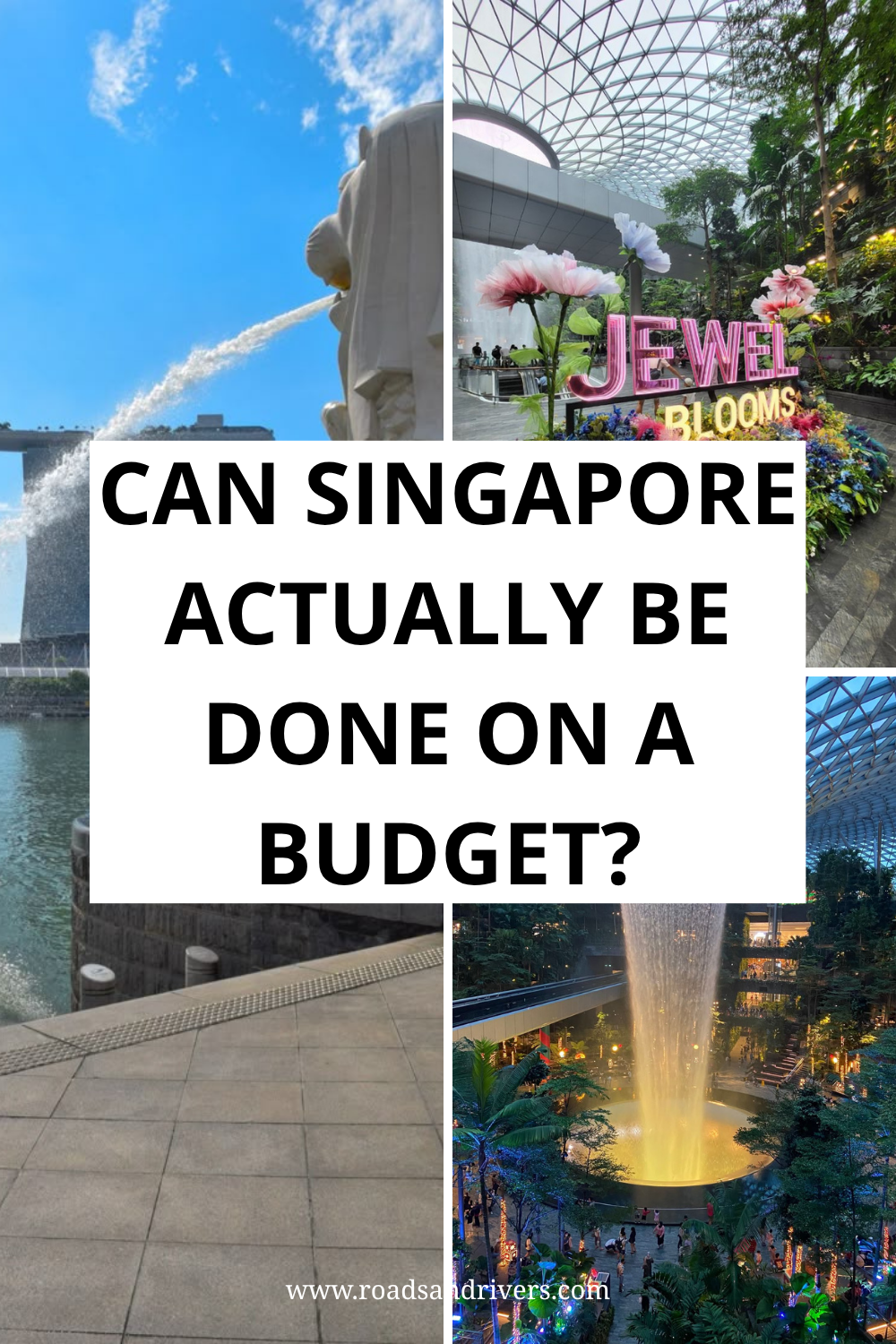
Everyone has a theory about singapore. That it’s too expensive for backpackers. That you need a week to do it justice. That the only way to experience it properly involves a rooftop infinity pool and a Michelin-starred dinner.
Here’s the actual truth: Singapore is one of the most affordable expensive cities in the world — if you know where to spend and where not to. The city has government-subsidized hawker centers serving meals for S$4–8, dozens of free world-class attractions, and a public transit network so efficient it makes most cities look embarrassing. You can spend three days here and have a genuinely great time for under $70–100 a day.
This guide covers the 3-day budget plan that works: day-by-day itinerary, the five budget traps tourists fall into, the cheapest way to see the city’s best sights, and what budget Singapore actually showed us about the place that the luxury version never would have. The short version: this is the trip everyone needs in 2026.
Table of Contents
- Quick-Reference Info Box
- Can Singapore Actually Be Done on a Budget?
- Day 1: Marina Bay, Gardens by the Bay, and the Free Night Show
- Day 2: Chinatown, Little India, Haji Lane, and Hawker Culture
- Day 3: Sentosa Island and What’s Actually Worth the Entry Fee
- 5 Singapore Budget Traps Tourists Fall Into
- What’s the Cheapest Way to See Singapore?
- Singapore Budget Breakdown: What 3 Days Costs in 2026
- Budget Singapore Showed Me a Side I Never Expected
- Key Takeaways
- FAQ
Quick-Reference Info Box
Best time to visit: February–April (drier months, manageable heat)
Average daily budget: $70 (strict) / $100–130 (comfortable budget)
Currency: Singapore Dollar (SGD / S$); 1 USD ≈ 1.35 SGD in 2026
Airport transfer: MRT from Changi Airport to city center costs S$2–3
Getting around: EZ-Link card (like a transit pass) for MRT and buses
Hawker meal price: S$4–8 for a full dish
Days needed: 3 days for highlights; 4–5 days to go deeper
Safety: Singapore is consistently ranked one of the safest cities in the world
Can Singapore Actually Be Done on a Budget?
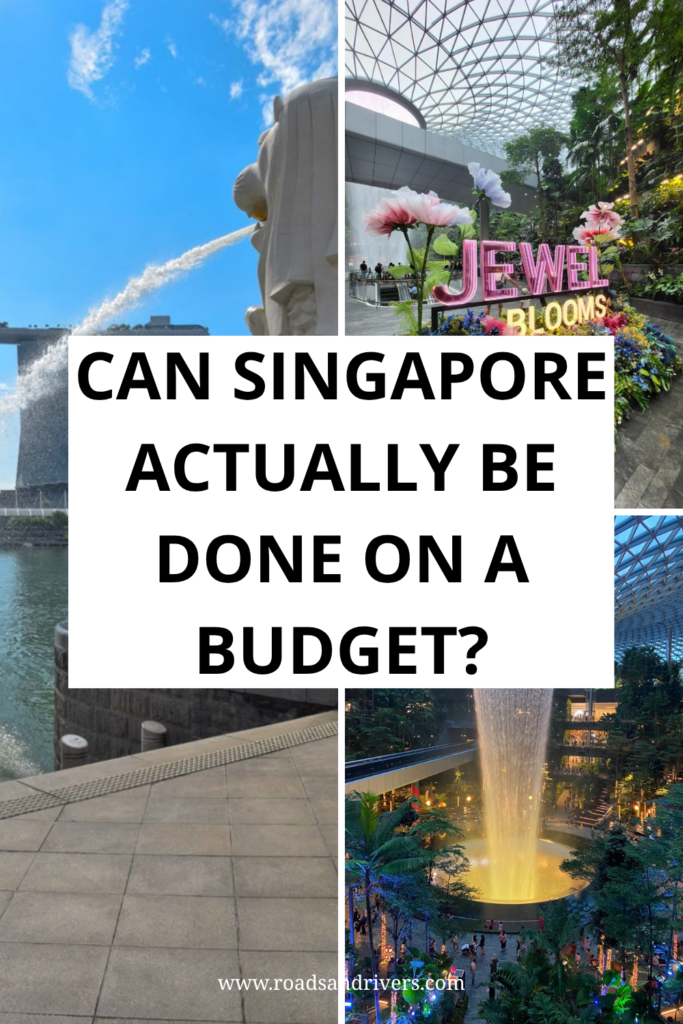
Yes — and the secret most travel articles miss is that two decisions control almost your entire daily spend: where you sleep and how you eat.
Accommodation is Singapore’s real budget pressure point. Hostel dorms run S$25–40 per night, which is reasonable for the city’s standards. Budget hotels start at S$80–100. Anything in Marina Bay or Orchard Road will be significantly more. Stay in a well-located hostel in Chinatown, Little India, or Bugis — all connected to the MRT — and your accommodation cost becomes manageable.
Food is where Singapore actively works in your favor. Hawker centers are government-subsidized, don’t add GST or service charges, and serve some of the best food in the city at prices that make other Southeast Asian cities look expensive. A plate of Hainanese chicken rice at Maxwell Food Centre costs S$4–5. A bowl of laksa runs S$5–7. You can eat breakfast, lunch, and dinner at hawker centers for S$15–20 total.
The free attractions list in Singapore is genuinely impressive: the Supertree Grove light show at Gardens by the Bay (nightly, free), Merlion Park and the Marina Bay waterfront, the Singapore Botanic Gardens (UNESCO World Heritage Site, free entry), MacRitchie Reservoir Park, Haji Lane and Arab Street, the Chinatown Heritage Area, Little India, and the Civic District’s colonial architecture — all costs nothing beyond transit.
Done right, a comfortable budget Singapore trip runs $70–100 per person per day. That number includes accommodation, all meals at hawker centers with one or two restaurant meals mixed in, MRT transit, and two or three paid attractions across the full three days.
Pro tip: Buy an EZ-Link card at the airport (S$10 including S$5 stored value). It works on all MRT lines and buses, and single-ride fares start from S$0.92 for short hops.
Day 1: Marina Bay, Gardens by the Bay, and the Free Night Show
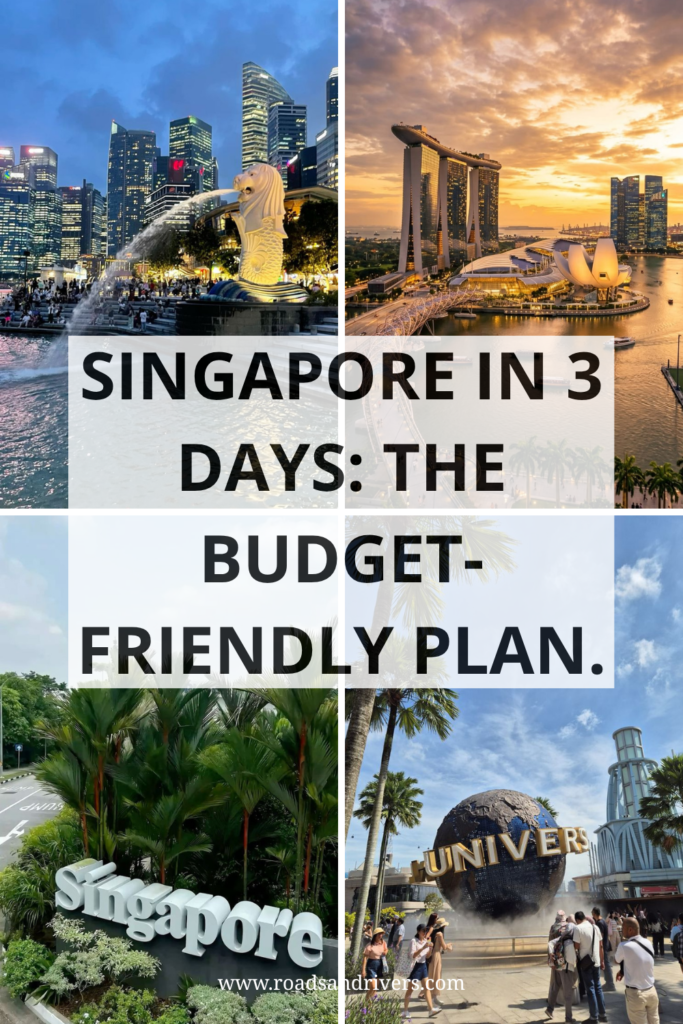
Start where Singapore announces itself: the Marina Bay waterfront. This is the city’s showpiece — the Marina Bay Sands hotel-casino complex with its famous rooftop, the ArtScience Museum shaped like a lotus flower, the Helix Bridge, and the Merlion statue spraying water into the bay. Walking this stretch costs nothing.
Morning: Marina Bay waterfront
Take the MRT to Bayfront station and walk the promenade from the Merlion Park toward the ArtScience Museum and the Gardens by the Bay entrance. This is Singapore’s most photographed skyline, and the morning light on the water is genuinely excellent. The free viewing is from the waterfront path — you don’t need to pay any of the Marina Bay Sands entry fees for the outdoor areas.
Afternoon: Gardens by the Bay
The Supertrees — the towering tree-like vertical gardens that have become Singapore’s most iconic image — are free to walk among during the day. The two indoor conservatories (the Flower Dome and Cloud Forest) charge entry at around S$28 per person and are worth doing once. The Flower Dome is the world’s largest glass greenhouse. The Cloud Forest has a nine-story waterfall inside. If budget is the priority, skip the indoor conservatories this trip — the Supertrees and the outdoor gardens are remarkable on their own.
Evening: OCBC Garden Rhapsody light show
Every night at 7:45 PM and 8:45 PM, the Supertrees come alive with a free synchronized light and music show. This is the single best free attraction in Singapore and one of the best free experiences in all of Southeast Asia. Stay for both shows if you can.
Dinner: Maxwell Food Centre
Walk or take a short taxi/Grab to Maxwell Food Centre in Chinatown. This is one of Singapore’s most famous hawker centers, home to Hawker Chan — which holds a Michelin Bib Gourmand for its soya sauce chicken rice at around S$3.50. Get there before 6 PM to avoid the dinner queue.
Read more: How Much Does a Trip to Japan Really Cost in 2026?
Day 2: Chinatown, Little India, Haji Lane, and Hawker Culture
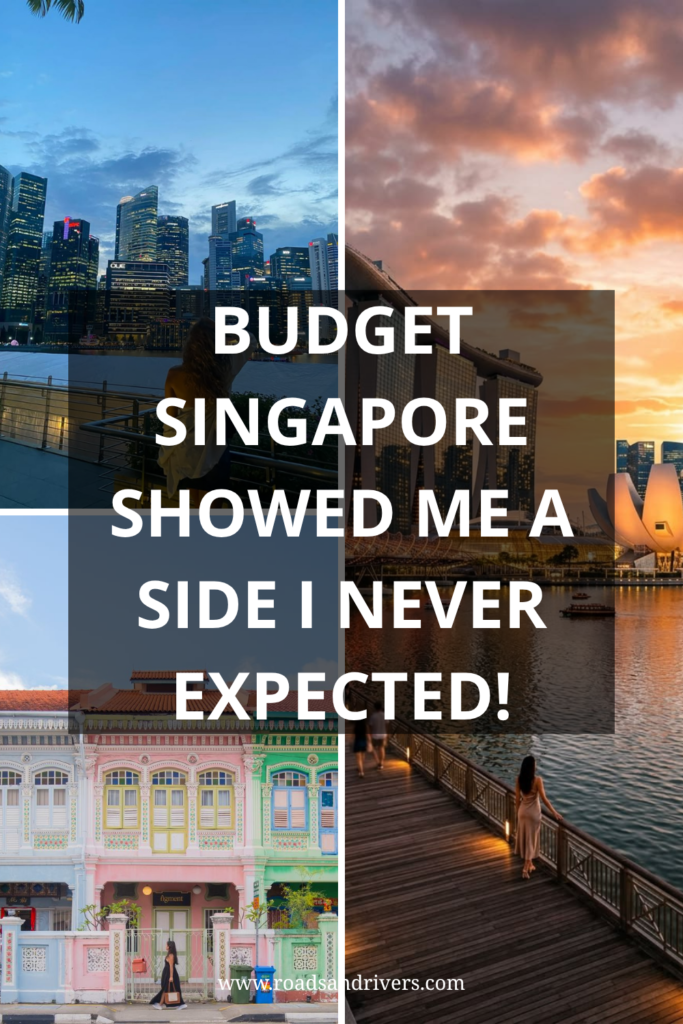
Day two is Singapore’s cultural heart. Three neighborhoods, all connected by MRT, all free to walk, and all serving some of the best food in the city. This is the day you understand why Singapore punches so far above its size.
Morning: Chinatown
Chinatown in the morning is a working neighborhood, not a tourist showpiece. The temples — Sri Mariamman Temple and the Buddha Tooth Relic Temple — are free to enter and genuinely worth seeing. The streets of Pagoda, Trengganu, and Sago are full of traditional shophouses, incense sellers, and tea houses. The Chinatown Complex Market upstairs is the largest hawker center in Singapore and one of the cheapest places to eat in the entire country.
Late Morning: Singapore Botanic Gardens
Head north by MRT to the Botanic Gardens — a 160-year-old UNESCO World Heritage Site that stretches 74 hectares across the edge of Orchard Road. Entry is completely free. The National Orchid Garden within the gardens charges a small fee (S$5 per adult) but is optional. The main gardens — lakes, heritage trees, bandstand, and the Swan Lake area — cost nothing.
Afternoon: Little India and Haji Lane
Take the MRT to Little India. The Tekka Centre wet market and food court is the best place to eat South Indian food cheaply in Singapore — mutton biryani, dhal curry, roti prata at S$3–5 per dish. Walk through the streets: the Sri Veeramakaliamman Temple on Serangoon Road, the Mustafa Centre (a 24-hour shopping complex with some of the cheapest prices in Singapore), and the general sensory overload of the neighborhood.
From Little India, walk or take the MRT one stop to Haji Lane — a narrow alley in the Arab Street/Kampong Glam area lined with brightly painted shophouses, independent boutiques, and cafés. This is Singapore’s most photogenic street and the most popular backdrop on social media. Free to walk, genuinely beautiful, best in the late afternoon light.
Evening: Chinatown food street or hawker dinner
End the day at one of Chinatown’s outdoor eating streets. Smith Street — known as “Food Street” — opens in the evenings with stalls lining both sides. Satay, char kway teow, wonton noodles, oyster omelette, cold sugarcane juice. Dinner for two runs S$20–30 at most.
Read more: Ultimate Guide on Backpacking Asia in a Budget-Friendly Way
Day 3: Sentosa Island and What’s Actually Worth the Entry Fee
Sentosa Island is where Singapore’s budget math gets complicated. The island has Universal Studios Singapore (S$83 per adult), the S.E.A. Aquarium, cable cars, and a dozen other paid attractions. It also has three free public beaches, free walking trails through the jungle, and a free shuttle bus that connects everything once you’re on the island.
The island entry itself is free if you walk or cycle across the Sentosa Boardwalk from VivoCity. Skip the monorail — it costs extra and the walk takes 10 minutes.
What’s worth paying for on Sentosa: Universal Studios Singapore is legitimately great, particularly for families or anyone who wants a full theme park day. One day is enough. Book in advance online — tickets are cheaper and it avoids the queue. As of 2026, a standard one-day pass runs around S$83.
What’s free on Sentosa: Palawan Beach and Siloso Beach are free to use and genuinely pleasant. The Imbiah Trail and Coastal Trail are well-marked jungle walks that cross the island for free. Sunset at Palawan Beach — with the Singapore skyline behind you across the strait — is one of the better free views in the city.
Budget alternative day 3: Instead of Sentosa, consider taking the bumboat (S$4 cash, round trip) from Changi Village to Pulau Ubin — a small island off the northeast coast where Singapore in the 1960s effectively still exists. Rent a bicycle (S$5–10 per day), cycle through rubber plantations and mangroves, and see a version of the country almost no tourists find. It is one of the genuinely hidden gem experiences in Singapore.
Pro tip: Carry tissue packets. In Singapore’s hawker centers, leaving a packet of tissues on a table is how locals reserve their seats while they queue for food. This is a custom unique to Singapore and completely universal — you’ll see it everywhere.
5 Singapore Budget Traps Tourists Fall Into
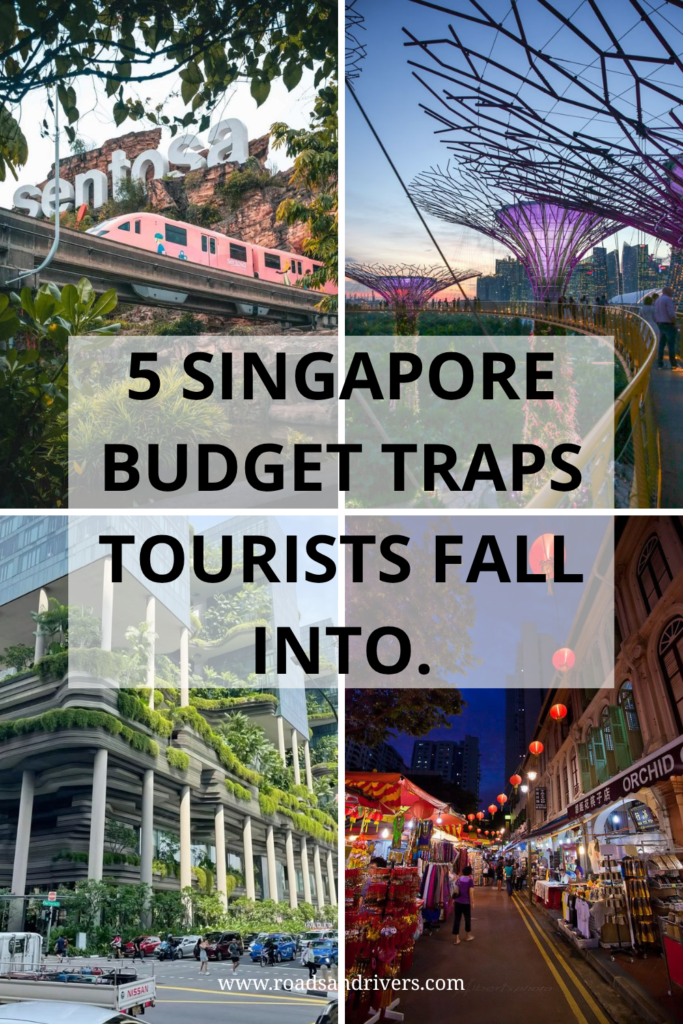
Singapore is full of opportunities to spend money in the wrong places. These five account for most of the budget overruns.
1. Eating in tourist-facing restaurants instead of hawker centers
The restaurants near Clarke Quay, Boat Quay, and Orchard Road charge S$20–40 per main course for food that is objectively worse than what you can eat at Maxwell Food Centre for S$5. Every single meal at a hawker center saves money and improves quality. This is not a compromise — it’s the better choice.
2. Taking taxis when the MRT covers the same route
Singapore’s MRT is one of the best metro systems in the world. It’s fast, air-conditioned, and goes almost everywhere tourists need to go. A taxi or Grab from Changi Airport to the city costs S$20–30. The MRT costs S$2–3. The only justification for a taxi is very late arrivals, heavy luggage, or traveling in a group of four where the math changes.
3. Paying for the Marina Bay Sands observation deck
The MBS SkyPark Observation Deck (for non-hotel guests) costs S$26. The view is genuinely good. But the CapitaSpring Sky Garden at 88 Market Street offers a free 51st-floor view of the city, open Monday to Friday 8:30–10:30 AM and 2:30–6:00 PM. The Jewel Changi Airport — a 10-minute MRT ride from the city — has spectacular views of the indoor Rain Vortex waterfall (the world’s tallest indoor waterfall) for free.
4. Booking tours for things you can self-guide
Paid walking tours of Chinatown and Little India run S$20–40 per person. The Singapore Tourism Board produces excellent free maps at tourist information centers at Changi Airport and in Chinatown that cover the same routes with the same historical information. Pick one up and walk at your own pace.
5. Going to Sentosa without a plan
Sentosa can consume an entire day and S$100+ per person very easily if you wander in without deciding what you want to do. Universal Studios is a full day. The beaches are a half day. The walking trails are a few hours. Going without a plan leads to paying for multiple half-experiences. Decide before you arrive whether this is a theme park day or a beach-and-nature day.
What’s the Cheapest Way to See Singapore?
The cheapest way to see Singapore uses three things: the MRT, hawker centers, and the city’s remarkable list of free attractions.
The free Singapore checklist:
- Supertree Grove light show (nightly, 7:45 PM and 8:45 PM)
- Gardens by the Bay outdoor areas and Supertrees
- Singapore Botanic Gardens (UNESCO, free main garden)
- Merlion Park and Marina Bay waterfront
- Haji Lane and Arab Street
- Chinatown heritage streets and temples
- Little India streets and Mustafa Centre
- MacRitchie Reservoir Park (jungle walk, suspension bridge)
- Sentosa beaches (Palawan, Siloso)
- Jewel Changi Airport — Rain Vortex waterfall (free to view from inside)
The paid attractions worth budgeting for:
- Gardens by the Bay conservatories (Flower Dome + Cloud Forest): S$28 — worth doing once
- National Museum of Singapore: free on Friday evenings (6–9 PM)
- Universal Studios Singapore: S$83 — only if theme parks are your thing
- Singapore Zoo or Night Safari: S$48–52 — genuinely excellent, particularly the Night Safari
The overall cheapest 3-day Singapore visit combines two full days on the free list and one paid attraction. You’ll spend more time and come away with more genuine Singapore memories than tourists who buy their way through every attraction on the map.
Singapore Budget Breakdown: What 3 Days Costs in 2026
Here’s what a realistic 3-day budget Singapore trip costs per person in 2026:
| Category | Budget | Mid-Range |
|---|---|---|
| Accommodation (per night) | S$25–40 (hostel dorm) | S$90–130 (budget hotel) |
| Food (per day) | S$15–20 (hawker centers) | S$35–50 (mix of hawker + restaurant) |
| Transport (per day) | S$5–10 (MRT and bus) | S$10–20 (MRT + occasional Grab) |
| Activities (3 days total) | S$0–30 (mostly free) | S$60–100 (conservatories + 1 big attraction) |
| Total (3 days) | ~S$175–250 | ~S$430–600 |
At current exchange rates (1 USD ≈ 1.35 SGD), that’s roughly $130–185 USD for a budget 3-day trip, or $320–445 USD mid-range — excluding international flights.
Singapore’s free attractions genuinely change the math. The Supertree Grove light show alone is world-class and costs nothing. The Botanic Gardens, the hawker culture, Haji Lane, and the neighborhoods take at least two full days to explore properly, also at no cost. A comfortable budget Singapore trip of $70–100 per day is achievable and leaves no experience of the city on the table.
Read more: How To Plan the Perfect Trip to Bali on a Budget
Budget Singapore Showed Me a Side I Never Expected
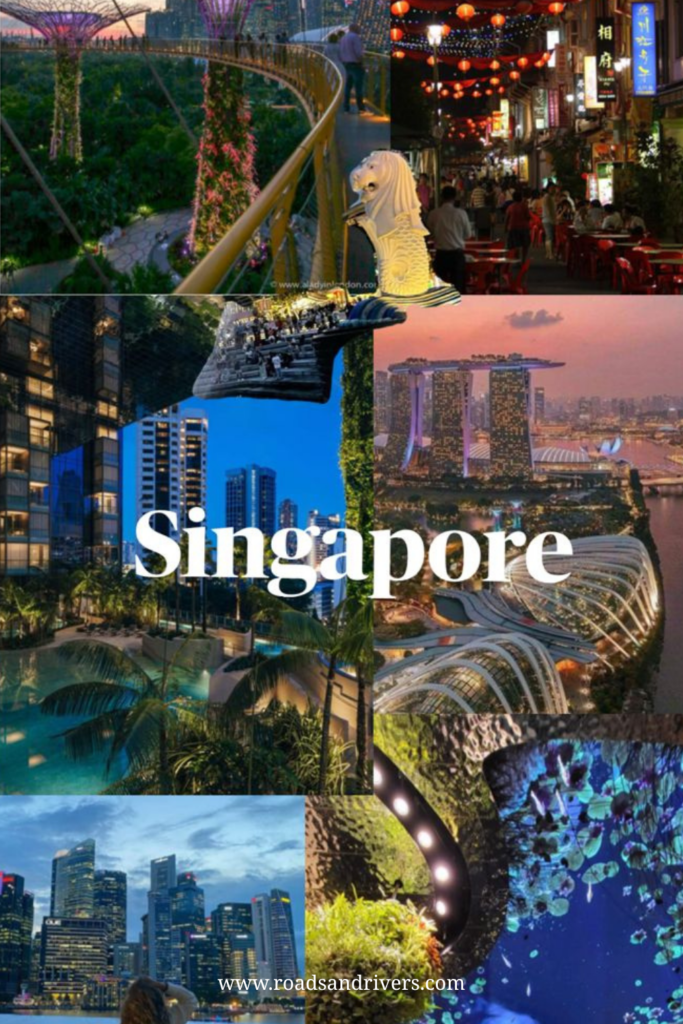
The surprise about visiting Singapore on a budget isn’t that it’s possible. It’s that the budget version is actually the more interesting version.
The people eating at Maxwell Food Centre at 7 PM are not tourists. They’re office workers, families, retirees — the whole cross-section of Singapore life at plastic tables under fluorescent lights eating some of the best food in Asia. The woman at the stall who’s been making wonton noodles for 30 years doesn’t change the recipe because the Michelin Guide stopped by.
Walking Haji Lane in the early evening, or threading through the Temple Street night market, or taking the bumboat to Pulau Ubin — these are experiences that the luxury hotel guest doesn’t get. The budget version of Singapore is the city seen from street level, and street level is where Singapore actually lives.
The architecture is still extraordinary from the outside. The Gardens by the Bay Supertrees are still extraordinary from underneath, for free. The food is better at hawker centers than at most restaurants that cost three times as much. And the MRT gets you everywhere in 20 minutes for the price of a piece of gum.
Singapore is genuinely one of the most livable, walkable, and photogenic cities in Asia. It doesn’t require a luxury budget to experience that. It requires good planning and the willingness to eat your meals at a plastic table in a food hall — which, once you taste the food, doesn’t feel like a sacrifice at all.
Read more: Best Islands in Thailand: How To Pick the Right One for You
Key Takeaways
- Singapore is doable on $70–100 per day with two decisions: hawker centers for food, MRT for transit
- The Supertree Grove light show (nightly, free), Merlion Park, Botanic Gardens, Haji Lane, and Chinatown are all free
- The best hawker centers: Maxwell Food Centre, Chinatown Complex, Lau Pa Sat, Tiong Bahru Market
- Sentosa Island entry is free if you walk across the Boardwalk from VivoCity
- The Pulau Ubin bumboat (S$4) to Singapore’s off-grid island is the single best hidden gem day trip
- Carry an EZ-Link card; carry tissue packets for hawker center seat-saving; carry a small umbrella
FAQ
Is Singapore expensive for tourists in 2026?
Singapore has a reputation as one of the world’s most expensive cities, but that reputation is based on luxury-level spending. Budget travelers can manage comfortably on $70–100 per day, covering accommodation in a hostel dorm, all meals at hawker centers, MRT transit, and the city’s extensive free attractions. The gap between budget and luxury spending in Singapore is larger than almost anywhere else in Asia.
What is the cheapest way to eat in Singapore?
Hawker centers. These government-subsidized food halls serve full meals for S$4–8 per dish, with no GST or service charge added. The best budget options include Maxwell Food Centre (Chinatown), Chinatown Complex Food Centre, Lau Pa Sat (Financial District), and Tiong Bahru Market. Hawker Chan at Maxwell serves Michelin Bib Gourmand-recognized soya sauce chicken rice at S$3.50. There is no cheaper or better way to eat in the city.
How many days do you need in Singapore?
Three days covers all the major highlights if the itinerary is organized by neighborhood: Day 1 for Marina Bay and Gardens by the Bay, Day 2 for the cultural districts (Chinatown, Little India, Haji Lane), and Day 3 for Sentosa Island or Pulau Ubin. Four to five days lets you add the Night Safari, the Southern Ridges walk, and more time in neighborhoods you want to revisit.
Is Gardens by the Bay free in Singapore?
The outdoor areas of Gardens by the Bay — including the Supertrees and the free nightly light show (Garden Rhapsody at 7:45 PM and 8:45 PM) — are completely free. The two indoor conservatories (Flower Dome and Cloud Forest) charge entry at around S$28 per adult. The free outdoor experience is genuinely impressive on its own and covers the most photographed element of the entire attraction.
What are the best free things to do in Singapore?
The Supertree Grove light show, Gardens by the Bay outdoor areas, the Singapore Botanic Gardens, Merlion Park and Marina Bay waterfront, Haji Lane, the Chinatown heritage streets and temples, Little India, MacRitchie Reservoir Park, and the Jewel Changi Airport Rain Vortex waterfall (viewable from inside the terminal for free). Singapore has more genuinely world-class free experiences than almost any city its size.
Visited Singapore on a budget and found a hawker stall or hidden spot worth sharing? Drop it in the comments — the best Singapore tips always come from people who’ve just been there.