The honest answer is yes, but with an asterisk. Iceland is one of the most expensive countries in the world for travellers. A basic restaurant meal in Reykjavik costs $25-35. A pint of beer costs $12-15. A rental car for a week costs $400-700 before insurance. And yet, people keep going, because Iceland travel offers something no other destination on earth can replicate: a landscape so raw, so volcanic, so dramatically alien that it makes you question whether you are still on the same planet.
The asterisk is this: budget Iceland is not the same as budget Bali or budget Mexico City. You will not spend $30 a day here. But you can see every waterfall, drive the Ring Road, soak in hot springs, and chase the Northern Lights for significantly less than most people assume, if you make specific choices about accommodation, food, and transport that most tourists do not make.
This guide breaks down exactly what those choices are, what Iceland actually costs in 2026, and where the money-saving tips from other budget guides fall apart against Icelandic reality.
How This Guide Works
This guide is structured as a myth-buster. Each section takes a common claim about Iceland travel costs (“Iceland is only for big spenders,” “you have to eat out every meal,” “the Blue Lagoon is a must”), tests it against real spending data, and delivers the honest verdict with specific alternatives.
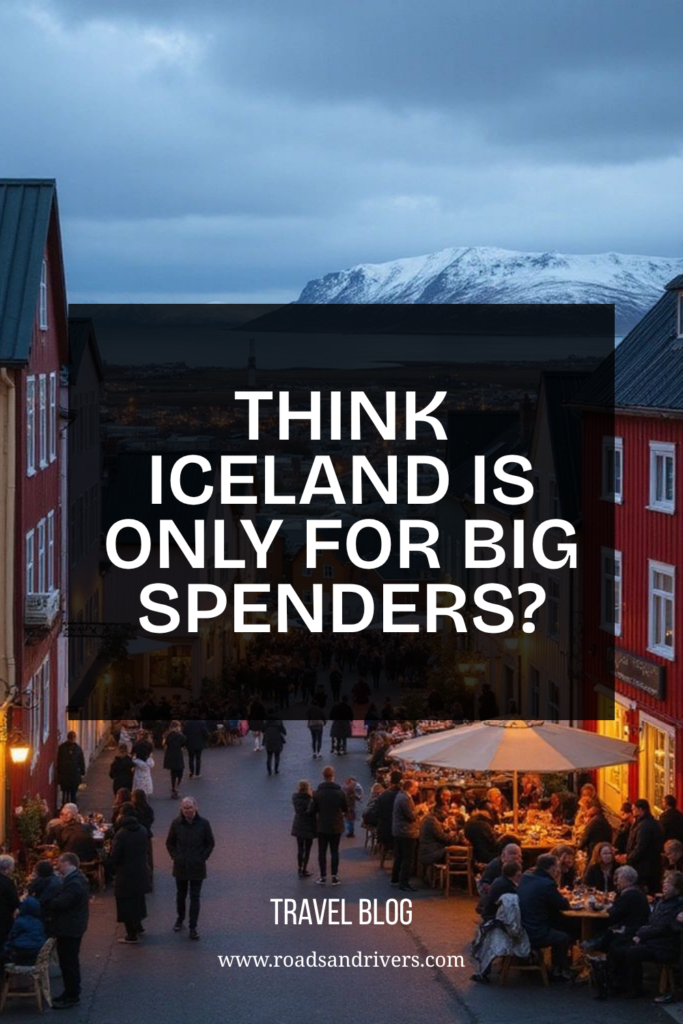
Myth 1: Iceland Is Only for Big Spenders
The claim: Iceland is prohibitively expensive and only works for travellers with large budgets.
The reality: Iceland is expensive, but the most extraordinary experiences are free. Waterfalls, geysers, volcanic landscapes, black sand beaches, hiking trails, and many hot springs cost nothing to visit. The expense comes from eating, sleeping, and driving, not from the actual experiences.
Here is a realistic breakdown for a 7-day Ring Road trip in 2026:
| Category | Budget Approach | Mid-Range Approach |
|---|---|---|
| Car rental (7 days) | $350-500 (small 2WD) | $550-800 (4WD SUV) |
| Fuel | $150-200 | $200-280 |
| Accommodation (7 nights) | $350-550 (camping/hostels) | $700-1,200 (guesthouses) |
| Food (7 days) | $200-300 (self-catering) | $450-700 (mix) |
| Activities | $50-100 (free sights + 1 paid) | $200-400 (2-3 paid tours) |
| Total per person | $1,100-1,650 | $2,100-3,380 |
The budget version works out to roughly $160-235 per day. That is not cheap, but it is less than half what most people expect, and it covers the entire Ring Road with every major natural sight included.
Read more: The Ultimate Lofoten Islands Travel Guide for another dramatic Nordic destination that shares Iceland’s landscape intensity at slightly lower costs.
Myth 2: You Have to Eat Out Every Meal
The claim: Food in Iceland is so expensive that your daily budget will be dominated by restaurant bills.
The reality: This is only true if you eat at restaurants for every meal. The single biggest budget lever in Iceland is food, and the solution is simple: cook most of your own meals.
The Bonus supermarket strategy: Bonus (recognisable by the yellow pig logo) is Iceland’s cheapest grocery chain. A week of self-catering groceries for one person costs ISK 12,000-18,000 ($85-130). That covers breakfast (bread, cheese, skyr yogurt, coffee), lunch (sandwiches, fruit, trail mix), and dinner ingredients (pasta, sauce, canned fish, vegetables). Compare that to ISK 3,000-5,000 ($22-36) for a single restaurant dinner.
What to buy at Bonus: Skyr (Icelandic yogurt, cheap and filling), rye bread, cheese slices, pylsur (Icelandic hot dog sausages, cheaper at the store than at the famous stands), pasta, canned tuna, instant noodles, bananas, and chocolate.
The one restaurant meal worth paying for: Icelandic lamb soup (kjötsúpa) at a rural guesthouse or farm restaurant. It is the national comfort food, it costs ISK 2,500-3,500 ($18-25), and it is warming, filling, and excellent. Budget one restaurant meal every 2-3 days and self-cater the rest.
Pro tip: Almost every guesthouse, hostel, and campsite in Iceland has a kitchen. This is not accidental. Icelanders know their food prices are extreme and the infrastructure is designed around self-catering travellers.
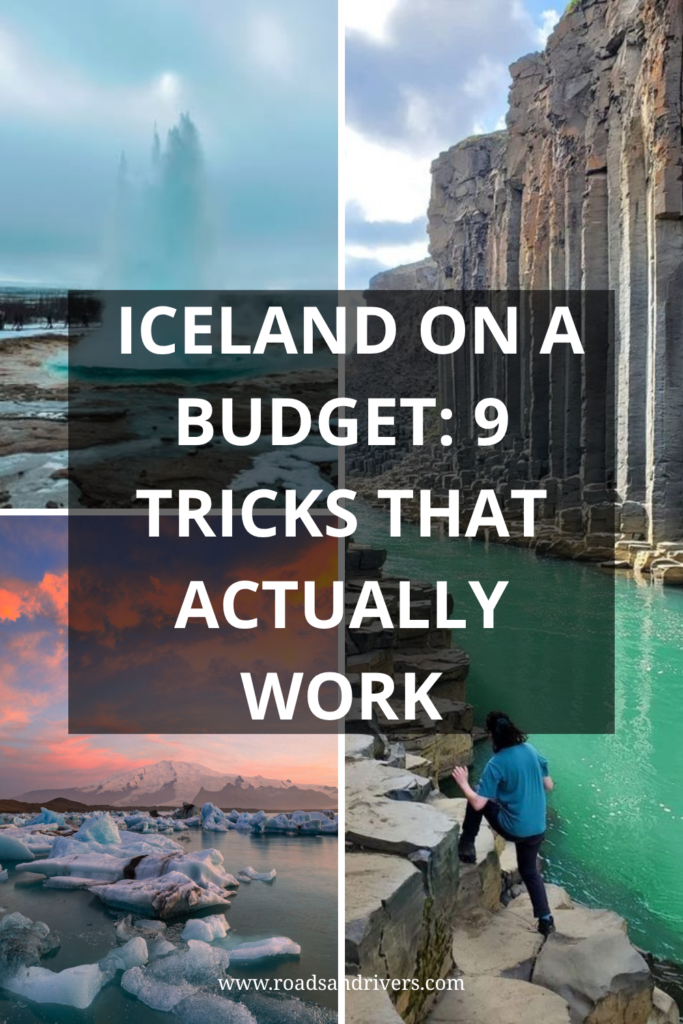
9 Budget Tricks That Actually Work in Iceland
1. Book the car early. Car rental prices in Iceland increase dramatically as summer approaches. Booking 3-4 months ahead saves 30-50% compared to last-minute bookings. A small 2WD (Suzuki Swift, Hyundai i10) is sufficient for the Ring Road in summer. You only need a 4WD for F-roads (highland roads), which most first-timers do not use.
2. Skip the Blue Lagoon. The Blue Lagoon costs ISK 12,000-18,000 ($85-130) per person for basic entry. It is beautiful and Instagram-famous but it is also a constructed tourist attraction built on a geothermal power plant’s runoff. Instead, visit free or cheap hot springs: Reykjadalur hot river (free, 45-minute hike), Seljavallalaug (free, remote pool), or Myvatn Nature Baths (ISK 6,500/$47, less crowded and more natural than the Blue Lagoon).
3. Camp. Iceland has over 170 campsites, many in spectacular locations. A campsite costs ISK 1,500-2,500 ($11-18) per person per night. The Camping Card (ISK 22,900/$165 for 28 nights at 40+ campsites) makes camping even cheaper. Bring a good tent (wind-rated, not the festival kind) and a sleeping bag rated to 0°C minimum.
4. Buy fuel at Orkan or Olis. Fuel prices vary between brands. Orkan and Olis are consistently the cheapest. The difference between the cheapest and most expensive fuel station on a full tank can be ISK 2,000-3,000 ($14-22). Over a week of driving, that adds up.
5. Get the free hot springs. Iceland has dozens of natural hot springs that are free and uncrowded. The tourist board does not advertise most of them. Research specific locations before your trip (the Hot Pot Iceland app is the best resource) and you can soak in geothermal water with a mountain view for zero cost.
6. Use the Flybus, not a taxi. The airport transfer from Keflavik to Reykjavik costs ISK 3,499 ($25) by Flybus or ISK 16,000-20,000 ($115-145) by taxi. Same journey, same time, one-sixth the price.
7. Bring snacks from home. Iceland’s import costs make packaged snacks and trail food expensive. Bring energy bars, dried fruit, nuts, and chocolate from your home country. Your daily hiking snack budget drops to zero.
8. Visit in shoulder season. May-June and September offer lower accommodation prices, fewer tourists, and still-accessible Ring Road conditions. September also brings the start of Northern Lights season. August is peak pricing across the board.
9. Share the car costs. The biggest single expense in Iceland is the rental car. If you are a solo traveller, finding 1-2 travel partners to split the car and fuel with cuts your transport costs by 50-66%. Hostels and online travel forums are good places to find Ring Road travel partners.
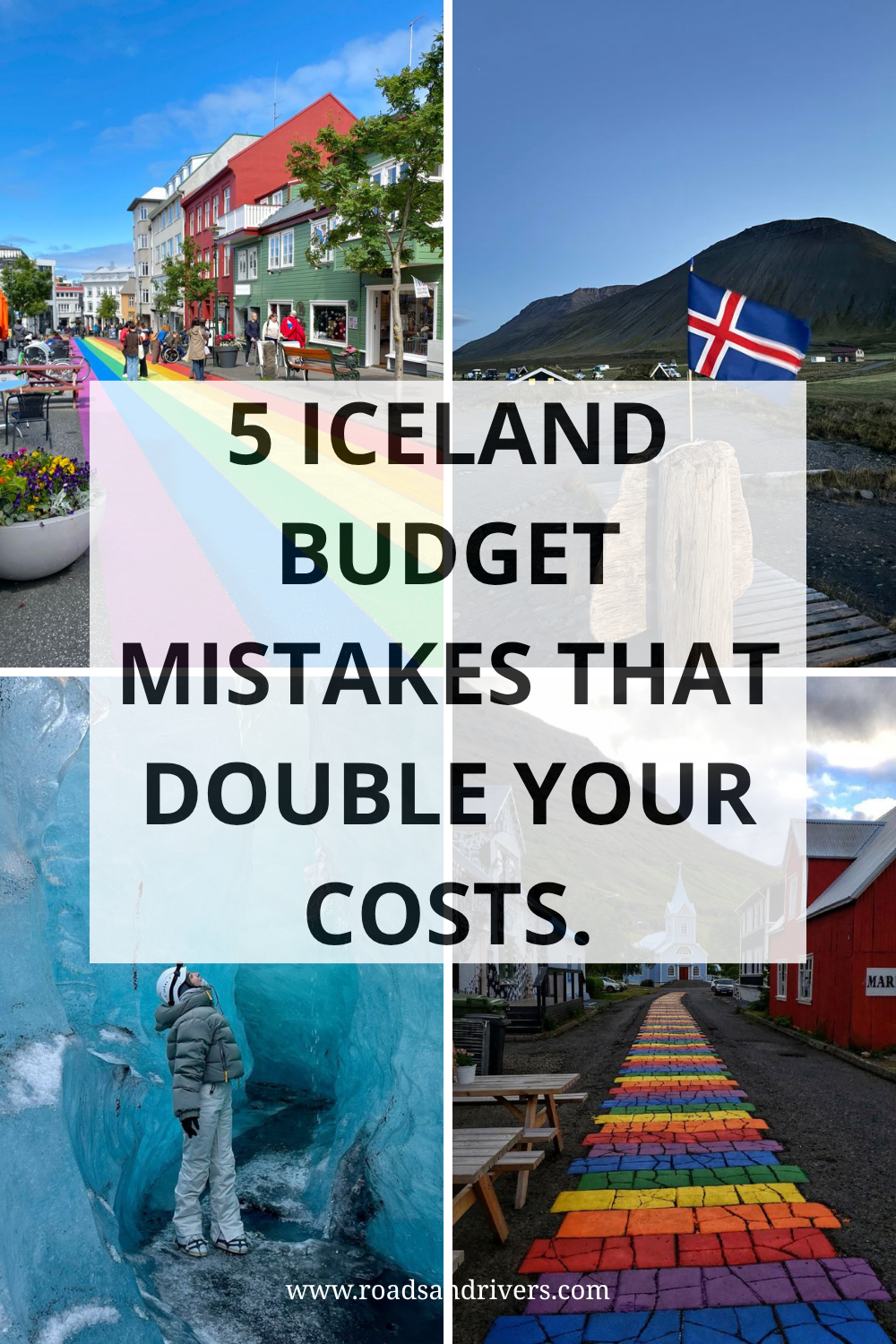
5 Iceland Budget Mistakes That Double Your Costs
1. Booking accommodation last minute. Iceland has limited accommodation outside Reykjavik, especially along the south coast and in the east. Booking 2-3 months ahead gives you access to the cheapest guesthouses and hostels. Waiting until the week before can mean paying double or finding nothing available.
2. Renting a 4WD when you do not need one. A 4WD rental costs 40-70% more than a 2WD. The Ring Road (Route 1) is fully paved and drivable in any car from May to September. You only need a 4WD for F-roads (Landmannalaugar, Askja, highland interiors), which require specific insurance and driving experience. If you are not planning to go off Route 1, save the money.
3. Paying for tours you can do yourself. The Golden Circle (Thingvellir, Geysir, Gullfoss) is the most popular day tour from Reykjavik. Tour companies charge ISK 12,000-18,000 ($85-130) per person. You can rent a car and drive the same route for roughly ISK 8,000 ($58) in fuel, at your own pace, with the freedom to stop wherever you want. The same applies to the south coast waterfalls (Seljalandsfoss, Skogafoss) and Diamond Beach.
4. Eating at tourist restaurants in Reykjavik. Laugavegur (the main shopping street) is lined with restaurants charging ISK 4,000-7,000 ($29-50) per main course. Walk two blocks in any direction and prices drop. The Hlemmur Matholl food hall offers decent meals for ISK 2,000-3,500 ($14-25). Better yet, cook at your accommodation.
5. Not checking fuel levels between towns. In eastern and northern Iceland, fuel stations can be 100+ km apart. Running low and filling up at the only station available means paying whatever they charge. Keep your tank above half and fill up at every Orkan or Olis you pass.
Budget Iceland Was Way Better Than I Expected
The surprise of budget Iceland is not that it is possible. It is that it is often better than the expensive version. Camping means you wake up next to waterfalls instead of in a hotel room. Self-catering means you stop at a scenic pullover for a sandwich lunch with a view that a restaurant could not replicate. Driving yourself means you can stop at the unnamed waterfall you spot from the road, the one that is not in any guidebook, and have it entirely to yourself.
The free hot springs are a perfect example. The Blue Lagoon is a managed, ticketed experience with changing rooms, a swim-up bar, and hundreds of other people. Reykjadalur is a 45-minute hike through a steaming valley to a hot river where you sit in naturally heated water surrounded by mountains, with maybe a dozen other people, for free. The budget version is not a compromise. It is the better experience.
The same pattern holds for the Golden Circle. Tour buses follow a fixed schedule: 30 minutes at Thingvellir, 20 minutes at Geysir, 15 minutes at Gullfoss. Drive yourself and you can spend two hours at Thingvellir walking between the tectonic plates, wait for Strokkur to erupt three times at Geysir, and hike down to the base of Gullfoss at your own pace.
Read more: The Scottish Highlands: A Complete Guide to Mystic Outlands Travel for another dramatic landscape destination where self-driving delivers a better experience than guided tours.
The Ring Road on a Budget: Your Step-by-Step Savings Plan
The Ring Road (Route 1) circles the entire island in roughly 1,322 km. Most travellers drive it in 7-10 days. Here is the budget approach, day by day.
Days 1-2: Reykjavik and the Golden Circle. Pick up your rental car. Drive the Golden Circle (Thingvellir, Geysir, Gullfoss). Camp near Geysir or Selfoss. Total driving: 230 km.
Days 3-4: South Coast. The waterfall corridor: Seljalandsfoss (walk behind it), Skogafoss (climb the steps beside it), Reynisfjara black sand beach, and Vik. Camp near Vik or Kirkjubaejarklaustur. Total driving: 190 km.
Day 5: Glacier Lagoon and Diamond Beach. Jokulsarlon glacier lagoon (free to view) and Diamond Beach (free). These are the most photographed spots on the south coast and both cost nothing. Camp at Hofn. Total driving: 250 km.
Day 6: East Fjords. The quietest section of the Ring Road and some of the most beautiful. Winding fjord roads, tiny fishing villages, and zero crowds. Camp at Egilsstadir or Seydisfjordur (the colourful port town). Total driving: 260 km.
Day 7: North Iceland — Myvatn. Lake Myvatn, the Dimmuborgir lava formations, the Grjotagja cave (free), and the Godafoss waterfall (free). Optional: Myvatn Nature Baths for a fraction of the Blue Lagoon price. Camp near Myvatn or Akureyri. Total driving: 170 km.
Days 8-9: West Iceland and return. Drive through Akureyri (Iceland’s second city, worth a lunch stop), across the highlands toward the Snaefellsnes Peninsula (often called “Iceland in miniature”), and back to Reykjavik. Camp or stay the final night in Reykjavik. Total driving: 450 km.
Pro tip: The Ring Road is not a race. The best moments happen when you stop for the unnamed waterfall, the roadside hot spring, or the sheep standing in the middle of the road looking at you like you are the one in the wrong place.
Read more: How to Plan an Outdoor Trip: From Gear to Route to Safety for the planning essentials that apply to any self-drive adventure trip.
Northern Lights on a Budget
The Northern Lights are free. This is worth stating because the tourism industry around them is not. Guided Northern Lights tours from Reykjavik cost ISK 10,000-15,000 ($72-108) per person, drive you to a dark spot outside the city, and offer no guarantee of seeing anything.
The budget alternative: drive yourself to a dark location (any spot 20+ minutes from Reykjavik with no light pollution), check the Icelandic Met Office aurora forecast (vedur.is), and wait. The lights appear between September and March, with the strongest activity typically in October, February, and March.
The best free Northern Lights spots: Thingvellir National Park (45 minutes from Reykjavik, dark skies and still water for reflections), Vik (south coast, minimal light pollution), and anywhere in north Iceland (Akureyri area has excellent aurora visibility).
Pro tip: The Northern Lights require patience, dark skies, and clear weather. Check the cloud cover map on vedur.is as carefully as the aurora forecast. A strong aurora behind clouds is invisible. A moderate aurora under clear skies is magnificent.
What to Know About Driving in Iceland
Iceland driving is straightforward but has a few rules that catch visitors off guard.
Speed limits are enforced by cameras. The limit is 90 km/h on paved roads and 80 km/h on gravel. Fines are ISK 15,000+ ($108+) and follow you home via the rental company.
Wind is the biggest hazard. Iceland regularly experiences winds of 50-70 km/h, strong enough to rip a car door off its hinges if you open it carelessly. Always hold your door when exiting the car. Check vedur.is wind warnings daily.
Gravel roads exist on the Ring Road. Short sections of Route 1 in the east are still unpaved. They are fine in a 2WD at reduced speed but require attention. Loose gravel on corners is the main risk.
F-roads are off-limits to 2WD vehicles. These highland roads are river crossings and rough tracks. Your rental insurance does not cover damage on F-roads unless you have a 4WD with F-road coverage. If you are not experienced with river crossings, do not attempt them.
Fuel stations accept credit cards with a PIN. Some unmanned stations in remote areas only accept chip-and-PIN cards. Make sure your card has a 4-digit PIN enabled before you travel.
Read more: Backpacking Europe for Beginners if you are connecting Iceland with a wider European trip. And for the hiking gear you need on Icelandic trails, the trekking essentials guide covers the non-negotiables.
Key Takeaways
- Budget Iceland is real but not cheap. A 7-day Ring Road trip costs $1,100-1,650 per person with camping and self-catering.
- The biggest savings come from cooking your own food (Bonus supermarket), camping, booking the car early, and skipping the Blue Lagoon for free hot springs.
- The budget version of Iceland is often the better experience. Camping, self-driving, and free hot springs put you closer to the landscape than any guided tour.
- September is the best value month: lower prices, fewer tourists, Northern Lights season starts, and the Ring Road is still fully accessible.
- Free is the most important word in Iceland. Waterfalls, geysers, beaches, hiking trails, and hot springs cost nothing. The money goes to eating, sleeping, and driving.
Iceland is not a destination you visit because it is affordable. You visit because there is nowhere else on earth where you can stand between two tectonic plates in the morning, walk behind a waterfall at lunch, soak in a volcanic hot spring by afternoon, and chase the Northern Lights after dinner. The budget question is not whether Iceland is worth the money. It is whether you are willing to cook your own pasta and sleep in a tent to make it happen.
Rent the car. Pack the tent. Buy the Camping Card. The waterfalls are waiting, and they are all free.
What was your biggest Iceland budget win or biggest surprise cost? Drop it in the comments.
FAQ
How much does a week in Iceland actually cost?
A budget 7-day Ring Road trip costs $1,100-1,650 per person with camping, self-catering, and a small rental car. A mid-range trip with guesthouses and a mix of self-catering and restaurants costs $2,100-3,400. These figures exclude flights, which range from $200-600 return from Europe and $400-900 from North America depending on timing and airline.
Is it possible to do Iceland on $100 a day?
Technically yes, but it requires strict self-catering, camping every night, and limiting paid activities. A more realistic budget floor is $150-170 per day, which allows one restaurant meal every few days and one paid activity (such as Myvatn Nature Baths or a glacier walk). Below $100 per day requires hitchhiking or campervanning with a partner to split costs.
What is the cheapest time to visit Iceland?
September and early October offer the best combination of lower prices, accessible roads, and Northern Lights potential. May and early June are also cheaper than peak summer, with long daylight hours and the start of puffin season. November through March is cheapest for flights and accommodation but limits driving options due to winter road conditions.
Do you need a 4WD for the Ring Road?
No. The Ring Road (Route 1) is fully paved except for short sections in the east, and is drivable in any car from May to September. A 4WD is only necessary for F-roads (highland interior roads), which most first-time visitors do not use. Save the money and rent a 2WD unless you specifically plan to access Landmannalaugar or other highland destinations.
Can you see the Northern Lights on a budget?
Yes. The Northern Lights are free and visible from September to March anywhere in Iceland with dark skies and clear weather. Drive 20-30 minutes from any town, check the aurora and cloud cover forecasts on vedur.is, and wait. You do not need to pay for a guided tour. A car, patience, and warm clothing are all you need.