I was sitting in a tiny basement restaurant in Euljiro at 11 PM, eating a bowl of kimchi jjigae that cost 7,000 won ($5), surrounded by Korean office workers who had clearly been eating here for decades. The wallpaper was peeling. The fluorescent light was unforgiving. The stew was the best thing I had eaten in months. That is Seoul in a single moment: completely uninterested in impressing you, and then impressing you more than any city you have visited.
This Seoul travel guide is for the person who has seen the cafe photos on Pinterest, watched enough K-dramas to recognise Bukchon Hanok Village, and is ready to go but has no idea where to actually start. Seoul is enormous (10 million people in the city, 26 million in the metro area), and the gap between the tourist version and the real version is wider than you might expect. The tourist version is palaces and Myeongdong shopping. The real version is neighbourhood-hopping by subway, eating your way through markets at midnight, and discovering that every corner of this city has its own aesthetic, its own food culture, and its own reason to exist.
Table of Contents
- Seoul Changed How I Think About Travel
- First Time in Seoul: Where to Start
- 11 Seoul Neighbourhoods to Eat, Shop, and Explore
- Hongdae or Myeongdong: Which Seoul Vibe Is Yours?
- What Seoul Food Experiences Do Most Tourists Miss?
- Seoul in 5 Days: The K-Culture Itinerary
- 5 Seoul Tourist Mistakes That Waste Your Trip
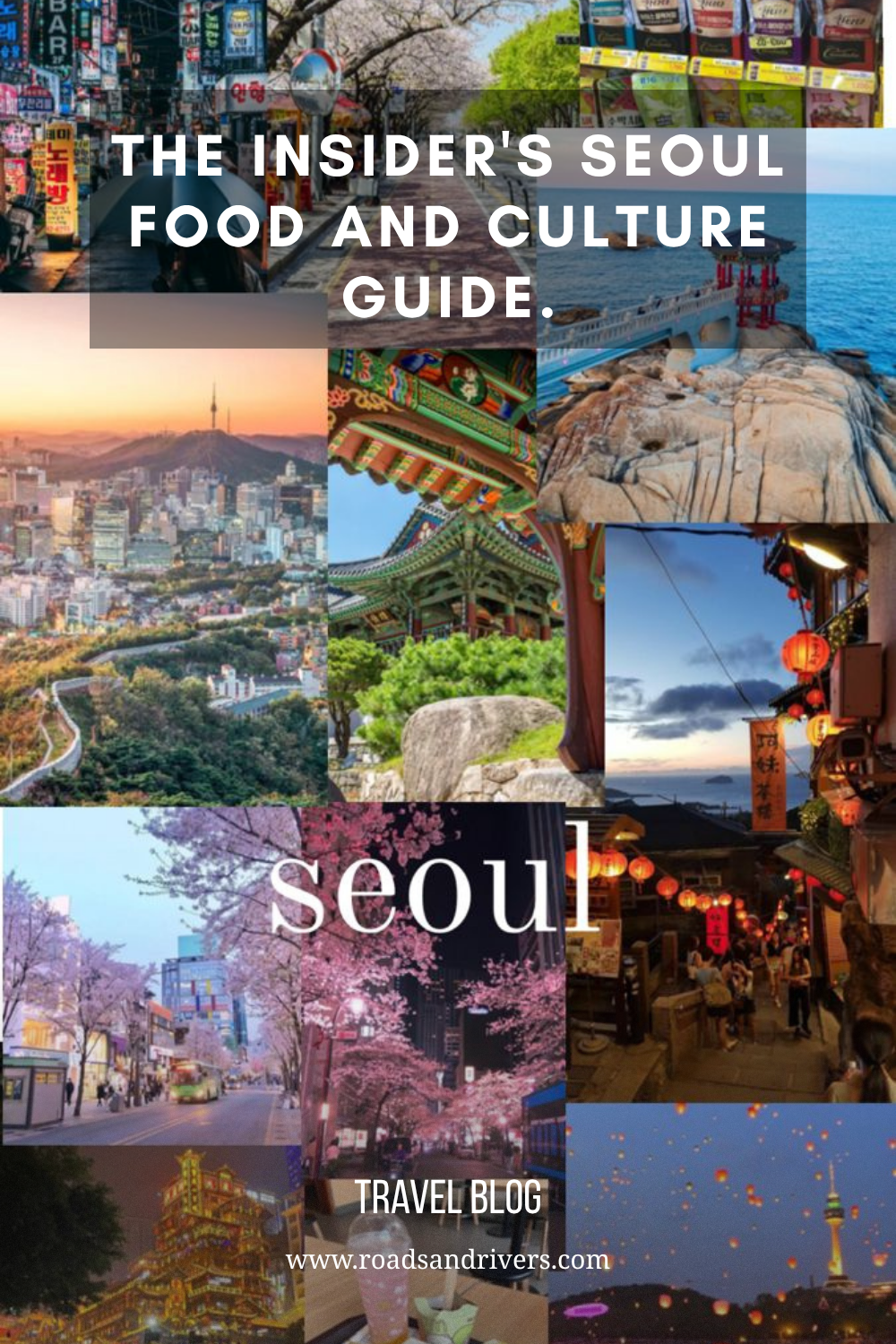
- The Insider’s Seoul Food and Culture Guide
- FAQ
Seoul Changed How I Think About Travel
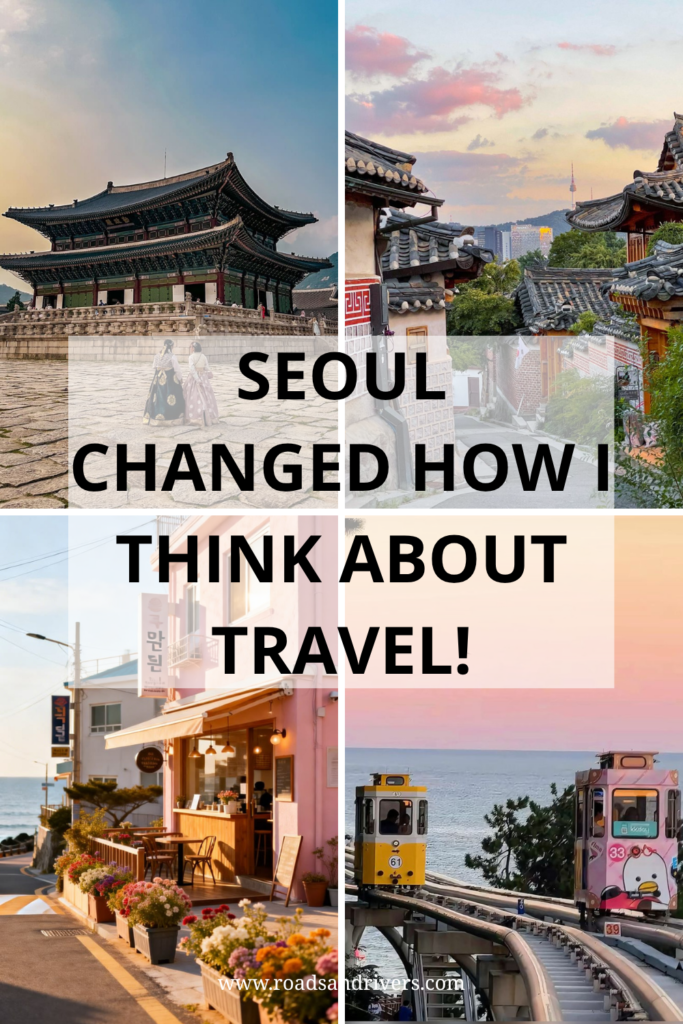
Before Seoul, I thought I understood what a food city was. I had done Bangkok, Mexico City, Tokyo. I thought the formula was always the same: find the markets, eat the street food, try the local spots, avoid the tourist restaurants. Seoul broke that formula because it does not have a single food identity. It has dozens, running simultaneously, and they are all world-class.
There is the Korean barbecue layer, where you grill your own meat at the table in a restaurant that has been serving the same cuts for 40 years. There is the street food layer, where tteokbokki (spicy rice cakes), hotteok (sweet filled pancakes), and gimmari (fried seaweed rolls) are sold from carts in every neighbourhood. There is the cafe layer, where Seoul has more cafes per capita than almost any other city on earth, and where the design ambition of a single-origin coffee shop rivals architecture studios. And there is the fine dining layer, where Korean ingredients and techniques are being reimagined by a generation of chefs who trained in New York and Paris and then came home.
All of this happens within a subway system so efficient that you never wait more than 3 minutes for a train, in a city where the convenience stores (CU, GS25, 7-Eleven) are themselves a food experience, selling fresh kimbap, instant ramyeon stations, and Korean fried chicken at 2 AM.
Seoul changed the way I think about city travel because it proved that a city does not have to choose between tradition and modernity, between cheap and refined, between accessible and surprising. It does all of them at once.
First Time in Seoul: Where to Start
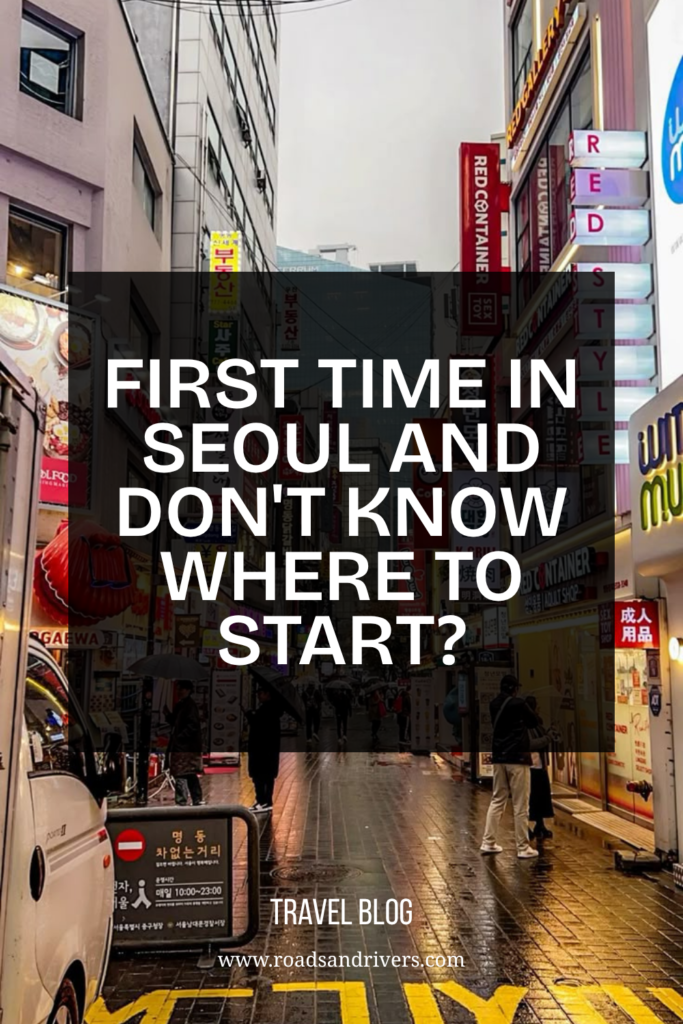
Seoul’s size is intimidating on a map but manageable in practice. The subway connects everything, and once you understand the neighbourhood system, the city becomes a series of distinct villages you move between rather than one overwhelming mass.
Getting in: Incheon Airport (ICN) is the main international airport, about 60-90 minutes from central Seoul by AREX express train (9,500 won/$7) or airport bus (15,000-17,000 won/$11-12). Get a T-money card (rechargeable transit card) at the airport convenience store. It works on every subway, bus, and taxi in the city.
Language: English signage is widespread on public transport and in tourist areas. Google Maps works in Seoul but Naver Map and KakaoMap are significantly better for navigation, transit directions, and finding restaurants. Download both before you arrive.
Money: South Korea is increasingly cashless. Credit cards are accepted almost everywhere, including street food vendors and convenience stores. Carrying 30,000-50,000 won ($22-37) in cash for small markets and older restaurants is enough.
Connectivity: Pocket Wi-Fi or an eSIM is essential. Rent a pocket Wi-Fi at Incheon Airport (3,000-5,000 won per day) or activate an eSIM before departure. Seoul’s public Wi-Fi is decent but not reliable enough for navigation.
Pro tip: Korean addresses can be confusing. Save locations on KakaoMap before you go out and use the Korean name of each destination when showing taxi drivers where you want to go.
Read more: How Much Does a Trip to Japan Really Cost? if you are combining Seoul with Tokyo, which is one of the most popular East Asia pairings.
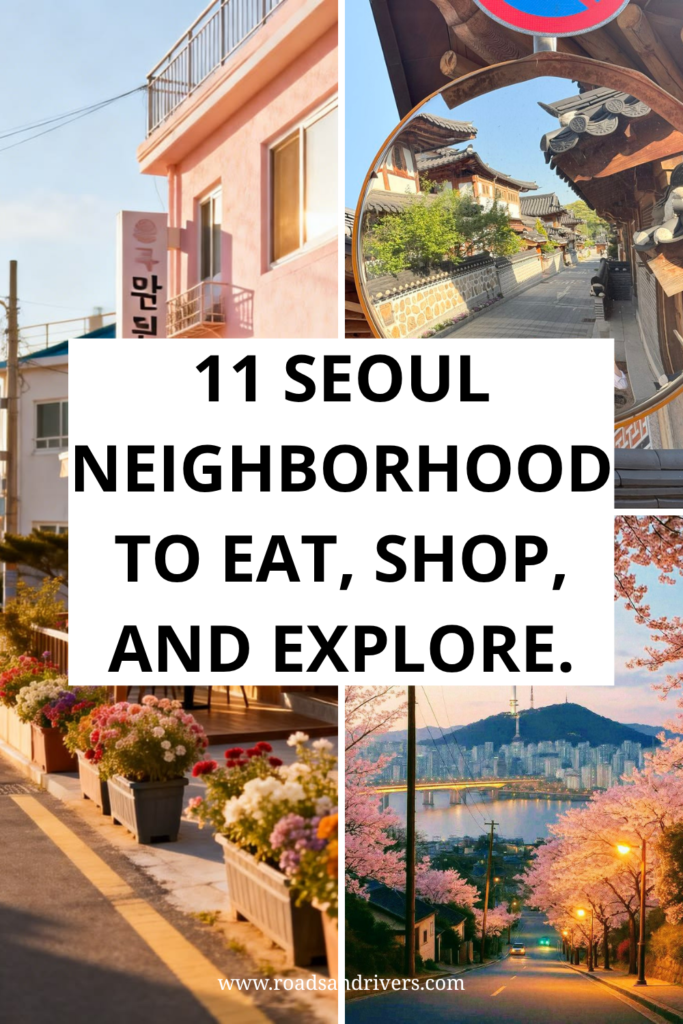
11 Seoul Neighbourhoods to Eat, Shop, and Explore
Seoul is a neighbourhood city. The subway delivers you to a new world every 15 minutes, and each stop has its own personality. These are the areas that matter for visitors, grouped by what they do best.
For Food
Euljiro is the neighbourhood that food-obsessed travellers talk about most. It is an old printing and metalwork district that has become Seoul’s trendiest food and bar area without losing its grit. Tiny bars sit between machine shops. Restaurants that have served the same menu for 50 years operate next to natural wine bars that opened last month. This is where you eat if you want the real Seoul.
Gwangjang Market is the most important food market in the city. Bindaetteok (mung bean pancakes), mayak gimbap (addictive mini rice rolls), and yukhoe (raw beef tartare with sesame oil and egg yolk) are the essential orders. Go for lunch on a weekday to avoid the worst crowds. The market stalls are mostly run by ajummas (older Korean women) who do not speak much English but will serve you the best meal of your trip.
Jongno 3-ga is the late-night eating district. Korean barbecue restaurants, pojangmacha (street tent bars), and 24-hour diners line the streets. This is where Seoul eats after midnight.
For Culture
Bukchon Hanok Village is the traditional Korean hanok (wooden house) district between Gyeongbokgung and Changdeokgung palaces. It is beautiful, photogenic, and worth visiting, but it is also a residential area, so walk quietly and respect the signs asking for minimal noise.
Insadong is the art and traditional culture neighbourhood. Tea houses, calligraphy shops, ceramic galleries, and the Ssamziegil multi-level shopping arcade are the main draws. It has a more polished tourist feel than Euljiro but is still worth an afternoon.
Ikseon-dong is a tiny hanok neighbourhood that has become Seoul’s most photogenic cafe district. The narrow alleyways are lined with cafes, restaurants, and boutiques packed into renovated traditional houses. Arrive early on weekdays. Weekends draw large crowds.
For Shopping and Nightlife
Hongdae is the university district and the social centre of young Seoul. Live music, street performers, vintage shops, independent fashion labels, and some of the best nightlife in Asia. It is loud, colourful, and energetic in a way that suits travellers under 35 and exhausts everyone else.
Myeongdong is the mainstream shopping and K-beauty destination. Every Korean skincare and cosmetics brand has a flagship here. The street food is tourist-facing but decent. It is the most commercially dense neighbourhood in Seoul.
Gangnam is the southern district that gave the world the song. In practice, it is upscale, corporate, and less interesting for tourists than the northern neighbourhoods. The COEX Mall underground complex and Starfield Library are worth a visit. Otherwise, your time is better spent north of the river.
Itaewon is the international district. Restaurants from every global cuisine, craft beer bars, and a more diverse atmosphere than anywhere else in Seoul. It has gone through difficult periods but remains the best neighbourhood for non-Korean food and an international social scene.
Seongsu-dong is Seoul’s answer to Brooklyn or Shoreditch: converted warehouses, specialty coffee, concept stores, and a creative energy that makes it worth a half-day even if you are not shopping.
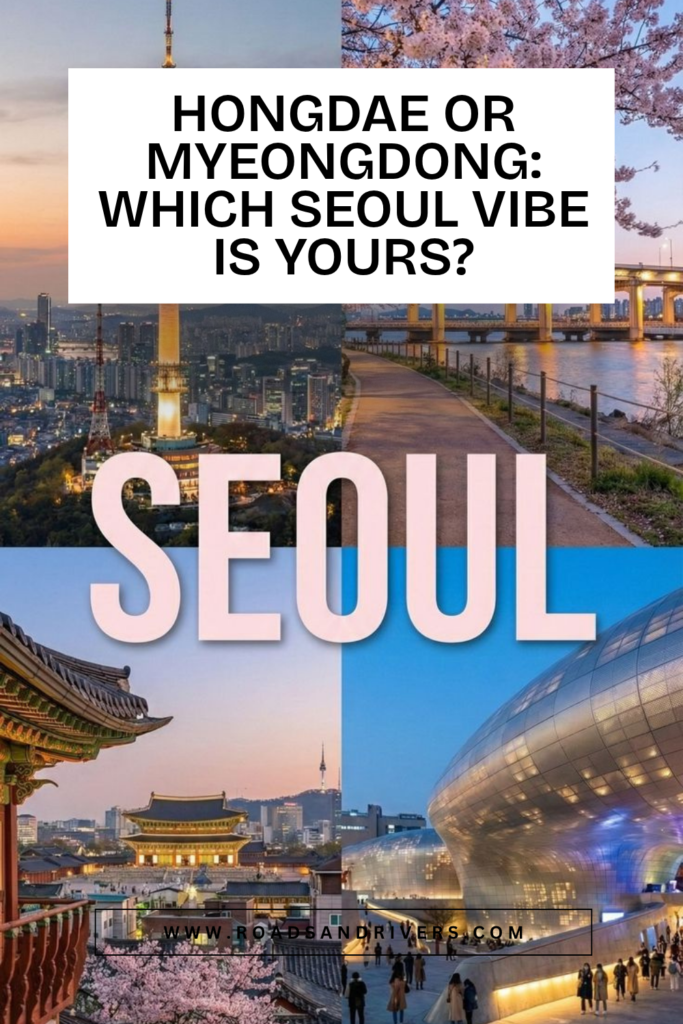
Hongdae or Myeongdong: Which Seoul Vibe Is Yours?
This is the accommodation and base-camp question that shapes every Seoul trip. Both are popular, central, and well-connected by subway. They serve different types of traveller.
Choose Hongdae if: you want nightlife within walking distance, you prefer an indie and youthful atmosphere, you are a solo traveller who wants to meet people, you like street performances and live music, or you are under 35 and want the social Seoul experience.
Choose Myeongdong if: you are visiting primarily for shopping and K-beauty, you prefer a more central location close to the palaces and historic sites, you want more hotel options (Myeongdong has the highest concentration of mid-range and upscale hotels), or you plan to use the city centre as your base for day trips.
The dark horse option: Stay in Euljiro or Jongno for the best combination of food, culture, and central access. These neighbourhoods are walkable to the palaces, one subway stop from Myeongdong, and surrounded by the best restaurants in the city. They lack the nightlife of Hongdae but more than compensate with character and convenience.
Pro tip: Wherever you stay, Seoul’s subway runs until midnight. After that, taxis are affordable (a cross-city ride rarely exceeds 15,000 won/$11) and KakaoTaxi (the local ride-hailing app) works reliably.
What Seoul Food Experiences Do Most Tourists Miss?
Most tourists eat Korean barbecue, visit Gwangjang Market, and try tteokbokki from a street cart. All excellent choices. But the food experiences that define Seoul for locals are different, and most visitors leave without discovering them.
The convenience store meal. This sounds underwhelming until you realise that Korean convenience stores are a parallel food universe. Fresh triangle kimbap (100 won each/$0.70), instant ramyeon cooked at the hot water station, banana milk, and Korean fried chicken pieces for late-night snacking. The quality is higher than any convenience store food you have experienced anywhere else. A full CU or GS25 dinner costs under 5,000 won ($3.50).
Jjimjilbang (Korean spa) food. Jjimjilbangs are communal bathhouses with saunas, sleeping rooms, and food courts. The sikhye (sweet rice drink) and maekbanseok gyeran (baked eggs) are the traditional jjimjilbang foods, served on wooden trays in your spa clothes. Dragon Hill Spa in Yongsan is the most tourist-friendly. The full experience costs 12,000-15,000 won ($9-11) for entry and you can stay as long as you want.
Pojangmacha (tent bar) eating. These are the orange-tented street food stalls that appear at night along certain streets, serving odeng (fish cake skewers in broth), tteokbokki, and soju. Jongno 3-ga has the highest concentration. The atmosphere is what makes it special: sitting on plastic stools under a tarp, sharing a table with strangers, with steam rising from the broth.
The neighbourhood bakery. Korean bakeries (Paris Baguette and Tous les Jours are the chains, but the independent ones are better) produce breads and pastries that combine French technique with Korean flavours. Red bean buns, cream cheese garlic bread, and soboro (crumble-topped sweet bread) are all under 3,000 won ($2.20) and all worth trying.
Lunch sets at Korean restaurants. Many Korean restaurants offer baekban (set meal) lunches for 8,000-12,000 won ($6-9) that include rice, soup, a main dish, and 5-8 banchan (side dishes). This is how office workers eat midday and it is the highest-value meal experience in the city.
If you are building a broader Asia food trip, the guide to backpacking Asia on a budget covers how Seoul fits into a regional itinerary alongside Tokyo, Bangkok, and Taipei.
Seoul in 5 Days: The K-Culture Itinerary
Five days gives you enough time to cover the major neighbourhoods, eat widely, and absorb the cultural layers that make Seoul different from every other Asian capital.
Day 1: Palaces and Bukchon. Gyeongbokgung Palace in the morning (arrive at 9 AM for the changing of the guard ceremony), rent a hanbok (traditional Korean dress) for free palace entry and photos, walk through Bukchon Hanok Village, lunch at a traditional Korean restaurant in Insadong, afternoon in Ikseon-dong for cafes and alleyways.
Day 2: Euljiro, Gwangjang Market, and Jongno. Morning exploring Euljiro’s backstreets and coffee shops, lunch at Gwangjang Market (bindaetteok and mayak gimbap), afternoon at Changdeokgung Palace and its Secret Garden (separate ticket, guided tours only, worth it). Evening Korean barbecue in the Jongno 3-ga area.
Day 3: Hongdae, Yeonnam-dong, and Mangwon. A full day in western Seoul. Morning at Mangwon Market (the local’s market, less touristy than Gwangjang), afternoon walking Yeonnam-dong’s tree-lined streets and independent shops, evening in Hongdae for street performances, shopping, and dinner.
Day 4: Gangnam, Seongsu-dong, and N Seoul Tower. Cross the river for the modern Seoul experience. Morning coffee in Seongsu-dong’s converted warehouses, lunch in Gangnam, afternoon at COEX and Starfield Library. Evening hike up Namsan Mountain to N Seoul Tower for sunset views over the entire city (or take the cable car if your legs disagree).
Day 5: DMZ day trip or Itaewon and Yongsan. Option A: the DMZ tour (book at least 2 days ahead, full morning, deeply impactful). Option B: a slower day in Itaewon for international food and Yongsan for the National Museum of Korea (free entry, world-class collection, give it at least 2 hours), then Dragon Hill Spa for the jjimjilbang experience.
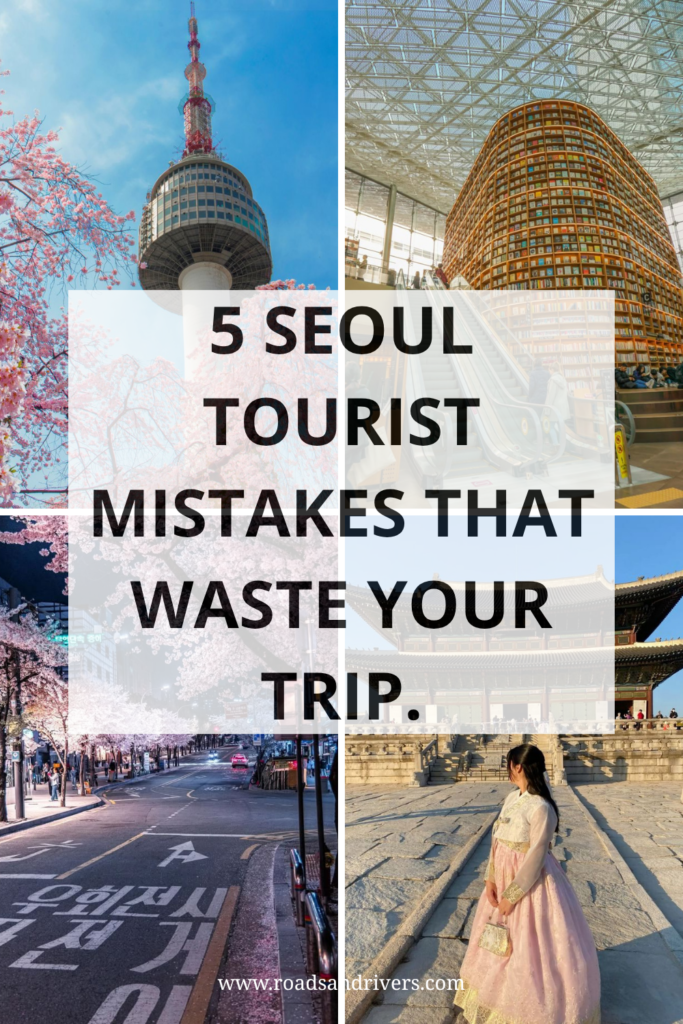
5 Seoul Tourist Mistakes That Waste Your Trip
Seoul is easy to navigate but easy to misallocate too. These are the mistakes that leave first-timers feeling like they missed the real city.
1. Spending too long in Myeongdong. Myeongdong is a shopping district, not a cultural destination. Two hours of skincare shopping and street food is enough. Spending a full day here means missing Euljiro, Ikseon-dong, or Seongsu-dong, all of which are more interesting.
2. Only eating Korean barbecue. Korean barbecue is spectacular but it is one layer of a food culture that has dozens. Tourists who eat barbecue every night miss jjigae (stews), bibimbap, kalguksu (knife-cut noodles), mandu (dumplings), and the entire street food and market ecosystem. Aim for barbecue once or twice and explore the rest.
3. Skipping the east side of the city. Seongsu-dong and the neighbourhoods east of the river have become some of the most creative areas in Seoul. First-time visitors who stick to the palace-Hongdae-Myeongdong triangle miss this entirely.
4. Using Google Maps for restaurants. Google Maps works for subway navigation in Seoul but its restaurant data is significantly worse than Naver Map or KakaoMap. Local review platforms (Naver Blog, MangoPlate) are where Koreans find restaurants. A place with 4 reviews on Google might have 2,000 on Naver.
5. Visiting palaces without a hanbok. This is not a cultural requirement but a practical hack. Renting a hanbok (traditional outfit) near Gyeongbokgung costs 15,000-20,000 won ($11-15) for 2 hours and gets you free entry to all five palaces. The palaces charge 3,000 won each, so the hanbok effectively pays for itself while giving you the full visual experience.
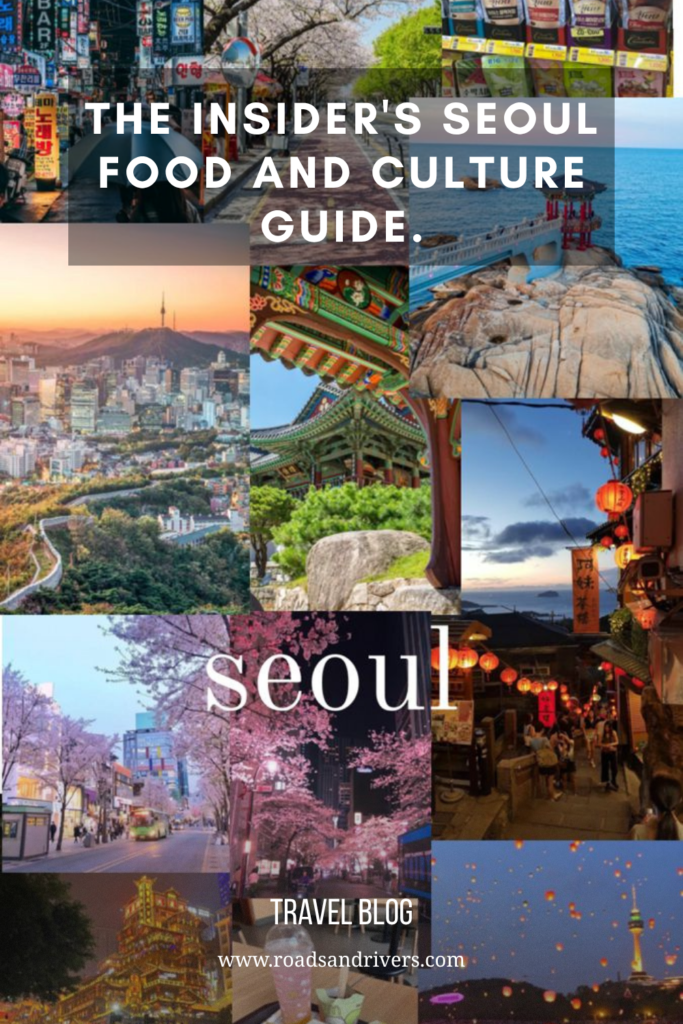
The Insider’s Seoul Food and Culture Guide
Seoul’s food and culture are not separate topics. They are the same thing experienced through different senses. The way Koreans eat, the rituals around shared meals, the banchan culture (every meal comes with multiple small side dishes, all free, all refillable), and the social architecture of a Korean dinner table are cultural experiences as much as they are culinary ones.
Cafe Culture
Seoul’s cafe scene deserves a section of its own because it operates at a level of design ambition and creative intensity that no other city matches. There are cafes built inside abandoned houses, cafes with rooftop gardens overlooking hanok rooftops, cafes that serve single-origin pour-over in handmade ceramic cups, and cafes themed around every conceivable concept from vinyl records to abandoned railways.
The cafe is not just where Seoul drinks coffee. It is where Seoul socialises, works, photographs, dates, and rests. Budget 5,000-8,000 won ($3.50-6) per cafe drink and expect to visit 2-3 cafes per day almost automatically.
K-Beauty Shopping
Seoul is the global capital of Korean skincare and cosmetics. Myeongdong and Gangnam have the highest concentration of flagship stores (Innisfree, Sulwhasoo, Laneige, Dr. Jart+, COSRX), but the best deals and newest products are often at Olive Young, the Korean equivalent of Sephora, which has locations in every neighbourhood.
Temple Stays and Cultural Experiences
For travellers who want to go deeper into Korean culture, temple stay programmes (offered at Buddhist temples across the country, bookable through the official Templestay website) give you a night in a functioning temple with monks, meditation sessions, and temple food meals. Jogyesa Temple in central Seoul offers day programmes that include tea ceremonies and lantern making.
Read more: How To Plan Your First Solo Trip to China Step by Step if you are considering extending your East Asia trip beyond Korea and Japan. And for another city where food and culture are inseparable, the Singapore budget guide covers a destination that pairs naturally with Seoul on an Asia circuit.
Key Takeaways
- Seoul is a neighbourhood city. The subway connects everything, and the best experiences come from hopping between areas rather than anchoring in one spot.
- Euljiro and Jongno are the best areas for food and atmosphere. Hongdae is the best for nightlife and social energy. Myeongdong is for shopping, not culture.
- Korean food goes far beyond barbecue. Gwangjang Market, convenience store meals, pojangmacha tent bars, and baekban lunch sets are where locals eat.
- Rent a hanbok at the palaces. It pays for itself in free entry and makes the whole experience more immersive.
- Five days covers the highlights. Add a sixth for a DMZ day trip or a day trip to Bukhansan National Park for hiking.
Seoul is a city that rewards curiosity. The more you wander off the obvious path, the more it gives you. The best meal you eat will be in a restaurant you almost walked past. The best cafe will be down an alley you turned into by accident. The best neighbourhood will be one you did not plan to visit.
Tap your T-money card. Take the subway one more stop. See what happens.
What was your favourite Seoul neighbourhood or food discovery? Drop it in the comments. Still planning? Ask anything below.
FAQ
How many days do you need in Seoul?
Four to five days is the ideal first visit. That covers the major palaces, 4-5 neighbourhoods, the essential food markets, and one day trip (DMZ or a nature excursion). You could spend two weeks and not run out of things to do, but 5 days gives you a thorough first impression.
Is Seoul expensive to visit?
Seoul is mid-range by Asian capital standards. Cheaper than Tokyo and Singapore, roughly comparable to Taipei, and more expensive than Bangkok or Hanoi. A comfortable daily budget is $60-90 USD per person (mid-range hotel, mix of street food and restaurants, subway transport, 1-2 activities). Budget travellers can manage $35-50 USD per day with guesthouses and warung-style local eating.
What is the best neighbourhood to stay in Seoul?
Hongdae is the most popular base for first-time visitors who want nightlife and a social atmosphere. Myeongdong is best for shoppers and those who want central hotel options. Euljiro and Jongno are the best for food lovers who want walkable access to the palaces and markets. Itaewon suits international travellers who want diverse food and a cosmopolitan vibe.
What Korean food should you try first in Seoul?
Start with bibimbap (mixed rice bowl with vegetables and gochujang sauce) at any traditional restaurant, then visit Gwangjang Market for bindaetteok (mung bean pancakes) and mayak gimbap (mini rice rolls). Korean barbecue deserves at least one evening. After that, branch into tteokbokki from a street cart, a jjigae (stew) at a neighbourhood restaurant, and a convenience store ramyeon session.
When is the best time to visit Seoul?
Spring (late March through May) is the favourite season: cherry blossoms bloom across the city in early April and temperatures are mild. Autumn (late September through November) is equally beautiful with fall foliage and crisp weather. Summer (June-August) is hot and humid with a monsoon season in July. Winter (December-February) is cold but offers fewer crowds and the magical atmosphere of snow on palace rooftops.